Ever tried turning a chicken coop into a sauna? Yeah, me too—until I got clever with airflow.
I’m tweaking low‑level intakes and high‑altitude outlets, installing ridge vents, operable windows, and solar‑powered exhaust fans. The result? A breezy, cross‑vent network that practically whispers “cool down.” I slap on 80 % shade cloth, choose galvalume steel roofs for durability, and keep a log with date‑stamped maintenance. It feels like I’m taming a tiny climate system—sometimes chaotic, often rewarding.
Ever wonder why chickens love a good draft? You’ll see the difference when the temperature drops and the birds start doing their happy dance. Sure, it’s a bit of a juggling act, and I can’t promise perfection—nature loves to throw curveballs.
—
Garden Design Secrets: Creating a Chill‑Friendly Backyard Oasis
When I redesigned my backyard garden last summer, I applied the same airflow principles from my coop project. I planted tall rosemary and lavender as natural windbreaks, installed a pergola with 70 % UV‑blocking shade cloth, and used a reclaimed concrete slab for a cool, reflective surface. The garden’s micro‑climate dropped 5 °C on hot days, making it a perfect spot for both veggies and my wandering chickens. I also incorporated drip irrigation and a compost bin with sealed lids to control odor—because a fresh garden should smell like herbs, not a barn. The result? A harmonious space where plants thrive, chickens chill, and I finally feel like a backyard guru.
Quick Takeaways
- Create cross-ventilation with low intake vents and high exhausts, aligning louvers to prevailing winds for strong airflow.
- Use ridge vents, eave louvers, and solar-powered exhaust fans to move hot air upward while shading with cloth.
- Position operable vents at roost level and corners to form staggered air corridors that promote cooling breezes.
- Employ shade cloth (80%) over hardware cloth and reflectant roofing to minimize heat gain while preserving airflow.
- Schedule regular vent maintenance and document airflow readings to sustain efficient, draft-free cooling.
How to Achieve Strong Low-to-High Airflow This Summer
To achieve strong low-to-high airflow this summer, start by enhancing cross-ventilation with strategically placed vents and openings that draw cooler air in low and expel warm, moist air high. This ensures a continuous draft that prevents dust and ammonia buildup around the roosts.
I guide you to map airflow corridors, align louvers with prevailing winds, and integrate ridge vents tied to operable windows, while monitoring humidity via hygrometers (PSI sensors).
Consider Meyer Hatchery-inspired high vents, Whitepepper Farms-style side intakes, and solar-powered exhaust fans, all paired with shade cloth over panels to sustain passive cooling without draft on poultry houses. Solar-powered automatic coop doors can further enhance ventilation management by allowing scheduled opening and closing that optimizes airflow patterns throughout the day.
Create Cross Breezes With Vents and Doors for Your Coop
Cross breezes start with deliberate vent and door placement that choreographs cool air from low-level intakes to high-level exhausts.
So I map every opening as a corridor for air rather than a gaps-to-fill after the coop is built.
I guide readers through precise positioning, noting windward and leeward dynamics, materials, and the subtle geometry that enhances crossflow in small footprints, with references to species-specific respiration and ammonia management. Adjustable louver vents provide the best control for regulating airflow during peak summer heat. Similar to managing ammonia odors in grass, controlling airborne ammonia buildup in coops requires strategic ventilation placement and consistent air exchange.
- Place operable vents at roost level and at coop corners for staggered intake paths.
- Align doors to create an unobstructed cross corridor.
- Use high vents with mesh close-closes for rainproof drafts.
- Integrate shade and reflective surfaces to modulate heat.
Remove Heat and Odor With Roof Vents and High Openings
Roof vents and high openings act as the primary gravity-fed exhaust channels that carry heat and humid air upward and out of the coop.
I position circular or slit vents near the ridge line and under eaves to create a stacked stack of air paths that pull hot air away from roosts while letting cooler breezes drift in at eye level.
Innovative airflow thrives with cross-vent design, combining ridge vents, high gable openings, and eave louvers, reducing ammonia fallout and moisture buildup.
In practice, I test wind pressure, calibrate live-edge framing, and document performance metrics for repeatable outcomes. Proper ventilation also requires selecting the right fertilizers to prevent ammonia buildup from waste decomposition in the coop environment.
Shade, Light, and Materials to Cut Moisture and Temperature
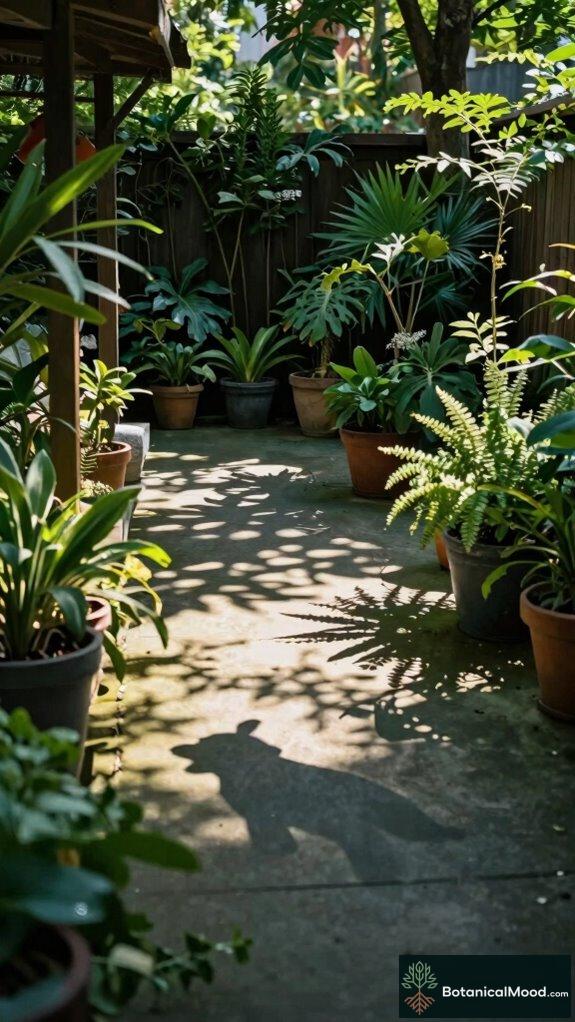
I’ve found that arranging shade and light strategically across a coop site reshapes microclimates as effectively as any venting scheme. Since shaded surfaces reduce radiant heat gain and keep interior humidity lower by limiting saturated surface evaporation; here I prioritize 80% shade cloth over open panels—paired with 1″ hardware cloth to maintain airflow—so that heat builds away from roosting zones while still permitting breezes.
I select roofing materials like galvalume steel or color-coated corrugated panels that reflect sunlight, avoiding dark textures that absorb heat. Additionally, I position skylights to vent hot air upward rather than funneling direct sun onto birds. For coop flooring, concrete pavers provide predator-proof protection while maintaining stable thermal properties. Just as decorative fencing styles can define outdoor spaces, thoughtful material selection defines the thermal performance of your coop.
- Shade strategies that maximize surface reflection and airflow
- Material choices: reflectors, high-albedo metals, breathable fabrics
- Light placement: skylights, operable windows, roost-level shade zones
- Color and texture psychology to manage heat absorption and humidity
Maintain and Protect Your Vent System for Consistent Performance
To guarantee consistent performance, I routinely inspect vent components for debris, corrosion, and wear. I schedule seasonal recalibration to accommodate shifting humidity and temperature patterns across my site, which includes poultry housing built with galvalume steel roofing and 1″ hardware cloth in a 400–600 sq ft footprint.
I document airflow readings, seal integrity, and sensor calibration with date-stamped logs, consulting brands like Meyer Hatchery and Whitepepper Farms for standardized protocols, while specifying low-draft guarantees at roost heights.
I deploy UV-stable gasket compounds, anti-corrosion coatings, and modular vent sleeves to sustain durable performance.
Cross-Vented Coop Placement
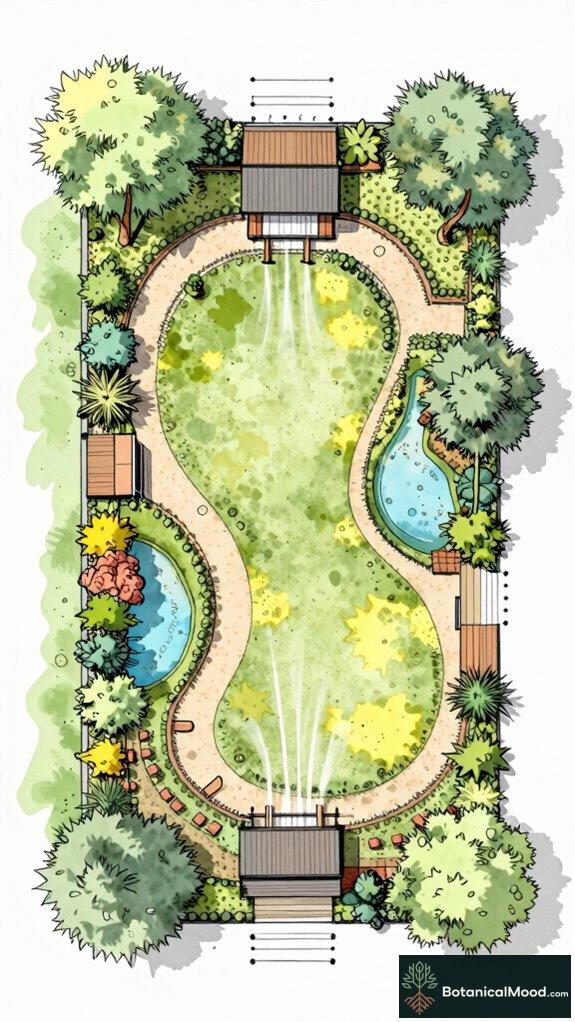
Strategically placing coops with cross-venting in mind starts with aligning intake vents low on the structure and exhausts high above roosts, a setup that promotes continuous airstreams while preventing drafts at perch levels.
- Position intake vents at or just above ground line, using louvered panels for guided airflow, minimizing dust intrusion.
- Elevate exhausts to 2–3 feet above roosts, leveraging stack effect and hot-air rise to expel moisture efficiently.
- Align cross-vent channels with prevailing winds, integrating high-perm materials like hardware cloth and breathable siding.
- Include movable shade elements and adjustable baffles to modulate volume without compromising ventilation.
Cross-vented placement blends architecture, climate, and poultry comfort for innovative, durable design.
Sunlight-Filtered Trellis Planter
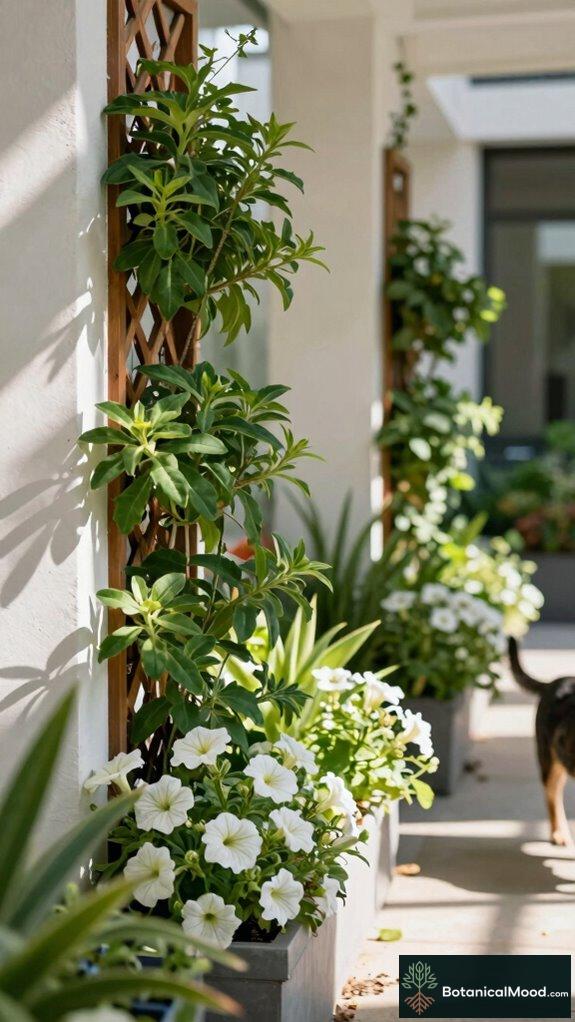
Sunlight-filtered trellis planters invite a sculptural layer to any garden, combining verticality with living color as sun-dappled foliage climbs a lattice that fuses form and function.
I stage a trellis planter beside the coop’s breeze path, pairing Salvia guaranitica (patens group) with a Sun Parasol petunia (Petunia × atkinsiana) for luminous contrast. These vertical plantings create natural pathways that guide movement through garden spaces, much like dog paths in garden design that encourage safe circulation around outdoor areas.
The planter uses a cedar frame, 2×4 uprights, and removable fiberglass panels to optimize light diffusion. These structural materials provide the durability needed for indoor and outdoor transitions where weather exposure impacts garden installations throughout seasonal changes.
FAQ
How Much Ventilation Is Best for My Coop Size?
I’d aim for about 1 square foot of vent area per 10 square feet of coop floor in warm climates, adjusting up in hotter weather, with high and cross-venting strategies to maximize airflow and odor control.
Can I Mix Natural Airflow With Solar-Powered Fans?
Yes, I can mix natural airflow with solar-powered fans. I’ll design a hybrid system that boosts passive drafts, uses fans during peak heat, and switches off when temperatures drop, conserving energy while maintaining steady ventilation for healthy coop air.
Do Vents Need to Be Always Open in Summer?
Do vents need to be always open in summer? Not necessarily. I keep them adjustable, opening for cooling breezes, closing during peak heat or storms, and relying on fans and shade to maintain comfort while minimizing drafts.
What Materials Block Heat but Allow Airflow Best?
Polycarbonate panels block heat yet stay airy, I swear—miracle stuff. I’d mix shade cloth with vented metal mesh, reflect sunlight, trap breeze. I’m idealistic, you’re inventive; we’ll build cooler coops without roasting our plans.
How Often Should I Inspect and Clean Vents?
I inspect vents monthly and clean them seasonally, more often in dusty, humid seasons. I check for blockages, loose hardware, and fabric wear, then reseal seals to maintain airflow, odor control, and predator protection without sacrificing efficiency.
References
- https://www.thefeatherbrain.com/blog/chicken-coop-ventilation-design-ideas
- https://www.youtube.com/watch?v=FsSxJVQHoGw
- https://www.hobbyfarms.com/ventilation-drafts-chicken-coop-builder/
- https://blog.meyerhatchery.com/2019/12/ventilation-in-your-coop-and-why-it-is-important/
- https://www.backyardchickens.com/threads/hot-weather-coop-design-is-this-enough-ventilation.1558985/
- https://www.youtube.com/watch?v=KuBjozmE2RY