7 Creative Catio Designs for Small Balconies
Ever tried to turn a shoebox‑sized balcony into a cat’s five‑star resort?
I built seven compact catios that squeeze every inch of height, safety, and fun out of a tiny outdoor space. I chose weather‑proof Douglas fir (Pseudotsuga menziesii) or teak (Tectona grandis) frames, wrapped in galvanized steel wire mesh, and added modular pieces that range from a 3‑ft entry platform to 2‑4‑ft vertical tiers. I tossed in window‑well shelves, tunnel connectors, latchable doors, and predator‑proof hardware—because who wants a cat that can escape a balcony? I also picked native, non‑toxic plants and shade cloths to keep the feline vibe chill and the aesthetic fresh.
Do you ever wonder how a cat feels perched above a city skyline? I’ve seen my own tabby stare, half‑amused, half‑indignant, at the world below—proof that a little design magic can turn a cramped balcony into a feline kingdom.
It’s not always straightforward; balancing weight limits, wind load, and a cat’s mood can be a juggling act. Still, the payoff? A purring, content cat and a balcony that finally feels lived‑in.
—
Garden Design Tips for Cat‑Friendly Balconies: Turning Green Spaces into Kitty Havens
When I revamped my own balcony garden, I blended cat‑friendly design with low‑maintenance flora. I used a mix of lavender (Lavandula angustifolia) and catnip (Nepeta cataria) for scent and stimulation, paired with a drip‑irrigation system to keep the soil moist without overwatering. A reclaimed teak bench doubled as a perch, while a modular trellis supported climbing vines like jasmine (Jasminum officinale) that offered shade and visual intrigue. I added a small, self‑watering herb pot for basil (Ocimum basilicum) and rosemary (Rosmarinus officinalis), which attracted pollinators and gave my cat fresh sniffing stations. The result? A thriving micro‑garden that’s both Instagram‑worthy and a sensory playground for my cat—proof that a little creativity can turn any balcony into a lush, cat‑approved oasis.
Quick Takeaways
- Vertical balcony catios maximize space with climbing paths, elevated cubbies, and perches for enrichment and airflow.
- Small spaces blend window-well inserts with staggered shelf systems for safe indoor-outdoor access.
- Compact freestanding units use modular, scalable heights (3 ft base, 2–4 ft vertical tiers) for flexible balcony fit.
- Durable, weatherproof materials (galvanized hardware, pressure-treated framing, UV-resistant textiles) ensure long-lasting cat-friendly structures.
- Safe, aesthetic design combines predator-proof mesh, secure latches, and native plants for enrichment and visual appeal.
How to Design a Vertical Balcony Catio
Designing a vertical balcony catio starts with a clear understanding that height, accessibility, and airflow are your most powerful allies. I prioritize stacking elements that invite climbing, perching, and exploration without overwhelming a compact space.
Vertical designs emerge from measured planning: structural framing in pressure-treated lumber (PTL), galvanized steel wire mesh, and modular layouts that adapt to balcony dimensions.
Cat climbing paths, elevated cubbies, and perches optimize space utilization while outdoor enrichment remains core. Safety features—latchable doors, predator-proof mesh, and slip-resistant decking—tie aesthetic integration to cost effective options, with careful color coordination and weatherproof finishes for durable urban longevity. For maximum protection against unwanted wildlife intrusions, stainless steel screen meshes provide superior durability and predator resistance compared to standard alternatives.
Think sun exposure, shade zones, and drainage for a serene, functional refuge.
Window-well and Shelf Combinations for Small Spaces
Window-well insertions and shelf configurations offer a compact yet expansive approach for small-space catios, combining vertical access with practical enclosure features that minimize footprint while maximizing enrichment.
I guide you through shelf organization that prioritizes staggered levels, anti-slip surfaces, and weatherproof finishes from brands like Trex (texter finish) and Kebony equivalents, ensuring durability in sun and rain.
Window well access provides safe ingress, with stainless-steel latches and 2×3 galvanized wire mesh for predator protection. Stainless steel screen meshes offer superior durability and resistance to corrosion compared to standard galvanized options, providing long-term predator-proof security for your catio installation.
I discuss microclimates, shade cloth, and native plant accents (Salix, Lupinus), helping cats observe birds without feeling confined, preserving balcony landscaping integrity.
Compact Freestanding Catio Units That Scale Up
| Component | Height | Purpose |
|---|---|---|
| Base module | 3 ft | Foundation, entry access |
| Vertical tier | 2–4 ft | Climbing, perching |
| Tunnel connection | 1–2 ft | Indoor-outdoor flow |
This scalable designs approach emphasizes vertical structures for sun, shade, and airflow, fostering intimate, legible microhabitats. Portable cat enclosures offer flexible solutions that adapt to varying balcony dimensions and configurations.
Weatherproof Materials for Balcony Cats
Weatherproof materials stand at the core of balcony catios, where durability, safety, and microclimate control converge; I prioritize components that resist sun fading, moisture intrusion, and temperature fluctuations while remaining non-toxic to felines.
- weather resistant fabrics
- durable wood treatments
- corrosion-resistant metals
I select textiles from trusted brands like Sunbrella (Asahi Gardānia line) and cushions woven with solution-dyed acrylics, enduring UV exposure on coastal balconies near Charleston, SC (USDA zone 8b).
For framing, I favor Douglas fir or teak with penetrating sealants (Sikkens Cetol HT) that resist mold, while metal hardware uses hot-dip galvanization and epoxy powder coatings. Monitoring soil and ambient conditions with smart soil sensors helps maintain optimal humidity levels within the catio microclimate, protecting both materials and feline respiratory health.
In practice, I document care schedules, replacing worn components before season shifts, preserving safety, aesthetics, and feline comfort.
Safe Access: Tunnels, Doors, and Predator Proofing
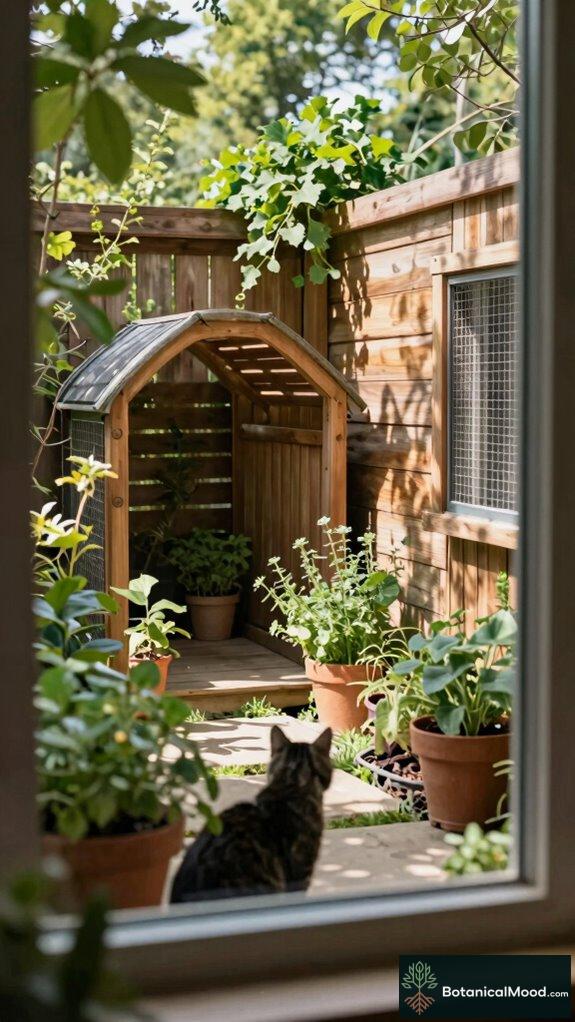
Access to a catio must feel seamless and secure, so I design tunnels, doors, and predator-proofing with a precise, layered approach that prioritizes seamless indoor-outdoor flow and deterrence of outdoor threats.
I emphasize tunnel safety, building discreet, reinforced conduits from cedar (Thuja spp.) to galvanized steel wire mesh, ensuring no gaps for paws or pests.
Door designs include magnetic latches, weatherstripping, and childproof handles, paired with predator proof features like 1/8-inch hardware cloth and anti-climb LEDs.
Access routes leverage window wells and coded adult-access exits, guiding cats safely while protecting bedding plants and soil ecosystems.
For winter installations, insulating outdoor pet doors maintain temperature regulation while preserving the security features essential to year-round catio functionality.
Lighting, Heat Management, and Landscaping Protection
1. string lights, 2. UV protection, 3. shade options, 4. Consider balcony sun shades specifically designed to block harmful rays while keeping your catio cool and comfortable during hot weather.
Step-by-Step Build Plan for a 7x2x3 Balcony Catio
I’ll begin by outlining a modular, freestanding frame built from pressure-treated lumber (PTH) and galvanized wire mesh in 2×2 and 2×3 configurations, ensuring the structure can be assembled on-site with common carpentry tools and locally sourced hardware.
I emphasize construction safety, space optimization, and modular fasteners, referencing brands like Simpson Strong-Tie and Grip Rite, plus outdoor-grade soil for surrounding planters.
Apartment balcony cat enclosures offer the ideal solution for indoor cats seeking secure outdoor enrichment while maintaining the safety and predator protection your feline companion deserves.
Patrons include Felis catus (domestic cat) and gardeners seeking durable, airy, predator-proof enclosure designs.
Green-certified materials underpin lasting, low-maintenance performance.
Compact Balcony Cat Enclosure Blueprint
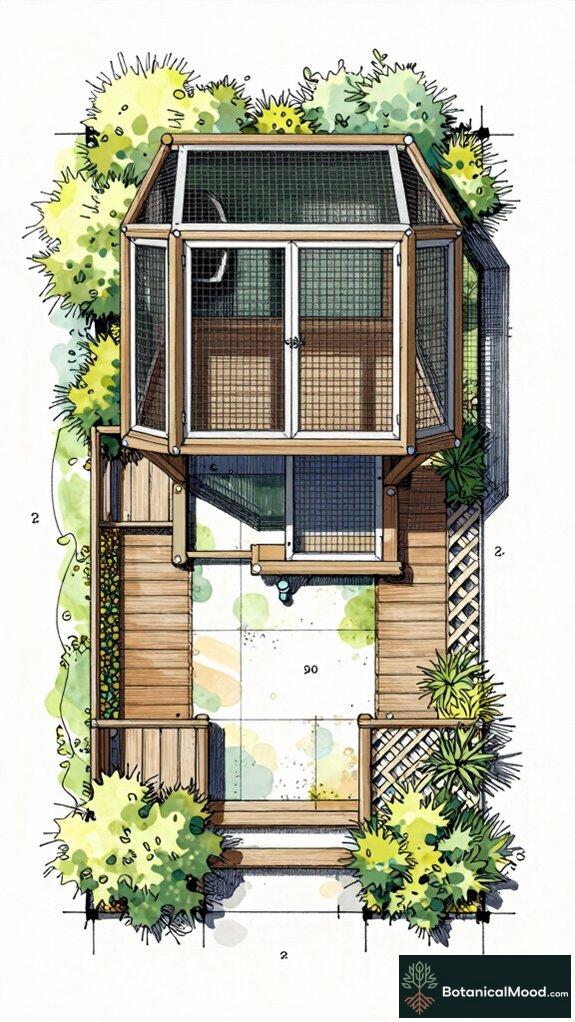
I’ll outline a compact, freestanding balcony catio that maximizes vertical airspace without compromising floor area, using pressure-treated lumber (PTH) joined with galvanized steel wire mesh in 2×2 and 2×3 configurations, so the frame remains modular, wind-resistant, and easy to assemble on-site with standard tools. A pet pool cover can provide similar weather protection principles for outdoor pet structures exposed to the elements.
- Multi level design ideas showcase scalable, DIY materials, including PTH beams, 14-gauge galvanized hardware, and 2×2, 2×3 mesh panels for predator-proof enclosures.
- On-site assembly emphasizes simple bracing, corner gussets, and on-wall anchoring for balcony safety.
- Materials selection covers weather-ready finishes, color-coordinated decks, and lattice accents for visual depth.
Cat Grass Planters Spotlight
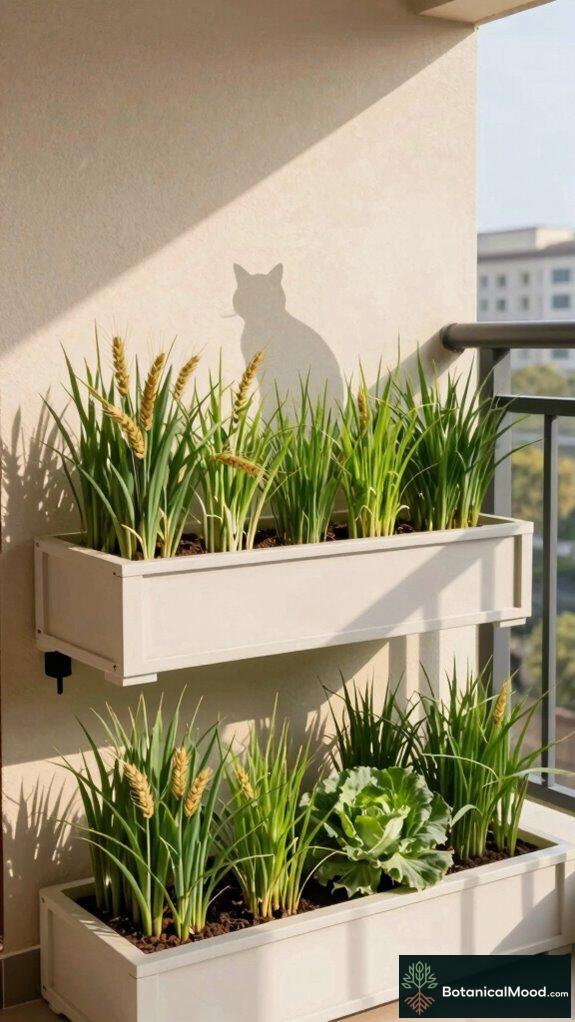
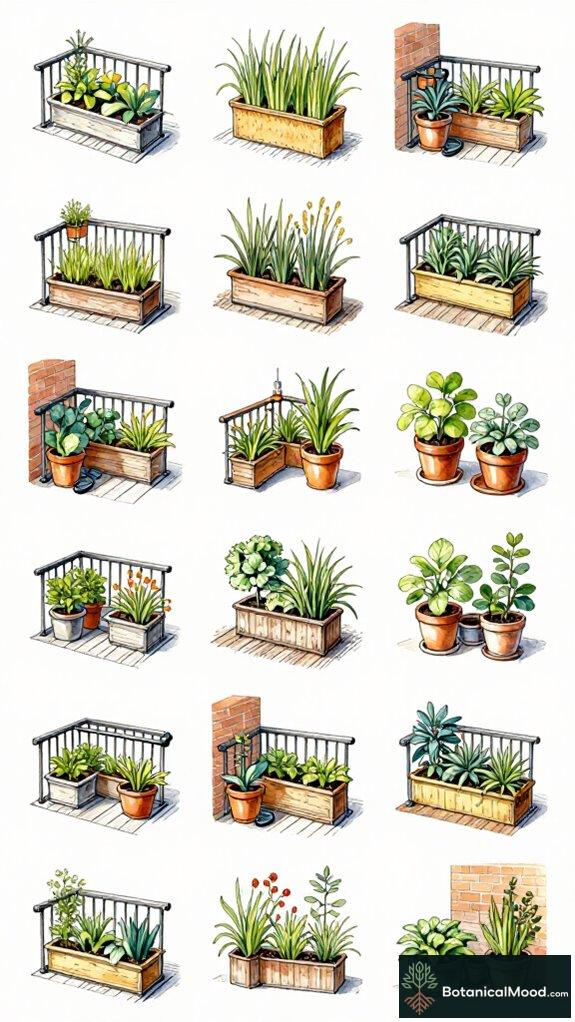
I equip balconies with compact, sun-loving cat grass planters that merge practical herbaceous greens with feline-friendly utility.
Readers, I invite you to explore cat grass types like Secale cereale (rye), Triticum aestivum (wheat), and Brassica oleracea var. capitata (cabbage) in resilient planter designs, using weatherproof coco coir inserts and BPA-free polypropylene pots.
For spacing, I favor modular planters from brands such as Bloem and JARDIN, sized 8x6x6 inches, with drainage saucers and micro-drip irrigation.
Position on rails to maximize sun exposure; rotate monthly for even growth, ensuring lush, nibble-ready textures against warm balcony walls. When selecting plants beyond cat grass, choose native plants safe for pets to ensure your feline friend remains protected from toxic species while enjoying outdoor enrichment.
FAQ
How to Budget for a Balcony Catio Project?
I’d start with a clear budget, then compare materials selection and costs, prioritizing durable, affordable options. I’d track hidden expenses and apply cost saving tips, like DIY assembly and reuse, while balancing safety and ventilation for my catio.
What Permits or HOA Rules Apply to Catios?
Symbolically, the fence is a heartbeat—local regulations pulse through my plan, guiding each step. I adhere to HOA guidelines and permits, staying intimate with rules so your catio’s walls stay legally safe and lovingly sturdy.
Best Plants Safe for Cats on Balconies?
Cat-safe plants I trust on balconies include cat friendly herbs like catnip and oregano, plus balcony friendly succulents. I’d mix, mulch, and sniff-test everything, inviting you to watch curiosity bloom while I keep her safe and entertained.
How to Clean and Maintain Balcony Catios?
I wipe away the dust like stars vanishing from a night sky, catio cleaning fading to calm. I share maintenance tips honestly, keeping bonds tight, revealing how routine care and mindful tissues shield paws, plants, and our intimate balcony sanctuary.
How to Prevent Wind-Related Damage to Structures?
I reinforce wind barriers around the catio and check anchoring weekly to guarantee structural stability, so you can trust me to shield our cats from gusts; together we safeguard comfort, calm, and intimate moments outdoors.