5 Stunning Blooms That Won’t Hurt Cats
I’m a cat‑mom who refuses to sacrifice style for safety.
I swapped lilies for roses, sunflowers, gerberas, snapdragons, and pansies—vet‑verified, non‑toxic beauties.
My paws‑guarded raised borders keep the critters safe, while lavender edging adds drama.
I label each cultivar with Latin names (Rosa, Helianthus, Gerbera, Antirrhinum, Viola) for bragging rights.
Petals? I scoop them up before the cats can turn them into confetti.
Ever wonder if a garden can be both chic and cat‑friendly? I’m still figuring it out—sometimes the wind blows a petal my way, and I laugh.
Garden Design Tips for Cat‑Safe Colorful Beds
I turned a dull patio into a cat‑approved oasis using raised beds, lavender borders, and a mix of sun‑loving flowers.
The beds stay tidy thanks to a drip‑irrigation system, and the cats love the soft mulch.
I added a trellis for snapdragons, which doubles as a climbing perch.
Mixing textures—smooth stones, rough bark—keeps the space interesting for both humans and felines.
A few strategically placed bird feeders distract the cats, letting the blossoms shine.
Quick Takeaways
- Choose cat-safe flowers like roses, sunflowers, gerberas, snapdragons, and pansies for stunning color without toxic risk.
- Avoid toxic lilies and tulips, which can cause vomiting, drooling, and serious systemic distress in cats.
- Use proper spacing and promptly remove fallen petals or blooms to reduce nibbling hazards.
- Label plants with Latin names and keep bouquets out of reach for safer indoor displays.
- Pair pet-safe blooms with safe herbs and tidy garden edging to balance aesthetics and cat-friendly maintenance.
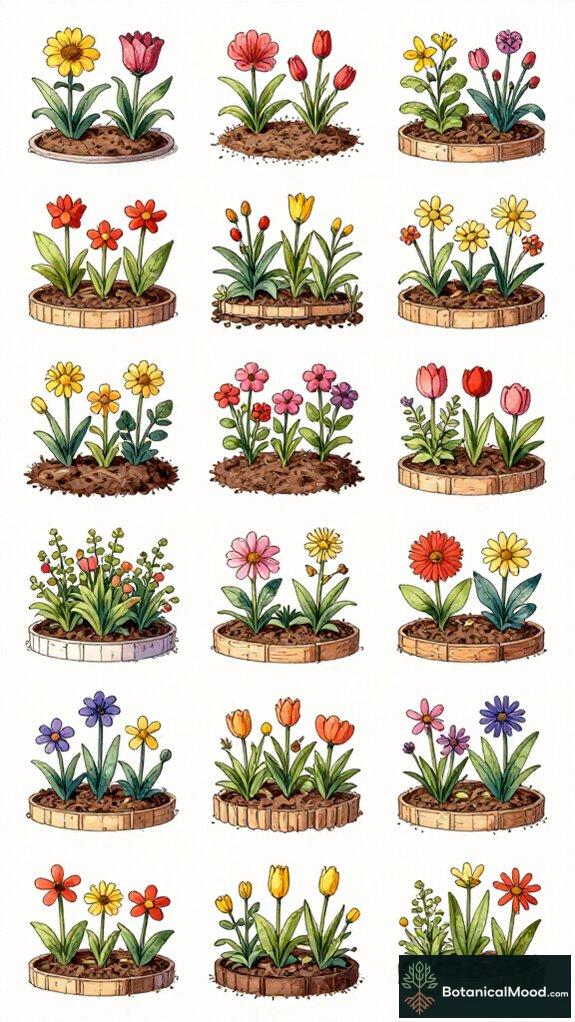
Avoid Toxic Flowers For Cats (Lilies, Tulips)
Before you plant for a cat-safe garden bed, you need to rule out a few high-risk ornamentals, especially lilies and tulips, because these bulbs and cut flowers can cause serious poisoning if your cat chews or ingests even small amounts.
I treat this as the first design constraint, because the toxic flower consequences aren’t just theory, they show up as vomiting, drooling, and systemic distress.
For innovation, I use smart labeling and physical zoning, placing dormant bulbs in sealed planters, then preventing feline exposure with raised beds, tight edging, and quick disposal of fallen petals.
Avoid (Lilium) and (Tulipa) entirely.
Choose Cat-Safe Flowers Like Roses And Sunflowers
When I design a cat-safe garden bed, I start with low-risk, non-toxic bloomers that still deliver strong color and structure, and that’s where roses (Rosa spp.) and sunflowers (Helianthus annuus) earn their place.
For you, cat friendly gardening means choosing petals and pigments that stay vibrant without adding toxic risk, so cats can roam near safe floral arrangements.
Roses bring layered hips and upright canes, sunflowers add tall, heat-tolerant heads, and both handle full sun, steady drainage, and mulched roots well.
Like dogs, cats benefit from gardens filled with non-toxic flower options that allow them to safely explore outdoor spaces without health concerns.
Native plants offer additional pet-safe alternatives that thrive in local growing conditions while providing natural beauty to your landscape.
I pair them with strict spacing, and I remove fallen blooms fast.
Plant Gerberas, Snapdragons, And Pansies In Beds
I like to plant Gerberas (Gerbera spp.), Snapdragons (Antirrhinum majus), and pansies (Viola tricolor var. hortensis) in the same cat-safe bed because they give me dense color, strong texture, and long-ish bloom windows with minimal risk, while still feeling cohesive in mixed borders.
I plan gerberas planting first, then I tuck in snapdragons for vertical spikes, and I finish with pansies as cool-season, edible edging that keeps color steady.
- Raised bed, well-draining compost, consistent spacing
- Sun to part sun, mulched crown area
- Moist, not soggy, watering cycles
- Snapdragons care: deadhead, cool temps, light feeding
Orchids That Are Safer For Cats (Names To Choose)
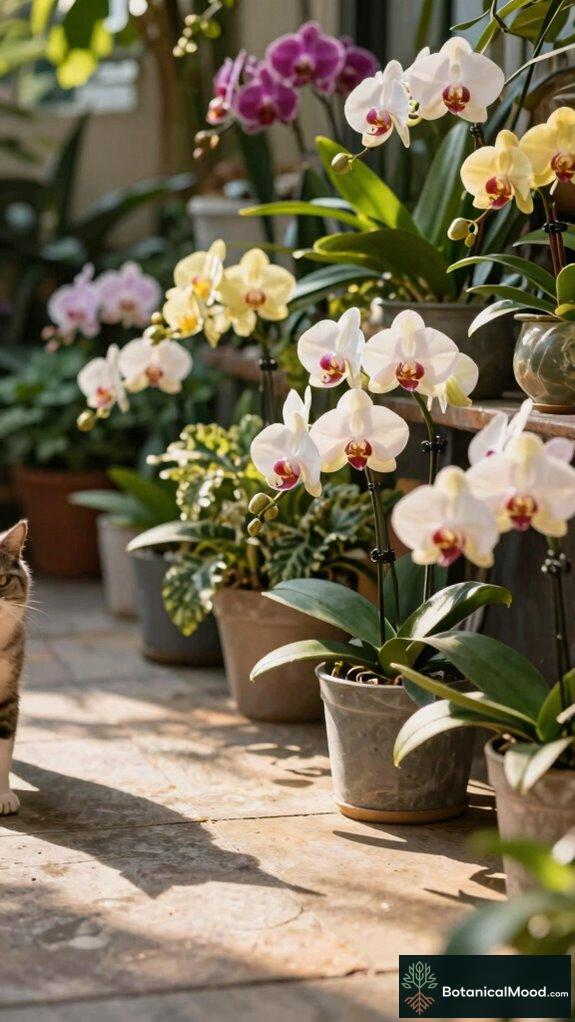
If you want blooms that feel refined, I recommend building your cat-safe bed or patio shelf around orchids that stay non-toxic, then choosing names you can actually identify at purchase, since labels and common names can drift.
For safe orchid varieties, I look for Phalaenopsis (Moth Orchid), Cattleya forbesii (Cocktail), Oncidium flexuosum (Dancing Doll), and Dendrobium gracilicaule (Leopard/Tiger).
On my tags, I prefer Latin in round brackets, so I can verify caring orchids at home.
I also keep pets away from bouquets, and I mist only the media, not leaves, to reduce nibbling temptations.
Grow Cat-Safe African Violets, Petunias, And Marigolds
A reliable trio for cat-safe, high-color impact starts with African Violets (Saintpaulia), petunias (Petunia spp.), and marigolds (Tagetes), because each species stays popular for both patio containers and garden beds, yet matches the everyday realities of watering, light, and soil.
I grow them for smart indoor care and reliable watering tips, so you get blooms without risky plants. These vibrant flowers complement winter-hardy succulents beautifully when designing a multi-season garden that remains safe for curious cats. Creating an enclosed space like a balcony catio enclosure allows cats to enjoy these pet-safe plants safely without access to toxic varieties.
- Use indirect light for (Saintpaulia), even moisture in well-draining acidic mix.
- Give (Petunia spp.) full sun, consistent moisture, avoid soggy beds.
- Water marigolds at the base, Tagetes in well-drained ground.
- Try Wave, Easy Wave, or Antigua Orange in containers for fast color.
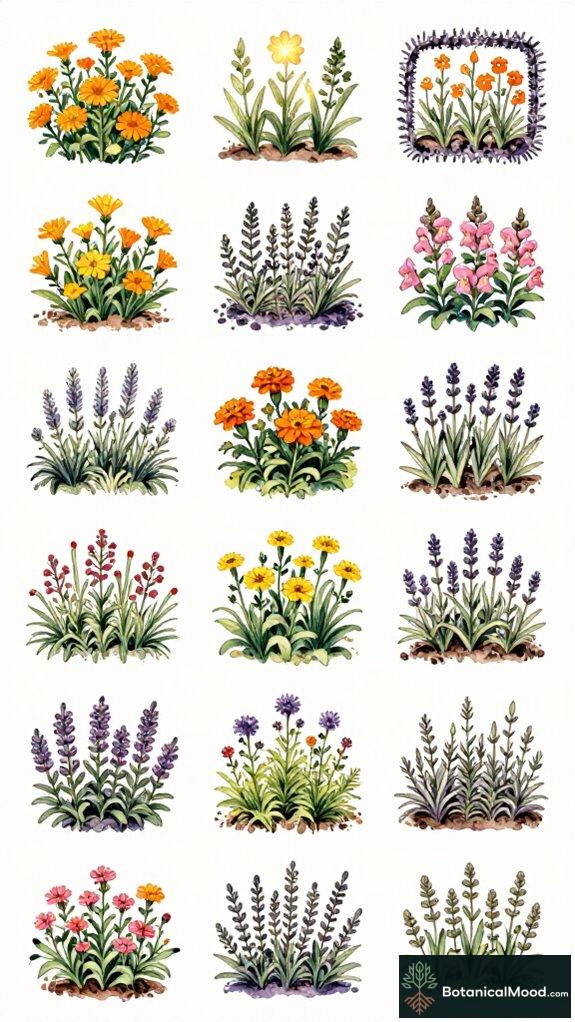
Raised Border Plan With Lavender
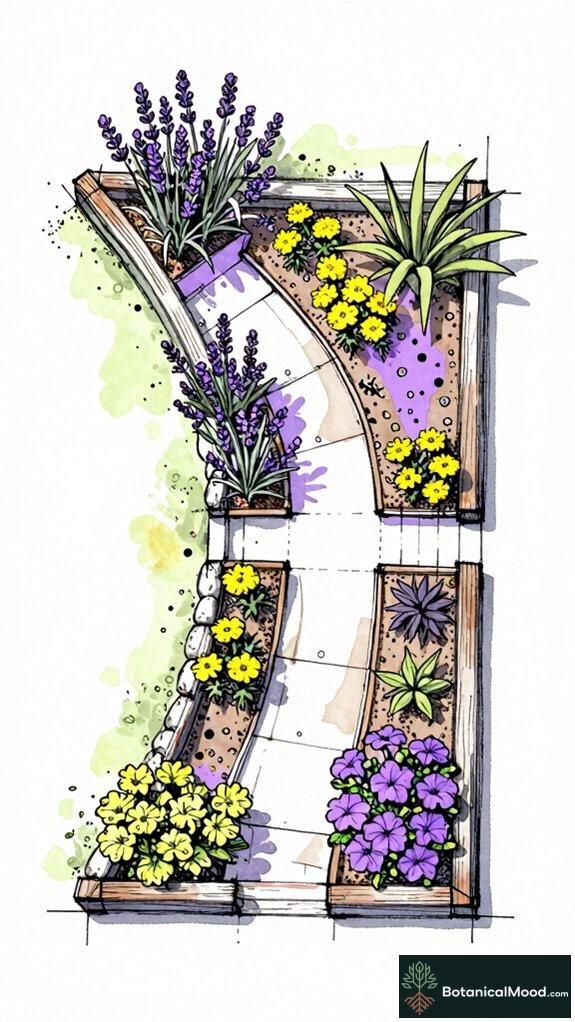
Building on your cat-safe color strategy from African violets (Saintpaulia), petunias (Petunia spp.), and marigolds (Tagetes), a raised border plan with lavender adds structure and a soft, purple rhythm along the edge of the yard, while keeping the planting palette intentionally non-toxic for curious cats.
I design the raised garden bed with stacked stone or cedar, then tuck English lavender beside petunias and marigolds, spacing by mature spread to prevent crowding and airflow issues. Dog-friendly lavender varieties like English lavender are also excellent choices for mixed pet households seeking plants that are safe across species.
Lavender benefits include a calming scent, plus natural pest deterrence, so your border stays cleaner with less intervention. The soothing properties of lavender can create a peaceful outdoor environment for your pets while simultaneously supporting their emotional well-being.
Related Pet-Friendly Garden Proucts

To keep your raised, cat-safe border looking intentional rather than improvised, I rely on a small set of pet-friendly garden products that support safe placement, predictable moisture, and tidy growth habits, starting with planters and supports that keep blooms within reach of your eyes but not of your cats’ chewing instincts.
- Raised planter liners to deter paw-borne soil, (Myosotis) style runoff control
- Drip lines with timers, consistent watering for African violets (Saintpaulia)
- Trellis netting for snapdragons, minimizing leaf contact (Antirrhinum)
- Compact, pet safe shrubs in buffered pots, like bottlebrush (Callistemon)
I also tuck cat friendly herbs close, so you can monitor what’s nibble-ready. For climbing plants, non-toxic jasmine varieties offer beautiful blooms that are safe for your feline friends to be around. When selecting garden plants, it’s essential to avoid toxic native plants that could pose serious health risks to your feline companions.
Sunproof Thyme Edging Blocks Pawprints
I keep the look of my cat-safe border consistent by adding sunproof thyme edging blocks along the front line, so the planting reads as intentional instead of just “stuff I set in place,” and it also gives my cats fewer soft targets to mouth. I like how these blocks support clean bed geometry, stabilize low-growing thyme (Thymus vulgaris) clumps, and deliver sunproof benefits in harsh afternoon glare, reducing scorch and patchiness; plus thyme maintenance stays simpler, because debris rolls off the hard edge, and mowing stays uniform. Thyme is one of the most versatile safe aromatic plants you can incorporate into a pet-friendly garden design. Similar to how underground waste digesters reduce environmental impact in pet spaces, these edging blocks create a contained, purposeful landscape that minimizes damage.
| Block role | What you notice |
|---|---|
| Radiant glare shield | Fewer leaf bleaches |
| Paw-guard line | Less nibbling |
| Maintenance step | Timing |
| Light shear | After first flush |
| Spot water | Base only, weekly |
FAQ
Are Cat-Safe Flowers Still Unsafe if Cats Chew Leaves?
Even if a flower’s listed cat-safe, chewing changes risk: watch cat behavior closely, because small bites can still trigger leaf toxicity if plants are mislabeled or those “safe” varieties were treated. Choose truly non-toxic plants and supervise.
Which Safe Flowers Attract Cats Most, and How Can I Deter Them?
I’ll be straight with you: cat friendly blooms can still tempt. Choose roses, sunflowers, gerberas, and marigolds, then deter feline attraction using citrus spray, thorny edging, and heavier mulch, plus supervised taste-testing. Keep lilies, tulips, and azaleas out.
What’s the Best Soil and Watering Routine to Prevent Toxic Runoff?
I’d use well-draining soil with organic amendments (compost, leaf mold) and drainage solutions like raised beds or grit. Water deeply, then let the top inch dry; avoid runoff by mulching and watering at the base, early.
Can I Grow Orchids Outdoors, and Which Ones Tolerate Cooler Climates?
Yes—you can grow Orchid varieties outdoors if you match your outdoor care to their needs. I’d prioritize cool-tolerant types like Dendrobium and Encyclia, then protect them from frost, wind, and soggy soil with shade and fast drainage.
Do Marigolds or Petunias Repel Pests Without Harming Cats?
Yes—marigolds and petunias repel pests without harming cats. Like a living decoy, marigold benefits deter aphids and mosquitoes, while petunia effectiveness attracts pollinators and resists troubles. I’ll choose well-draining soil and clean watering.
References
- https://catprotection.org.au/cat-care-factsheets/factsheet-cat-friendly-flowers/
- https://orchidrepublic.com/blogs/news/pet-friendly-flowers-cats-dogs
- https://www.lushanddew.com/blogs/gardening-instructions-tips/pet-safe-flowers
- https://www.preventivevet.com/pets/beautiful-pet-safe-flowers-for-home-and-garden
- https://ferrymorse.com/blogs/the-greenhouse/15-cat-friendly-plants
- https://www.aspca.org/pet-care/animal-poison-control/cats-plant-list
- https://www.greatgardenplants.com/collections/cat-friendly-plants