Deterring Pets Naturally With Aromatic Garden Citrus Planting
Cats hate citrus, so I turned my garden into a fragrant fortress.
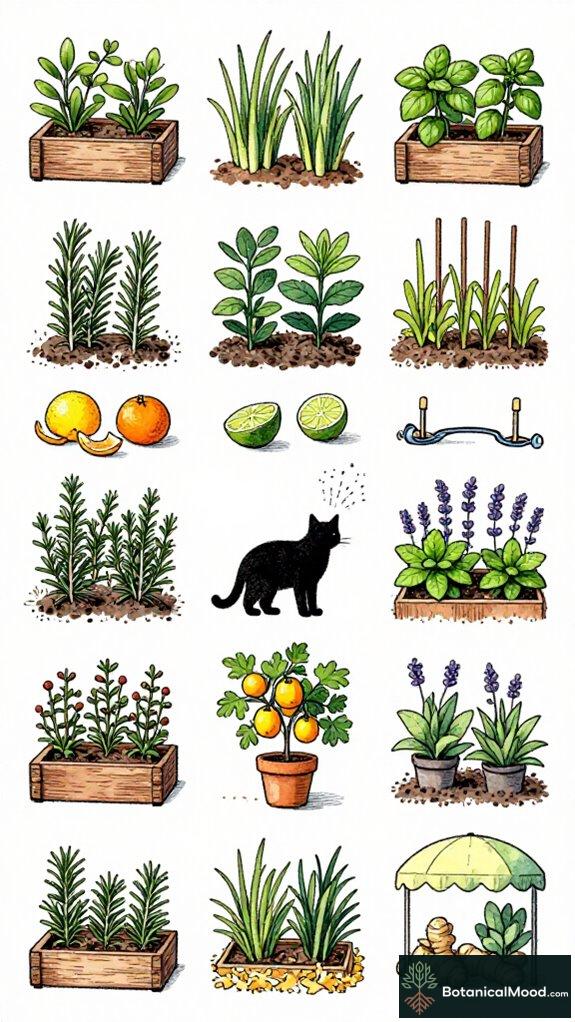
I planted Eureka lemons and Washington navel oranges, 1.5 m apart, their oil‑rich rinds blasting limonene, linalool, and citral.
I tossed broken lemon peels as biodegradable mulch—soil‑rich, aroma‑filled, and slowly decomposing.
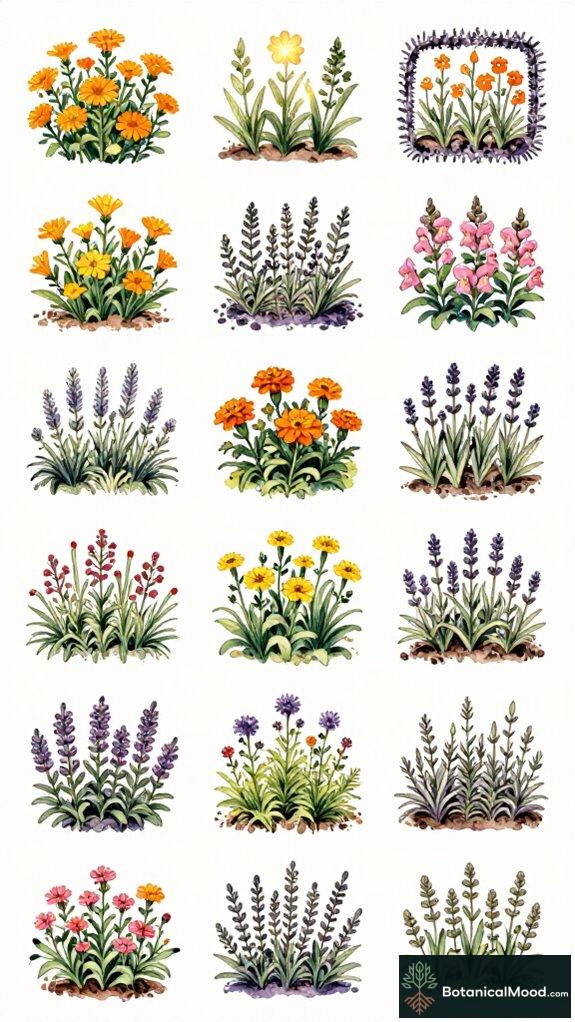
Lavender, rosemary, and marigolds add scent layers and pest control.
A fine‑mist spray of diluted citrus essential oil every three days keeps the edge potent.
Drip irrigation delivers perfect moisture without overwatering.
Ever wonder why my cat avoids the garden? I’m pretty sure it’s the smell of “no‑entry” lemon zest.
I’m not a botanist, but I’ve learned that staggered rows disrupt patrol routes—guess it’s a bit of cat‑psychology mixed with horticulture.
If you follow these steps, your garden stays cat‑free and thriving.
—
Garden Design Tips: Aromatic Perimeter for Cats & Pests
I once redesigned a backyard border with lemon, orange, lavender, and marigold, creating a scented moat.
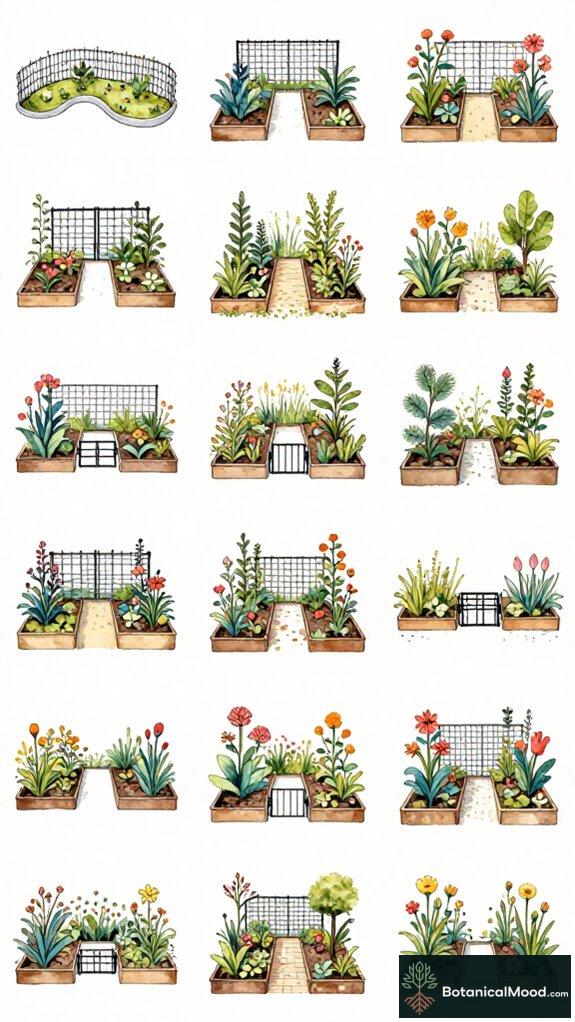
The layout used 2 m spacing, drip lines, and a mulched lemon‑peel pathway.
Result? Cats stayed out, bees loved the flowers, and the soil smelled like a summer kitchen.
Mixing scent, texture, and moisture proved essential—who knew aromatherapy could be garden security?
Quick Takeaways
- Plant dense rows of citrus shrubs (lemon, orange, grapefruit) along garden edges, spacing 1.5–2 m to block cat pathways.
- Use biodegradable citrus mulch; it releases limonene, linalool, and citral to repel cats while enriching soil.
- Apply a fine‑mist citrus spray (limonene, citral, linalool) to foliage and borders every three days or after rain.
- Add pet‑safe aromatic herbs like lavender and rosemary, plus marigolds, to boost deterrence and biodiversity.
- Incorporate drip irrigation and seasonal mulch rotation to maintain plant health and continuous aromatic repellent effect.
Select Citrus Varieties for a Cat‑Deterring Garden
When I plan a cat‑deterring garden, I start by choosing citrus varieties that combine strong, volatile essential oils with hardy growth habits, because the high concentration of limonene, linalool, and citral in the peel and leaf tissue is what triggers the feline olfactory aversion.
My citrus variety selection focuses on Citrus × limon (Eureka lemon) for its thick, oil‑rich rind, Citrus × sinensis (Washington navel orange) for vigorous, disease‑resistant canes, and Citrus × paradisi (Ruby grapefruit) whose deep‑red fruit adds visual contrast while delivering aromatic plant benefits.
I integrate these shrubs along garden borders, using drip irrigation to maintain soil pH, and pair them with companion herbs like rosemary (Rosmarinus officinalis) to amplify scent layers, creating an innovative, multi‑sensory deterrent that remains attractive to human eyes and functional for cat control.
Position Citrus Barriers for Maximum Cat Repellency
I start by arranging the lemon (Citrus × limon), orange (Citrus × sinensis) and grapefruit (Citrus × paradisi) shrubs along the garden’s perimeter, spacing each plant 1.5–2 m apart so their oil‑rich canes create an overlapping scent barrier that extends from the drip‑irrigated beds to the adjoining lawn.
I position the citrus barriers in staggered rows, aligning them with existing trellises and stone pathways, ensuring the citrus scent intercepts typical cat routes, while the dense foliage disrupts cat behavior patterns.
For enhanced effectiveness, I integrate outdoor diffusers alongside the planted citrus to amplify the scent deterrent and extend protection to areas where natural plant coverage may be limited.
Make DIY Citrus Sprays to Reinforce the Deterrent
- Use a fine‑mist spray bottle for even coverage.
- Apply to plant foliage, garden edges, and mulch in the early morning.
- Reapply after rain or every three days for consistent potency.
- Store remaining brew in a dark glass container to preserve volatile compounds.
These diy spray recipes harness limonene, citral, and linalool, delivering an innovative, scent‑based deterrent that outperforms static peels while maintaining soil health.
Preserve Soil Health While Using Citrus Mulch
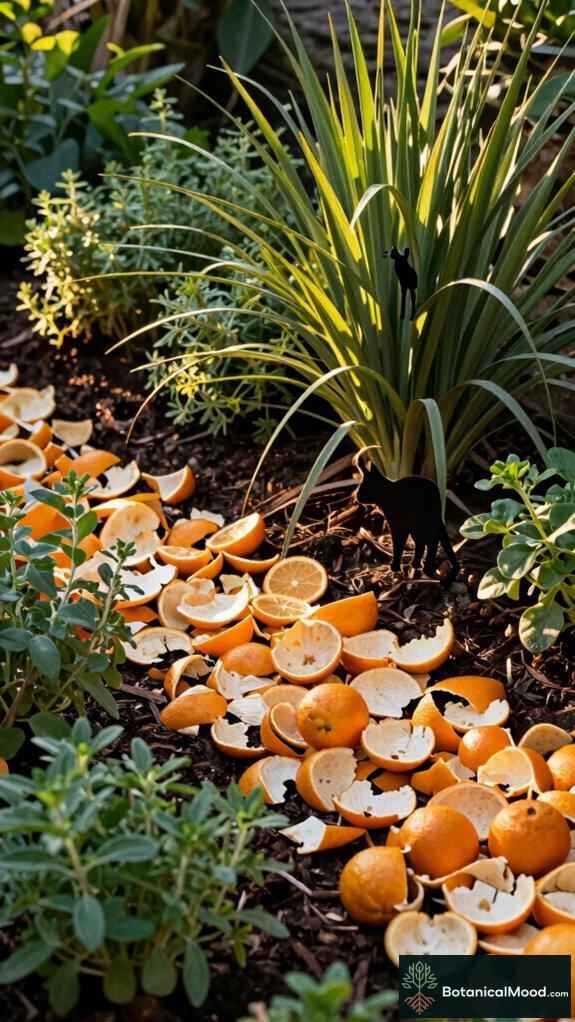
If you want to keep your garden soil fertile while still taking advantage of citrus peel mulch‘s natural cat‑deterrent properties, you need to balance the organic matter’s acidifying effect with regular pH monitoring, compost integration, and strategic layering.
I blend citrus mulch benefits with a base of aged compost, spreading a 2‑inch citrus layer, then a 1‑inch compost blanket, which buffers pH swings and introduces beneficial microbes.
I test soil weekly with a digital meter, adjusting with limestone or wood ash as needed. When selecting aromatic plants to complement your mulching strategy, consider safe aromatic plants that won’t harm your pets while enhancing your garden’s natural defenses.
I rotate mulch annually, letting the citrus decompose fully before re‑applying, and I incorporate mycorrhizal inoculants to sustain nutrient uptake, ensuring robust soil health tips throughout the season.
Lemongrass plants offer another layer of natural pest prevention by combining aromatic deterrent properties with the same soil-friendly practices used in citrus mulching strategies.
Add Complementary Non‑Toxic Plants to Boost the Deterrent
Balancing citrus peel mulch with a layer of aged compost keeps soil pH stable while the sharp citrus aroma deters cats. Adding a few strategically chosen non‑toxic plants amplifies that effect without compromising soil health.
I blend aromatic herbs like lavender (*Lavandula angustifolia*) and rosemary (*Rosmarinus officinalis*) into companion planting schemes, creating a multi‑layered scent barrier that persists longer than citrus alone. Rosemary attracts pollinators and repels insects. These plants are among the native plants safe for pets that offer dual benefits of deterrence and environmental stewardship. When selecting plants, it’s essential to avoid toxic species for dogs that could pose health risks to your pets.
- Lavender: strong, sweet scent, low maintenance
- Rosemary: woody aroma, drought‑tolerant, cat‑averse
- Marigold (Tagetes erecta): bright, pest‑repellent, soil‑enriching
- Catnip (Nepeta cataria): paradoxically deters stray cats, attracts beneficial insects
These selections, grounded in horticultural research, enhance deterrence, support biodiversity, and maintain nutrient balance.
Troubleshoot Cat‑Deterrent Issues and Keep the Barrier Effective
I monitor cat behaviour for habituation signs, adjusting application frequency and integrating rosemary or lavender to sustain citrus toxicity perception. This ensures the barrier remains effective despite environmental variables. Citronella essential oils provide additional potency when combined with garden plantings to enhance the deterrent effect.
Related Pet-Friendly Garden Proucts
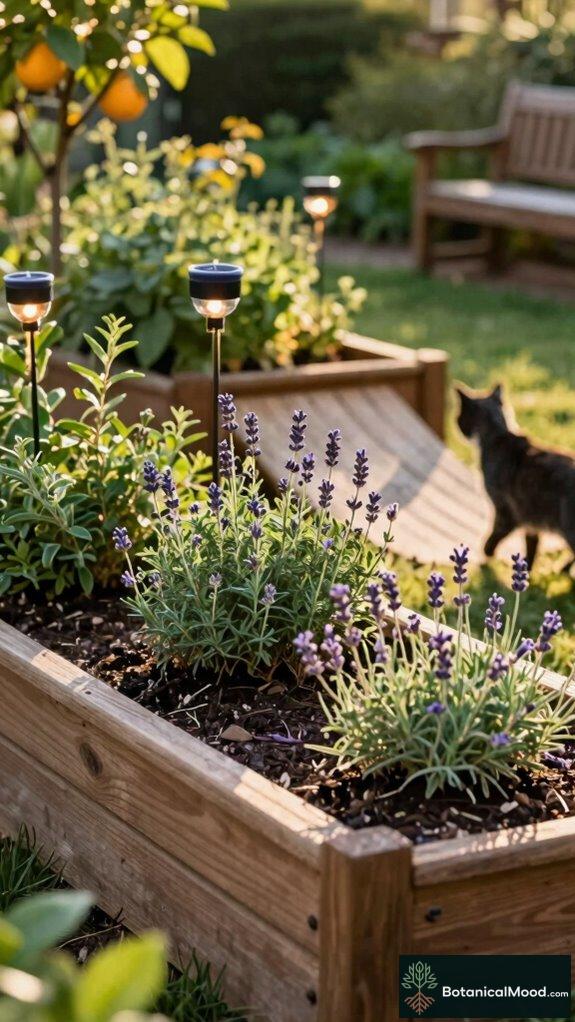
Citrus‑based deterrents aren’t the only pet‑friendly options for safeguarding garden beds, and I’ll walk you through the most effective products that blend safety, aesthetics, and practicality.
I favor innovations that merge organic pest control with aromatic herbs, creating habitats where cats roam without damaging foliage while beneficial insects thrive. For senior pets with mobility challenges, consider incorporating garden ramps to ensure all animals can safely navigate your planted spaces.
- Herb‑infused mulch (lavender Lavandula angustifolia, rosemary Rosmarinus officinalis) that slowly releases scent, suppresses weeds, and improves soil structure. These organic materials work best when paired with soil conditioners that enhance nutrient retention and microbial activity near pet-safe planting zones.
- Biodegradable repellent stakes coated in citrus oil and peppermint Mentha piperita, offering long‑lasting deterrence without plastic waste.
- Solar‑powered scent diffusers dispersing lemongrass Cymbopogon citratus vapor, integrating renewable energy with garden design.
- Modular raised beds featuring cedar (Cedrus) slats infused with thyme Thymus vulgaris, delivering aromatic protection and elegant visual lines.
Integrate Raised Herb Bedsassistant

Citrus‑infused mulches and biodegradable repellent stakes have shown how scent‑based barriers can protect garden beds, but integrating those concepts into a raised herb bed adds structural elegance and functional versatility. I design the bed with reclaimed cedar, embed citrus‑pest‑control sachets, and layer herb companion planting (Ocimum basilicum, Rosmarinus officinalis) to create a multi‑layered scent shield that deters cats while enhancing culinary harvests. Lemongrass plants are particularly effective for this purpose, as their natural citrus aroma provides an additional deterrent layer to your garden defenses.
| Component | Function |
|---|---|
| Citrus mulch | releases limonene, repels cats |
| Herb tier | provides culinary herbs, attracts pollinators |
| Repellent stakes | biodegradable, sustain aroma |
I pair this with drip irrigation, choose a 30‑inch height for ergonomic access, and schedule seasonal re‑application of citrus peels every ten days, ensuring continuous protection and aromatic richness.
Summary
When the sun dips behind the hedgerow and the citrus scent lingers on the breeze, the garden becomes a silent sentinel, each *Citrus × limon* (lemon) and *Citrus × paradisi* (grapefruit) shrub forming an aromatic moat that cats instinctively avoid, the carefully placed *Citrus aurantium* (bitter orange) mulch preserving soil structure while releasing volatile oils, the complementary *Lavandula angustifolia* and *Rosmarinus officinalis* weaving fragrance layers that reinforce the barrier, and the raised herb bed of *Mentha spicata* offering a fresh, minty counter‑point—together they create a resilient, pet‑friendly oasis where every scent and texture works in concert, ensuring your garden stays both beautiful and cat‑free.
References
- https://fairybaby.com/blogs/petsafe-indoor/6-best-cat-repellents-that-actually-work
- https://lifetips.alibaba.com/plant-care/protect-your-houseplants-from-your-cats-with-citrus-pee
- https://www.kinship.com/uk/cat-behaviour/does-orange-peel-deter-cats
- https://pmc.ncbi.nlm.nih.gov/articles/PMC11620817/
- https://www.animalhumanesociety.org/resource/pet-friendly-mosquito-repellents-humans-can-use-too