
Sustainable Landscaping: Transform Your Yard With Local Greenery
Transforming my yard with native plants, like Echinacea purpurea (purple coneflower) and Rudbeckia hirta (black-eyed Susan) was a brilliant idea!
Not only do they look fabulous, but they actually help the local bees and butterflies. Who knew I’d be part of a secret garden club?
By using drought-tolerant plants like Blue Oat Grass, I’m basically low-key saving the planet and my wallet.
Though let’s be real, navigating garden design can feel like decoding hieroglyphics sometimes – am I doing it right?
But trust me, if I can create a thriving ecosystem in my backyard, so can you!
My Garden Design Triumph: When Nature Does the Work
Last summer, I decided to dive into the world of sustainable gardening. I impulsively joined a workshop about native plants, hoping to spice up my dull yard. What a game changer! They suggested colorful natives that thrive on neglect, which is right up my alley!
Fast forward to a few months later: honeybees buzzing, butterflies dancing, and my neighbors marveling at my green thumb (okay, it’s more like a ‘green finger.’)
Exploring this new passion gave me an unexpected joy. Sustainability, beauty, and a flair for the dramatic—who wouldn’t want that in their yard? Plus, it sparked my curiosity about landscaping rhythm, plant diversity, and biodiversity. It’s wild how plants can connect us all!
Quick Takeaways
- Incorporate native plants to enhance local biodiversity, requiring less water and maintenance while supporting pollinator populations.
- Design garden layouts with varied heights and textures to create visual appeal and promote self-sustaining ecosystems through permaculture.
- Use drought-resistant species like California Poppy and Desert Marigold to conserve water and create a sustainable garden aesthetic.
- Enhance soil health and stability through deep-rooted native plants, improving nutrient cycling and water infiltration.
- Implement eco-friendly practices like drip irrigation and permeable pavers to reduce runoff pollution and improve water quality in landscaping.
Importance of Native Plants in Sustainable Landscaping
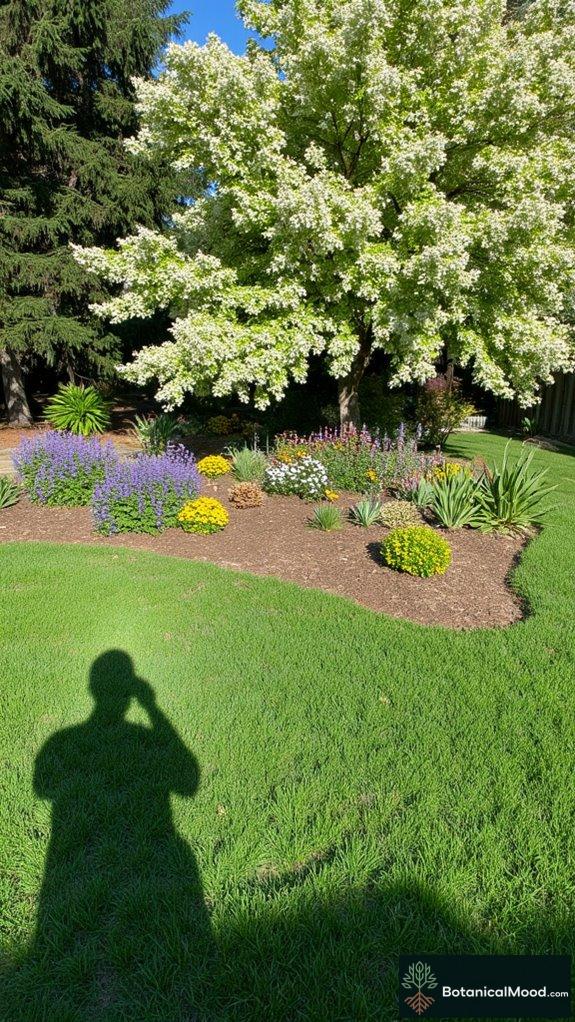
When one considers the essence of sustainable landscaping, it’s impossible to overlook the integral role that native plants play in crafting resilient ecosystems.
With their adaptability and innate ability to flourish in local conditions, native plants such as Echinacea purpurea (purple coneflower) and Rudbeckia hirta (black-eyed Susan) deliver numerous native plant benefits.
They require less water and fertilizer and are typically more resistant to pests and diseases, ensuring a harmonious balance in your garden. Additionally, native plants support a diverse pollinator community, which enhances the overall health of the ecosystem.
Enhancing Biodiversity With Local Flora

As we cultivate our gardens, the choice of local flora can considerably enhance biodiversity, fostering a thriving environment that supports both wildlife and the ecosystem.
By incorporating native plants like Echinacea purpurea and Asclepias tuberosa, we’re not just creating beautiful environments; we’re establishing pollinator gardens that attract bees, butterflies, and birds, filling our spaces with vibrant life.
Incorporating native plants enhances our gardens’ beauty while attracting vital pollinators like bees, butterflies, and birds.
These plants provide essential nectar and habitat, forging crucial habitat corridors that facilitate movement and interaction among various species.
Additionally, integrating companion planting strategies can further boost the overall health and yield of your garden’s ecosystem.
Imagine a garden alive with color, teeming with pollinators, all the while contributing to the ecological balance of our surroundings.
This is what inspires me as I share perspectives through Botanical Mood.
Together, let’s advance the power of native flora in our environments and nurture nature’s rich tapestry.
Water Conservation Strategies Using Drought-Tolerant Species
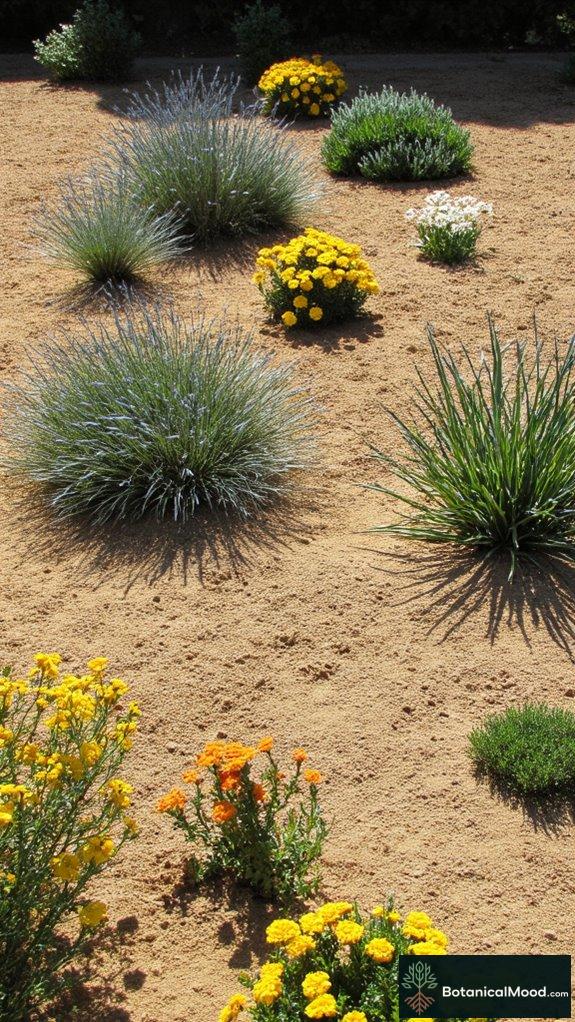
How can we transform our gardens into water-efficient sanctuaries while celebrating the beauty of nature? By adopting drought-resistant plants and leveraging xeriscaping techniques, we can create stunning, sustainable environments that thrive even in arid conditions.
Here’s a quick overview of effective drought-tolerant species to examine:
| Plant | Latin Name | Water Needs |
|---|---|---|
| Blue Oat Grass | Helictotrichon sempervirens | Low |
| Desert Marigold | Baileya multiradiata | Low |
| California Poppy | Eschscholzia californica | Moderate |
Improving Soil Health Through Native Plant Roots
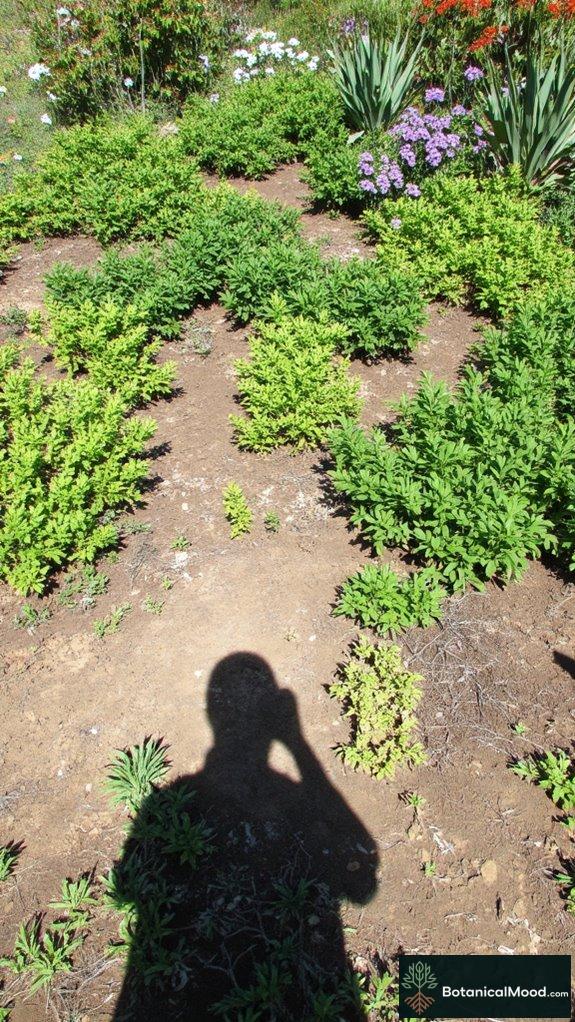
While many of us cherish the aesthetics of a vibrant garden, we often overlook the profound impact native plant roots have on improving soil health, which is essential for fostering a thriving ecosystem.
The robust root structure of native plants, such as *Echinacea purpurea* and *Asclepias tuberosa*, enhances soil stability and encourages nutrient cycling.
These deep roots penetrate the earth, aerating the soil and creating channels for water infiltration. Through their natural decomposition, they enrich the soil with organic matter, promoting an environment teeming with beneficial microorganisms.
Reducing Maintenance and Costs With Native Gardens

Creating a native garden not only enriches our surroundings but markedly reduces maintenance needs and costs; this dual benefit appeals to both budget-conscious homeowners and environmentally aware gardeners.
Embracing local flora means investing in cost effective maintenance, giving you a beautiful environment with less effort and expense.
Here are some striking native garden benefits:
- Low Water Requirements: Native plants thrive in local climates, needing less irrigation.
- Pest Resistance: They naturally repel pests, reducing the need for chemical interventions.
- Soil Health Improvement: Deep root systems enhance soil structure and fertility.
- Seasonal Interest: Year-round blooms and foliage add dynamic colors to your space.
Designing for Wildlife Habitat and Ecosystem Support

Enhancing our gardens to support wildlife habitats and ecosystems opens up a world of opportunity for creating beautiful spaces that blend seamlessly with nature.
By integrating native plants such as Echinacea purpurea and Rudbeckia hirta, we can foster crucial wildlife corridors that facilitate the movement of creatures like pollinators and small mammals.
These plants not only enhance aesthetic appeal but also provide essential ecosystem services, including natural pest control and soil enrichment.
Incorporating features like birdhouses and water sources attracts diverse species, enriching the garden experience.
Creating Year-Round Visual Interest in Your Landscape
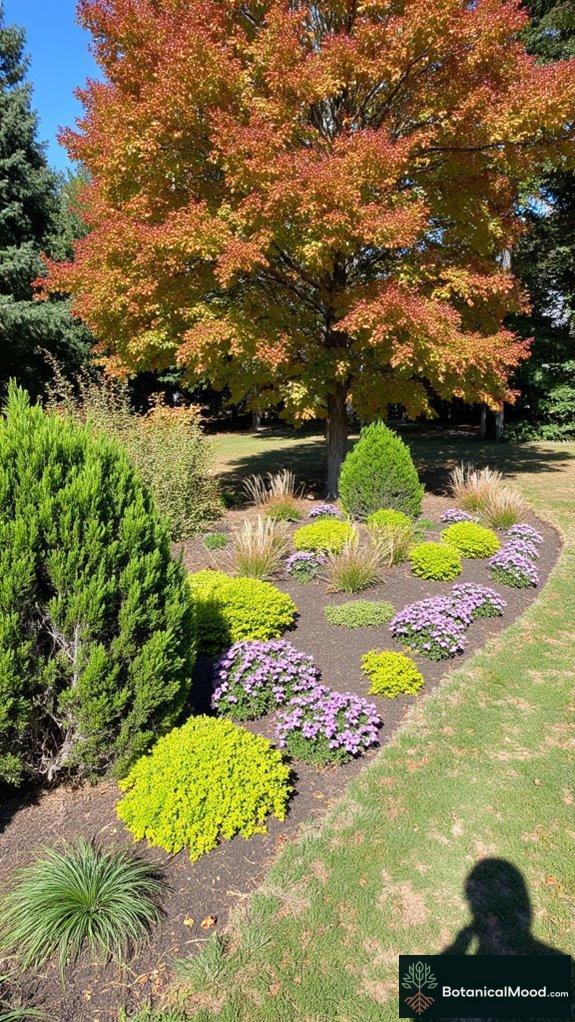
To maintain visual interest throughout the changing seasons, it’s crucial to thoughtfully select plant species that not only thrive in your local climate but also provide variation in texture, color, and form.
By incorporating plants that deliver year-round colors and seasonal textures, you’ll transform your setting into a dynamic masterpiece.
Consider these powerful design elements:
- Evergreen shrubs like Ilex crenata for reliable structure
- Deciduous trees such as Liquidambar styraciflua for stunning autumn hues
- Perennial flowers like Echinacea purpurea, providing vibrant summer blooms
- Ornamental grasses like Deschampsia cespitosa, enhancing movement and texture
Engaging these principles from local gardening resources can guarantee your setting captivates the senses, creating an environment where beauty thrives all year.
As you explore sustainable design, keep in mind that the right combinations empower your garden’s voice.
Essential Plant Compositions for Native Gardens

Gardening with native plants brings a vibrant and authentic charm to any environment, celebrating local flora while promoting ecological balance.
When designing your native garden, consider essential native plant combinations like Echinacea purpurea (purple coneflower) paired with Rudbeckia hirta (black-eyed Susan) for bold colors and attraction to pollinators.
Pairing grasses such as Schizachyrium scoparium (little bluestem) with low-growing groundcovers like Dichondra repens enhances visual interest year-round.
Utilizing effective seasonal planting strategies facilitates stunning blooms from spring through fall, creating a dynamic setting.
Incorporating layers of plants, from towering perennials to subtle undergrowth, invites depth and complexity to your garden.
Erosion Control Techniques With Native Vegetation

Soil erosion represents a significant challenge for many terrains, but using native vegetation offers effective solutions that foster both stability and ecological harmony.
By implementing soil stabilization methods and effectively managing invasive species, we can rejuvenate our environments.
Here are powerful erosion control techniques I’ve found invaluable:
- Deep-rooted native grasses: Such as Schizachyrium scoparium, they hold soil firmly in place.
- Perennial ground covers: Native plants like Fragaria virginiana create a dense mat, reducing runoff.
- Rain gardens: Designed to capture stormwater, they’re planted with local wetland species.
- Buffer strips: Incorporate native trees and shrubs to protect waterways and decreasing soil displacement.
Market Trends in Native Plant Landscaping
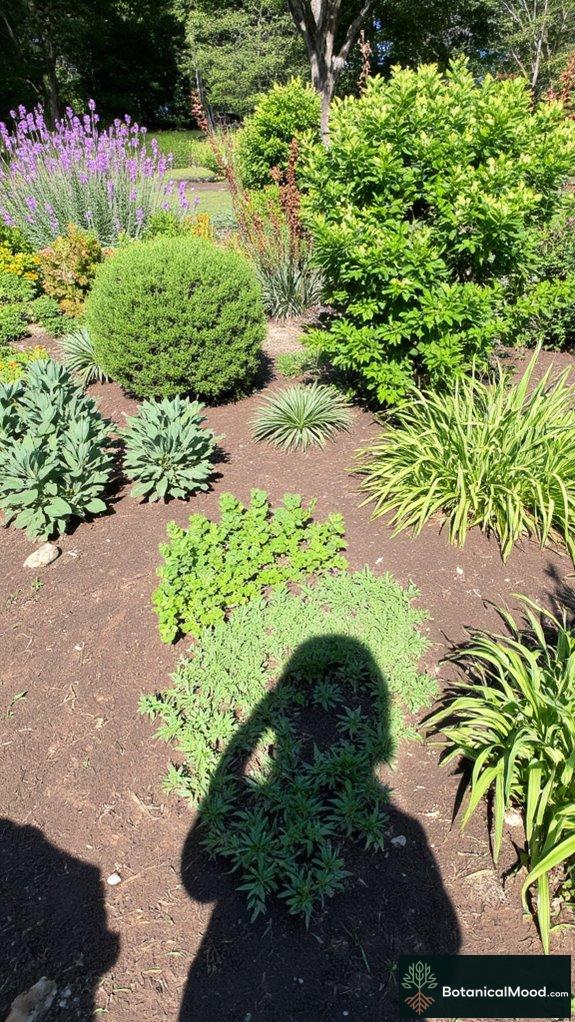
The growing interest in native plant gardening reflects a significant shift in consumer preferences toward sustainability and ecological responsibility. This rising market demand for local flora showcases an increasing awareness of the importance of plant diversity and its role in enhancing local ecosystems.
Homeowners are keen to connect with their environment by choosing species like Echinacea purpurea (Purple Coneflower) and Asclepias tuberosa (Butterfly Weed), which not only attract pollinators but also thrive with minimal resources.
Terrain architects like those at Native Land Design are championing these ethos, emphasizing compatibility with regional soil and climate.
As I curate content for Botanical Mood, I find inspiration in these trends, encouraging others to embrace beauty while fostering ecological balance through intelligent native gardening choices.
Inspiring Examples of Successful Native Plant Gardens

What makes a native plant garden truly exceptional?
The power of native garden aesthetics lies in its ability to create a stunning, environmentally sustainable environment. Engaging with local flora not only showcases the beauty of our region but also promotes biodiversity.
Here are some inspiring examples that can ignite your creative spirit:
- Pollinator Paradise: A garden filled with Echinacea purpurea and Asclepias tuberosa invites butterflies and bees, thriving through seasonal plant selection.
- Color Harmony: A blend of solidago (goldenrod) and rudbeckia (black-eyed Susan) creates striking visual contrasts year-round.
- Water Wise Design: Incorporating native sedges and rushes minimizes irrigation needs while enhancing moisture retention.
- Wildlife Haven: Including native shrubs like Symphoricarpos albus supports local fauna and enriches ecosystem health.
Transforming your yard with these elements yields a thriving, enchanting retreat.
Sustainable Garden Planning

Creating a sustainable garden involves more than just choosing plants; it’s about designing an ecology that thrives in harmony with local environments. By applying permaculture principles, I prioritize biodiversity, creating a self-sustaining system that resonates with nature’s rhythms.
In planning, I focus on sustainable materials, opting for recycled or reclaimed items in hardscaping. Incorporating native species, like Echinacea purpurea (purple coneflower) and Asclepias tuberosa (butterfly weed), not only supports local wildlife but guarantees low maintenance.
I also consider seasonal colors, interspersing vibrant blooms with lush foliage, creating an ever-evolving tapestry. This approach elevates the beauty of my garden while minimizing environmental impact, fulfilling my vision as someone passionate about eco-friendly design, just like the ethos behind Botanical Mood.
Native Plant Garden Design

How can we harness the vibrant potential of native plants to create a garden that not only captivates the eye but thrives in its environment?
Designing a native plant garden requires thoughtful consideration of seasonal colors and soil amendments to enhance the soil’s natural beauty and fertility. Here are key elements to focus on:
- Analyze soil type, pH, and drainage to meet plant needs.
- Group plants with similar sunlight and water requirements for peak growth.
- Incorporate layers of heights and textures for visual intrigue.
- Plan for succession blooming to guarantee year-round interest. Additionally, utilizing native plants can significantly reduce the need for water and pesticides, making your garden both beautiful and environmentally friendly.
Using these principles, you’ll create a stunning native plant garden that flourishes with minimal intervention, showcasing the exquisite diversity of local flora while promoting ecological harmony.
Eco-Friendly Landscape Arrangement
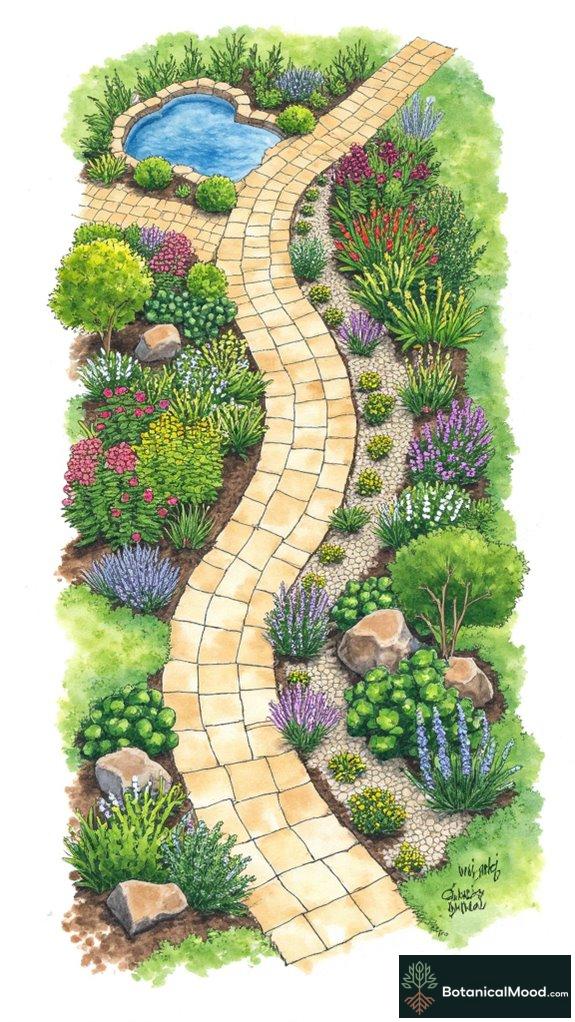
While designing an eco-friendly scenery arrangement, it’s essential to envision a harmonious blend of elements that prioritize sustainability without sacrificing aesthetic appeal. I often focus on creating a setting that minimizes water use and supports biodiversity through innovative irrigation solutions and sustainable maintenance practices.
Consider the table below to guide your arrangement choices:
| Element | Function | Benefit |
|---|---|---|
| Native Plants (e.g. Echinacea) | Provides habitat for local wildlife | Supports ecological balance |
| Rain Gardens | Filters stormwater before infiltration | Improves water quality |
| Drip Irrigation | Targets water delivery to roots | Enhances efficiency and conservation |
| Permeable Pavers | Enhances groundwater recharge | Reduces runoff pollution |
Creating an inviting outdoor space encompasses practical beauty while nurturing our environment.
Meet the Garden Designer

Meet Sarah Thompson from Portland, Oregon, whose love for nature blossomed during childhood hikes in the Pacific Northwest. This passion inspired her to create a sustainable garden that harmonizes with the local ecosystem.
To bring her vision to life, Sarah pursued a Bachelor of Science in Site Design and obtained her CGDMP certification. She navigated the garden design process by conducting a thorough site appraisal, evaluating soil and light conditions, and selecting native plant species to guarantee environmental sustainability and aesthetic appeal.
Using tools like a CAD software program from AutoCAD and accessories such as the WaterSmart irrigation system, Sarah collaborated with local horticulturists from the Oregon Museum of Science and Industry. Together, they cultivated a beautiful, sustainable garden that thrives year-round.
Iconic Botanical Gardens Nationwide

Gardens serve as remarkable spaces that encapsulate the beauty of nature, and iconic botanical gardens across the United States exemplify this notion.
These botanical treasures not only showcase stunning flora but also inspire sustainable practices in our own yards.
Here are a few standout gardens you shouldn’t miss:
- Missouri Botanical Garden (St. Louis, MO): A historic gem featuring an extensive collection of medicinal plants and a striking conservatory.
- Chicago Botanic Garden (Glencoe, IL): Home to over 2.4 million plants, recognized for its commitment to conservation and stunning bonsai trees.
- New York Botanical Garden (Bronx, NY): Spanning 250 acres, it includes themed gardens and an impressive conservatory.
- Fairchild Tropical Botanic Garden (Coral Gables, FL): Focused on tropical plant conservation with enchanting water features and a butterfly conservatory.
Exploring these gardens can transform our gardening philosophy and deepen our connection to nature.
References
- https://alluvialsoillab.com/blogs/soil-facts-3/native-plant-landscaping-and-soil-health-in-california-a-comprehensive-analysis
- https://blog.nwf.org/2023/04/plant-50-to-70-native-benefit-more-wildlife/
- https://paradisescapes.com/why-native-plants-are-the-sustainable-alternative-to-traditional-lawns/
- https://cognitivebehaviorallab.cals.ncsu.edu/wp-content/uploads/sites/171/2023/03/Rihn-et-al-2021-Investigating-drivers-of-native-plant-production-in-the-US-green-industry-Sustainability.pdf
- https://www.asla.org/sustainablelandscapes/gardengarden.html
- https://petruslandscape.com/gardening-statistics-in-2025/
- https://ucanr.edu/sites/default/files/2014-06/192025.pdf
- https://esajournals.onlinelibrary.wiley.com/doi/10.1002/ecs2.4360
- https://www.nar.realtor/magazine/real-estate-news/home-and-design/sustainable-spaces-landscaping
- https://gardenforwildlife.com/blogs/learning-center/native-plant-landscape-design-how-to-create-the-wildlife-garden-of-your-dreams
- https://www.monarchgard.com/thedeepmiddle/fundamentals-of-natural-garden-design
- https://grownative.org/learn/native-landscape-plans/
- https://www.prairienursery.com/media/pdf/designing-natural-landscapes-garden-design-with-native-prairie-plants.pdf
- https://www.nwf.org/Native-Plant-Habitats/Plant-Native/Ecological-Landscape-Design
- https://www.plantnovanatives.org/garden-design-tips
- https://www.cnps.org/gardening/native-design-basics
- https://www.npsot.org/posts/the-art-of-native-plant-landscaping-from-mistakes-to-mastery/
- https://classicnursery.com/blog/ecological-landscape-design/
- https://www.kglandscape.com/eco-friendly-landscaping
- https://crrhospitality.com/blog/eco-friendly-landscaping-techniques-for-rv-resorts/
- https://barefootgardendesign.com/eco-friendly-landscape-designs-2025/
- https://www.ralstonarchitects.com/eco-friendly-landscape-design/
- https://blog.landscapeprofessionals.org/eco-friendly-landscaping-techniques-for-landscape-professionals/
- https://www.youtube.com/watch?v=rn6utyrVC8A
- https://www.drabtofab.com/the-future-of-eco-friendly-landscaping-blending-aesthetics-with-environmental-impact
- https://aibm.us/certified-garden-design-and-maintenance-professional-cgdmp/
- https://www.asla.org/ContentDetail.aspx?id=12206
- https://www.indeed.com/career-advice/finding-a-job/how-to-become-landscape-designer
- https://draftscapes.com/how-to-become-a-professional-landscape-designer/
- https://perricogardens.com/gardenjournal/resources-for-aspiring-garden-designers
- https://www.theenglishgarden.co.uk/gardening-advice/how-to-become-a-garden-designer-with-pollyanna-wilkinson/
- https://www.dynascape.com/blog/how-to-become-an-expert-landscape-designer/
- https://mothernaturesapprentice.com/bucket-list-gardens-part-1-the-united-states/
- https://www.kremp.com/blogs/the-kremp-florist-blog/the-most-incredible-public-gardens-in-america
- https://whereangiewanders.com/50-most-beautiful-botanical-gardens-in-the-world/
- https://nebg.org/wp-content/uploads/2023/07/10-Best-Botanical-Gardens-In-The-U.S.-_-TravelAwaits.pdf
- https://en.wikipedia.org/wiki/List_of_botanical_gardens_and_arboretums_in_the_United_States
- https://www.botanicalartandartists.com/botanic-gardens-in-the-usa.html
- https://www.phipps.conservatory.org/press-room/press-releases/phipps-conservatory-and-botanical-gardens-makes-list-of-10-best-botanical-g


