7 Tasty Flowers for Your Garden Pets
Ever tried feeding your dog a flower? I did—once, and the pup loved the sweet, pesticide‑free bite.
I grow seven reliable blooms: Calendula, Viola (pansies & violets), Tropaeolum majus (nasturtium), Taraxacum officinale (dandelion greens), Cosmos bipinnatus, Zinnia elegans, and hardy Echinacea purpurea.
I use clean compost, drip irrigation, low‑dust mulch, and deadheading for steady color. Companion planting and targeted organic pest control keep the ecosystem stable.
I’m not a botanist, just a pet‑parent who turned a garden into a nibble‑friendly buffet.
Do you think a garden can be both pretty and pet‑safe? I’m still figuring out the balance, but the results are deliciously rewarding.
—
Garden Design Tips: Pet‑Friendly Flower Beds
I once rearranged my backyard after a curious rabbit chewed my lettuce. I swapped lettuce for nasturtium, added dandelion greens, and placed Cosmos for height. The rabbit stayed happy, the colors popped, and the soil stayed healthy.
Key tricks: use drip irrigation, low‑dust mulch, and deadhead regularly. Mix sun‑loving Cosmos with hardy Echinacea for year‑round interest. Companion plants like marigold deter pests naturally.
Result? A vibrant, pet‑approved garden that looks as good as it tastes.
Quick Takeaways
- Plant proven edible, pet-safe flowers like calendula, nasturtium, pansies, and violets in pesticide-free soil.
- Grow flowers organically using clean compost, drip irrigation, and targeted, minimal treatments only when necessary.
- Choose native or region-adapted varieties to reduce failures and avoid unsafe “mystery volunteer” plants.
- Create contained, low-dust grazing zones with edging and fencing to prevent trampling and digging.
- Design easy harvest patches with proper watering, deadheading, and mulch for healthy, continuous blooms.
7 Tasty Edible Flowers for Pets to Graze
When your pet looks for a tasty nibble in the yard, I start by designing a small, edible “grazing zone” with dog- and cat-safe blooms that are grown pesticide-free, because safety depends on cultivation as much as on botany.
I pair safe flower combinations like Calendula officinalis (marigold) with Nasturtium (Tropaeolum majus), then add pansies (Viola × wittrockiana) for spring-to-fall texture, and dandelions (Taraxacum officinale) for resilience. Selecting native plants for pets ensures you’re choosing species with established safety records in your region.
These choices deliver edible flower benefits—bright pigments, immune-support nutrients, and continuous pollinator traffic, while my border stays innovative, modular, and easy to replant by season.
Starting with native wildflower seeds ensures your grazing zone thrives with plants adapted to your local climate while maintaining the safety standards your pets deserve.
How To Pick Safe Edible Flowers for Dogs and Cats
Selecting edible flowers for dogs and cats starts with a simple rule I follow every time. I treat “edible” as a full label requirement for both the plant and my growing practices, not a guess from appearance.
For pet flower safety, I only choose known options like calendula (Calendula officinalis), pansy (Viola × wittrockiana), nasturtium (Tropaeolum majus), and violet (Viola odorata), each grown pesticide-free with clean compost and drip irrigation. I avoid florist bouquets, mystery volunteers, and thorns access points. These non-toxic flower options create a beautiful landscape that both you and your pets can enjoy. When designing my garden layout, I incorporate thorny defensive plants as natural barriers to keep pets away from any restricted areas while maintaining a safe edible zone.
When I vet sunlight and bloom timing, I maximize edible flower benefits. Plus, I keep harvests fresh, rinsed, and portioned for curious noses and paws.
Choose Calendula Petals for Easy, Pesticide-Free Grazing
Calendula (Calendula officinalis) petals make an easy, reliable choice for pet-safe “grazing” because they’re naturally non-toxic and openly edible, with bright yellow-to-orange daisy blooms that you can grow right in your own beds or containers without guessing.
I plant calendula for clear calendula benefits: consistent color, late spring through fall flowers, and an aromatic foliage presence that supports a tidy companion-plant design.
To keep it pesticide-free, I use row cover and check leaves weekly. As a living pest deterrent, calendula helps reduce pressure from sap feeders, so your pets can nibble calmly while pollinators do their rounds. Unlike synthetic turf alternatives, calendula provides natural durability while maintaining dog-safe landscaping standards for active pets.
Add Dandelion Greens and Blossoms for Gentle Daily Nibbling
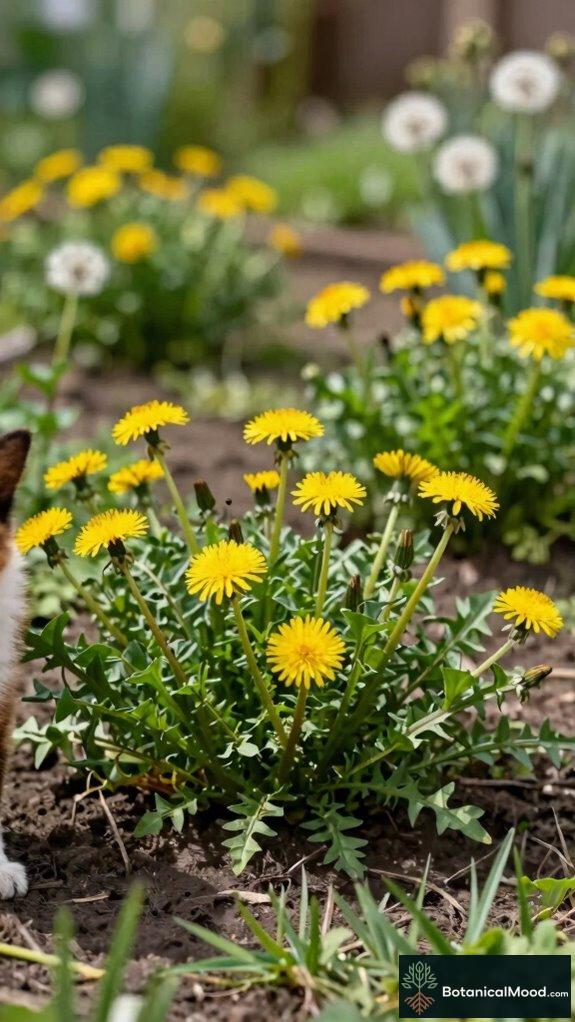
To give your pets gentle, daily grazing options, I grow dandelion greens and blossoms (Taraxacum officinale) right in a dedicated, pesticide-free patch, because the leaves and flowers are edible and generally safe for dogs and cats.
I harvest in the morning, rinse cool, then offer small pinches of tender rosette greens and a few open yellow heads, rotating locations so plants regrow.
You’ll notice dandelion benefits through steadier appetite and softer coats, and dandelion benefits plus daily nutrition from folate, carotenoids, and natural bitter compounds.
For innovation, I freeze chopped greens in silicone trays, thawing one cube at a time.
Grow Nasturtium Flowers for Bright, Vitamin-Rich Snacking
Nasturtium (Tropaeolum majus) gives you fast, edible color in a pet-friendly garden, so I seed it where your dog or cat can safely nibble—after you confirm it’s pesticide-free. For innovation-friendly snacking, I treat it as a living micro-harvest: blooms and young leaves taste peppery, and Nasturtium benefits include vitamin-rich nutrition for everyday foraging.
| Area | What to do |
|---|---|
| Containers | Use 10–12″ pots, full sun |
| Beds | Train trailing stems on trellises |
| Water | Keep soil lightly moist |
| Harvest | Pick flowers early morning |
My Growing tips: sow after frost, avoid heavy nitrogen, and mulch sparingly.
Plant Pansies and Violets for Pet-Safe Spring and Fall Bites
When you want a reliably pet-safe bite across cooler months, I plant pansies (Viola × wittrockiana) and violets (Viola spp.), because both deliver edible, garden-ready color in spring and fall without demanding exotic techniques.
For pansy care, I set them in bright morning sun with cool, moist soil and skip fertilizers with residues, then deadhead lightly to keep blooms cycling.
I prioritize violet benefits too: their delicate flowers stay tender, perfect for quick, pesticide-free pinches.
- Plant in fall for spring texture.
- Use mulch to moderate soil temperature.
- Water at the base, avoid leaf wetting.
- Harvest petals early, rinse, then share.
Pick Cosmos, Zinnia, and Echinacea for Colorful, Dog-Friendly Beds
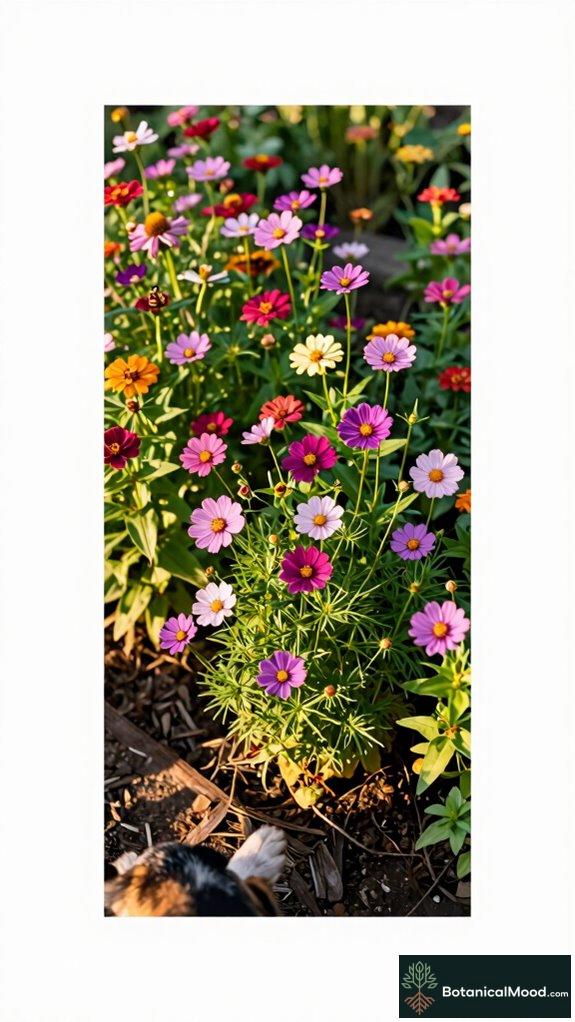
If you want a dog-friendly burst of summer-to-fall color, I start bed edges with cosmos (Cosmos spp.), zinnia (Zinnia spp.), and purple coneflower or echinacea (Echinacea purpurea), because all three stay reliably non-toxic for dogs and deliver that daisy-like, pollinator-attracting look without finicky care.
To innovate your palette, I layer combining colors in repeating drifts, pairing warm zinnia with airy cosmos, then anchoring the mix with echinacea’s sturdy umbels.
Plant in full sun, well-draining soil, and keep watering moderate; cosmos and zinnia bloom through heat, while echinacea carries color toward first frost, attracting pollinators all season long.
Companion Planting Beside Pet Pathways
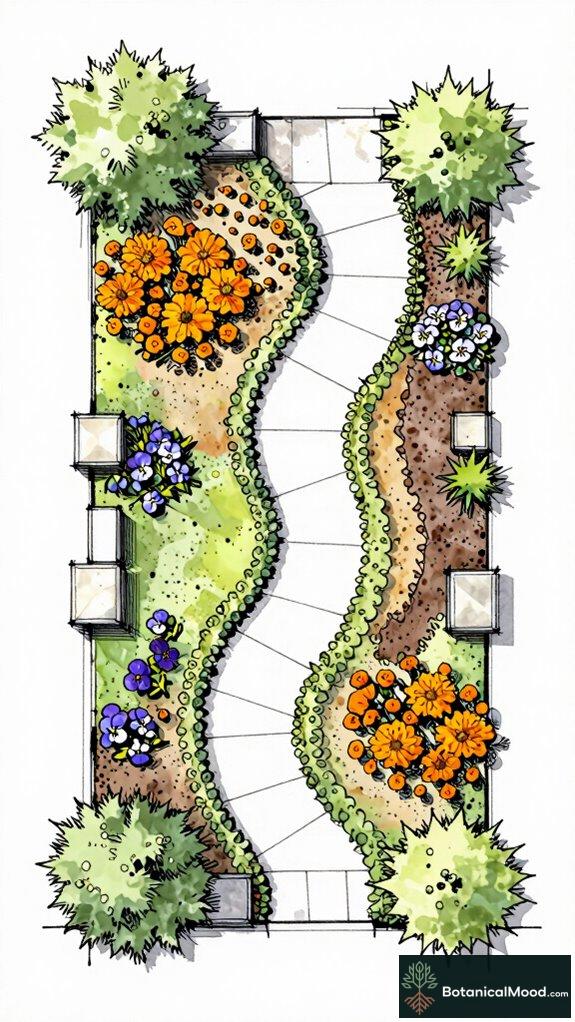
After you’ve nailed the cosmos (Cosmos spp.), zinnia (Zinnia spp.), and echinacea (Echinacea purpurea) color rhythm along the dog-friendly bed edges, I turn to companion planting beside pet pathways, where durable texture and predictable blooms help pets enjoy the route without turning it into a bare, weedy strip.
I interlace edible, non-toxic anchors—calendula (Calendula officinalis), nasturtium (Tropaeolum majus), pansy (Viola spp.)—with soil-binding companions, then mulch with coarse, low-dust chips for traction.
- Plant in staggered drifts, 10–14 in. spacing.
- Include marigold (Tagetes spp.) for pest disruption.
- Maintain pesticide-free beds for safety.
- Edge with groundcover for clean borders.
Related Pet-Friendly Garden Proucts
To keep pet pathways attractive and genuinely usable, I pair my color rhythm—calendula (Calendula officinalis), nasturtium (Tropaeolum majus), and pansy (Viola spp.)—with the right pet-friendly garden products, because the hardware and materials decide whether those edible, non-toxic flowers stay clean, low-dust, and reliable through traffic.
I choose pet safe fertilizers with slow-release organic inputs, like composted kelp or worm castings, so nutrient uptake stays steady without gritty residue. Dog-friendly flower fertilizers enhance color vibrancy while keeping your pets safe from chemical exposure.
For pest pressure, I switch to organic pesticides only when needed, selecting targeted soaps or neem-based formulas, never broad-spectrum dusts.
With drip lines and sealed edging, your blooms stay pristine.
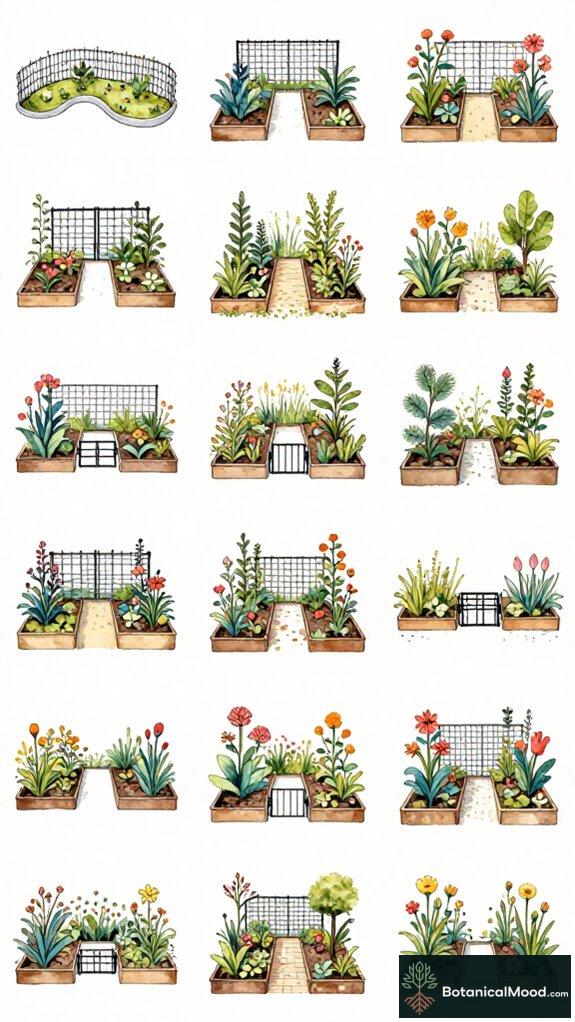
Establish Fenced Herb Beds
I recommend building fenced herb beds first, because a physical barrier keeps your dogs and cats from trampling tender seedlings, digging bulbs, and sampling leaves you planned for the kitchen or herbal tea blends.
For modern garden design, I treat this as a smart edge: a low, food-garden enclosure that still invites pollinators, sunlight, and airflow.
- Set posts 1.2–1.5m apart, then add welded wire or hardware cloth.
- Line beds with cardboard, top with compost and mulch.
- Plant herbs and companion flowers; keep spacing tight.
- Install removable gates for harvesting, and skip pesticides to stay pet-safe.
Rectangular planter boxes offer a practical alternative for balcony gardeners seeking contained herb growing spaces that naturally restrict pet access.
FAQ
Can My Dog and Cat Eat Flowers From the Same Bed Safely?
Yes, you can, if you pick compatible flower varieties that fit both your dog and cat’s pet preferences. I stick to pesticide-free calendula, nasturtium, pansy, and dandelion, and I avoid roses’ thorns and toxic blooms.
What Pesticide-Free Practices Keep Edible Flowers Safe for Pets?
I keep edible flowers safe for pets like a “natural fortress” by practicing pesticide-free flower garden maintenance: I compost feeds, hand-weeder, spot-spray only soap/neem-free options, cover soil with mulch, and verify every edible flower variety before letting pets graze.
How Much Edible Flower Should Pets Graze Daily Without Stomach Upset?
I’d start with grazing limits: offer only a few petals or a teaspoon per 10 pounds body weight daily, then increase slowly. I watch for loose stools. Rotate edible flower varieties, and skip any new variety for a full week.
Are Rose Thorns Harmful if My Pet Bites Flower Heads?
Yes—rose thorn safety matters, even if it’s just a nibble. I’ve seen pets get tiny punctures when biting flower heads. Rinse them, monitor for swelling, and keep thorns trimmed; for safe pet flower interactions, supervise.
Which Flowers Are Safest for Indoor Versus Outdoor Pet Nibbling?
I’d choose safe indoor flowers like African violet, pansy, and calendula; for outdoor pet safety, plant cosmos, zinnia, echinacea, nasturtium, and rose petals. Always grow pesticide-free and watch bites.
References
- https://blog.smokecampcrafts.com/what-edible-flowers-are-safe-for-pets-in-2025/
- https://www.rover.com/blog/safe-flowers-for-dogs/
- https://www.lushanddew.com/blogs/gardening-instructions-tips/pet-safe-flowers
- https://bokashiliving.com/creating-a-pet-safe-garden-a-guide-to-toxic-and-non-toxic-plants/
- https://www.preventivevet.com/pets/beautiful-pet-safe-flowers-for-home-and-garden
- https://ferrymorse.com/blogs/the-greenhouse/15-cat-friendly-plants
- https://www.joyceflorist.com/what-flowers-are-edible-for-people-and-pets/
- https://thegrowers-exchange.com/collections/herbs-safe-for-pets/edible-flowers