9 Charming Window Box Ideas for Coops
Ever tried turning a chicken coop into a garden runway?
I did, and the coops never looked so chic.
I’m stacking rosemary, lavender, and thyme (Thymus vulgaris) beside nasturtiums and marigolds, because who doesn’t love a splash of edible color? The tiered vertical boxes scream “max growth” while cedar with drainage holes whispers “I’m built to survive rain.” I’ve learned—daily watering during the first month, a summer boost, then a lazy winter pause—keeps everything thriving.
Do you worry about birds raiding your herbs? I’ve got pet‑safe herbs and non‑toxic petunias that keep the flock happy and the garden safe.
It’s not always straightforward; moisture, soil pH, and feathered foragers add complexity, but the payoff? A thriving, fragrant oasis that makes me smile every sunrise.
—
Garden Design Secrets: From Coop to Courtyard Oasis
When I repurposed my grandma’s old terracotta pots for a backyard coop, I discovered that color‑coordinated shutters and reclaimed picket fences can transform any space. I mixed succulents with lavender, added a drip‑irrigation line, and used reclaimed wood for a rustic vibe. The result? A low‑maintenance, aromatic retreat that attracted butterflies and kept the chickens curious. I learned that layering textures—smooth stone, rough cedar, bright marigolds—creates depth, while proper drainage prevents soggy roots. This hands‑on experiment taught me that a well‑planned garden design balances aesthetics, function, and the occasional feathered surprise.
Quick Takeaways
- Classic picket fence designs complement cottage-style coops while providing excellent air circulation for diverse plant arrangements.
- Terracotta pot displays enable easy seasonal plant swaps with rotating thrillers, fillers, and spillers throughout the year.
- Creative hanging planters with decorative shutters maximize vertical space and create vibrant focal points on coop windows.
- Aromatic perennials like rosemary, lavender, and thyme are chicken-resistant plants that enhance aesthetics while ensuring flock safety.
- Vertical tiered arrangements with layered heights and trailing spillers maximize planting capacity while adding visual depth and interest.
Why Window Boxes Matter in Chicken Coops
Window boxes—those charming planted containers nestled beneath coop windows—serve far more than an aesthetic purpose in chicken housing design.
I’ve discovered they’re transformative elements that enhance chicken coop aesthetics while creating intentional garden integration around your property.
These planted structures soften architectural lines, introduce color contrast through blooms like petunias and geraniums, and establish visual continuity between your coop and surrounding scenery.
Beyond beauty, they’re functional boundaries that protect plantings from foraging birds. Creative planter boxes offer strategic options for concealing coop structures while maintaining the visual appeal of your outdoor space.
Whether you’re installing terracotta pot boxes, picket fence designs, or cedar constructions with plastic liners, window boxes demonstrate how thoughtful garden planning elevates your homestead’s overall design cohesion and purposeful space utilization.
Classic Picket Fence Designs
Among the most visually striking and structurally straightforward designs I’ve encountered, the Picket Fence Window Box offers a quintessential charm that complements cottage-style and farmstead aesthetics alike.
I construct mine using twelve thin wood strips—paint mixing sticks from Lowe’s or Home Depot—attached securely to two horizontal boards, creating authentic picket fence aesthetics that enhance coop architecture.
This design delivers exceptional window box functionality through its open framework, promoting superior air circulation around trailing spillers and thriller plantings.
The latticed construction accommodates diverse plant arrangements, from cascading sweet potato vine (Ipomoea batatas) to upright geraniums (Pelargonium spp.), while maintaining accessibility for daily watering and seasonal shifts between seasonal annuals.
These charming window boxes integrate seamlessly with mobile chicken coop landscaping to create a cohesive farmstead aesthetic.
Terracotta Pot Displays for Easy Swaps
Swapping seasonal plantings doesn’t require reconstructing your entire window box—I’ve found that mounting a sturdy board with three pre-drilled holes creates the perfect framework for interchangeable terracotta pots, allowing you to rotate throwers, fillers, and spillers based on seasonal availability and aesthetic preference. When selecting window box brackets, prioritize sturdy construction that can support the weight of multiple terracotta pots throughout the year.
| Season | Thriller Plant | Filler Plant | Spiller Plant |
|---|---|---|---|
| Spring | Salvia (Salvia splendens) | Pansies | Sweet Potato Vine |
| Summer | Geraniums (Pelargonium) | Marigolds | Nasturtiums |
| Fall | Pineapple Sage | Kale | Trailing Thyme |
| Winter | Lavender | Rosemary | Oregano |
The terracotta color naturally complements coop architecture while offering superior pot durability through seasonal shifts, making this modular system an innovative solution for dynamic garden design.
Bright Shutters With Hanging Planters
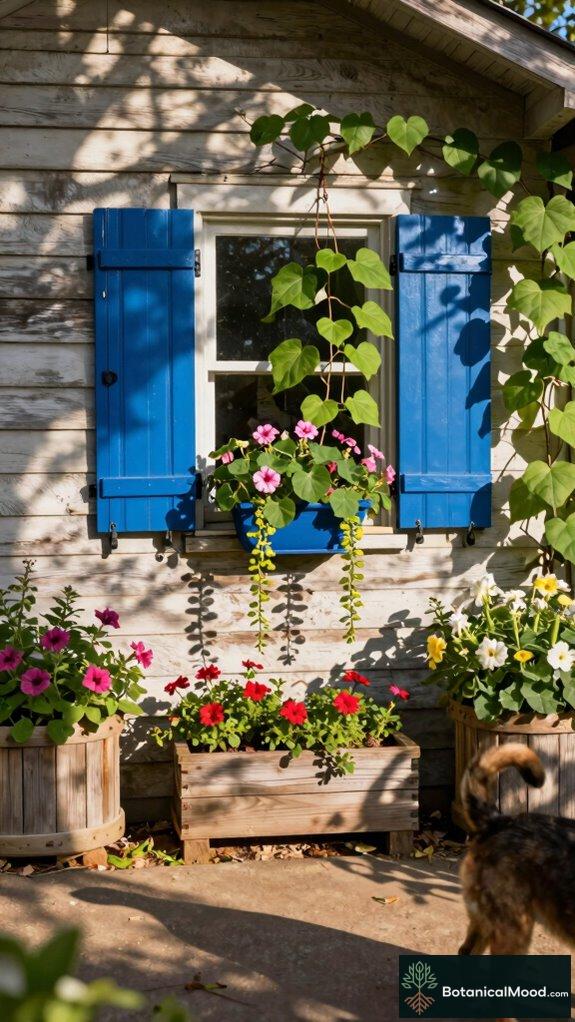
Two functional design elements—bright blue shutters paired with hanging flower pots—transform your coop’s window into both a protective feature and a vibrant focal point.
I’ve found that decorative shutters provide storm protection while establishing visual interest, creating dynamic contrast against weathered coop siding.
Your hanging planters showcase cascading spillers like sweet potato vine (Ipomoea batatas) and trailing nasturtiums (Tropaeolum majus), while thriller plants command attention above.
This layered approach maximizes vertical space, reduces predator access to plantings, and simplifies daily watering rotations.
Cedar construction with plastic liners guarantees durability against moisture damage, while strategic placement optimizes sunlight exposure for thriving blooms throughout growing seasons.
DIY Scrap Wood Builds on a Budget
When you’ve got leftover lumber and a vision for affordable coop aesthetics, scrap wood window boxes deliver maximum impact without straining your budget.
I’ve found that reclaimed materials—coupled with strategic design—create weatherproof planters rivaling commercial options. BEAR VIEW LLC’s ultimate DIY approach demonstrates this perfectly: rip 2x4s to 1.5 inches, join frames with pocket holes, add plastic inserts, and install cross hatches for structural integrity.
This budget designs methodology transforms discarded wood into functional art. Michelle and Joe’s accessible scrap wood builds prove innovation thrives on resourcefulness.
Line your box with plastic, install drainage holes, and you’ll cultivate thriving thriller-filler-spiller arrangements (featuring petunias and zinnias) while protecting against rot and rust.
Choosing Plants Chickens Won’t Destroy
Once you’ve constructed your weatherproof scrap wood box and lined it with plastic for durability, you’ll face a fundamental challenge: your chickens will view your carefully planted window box as an all-you-can-eat buffet unless you select species they’ll actively avoid.
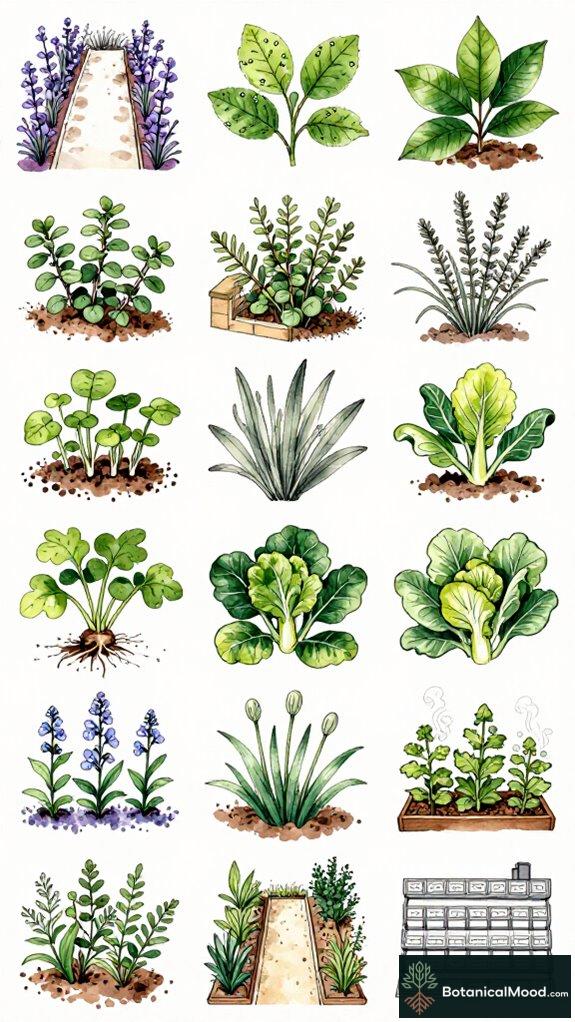
I’ve discovered that chicken resistant herbs like rosemary (Rosmarinus officinalis), sage (Salvia officinalis), lavender (Lavandula angustifolia), and thyme (Thymus vulgaris) thrive while remaining untouched by foraging birds. These aromatic perennials offer dual benefits: ornamental appeal paired with culinary utility.
Meanwhile, edible flowers such as nasturtiums (Tropaeolum majus) and marigolds (Tagetes spp.) add vibrant color without attracting destructive pecking, creating innovative, functional garden displays. When selecting plants for pet-accessible areas, prioritize native plants safe for backyard pets to ensure your flock remains healthy alongside your decorative plantings.
The same principle of natural deterrents applies across different poultry and garden scenarios, making strategic plant selection your most effective defense against unwanted foraging.
The Thriller-Filler-Spiller Approach
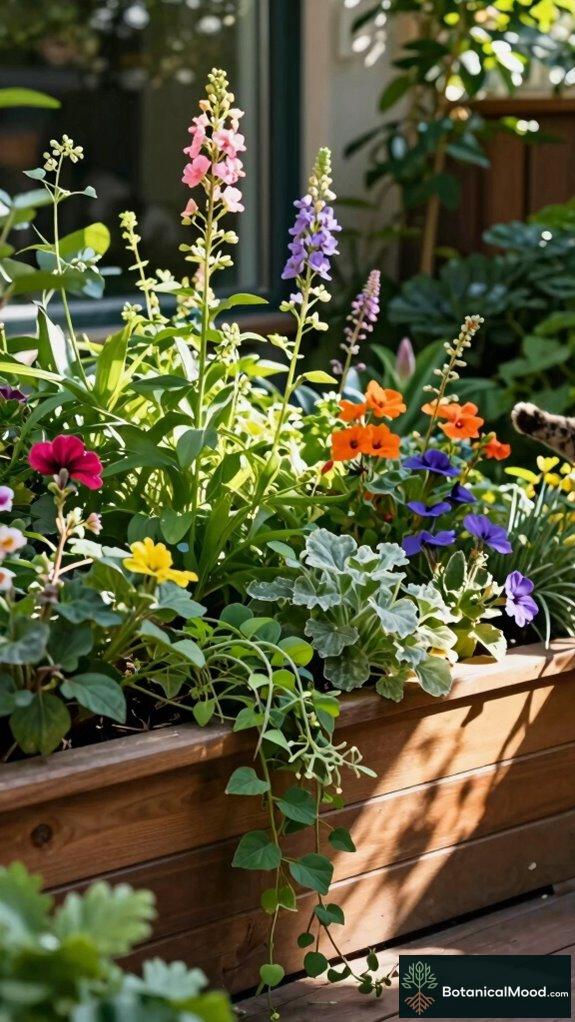
The thriller-filler-spiller framework—a design principle borrowed from traditional container gardening—transforms your chicken coop window box into a visually compelling composition with structural depth and seasonal interest.
I’ve found this innovative layering technique creates immediate visual impact while maximizing limited planting space.
- Thriller plants anchor your design with height, featuring geraniums, salvias, or pineapple sage (Salvia elegans) reaching 12-18 inches.
- Filler options bridge the gap with begonias, impatiens, and marigolds providing dense color contrast.
- Spiller choices cascade frontward—sweet potato vine or trailing nasturtiums soften edges.
- Design balance emerges through strategic color contrast and staggered heights.
This approach delivers professional-caliber aesthetics while maintaining functional chicken-proof protection.
Installation and Rot Prevention
After you’ve layered your thriller, filler, and spiller plants into your window box composition, securing that box to your coop’s exterior becomes equally critical as the design itself.
I recommend utilizing rot resistant materials—cedar boxes paired with plastic liners and plywood backers—to combat moisture damage and rust development. Secure installation requires fastening boxes firmly beneath windows using rust-proof hardware, ensuring structural integrity against weather exposure.
Drainage holes prove essential, preventing water accumulation that deteriorates wood and metal.
Line all interior surfaces with quality plastic, creating moisture barriers that extend box longevity while protecting your coop’s wooden siding from decay and structural compromise. For plants thriving near your coop, consider incorporating soil conditioners to enhance nutrient content and support robust growth in window box environments.
Seasonal Watering and Care
Since your window box plants—begonias, geraniums, impatiens, petunias, and trailing sweet potato vine (Ipomoea batatas)—establish themselves in confined root spaces with limited soil volume, I’ve found that consistent watering becomes your most critical maintenance task during the establishment phase.
- Water daily for the first few days after planting to encourage root development.
- Adjust your watering schedule seasonally, reducing frequency during cooler months.
- Monitor soil moisture before watering; container drainage holes prevent root rot.
- Increase hydration during summer heat when soil temperature swings accelerate evaporation.
Spring through fall demands vigilant attention, while winter requires minimal intervention for dormant plantings. For added comfort during hot months, consider pairing your window boxes with fast-growing shade trees nearby to reduce heat stress on your coop plants.
Vertical Tiered Planter Arrangements
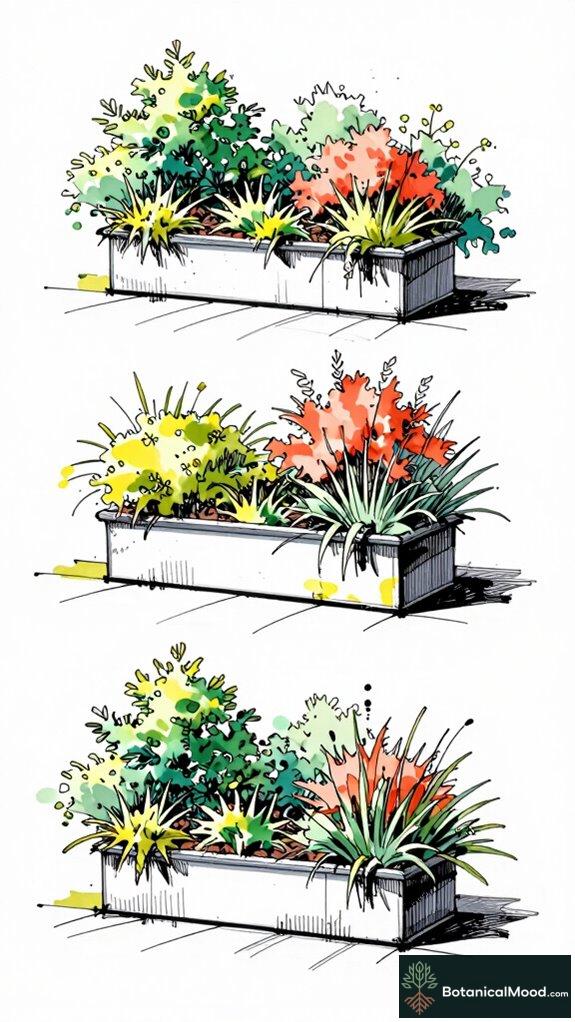
Building vertical tiered arrangements into your coop’s window boxes transforms limited horizontal space into a dynamic, multi-level display that maximizes both visual impact and growing capacity.
I’ve found that vertical gardening strategically layers plants at ascending heights, creating visual depth while optimizing sunlight exposure for each specimen.
Tiered arrangements position thriller plants—like tall geraniums or pineapple sage—at back tiers, colorful fillers—begonias and marigolds—in middle sections, and trailing spillers—sweet potato vine or nasturtiums—cascading forward.
This three-dimensional approach enhances your coop’s aesthetic appeal while accommodating diverse plant requirements within compact window box dimensions.
Pet-Safe Window Box Plants
When you’re cultivating window boxes for your chicken coop, selecting plants that won’t harm your feathered flock becomes just as essential as choosing aesthetically pleasing specimens.
I’ve found that pet-safe herbs and non-toxic flowers create both beauty and security around your coop environment. Many of the same non-toxic plant principles that apply to keeping cats safe also benefit chickens and other backyard pets. Beyond visual appeal, these plants can also serve as aromatic enrichment options that encourage natural foraging behaviors in your garden.
Here’s what I recommend:
- Culinary herbs: Rosemary, thyme, sage, oregano, mint, lemon balm
- Non-toxic flowering options: Petunias, marigolds, zinnias, nasturtiums, pansies
- Edible ornamentals: Kale, sweet potato vine (Ipomoea batatas)
- Aromatic selections: Lavender, salvia, pineapple sage
These selections thrive in window boxes while remaining completely safe should your chickens nibble nearby foliage, creating innovative garden solutions.
Building Coops With Window Boxes
Once you’ve selected your pet-safe flora, I’d recommend constructing sturdy window boxes that’ll withstand the unique demands of coop environments.
You’ll want to secure metal or wood boxes beneath windows using pocket holes, plastic liners, and drainage holes to prevent rot and rust deterioration. Cedar construction paired with plywood backers offers superior durability and weatherproofing for chicken coop aesthetics. Recommended cedar window boxes combine beauty with structural strength to protect your planting investments.
This window box functionality enhances both visual appeal and practical planting capacity, allowing you to maximize growing space while maintaining structural integrity against moisture exposure and temperature fluctuations that characterize outdoor poultry housing installations. Cedar window boxes provide a charming yet practical solution that combines aesthetic appeal with the durability needed for coop environments.
FAQ
What Size Window Box Dimensions Work Best for Standard Chicken Coop Windows?
I’d recommend matching your window box’s ideal dimensions to your coop’s frame—typically 24-36 inches wide works best. This sizing delivers maximum aesthetic appeal while ensuring secure installation and adequate soil volume for thriving plants that’ll elevate your coop’s visual impact.
How Often Should Drainage Holes Be Cleaned to Prevent Pest Infestations?
I’d recommend checking your drainage holes weekly for ideal pest prevention. You’ll want to clear debris monthly during growing season—this drainage maintenance stops mosquitoes and insects from breeding in standing water near your coop.
Can Window Boxes Be Installed on Coops With Curved or Angled Walls?
You can absolutely install window boxes on curved or angled walls—I’d recommend using curved installations with flexible mounting brackets and angled adaptations with adjustable hardware. Custom framing opens innovative design possibilities for your coop’s unique architecture.
What’s the Cost Difference Between Cedar and Scrap Wood Box Construction?
Cedar boxes’ll cost you more upfront—that’s money in the bank for longevity. Scrap wood’s your budget-friendly hack, though it won’t match cedar’s durability. I’d say cedar benefits justify the investment if you’re innovating long-term solutions.
How Do You Protect Window Boxes From Extreme Weather and Temperature Fluctuations?
I’d recommend you use weather resistant materials like cedar and plastic liners to shield against moisture damage. Layer plastic inserts with cross-hatches for drainage, and position boxes strategically to maximize temperature insulating techniques while minimizing sun exposure fluctuations.
References
- https://thefrugalchicken.com/adorable-window-box-ideas-for-your-coop/comment-page-1/
- https://www.fresheggsdaily.blog/2022/06/planting-nearly-chicken-proof-window-box.html
- https://www.youtube.com/watch?v=AMtYTk5jeXw
- https://yellowcottagehomestead.com/2017/06/chicken-coop-window-boxes/
- https://www.youtube.com/watch?v=1Cgo6f4UmV0
- https://www.youtube.com/watch?v=m9OABMOnMhA