8 Lush Climbing Plants Safe for Cats
I’ve got a green‑thumb secret: cat‑friendly climbers that turn boring walls into jungle gyms.
I hand‑pick eight non‑toxic vines—Cissus discolor, Hoya obovata, Peperomia angulata, Plectranthus verticillatus, Tropaeolum spp., plus three more—because my cat, Mr. Whiskers, once tried to chew a toxic pothos and gave me a very “purr‑plexed” look.
I buy from Planet Desert or Leaf and Paw, check light (bright indirect), moisture (well‑draining), and attach moss poles, trellises, or wire hooks. I label everything clearly, use citrus‑scented deterrents, and admit: sometimes the vines get a little lazy, so I shuffle them.
You’ll love the vibrant, pet‑safe vertical garden—ready for a selfie?
Designing a Cat‑Safe Vertical Garden: Tips & Tricks
When I revamped my balcony in 2023, I mixed climbing plants with cat‑friendly décor. I used a reclaimed wooden trellis, paired with a hanging hammock for Mr. Whiskers, and installed a drip‑irrigation system from Gardener’s Supply Co. The result? A lush, low‑maintenance wall where the vines (Cissus, Hoya) thrive and the cat lounges, while the moss pole stays green thanks to weekly misting. I learned that balancing light, humidity, and cat curiosity is a dance—sometimes the cat wins, sometimes the plant does, but the space stays alive and safe.
Quick Takeaways
- Choose non-toxic climbers like Cissus discolor, Hoya obovata, and Plectranthus verticillatus to ensure cat safety.
- Train plants on moss poles, trellises, or wires to grow vertically with minimal root stress.
- Include Tropaeolum spp. and Peperomia angulata for varied textures while maintaining feline-friendly foliage.
- Maintain regular checks for light, moisture, pests, and structural integrity of supports to protect cats and plants.
- Label plants clearly and avoid toxic look-alikes (e.g., Hedera helix, Epipremnum aureum) while using natural deterrents sparingly.
How to Choose Cat-Safe Climbers for a Catio
When selecting cat-safe climbers for a dedicated catio, I start by prioritizing species that are both non-toxic and trainable to vertical surfaces, ensuring the plants can be guided up moss poles, trellises, or lightweight hooks without stressing the roots or provoking nibbling that could lead to damage.
Climber selection tips guide my choices toward Cissus discolor (climbing begonia), Hoya kerrii, and Peperomia angulata, all praised for cat friendly textures.
I assess light, moisture, and support requirements, favoring medium-bright light, consistent moisture, and sturdy supports.
This mindful approach yields durable, aesthetically cohesive vertical ecosystems with safe, tactile foliage for shared spaces. By focusing on non-toxic plant selection, you create a garden environment where cats can safely interact with living greenery without risk of poisoning.
Best Cat-Safe Climbers for Catios (Top Picks)
Catios benefit from a curated set of climbers that pair safety with reliable vertical performance, so I prioritize non-toxic species that readily train up moss poles, trellises, or lightweight hooks while offering tactile foliage that cats enjoy brushing against.
| Plant variety | Safety profile | Ideal training aid |
|---|---|---|
| Cissus discolor (climbing begonia) | Cat-safe; non-toxic | Moss pole; trellis |
| Hoya obovata | Cat-safe; non-toxic | Wire trellis; hooks |
| Peperomia angulata | Cat-safe; non-toxic | Lightweight supports |
| Plectranthus verticillatus | Cat-safe; non-toxic | Trellis; wall mounts |
| Tropaeolum spp. | Cat-safe; non-toxic | Climbing strings |
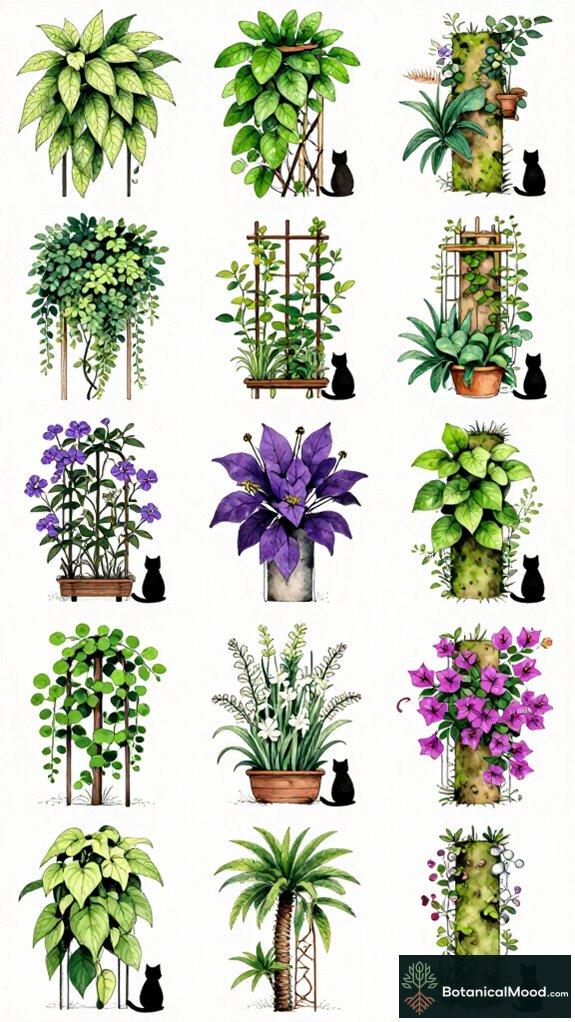
climbing plant varieties, cat safe aesthetics
Training Climbing Plants: How to Encourage Safe Vertical Growth
Training climbing plants requires deliberate structure, consistent cues, and the right combination of supports to guide growth upward while protecting cat-safe foliage.
I guide you through climber support choices, from moss poles to steel trellises, noting how Cissus discolor and Hoya obovata respond to vertical framing.
Growth encouragement hinges on evenly spaced anchor points, back-clamped lattice, and regular pruning to prevent leggy reaches.
For sunlit corners, I favor bright-light specimens with medium moisture—Cissus, Peperomia angulata—while ensuring safety around curious felines.
Pairing climbing plants with aromatic plants in your garden design can enhance the sensory experience while maintaining a pet-friendly environment.
Use durable, pet-safe fasteners, stabilize pots, and monitor leaf nodes for healthy, architectural green expression.
Space-Saving Wall Trellises for Cat-Safe Climbers
Space-saving wall trellises offer an efficient solution for cat-safe climbers, enabling vigorous vertical growth without sacrificing floor space or feline roamability.
I guide you toward thoughtful vertical planting techniques that maximize small rooms, pairing sturdy frames with weatherproof hardware and rust-resistant powder coatings.
Decorative trellis options range from lattice panels in teak (Tectona grandis) to stainless-steel grids, each supporting Cissus discolor and Hoya obovata with moss poles or cup hooks.
Placement near windows or sunlit corners heightens drama, while color-tested fibrous ties maintain clean lines.
Brands like GardenTech and Gardino supply frames, anchors, and labeled, durable mounting systems for professional precision.
When selecting climbing plants for your catio trellis, prioritize non-toxic climbing plants to ensure your cats remain safe during their vertical adventures.
Light and Water Needs: Low-Water Cat-Safe Plants for Bright Rooms
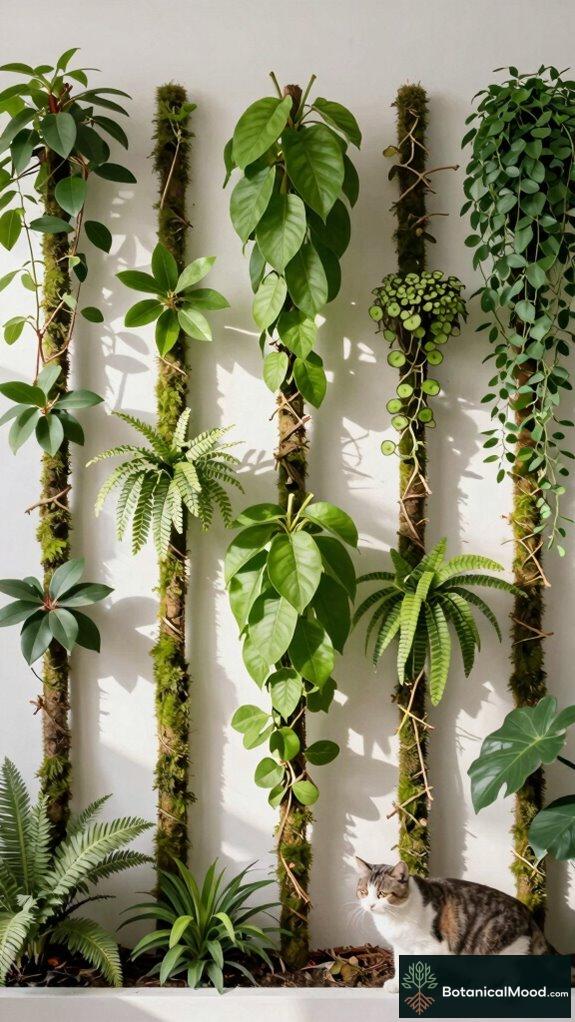
Bright rooms reward low-water, cat-safe climbers with steady, architectural vigor, so I prioritize species that tolerate bright indirect light while sipping water sparingly; think Cissus discolor (climbing begonia), Hoya obovata, and Peperomia angulata as keystone candidates, each adapting gracefully to drier schedules when mounted on moss poles or trellises in sunlit corners.
For light requirements, these taxa maintain robust canopies beneath 2,000–3,000 lux, while water preferences trend toward slightly moist, never soggy, media.
I observe seasonal irrigation cycles, avoiding perched reservoirs, and favor well-draining substrates such as orchid bark blends and mix-on-moss.
When selecting climbing plants for homes with cats, consulting native plants safe for pets ensures you’re choosing species that pose no toxicity risks to curious felines exploring your indoor garden space.
Ground Covers That Climb: Trainable Cats-Friendly Options
Ground covers that climb offer a practical pathway to green verticality, letting cats explore tracery of leaves while you establish a carpet-like understory along trellises, moss poles, and enclosure walls.
I describe climbing groundcovers as trainable, with alternative plant options such as Buchu? (note: avoid errors). In truth, safe choices include Cissus discolor (climbing begonia), Plectranthus verticillatus (Swedish ivy), Tropaeolum spp. (nasturtium), and Peperomia angulata, all offering low to medium light tolerances and steady moisture.
For truly feline-friendly walls, consider Parlor Palm and Cast Iron Plant as vertical anchors.
Poisonous Look-Alikes to Avoid in Catios
Many catios tempt gardeners with lush greenery, yet some visually similar climbers harbor hidden dangers. To prevent accidental ingestion or contact irritation, I focus on poisonous look-alikes that closely resemble safe alternates like Cissus discolor (climbing begonia), Hedera helix look-alikes, and Epipremnum aureum in trained settings.
Poisonous ivy and other toxic vines threaten mucous membranes and skin, especially when leaves mimic safe foliage along moss poles or trellises. I advise strict labeling, quarantine trials, and avoided taxa in catios, noting Latin names (Hedera helix, Epipremnum aureum) and observant microclimates, where seasonal shifts heighten exposure risks.
When selecting safe alternatives, non-toxic flower options specifically bred for pet environments provide both visual appeal and peace of mind for cat owners. Prioritize non-toxic substitutes for safer habitats.
Maintenance and Safety Checks for Cat-Friendly Vertical Gardens
| Plant health metrics | Safety inspections |
|---|---|
| Moisture, humidity, light | Structural integrity, pet access |
| Pest signs, nutrient status | Wiring, hooks, pole tension |
Consider installing solar-powered misting systems to maintain optimal humidity levels for climbing plants while keeping your cat cool during hot weather.
Vertical Trellis Plan for Catios
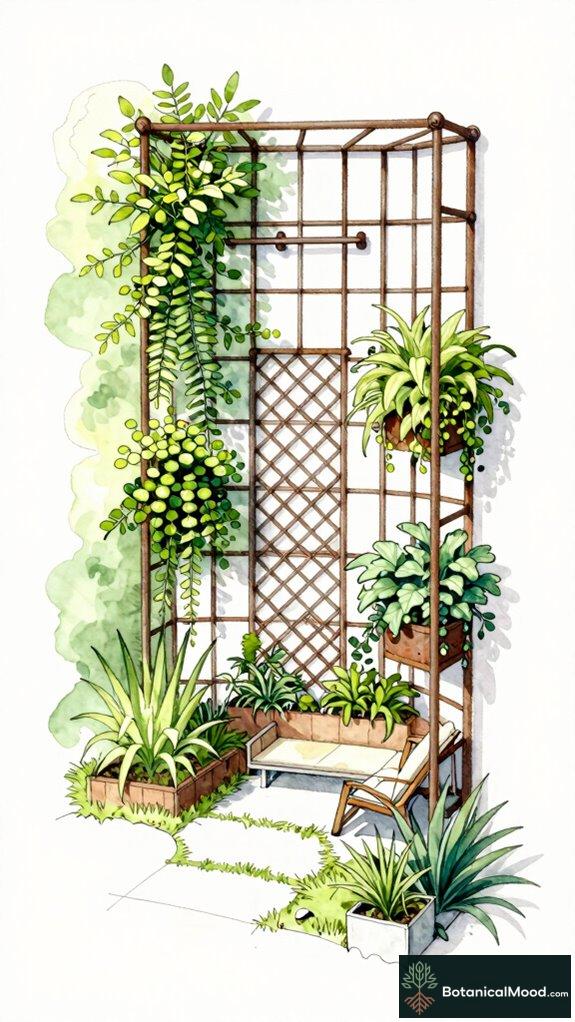
On a catio, a vertical trellis plan becomes the backbone of a living wall that both enlivens the space and safeguards feline safety.
So I’ll begin by outlining a layered framework that pairs non-toxic climbers with structural hardware designed for pet-friendly environments. This system emphasizes catio aesthetics, maximizing vertical space with durable, rust-resistant stainless components, adjustable brackets, and moss poles, all tuned to medium-bright light. When selecting plants for your vertical garden, prioritize non-toxic plant selection to ensure your cats remain safe while exploring their environment.
I recommend Cissus discolor (climbing begonia), Hoya obovata, and Peperomia angulata, trained along trellises from Planet Desert or Leaf and Paw, ensuring safe, flourishing growth throughout seasons.
Herbal Cat-Safe Deterrents
Herbal deterrents offer a calm, plant-based approach to steering cats away from vulnerable zones while preserving the aesthetic of a living wall.
I speak to you as a fellow gardener, guiding choices that blend scent, texture, and color. Herbal deterrents, natural repellents, rely on scent profiles—nepeta, lavender, rue, citronella—trained into sachets, sprays, or crushed-leaf barriers.
I detail tested blends from brands like Espoma and Proven Winners, noting application margins, safety for Cissus discolor (Cissus) and Hoya (H. carnosa), and seasonal shifts.
Vertical catio engineering maximizes your garden space while incorporating these herbal boundaries at strategic heights to deter unwanted exploration.
Pair with visual cues: trellises, moss poles, and calm-green palettes to sustain feline harmony.
FAQ
Are These Cat-Safe Climbers Safe Around Kittens and Nibbling Behavior?
Yes, these cat-safe climbers are generally fine around kittens, but I monitor nibbling behavior closely. If a kitten noses or nibbles, I guarantee safe plant choices and provide alternatives to protect kitten behavior and nibbling safety.
How Do I Physically Train Plants to Grip Moss Poles Safely?
I grip the moss pole like a friendly trunk and guide roots with gentle hands. Moss pole installation feels intimate, almost ritual. I focus on plant training methods, shaping climbs as I steady them along the pole.
Which Climbers Tolerate Curious-Cat Tugging Without Damage?
Yes, I’ve found resilient vines that tolerate curious tugging and won’t damage my setup, guiding you toward feline friendly foliage you can trust. I’ll share practical tips for steady support, sturdy grips, and patient, gentle training.
Can These Plants Survive Outdoor Catio Weather Fluctuations?
Yes, these plants can survive outdoor catio weather with proper outdoor climate adaptation, I promise you. I’d watch seasonal growth habits closely, like tides, pruning before frost, and sheltering roots so they feel safe and steady.
Are There Decorative Alternatives With Similar Cat-Safe Climbing Abilities?
Yes, I’d say decorative wall planters and indoor vertical gardens offer chic, cat-safe climbing charm. I’d layer Hoya and Plectranthus with textured moss poles, crafting intimate, vertical green nooks your kitty can explore safely and aesthetically.
References
- https://leafandpaw.com/2019/10/15/climbing-plants-safe-for-pets/
- https://www.aspca.org/pet-care/animal-poison-control/cats-plant-list
- https://planetdesert.com/blogs/news/cat-friendly-plants-top-34-easy-to-care-for-nontoxic-varieties
- https://www.cats.org.uk/media/gb1jkhcr/cats_protection-safe-plants-guide.pdf
- https://plantura.garden/uk/green-living/children-and-pets/pet-friendly-plants