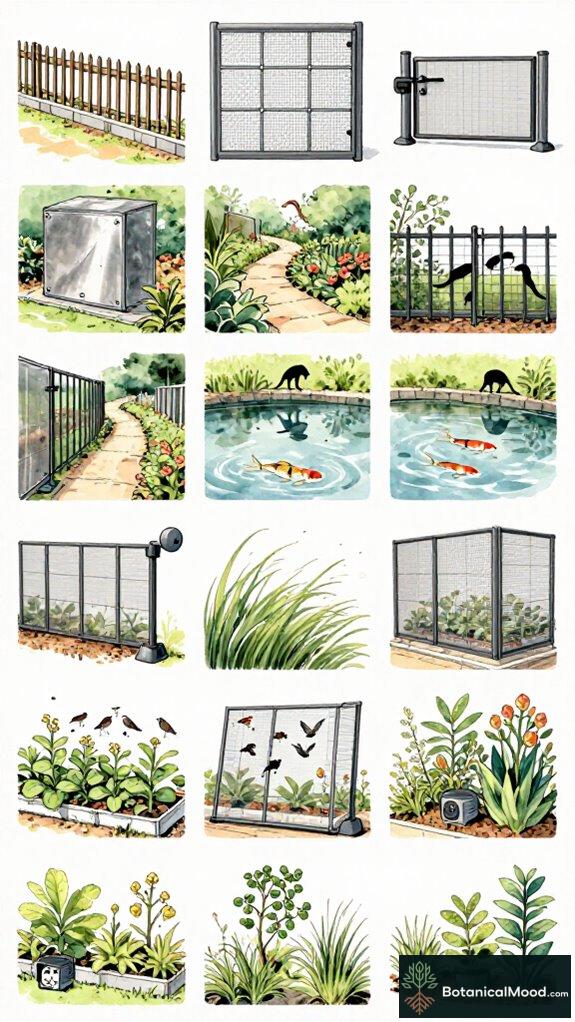
7 Ways to Keep Your Catio Cool
Ever tried turning your catio into a sauna?
I’m not kidding—my cat, Luna, once lounged under a blazing 95°F sunspot, and I swear she gave me a side‑eye that said, “Seriously?”
I mapped every sunpath, spotting heat pockets like a detective on a hot‑day stakeout. In shaded micro‑zones I placed water stations, because cats love a cool sip as much as they love a sunny nap. I installed passive vents, ridge‑t vents, and UV‑tuned mesh, then added solar‑powered fans for that eco‑friendly brag‑factor. Deciduous canopies, lattice screens, and reflective pale finishes keep the glare down, while a Wisteria (Wisteria sinensis) climber and native grasses do their evaporative‑cooling dance.
It’s not all sunshine and rainbows—balancing airflow with privacy is a tricky puzzle, and I’m still tweaking the fan speed. But watching Luna stretch in a breezy, shaded nook? Worth every sweaty trial.
## Garden Design Secrets: Cooling Your Catio with Smart Plant Choices
When I revamped my backyard garden, I paired the catio’s cooling system with a drought‑tolerant xeriscape. I planted lavender (Lavandula angustifolia) and ornamental grasses like Pennisetum alopecuroides, which not only look sleek but also release moisture through transpiration. A drip‑irrigation line fed the soil at 0.5 gal per hour, keeping the ground cool without waste. I added a reclaimed‑wood pergola, draped with a UV‑stable HDPE canopy, creating a shady retreat for both cats and guests. The result? A harmonious blend of aesthetics and micro, proving that thoughtful garden design can be the ultimate catio thermostat.
Quick Takeaways
- Use shade strategies (lattice, shade cloths, shade sails) and reflective surfaces to reduce radiant heat in the catio.
- Enhance airflow with ridge vents, gable louvers, passive chimneys, and strategically placed oscillating fans.
- Create shaded, cool hydration zones with multiple water stations and deep, wide bowls to encourage drinking.
- Implement evaporative cooling and cooling mats, gel pads, and washable cooling covers for instant relief.
- Plan seasonal plantings and fast-growing shade trees to naturally expand the catio’s cooling capacity over time.
Assess Your Catio: Identify Shade, Breeze, and Heat Risk
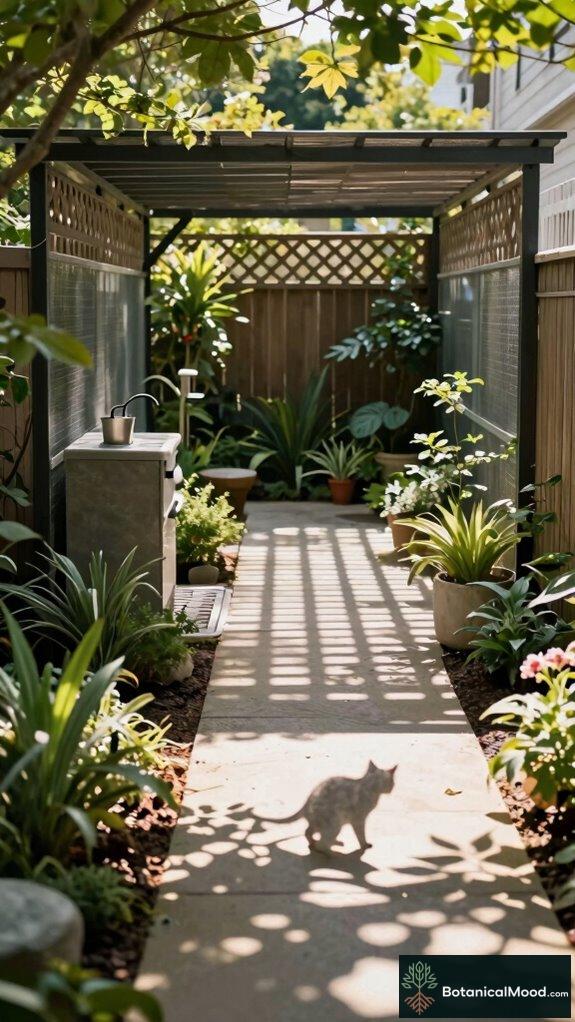
Evaluating your catio starts with a careful survey of shade, breeze, and heat risk, because the balance of these elements dictates comfort and safety for feline visitors.
I walk the perimeter, noting dappled canopy (Quercus rubra) and lattice shade, while measuring gusts through vents and cresting eave gaps, aligning with passive cooling principles.
I map sunpaths, record heat pockets, and mark water stations, burrowed retreatment in covered alcoves, and reflective surfaces (albedo 0.65) to avoid radiant hotspots. Solar powered fans offer an energy-efficient solution for enhancing air circulation without relying on electrical outlets.
I prioritize modular airflow, weatherproof fabrics, and whisper-quiet fans, supported by data-driven, innovative, shelter-first design guidance. During peak summer temperatures, misting fans provide additional evaporative cooling to maintain optimal comfort levels for your cats.
Shade First: Practical Natural and Built Cover Solutions
Shade first frames the catio as a hospitable microclimate where natural and built cover harmonize to shelter visitors from sun and heat.
I guide you through layered shading strategies, pairing deciduous canopies (Fagus sylvatica) with lattice screens, pergolas, and reflective, light-colored furnishings to reduce surface temperatures.
Think native climbers (Clematis spp., Wisteria sinensis) weaving over trellises, while breathable shade cloths create phased sun exposure.
Materials select against radiant gain: pale concrete finishes, aluminum framing, and chipboard with UV inhibitors.
Placement centers around porches, south-facing walls, and microhabitats, ensuring sheltered aisles, moisture pockets, and visual axes for cats. Like outdoor dog retreats, strategic shade placement maximizes comfort while creating distinct zones within your catio landscape.
Consider incorporating dog-safe clover ground covers beneath shade structures to create a soft, cool surface that complements your feline-focused design while maintaining an integrated garden ecosystem.
Maximize Airflow: Strategic Ventilation Under Shade
Strategically harnessing airflow under shade isn’t just about venting hot air away; it’s about choreographing a microclimate where gentle currents continually renew the catio’s air, keeping the space breathable and breathable for the cats.
- Strategic placement of oscillating fans (Ceiling, pedestal) synchronized with shaded corridors and lattice vents
- Ridge-t vents and gable louvers aligned to prevailing southwest breezes, minimizing eddies
- Shade-tuned mesh screens (polypropylene, 20–40% shade) over intake zones for laminar flow
- Passive chimneys and stack ventilation using vertical shafts and plant trellises, promoting continuous aeration
For enhanced cooling in planted catios, drip irrigation kits can maintain herb garden moisture while supporting the vertical growing systems that contribute to passive ventilation. Solar-powered misting systems provide additional evaporative cooling benefits while maintaining sustainable energy efficiency for outdoor feline spaces.
Catio design merges climate science with feline comfort, elevating airflow innovation.
Hydration Habits: Water Stations and Temperature Control
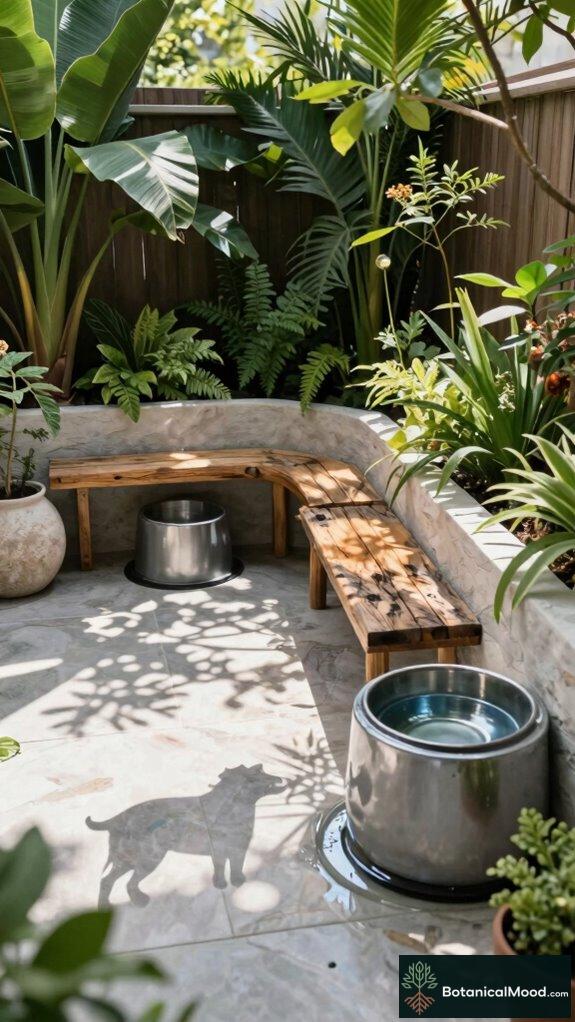
Water stations form the nucleus of hydration strategy, so I position multiple, clearly marked bowls in shaded microzones—under overhangs, near lattice trellises, and beside cool, porous substrates like limestone pavers—to reduce evaporation and encourage steady intake; I favor deep, wide bowls (ceramic or stainless steel) that minimize water turnover, keep algae at bay, and allow gentle sipping without splashing, while rotating materials seasonally to reflect heat load and maintain hygiene.
Complementing water stations, washable pet cooling covers provide additional relief by creating shaded resting areas that actively regulate temperature during peak heat hours. Innovations include insulated hauses from weatherproof plastics, antimicrobial coatings, and smart sensors from brands like Netatmo and Eve, linking to dashboards for real-time flows and refills.
Cooling Aids: Pads, Mats, and Safe Devices for Cats
A practical array of cooling aids offers cats instant relief from heat, with pads, mats, and safe devices that combine comfort, safety, and durability in a catio or outdoor enclosure.
- Gel-based cooling pads (non-toxic) placed atop breathable substrates near shaded perches, aligning with ergonomic cats.
- Evaporative mats, weighted to prevent displacement, paired with gentle airflow from oscillating or ceiling fans.
- Safe electric cooling devices with auto shutoff, enclosed housings, and remote monitoring via garden sensors.
- Frozen water bottles under bedding in sheltered zones, wrapped to prevent direct contact and accidental clawing.
- Pet cooling mats designed for garden spaces provide similar thermal regulation benefits and can be integrated into catio layouts for enhanced comfort during peak heat hours.
- Reflective insulation panels help maintain optimal temperature regulation by reducing radiant heat absorption within the catio structure.
These innovations integrate color, material science, and design for feline comfort.
Shelter Placement: Hidden Cool Spots That Cats Use
Hidden cool spots emerge naturally where structure, shade, and microclimates intersect, so I look for discreet nooks under eaves, behind lattice screens, and between sturdy shrubs like Lavandula spp. (lavender) or Artemisia annua (sagebrush) that offer both concealment and airflow; here, a cat can retreat from direct sun while still surveying the catio, listening for distant birds, and feeling a slight breeze off a reflective surface such as whitewashed brick or light gray cedar siding. When selecting materials for your catio structure, consider safe pond deicers and other pet-friendly products to ensure your cat’s environment remains non-toxic year-round. Creating dedicated cooling zones throughout your catio encourages cats to naturally gravitate toward the most comfortable spots during hot weather.
| Zone | Feature | Benefit |
|---|---|---|
| A | Eave alcove | Airflow, concealment |
| B | Lattice shelter | Low heat gain, visibility |
| C | Shrub screen | Moisture, shade |
| D | Reflective wall nooks | Breeze channels |
| E | Ground-med shelter | Cool microclimates |
Maintenance and Seasonal Adjustments for Heat Safety
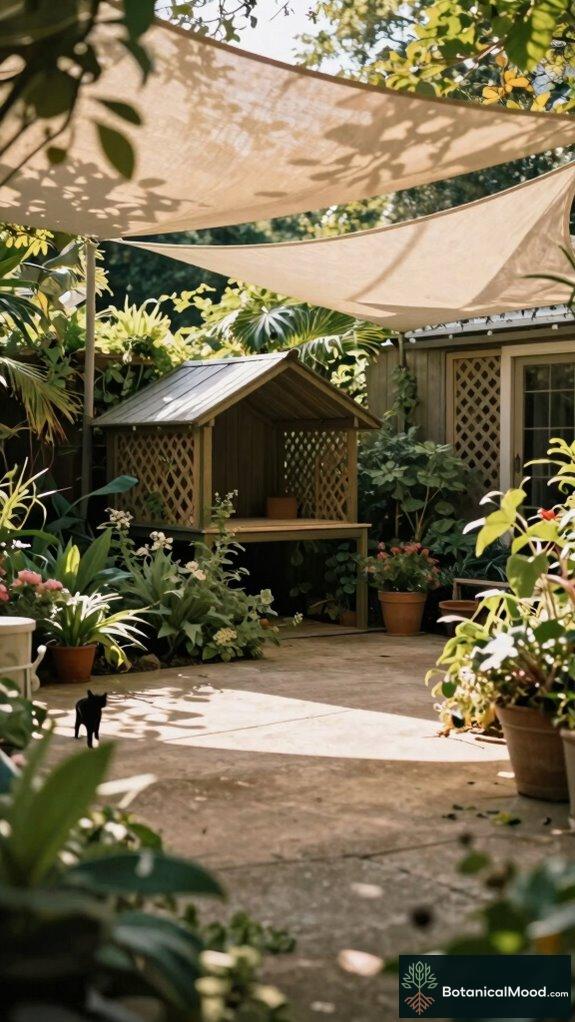
During the hot months, I methodically inspect the catio for unobstructed airflow and intact shade structures, adjusting sunlit angles with movable shade sails (Curved Sail Shade by Coolaroo, breathable fabric) and repositioning lattice screens to optimize microclimates.
I test the ceiling and portable fans, ensuring their motors run quietly and without direct blast on any cat, while recalibrating pets’ hydration stations, deep bowls, and shaded shelters to prevent evaporation and heat stress.
Weather-resistant scratching posts should also be checked for structural integrity and proper positioning to maintain airflow around vertical catio elements. Shade sails made from breathable sail materials provide superior UV protection while allowing air circulation essential for natural cooling.
- Inspect vents, seams, and hinges for corrosion, replacing worn grommets and weatherstrips to sustain airflow
- Calibrate hydration stations with shaded reservoirs, ice-chilled bowls, and monitored water turnover
- Rotate plants and lattice patterns to maintain evaporative cooling cycles
- Schedule seasonal shade audits aligned with solar angles and regional climate data
Shade Sails Over Catio

Shade sails over the catio transform an open-air refuge into a structured microclimate, weaving sun-shading lanes across the space with purpose-built tension and breathable fabric that lowers ambient temperatures while preserving daylight and airflow.
I guide you through high-tension braided suspension, UV-stable HDPE membranes, and light-lean palettes that reflect heat yet invite dawn and dusk warmth.
Choose white or alabaster sails for reflectivity, or pale mineral tones to cue serenity, while rust-resistant hardware from brands like Dri-Deck or Gardena guarantees longevity.
Consider lattice shade beneath camellias (Camellia spp.) and Pyracantha, enhancing microhabitats and visual cadence. For long-term shade coverage, plant fast-growing trees nearby and apply root stimulators during installation to accelerate establishment and provide natural cooling as they mature.
Cooling Gutter Planters
- Installation checklist: gauge, slope, sealant, drainage
- Plant palette: Salvia, Nepeta, Agave, Ocimum
- Irrigation timing, moisture, filtration
- Seasonal color shifts, edible yields, maintenance
FAQ
How Often Should Shade Materials Be Replaced or Cleaned?
Shade materials should be cleaned weekly and replaced every 6–12 months, depending on sun exposure and wear. I’ll innovate by rotating covers seasonally, swapping light materials for darker during heat waves to maintain cooling efficiency.
What Signs Indicate the Catio Is Too Hot for Cats?
The catio’s too hot when I notice panting, drooling, or lethargy, plus glazed eyes and open-mouth breathing. If I see rapid heart rate, clawing for shade, or reduced activity, I’ll cool it immediately and hydrate everyone.
Can DIY Shading Be Safer Than Store-Bought Options?
Yes, DIY shading can be safer if I design it thoughtfully, like a reflective shield—smart angles, breathable fabrics, and sun-tracking tie-ins—but I’ll test reliability, heat tolerance, and stability before trusting it as a store-bought substitute.
Are There Safe, Cat-Friendly Cooling Fans or Devices?
Yes—there are safe, cat-friendly cooling fans and devices. I prioritize pet-specific, guard-railed or angled blades, outdoor-rated units, and noise-minimized designs; pair with shaded areas, water access, and non-toxic cooling pads for maximum comfort.
How Long Can Cats Stay in the Catio During Extreme Heat?
Cats should not stay long in extreme heat; I limit sessions to brief breaks, then move them to shaded, cooled spaces. I monitor signs of distress, rotate cooler pads, and guarantee constant fresh water availability.
References
- https://www.thecattopia.com/blog/summer-catio-care-beating-the-heat/
- https://www.consumerreports.org/home-garden/pet-supplies/catios-outdoor-cat-enclosures-safety-expert-recommendations-a6837206054/
- https://www.alleycat.org/heat-wave-tips-to-keep-cats-cool/
- https://www.caspca.org/expanding-kitty-s-kingdom-the-benefits-of-catios
- https://www.youtube.com/watch?v=lHiH1MJtfXw
- https://www.hillspet.com/cat-care/resources/understanding-the-basics-of-how-to-build-a-catio