Ever thought a chicken run could look like a boutique garden?
I’m mixing evergreen and deciduous shade shrubs that survive feather traffic, love drip irrigation, and thrive in compost‑rich soil. Spiraea japonica gives a reliable canopy, Viburnum spp. adds winter color, and Cornus sericea offers pest‑resistant vibes. Native viburnums—V. dentatum, V. opulus, V. acerifolium—double as cover and foraging stations. I mulch, set up reflective drainage, and pick deer‑resistant cultivars from Proven Winners. The result? A durable, healthy infrastructure that’s surprisingly chic. Still, I’m still tweaking—because nature never follows a script.
Designing a Chicken‑Friendly Garden Oasis
When I first tried to turn my backyard into a chicken‑friendly oasis, I started with a simple idea: let the birds enjoy shade without turning the garden into a mess. I planted a row of Spiraea japonica along the east fence, then added Viburnum ‘Winterthur’ for winter interest and Cornus sericea for its striking red stems. The drip irrigation system kept everything hydrated, while a thick layer of compost‑enriched mulch prevented mud splatters. I even installed reflective drainage tiles to keep the ground dry after rain. The chickens love the cover, the garden looks lush, and I’ve learned that balancing moisture, soil health, and shrub selection is a delicate dance—one that keeps both plants and poultry thriving.
Quick Takeaways
- Choose evergreen shade shrubs like Spiraea japonica and viburnums for year-round cover and privacy in chicken runs.
- Add native viburnums (V. dentatum, V. opulus, V. acerifolium) for reliable cover, fruit, and pest resistance.
- Use Cornus sericea (red osier dogwood) for winter color and structure that withstands feathered traffic.
- Layer with shrubby trees such as Mulberry and hibiscus accents to balance aesthetics, shade, and forage.
- Support health with compost, mulch, drip irrigation, and regular maintenance to reduce algae and maintain a clean run.
What Makes a Shrub Safe for a Chicken-Run Shade Area
Choosing shrubs for a chicken-run shade area hinges on safety, durability, and the plants’ willingness to tolerate feathered traffic, moisture, and potential nibbling.
I assess species by known resilience: (Spiraea japonica) and (Viburnum) varieties offer layered canopy, while (Cornus sericea) provides visible winter color without compromising access.
I value deer resistance, soil compatibility, and low sap leakage, favoring Proven Winners selections like Sunjoy barberries and Sweet Talker viburnums for predictable performance.
I emphasize root health, amending with compost, mulch, and drip irrigation.
I guide readers toward native options, zone suitability, and informed pruning to maintain safe shade corridors.
How to Choose Shade Shrubs for a Chicken Run (Evergreen vs. Deciduous)
Evergreen and deciduous shrubs offer different pathways to shaping a shaded chicken run, affecting year-round structure, color, and access for feathered inhabitants.
I weigh permanence, seasonal dynamics, and maintenance, balancing constant canopy with seasonal glow. Evergreen options deliver continuous privacy and windbreak, while deciduous choices reveal lighter winter silhouettes and sun peeks during cold months.
- Spiraea japonica (S. japonica) seasons, foliage color shifts, disease resistance
- Viburnum (Viburnum spp.) varieties: evergreen vs. deciduous, native options, beetle resistance
- Cornus sericea (C. stolonifera) yellow-twig dogwood contrasts, winter interest, moisture tolerance
Consider climate, space, and chicken foraging when selecting strategies.
Native Viburnums for Cover and Foraging Opportunities
Native viburnums offer reliable cover and foraging opportunities in shaded chicken runs, delivering dense foliage, variable tree-to-shrub forms, and a spectrum of seasonal interest that supports both shelter and dietary enrichment. I speak as a gardener and keep to the practical, naming Viburnum spp. (V. dentatum, V. opulus, V. acerifolium) for site-specific decisions, noting native provenance, leaf texture, and berry timing. This section links habitat value with chicken foraging, highlighting deer resistance, pest tolerance, and shade tolerance. Use Proven Winners and native cultivars to craft layered hedges, understory screens, and seasonal fruiting screens that optimize cover, microclimates, and foraging diversity. Strategic planting of viburnums near chicken runs can also reduce the need for ultrasonic pest repellers by creating natural barriers that deter unwanted wildlife while maintaining a welcoming environment for your flock.
| Shade tolerance | Forage yield |
|---|---|
| Native viburnums | Supplementary berries |
| Privacy hedge | Seasonal texture |
| Easy maintenance | Multiyear structure |
Colorful Hibiscus and Barberry Options Chickens Can Enjoy
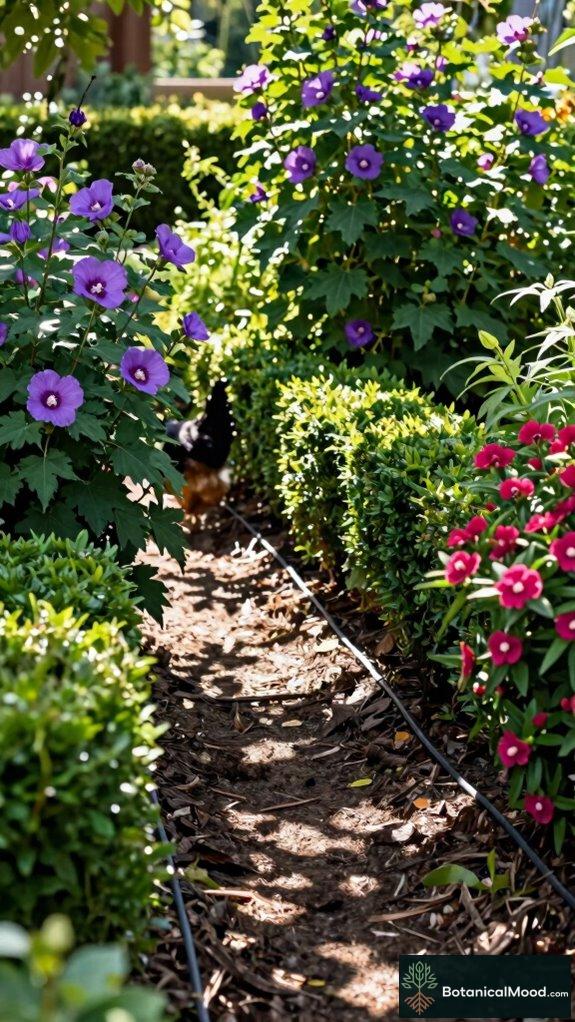
Colorful hibiscus and barberry selections offer striking, chicken-friendly options that combine vibrant foliage and blooms with practical durability in shaded run zones.
I’ve observed Dark Lavender Chiffon (Hibiscus) and Sunjoy Sequins® barberry pairing brilliantly, delivering bold color pops while resisting herbivory and thriving in dappled light. Their textures create layered depth, guiding shade-aware flock movement and foraging routes.
Think hedge-like structure with seasonal contrast, from spring blossoms to and then flushes of pink-speckled foliage. Understanding garden aesthetics helps create visually appealing chicken runs that balance beauty with functionality for both your plants and flock.
- Hibiscus (Hibiscus rosa-sinensis) cultivars: Dark Lavender Chiffon®, Blue Chiffon®, Paraplu Pink Ink® (Proven Winners)
- Barberry (Berberis) selections: Sunjoy Sequins®, Sunjoy Citrus
- Care notes: mulching, drip irrigation, deer resistance, and partial sun tolerance
Spiraea and Cornus Sericea for Structure, Shade, and Winter Color
Spiraea and Cornus sericea offer dependable structure, shade, and winter color in a chicken-friendly environment, with each genus contributing distinct architectural and seasonal cues. I prioritize layered silhouettes, with Spiraea japonica forming midcanopy masses and Cornus sericea (syn. Cornus stolonifera) supplying vivid yellow-twig contrast for winter interest, especially in hedges aligned to fenced runs. For color, I pair pink-rose Spiraea blooms with red-branch Cornus sericea accents, ensuring visible winter structure. Table below visualizes relationships, seasonality, and maintenance.
| Genus | Structural Role | Seasonal Cue |
|---|---|---|
| Spiraea | Massing, mid-canopy | Spring bloom, soft texture |
| Cornus sericea | Elliptical form, hedging | Winter yellow stems, exfoliation |
| Intersection | Height harmony | Color and texture across seasons |
Multi-Use Trees and Layered Shade for the Run
Multi-use trees and layered shade create a versatile, resilient run that accommodates both poultry behavior and garden design goals.
I describe practical, research-backed choices that maximize microclimates, predator margins, and forage density while preserving airflow and accessibility for coop maintenance.
- Mulberry (Morus spp.) for dappled canopy, fruiting baiting zones, and tall vertical structure
- Tamarillo (Solanum betaceum) for multi-trunk intrigue, edible shade, and seasonal color shifts
- Banana (Musa spp.) for windbreak, thermal inertia, and lush understory texture
Consider Proven Winners selections for robust foliage, and align with USDA zones and local Viburnum options for layered shade. Strategic hedge placement around the run perimeter provides additional protection while creating distinct microclimates. All recommended plants are native plants safe for backyard pets to ensure your chickens remain healthy and protected from toxic foliage.
Step-by-Step Plan to Design a Chicken-Friendly Shade Garden
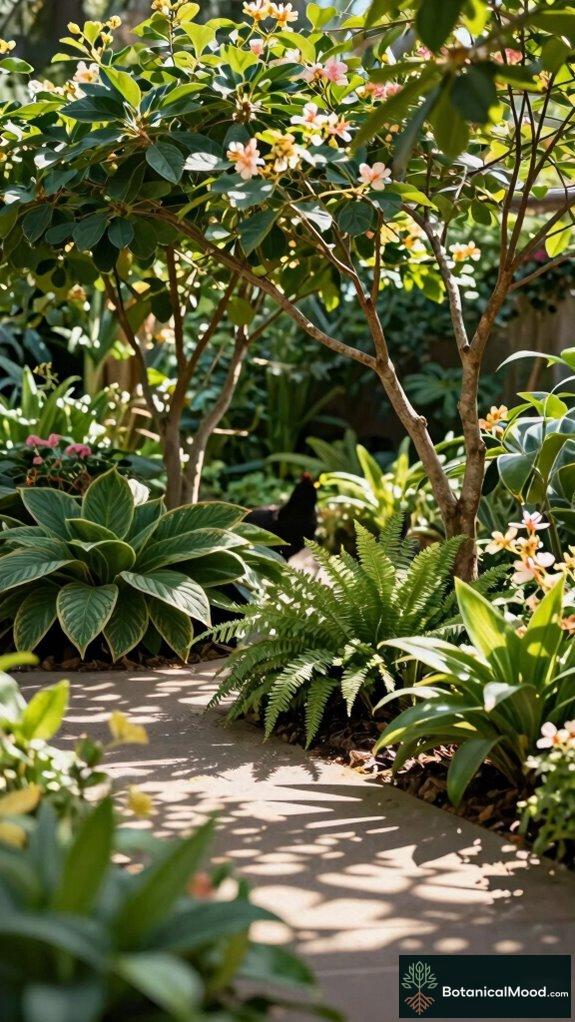
To design a chicken-friendly shade garden, I start by mapping a layered canopy that supports flock behavior and garden aesthetics, ensuring each plant contributes both shade and safe foraging opportunities. Like decorative garden fencing, thoughtful shade structures create defined spaces that enhance both functionality and visual appeal while protecting your flock.
| Element | Benefit |
|---|---|
| Shade shrubs (Spiraea japonica, Viburnum) | Dense cover, temp moderation, edible foraging gaps |
| Shrubby trees (Mulberry, Cornus sericea) | Structural habitat, winter color, windbreak |
| Hibiscus and Camellias | Color accents, nectar, chicken-friendly petals |
| Understory understory (arrowroot, ferns) | Ground moisture, pathways, retreat zones |
| Brands and care (Proven Winners, Kathy Shea Mormino) | Trusted performance, improved pest resistance |
Hidden Shrub Placement Plan
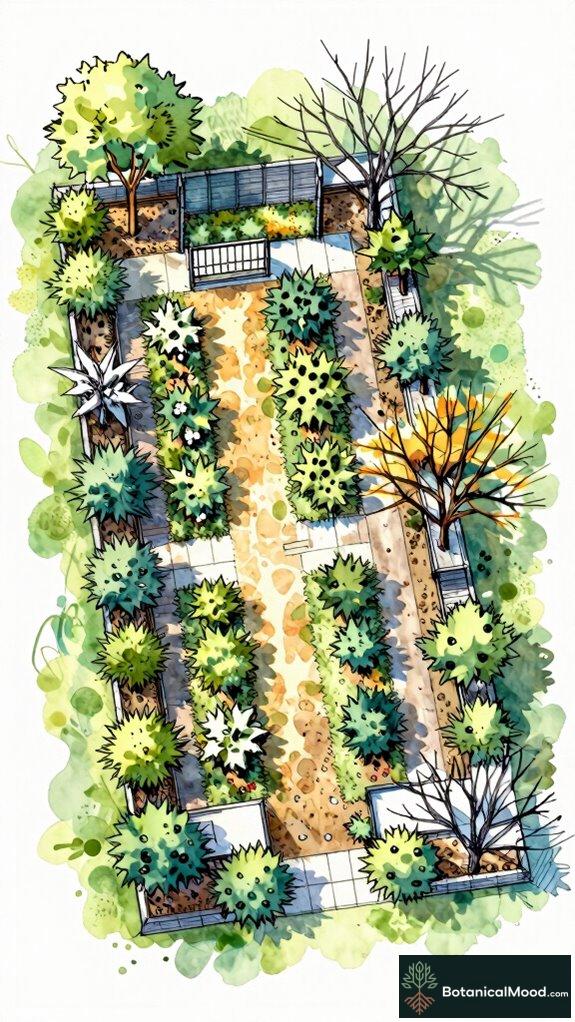
Hidden shrub placement starts with deliberate layering that hides coop enclosures while forging inviting foraging corridors.
I guide you through a plan that blends structure, texture, and color, using Spiraea japonica and Viburnum (Viburnum spp.) as anchors to create living screens and seasonal interest.
Carefully staggered lines, low understory, and taller focal points mimic natural hedgerows, reducing glare and improving microclimates for birds and soil life.
- Layered spacing for sightlines and shade
- Color progression from spring to fall with Proven Winners selections
- Winter branches for structure and predator cues
This approach elevates design precision and poultry welfare.
Shade-Tolerant Waterer Station
A shade-tolerant waterer station blends practicality with microclimate benefits, placing a compact, drip-friendly reservoir beneath a canopy of Spiraea japonica (brush cherry) and Viburnum spp. to keep it cool and accessible for poultry.
I describe a installations-friendly approach: injection-molded, BPA-free tanks, 2–4 L capacity, gravity-fed nipples, and drip ports; shade pockets reduce algae growth, while reflective mulch directs sun away from cups.
The station coordinates with Proven Winners ColorChoice plantings, situating near Cornus sericea (red osier dogwood) for windbreak and visual calm. Brands like K&H Manufacturing and Rentokil-informed maintenance schedules guarantee hygiene, durability, and long-term poultry health.
FAQ
What Are the Best Fast-Growing Shade Shrubs for Chicken Runs?
I’d choose fast-growing, shade-friendly shrubs like viburnum, Spiraea japonica, and Cornus sericea, plus hibiscus varieties. I’ll plant multi-stem, prune lightly, and lean into deer-resistant options—delivering quick cover for your chicken run with innovative layering.
How Can I Prevent Shrub Leaves From Becoming Chicken Choke Hazards?
I prevent shrub leaves from choking by pruning regularly and selecting nibble-safe varieties, juxtaposing dense shade with open, safe exposure; I mulch, monitor flock, and rotate plants, innovating safer foliages that reduce choking risks for my chickens.
Which Evergreen Shrubs Tolerate Chicken Traffic and Shade Best?
Evergreen shrubs that tolerate chicken traffic and shade best: I’d pick Sweet Talker viburnum, Sunjoy Sequins barberry, and yellow-twig dogwood for winter interest. I mix evergreen structure with chicken-safe foliage to innovate your coop’s microclimate.
Do Flowering Shrubs Attract More Pests to the Coop Area?
Yes, flowering shrubs can attract more pests near the coop, but I’ll mitigate it with plant choices, spacing, deterrents, and vigilant monitoring, so your flock stays healthy while you innovate with bloom-friendly, pest-conscious landscaping.
How Can I Arrange Shrubs to Maximize Shade Without Clutter?
I’ll lay out a shade-smart layout: stagger shrubs in curved layers, place taller varieties at the back, mid-sized in mid-ground, and low groundcovers at the front; this weave creates breathable shade corridors while avoiding visual clutter.
References
- https://www.tractorsupply.com/tsc/cms/life-out-here/the-coop/coop-tips/shade-plants-for-chicken-pen
- https://www.provenwinnerscolorchoice.com/six-chicken-friendly-shrubs/
- https://www.backyardchickens.com/threads/shade-loving-plants-for-chicken-run.1437242/
- https://www.youtube.com/watch?v=1c1pYkmGsH0
- https://growingfruit.org/t/chicken-plants-what-y-all-planting-in-and-around-your-coops/71896
- https://www.dineachook.com.au/blog/the-best-dualpurpose-plants-for-the-chicken-run/
- https://poultrykeeper.com/keeping-chickens/chicken-friendly-plants/