Have you ever walked into a garden and felt like you just entered a masterpiece?
Well, I can relate!
My own garden has become my experimentation zone where I awkwardly try to apply the 29 aesthetic principles I stumbled upon.
Seriously, who knew Echinacea purpurea could look so chic? Every plant creates this beautiful rhythm—though my neighbors think I’m a little obsessive. Hardscaping with elegant stone edging? Gamechanger.
Trust me, exploring all this makes you realize: effective garden design isn’t just about plants; it’s about letting nature reveal its quirky personality.
So, are you ready to dig in?
The Surprisingly Complicated Joy of Garden Design
A few summers back, I decided to revamp my garden into an urban oasis. I learned the hard way about balance and proportion when my vibrant sunflowers towered over poor little daisies.
Mixing native plants and colorful textures? Challenging! But the moment I added a rustic wooden bench, everything clicked—just like the Pinterest boards promised!
I realized that adding personal touches, like a quirky birdhouse, brings my own flair while enhancing ecological harmony. Who knew garden design could be so emotional? Sure, it’s messy and complicated, but isn’t that what makes it all worthwhile?
Quick Takeaways
- Unity in design ensures a cohesive garden through strategic placement and harmonious color and texture integration.
- Balance is achieved via symmetrical and asymmetrical arrangements, enhancing visual dynamics and flow throughout the garden.
- Proportion maintains visual balance by considering plant heights and forms relative to hardscape elements, creating spatial interest.
- Rhythm and repetition elevate garden aesthetics by mirroring elements, cultivating a smooth flow for visitors.
- Seasonal interest enhances engagement with diverse plant selections, ensuring a lively and visually dynamic garden year-round.
Unity

When we think about creating a cohesive garden, it’s essential to focus on unity, as it ties all elements together, providing a sense of harmony and balance. A cohesive theme allows for design continuity, ensuring that each component complements the others, from plant selection to hardscaping.
In my experience, fostering visual coherence requires aesthetic integration of colors and textures, creating compositional unity in each space.
Consider using native plants like Echinacea purpurea for their resilience and visual appeal, enhancing scenery harmony.
Incorporating native plants like Echinacea purpurea elevates your garden’s visual harmony and nurtures local ecosystems.
Strive for element connection through strategic placement, ensuring every feature breathes garden synergy into your design.
This approach doesn’t just beautify spaces—it transforms them, offering a seamless journey that evokes serenity, a principle I’ve embraced in curating my own designs on Botanical Mood.
Balance
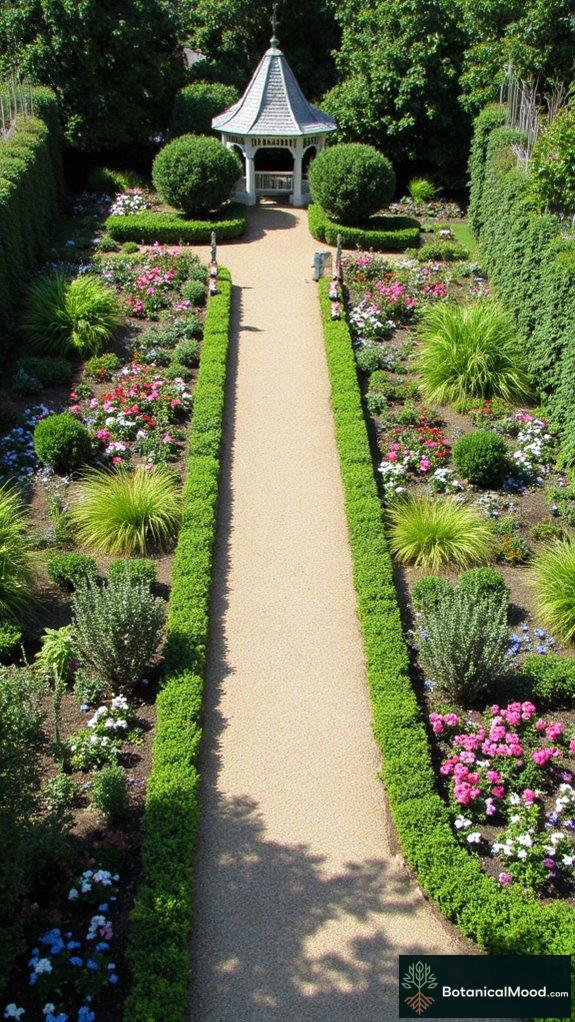
A harmonious garden thrives not just on unity, but also on the delicate balance of its elements. Achieving visual equilibrium requires thoughtful spatial awareness, where symmetrical arrangements might coalesce with asymmetrical balance to create a dynamic contrast. My personal designs often feature focal symmetry, drawing the eye toward specific points while guaranteeing a unified composition.
| Element | Description |
|---|---|
| Scale Variation | Varying sizes for depth |
| Proportional Distribution | Equal spacing across areas |
| Harmonious Spacing | Secures seamless flow |
| Dynamic Contrast | Engaging interplay of colors |
In crafting gardens, I emphasize careful attention to these principles, cultivating spaces that engage the senses and offer innovative viewpoints in every corner. It’s this artfulness that inspired me to create Botanical Mood.
Proportion

Proportion serves as the backbone of a well-designed garden, influencing not only the aesthetic appeal but also the functionality of the space. When I think about visual balance, I realize how critical it’s to contemplate the size of plants like Hydrangea macrophylla (Bigleaf Hydrangea) versus towering structures such as pergolas.
Incorporating varying heights and shapes creates compelling spatial dynamics, allowing each element to coexist harmoniously. For instance, pairing low-growing groundcovers, like Thymus serpyllum (Creeping Thyme), with stately shrubs guarantees every corner of the garden captures attention.
I often explore innovative combinations that highlight the proportion of plant materials, balancing organic forms with geometric hardscapes. This approach not only elevates design but also enhances the overall experience, making every visit a pleasure.
Rhythm and Repetition

These elements promote not only visual interest but also an instinctive rhythm that unfolds as one walks through the scenery.
Envision strolling along curving paths flanked by clusters of soft blooms, their placement mirroring one another, akin to musical notes in a score.
At Botanical Mood, I embrace these principles, aiming to inspire others to innovate in their own verdant spaces.
There’s beauty in repetition, and it can elevate any garden.
Color

Color plays an important role in the garden’s scenery, acting as a visual language that evokes emotion and sets the ambiance. Through color psychology, we perceive how hues impact our feelings, allowing us to craft seasonal palettes that respond to nature’s rhythms.
I find that color harmony is essential; whether I choose monochromatic schemes for tranquility or bold contrasts for dramatic flair, the balance elevates the garden’s aesthetic.
Pastel combinations offer a soft, inviting feel, seamlessly blending with color shifts throughout the seasons.
Incorporating complementary colors can create eye-catching focal points, drawing the eye through the environment.
Texture

Texture adds depth and dimension to a garden, inviting interaction and engagement from those who wander through its spaces.
By working with natural materials and carefully planned texture combinations, we can create a beautiful sensory experience that captivates the eye and enriches the spirit.
Here are some thoughtful elements to explore:
- Tactile contrasts: Mix coarse and smooth surfaces for engaging touch.
- Layered textures: Use various plant textures, like the fine fronds of Acorus calamus against the robust leaves of Rudbeckia hirta.
- Texture shifts: Gradually shift from soft to rugged terrain to guide movement.
- Textural harmony: Combine visual interest with complementary colors and forms.
In my garden, I’ve realized that a mindful approach to texture not only enhances beauty but fosters a profound connection to nature.
Form

As I’ve designed my own space, I’ve realized that mindful attention to form allows me to engage with the environment in a more meaningful way. This reinforces why I created this website, Botanical Mood, to share the beauty of thoughtful design in gardening.
Form exploration in gardens is fascinating; I relish the integration of organic shapes with geometric design. Emphasizing structural elements and well-considered spatial arrangements creates visual harmony while enhancing the natural beauty of terrain contours. Sculptural forms can redefine boundary definitions, inviting visitors to experience the environment dynamically.
Incorporating such innovative designs responds beautifully to the environmental setting, fostering a connection between nature and artistry. This design philosophy cultivates an engaging atmosphere that inspires creativity in both seasoned and novice gardeners alike.
Line

Lines play a critical role in shaping our garden spaces, guiding the eye and influencing the movement through the design. They serve not only as pathways but also as artistic boundaries that define areas and create visual direction.
I love incorporating various line types, such as:
- Curved pathways that invite exploration and soften the surroundings.
- Structural lines formed by hedges or fencing, providing a strong framework.
- Textured edges that blend with plant forms, enhancing harmony.
- Dramatic vertical elements like trellises or sculptures that draw the eye upward.
Focal Points

Focal points act as the enchanting stars of your garden design, drawing attention and creating moments of interest. Their significance lies in guiding the eye, evoking emotion, and establishing a cohesive narrative throughout your outdoor space.
When creating focalizations, consider elements like striking sculptures, vibrant flower beds, or architectural features, such as trellises adorned with beautiful climbing roses (Rosa spp.). A well-placed water fountain, like the classic tiered design, transforms ambiance while anchoring a scene.
Emerging trends encourage incorporating innovative materials, including sustainable components such as reclaimed wood or concrete. Elements like color contrasts—deep purples (Echinacea purpurea) against lush greens—can elevate visual enjoyment.
In embracing these ideas, I found inspiration, helping others to appreciate the radiant beauty of gardens through the lens of thoughtful design on Botanical Mood.
Depth and Layering

Creating a sense of depth and layering in garden design elevates the overall aesthetic, making spaces feel more dynamic and inviting.
I’ve found that thoughtfully arranged overlapping layers create stunning visual depth that captivates the eye. By incorporating various botanical arrangements, you can emphasize contrasting heights and textured planes that add intrigue and complexity.
Consider these key elements for innovative layering:
- Elevation changes: Utilize slopes and terraces to create variations in height.
- Seasonal layering: Choose plants that thrive in different seasons, enhancing visual interest year-round.
- Shadow play: Position taller plants to cast shadows on lower layers, adding depth.
- Contrasting heights: Balance short and tall elements for a visually striking effect.
Engaging these principles truly brings your garden to life.
Edging

Edging serves as the elegant boundary that transforms a garden’s layout from mere practicality into artful expression.
When I consider the endless possibilities, I realize that choosing the right edging materials—be it stone, brick, or composite—can beautifully frame aesthetic borders, enhancing various garden styles, from modern zen (Bonsai) to lush English cottage (Rosa).
Utilizing edging not only delineates spaces but also provides practical applications for maintaining mulch and soil integrity. Creative designs can incorporate curves or geometric patterns, drawing the eye and inviting exploration.
For those seeking to maintain their artistry, I recommend keeping edges tidy with regular trimming and weeding.
Through my exploration with Botanical Mood, I hope to inspire others to appreciate the serenity found in well-defined garden boundaries.
Movement

Movement in a garden is like a gentle breeze, guiding the eye and beckoning one to explore its pathways.
By incorporating dynamic arrangements and directional planting, we create intriguing movement patterns that inspire discovery. I focus on several key elements to enhance spatial dynamics in my designs:
- Natural pathways that invite a sense of flow
- Plant choreography that emphasizes rhythmic landscaping
- Visual shifts that connect seasonal flows
- Gesture in gardens that lead the viewer’s gaze
Simplicity

Simplicity serves as the foundation upon which a soothing garden narrative unfolds, crafting spaces that resonate with serenity and elegance. In embracing minimalist gardening, we reveal the effortless beauty inherent in nature and our design intentions. Picture a garden focused on clean lines, limited palettes, and thoughtfully selected plants.
| Element | Description |
|---|---|
| Plant Variety | Three or four native |
| Pathways | Natural stone or gravel |
| Hardscaping | Simple geometric shapes |
| Color Palette | Monochromatic greens |
Variety

In crafting a garden, embracing variety enriches the experience, transforming the outdoor space into a vivid tapestry of colors, textures, and forms.
By incorporating a rich spectrum of plant diversity, I create a dynamic, ever-changing vista that captivates and delights.
Here’s where innovation shines:
- Seasonal variation: Choose plants that bloom at different times to keep the garden lively year-round.
- Texture contrast: Mix coarse-leaved ferns (Polystichum munitum) with fine grasses (Carex morrowii) for depth.
- Color combinations: Pair bold reds (Rudbeckia hirta) with soothing blues (Nepeta ×faassenii) to evoke emotions.
- Functional variety: Include edible plants alongside ornamentals for both beauty and utility, ensuring ecological benefits.
In my own journey with Botanical Mood, I embrace these elements to craft unique and vibrant spaces.
Contrast

Contrast acts as a powerful design element in garden aesthetics, allowing distinct features to stand out and engage the viewer’s senses. By employing visual contrast through color, texture, and shape, our gardens can evoke emotions and create drama. Light contrast can highlight certain plants, like the bright Leucanthemum (Shasta Daisy), set against dark foliage. Seasonal contrast adds dynamism, as the rich hues of autumn juxtapose winter’s starkness.
Here’s a table that summarizes key types of contrast in gardening:
| Type of Contrast | Example | Effect |
|---|---|---|
| Color Contrast | Red (Rosa) vs. Green | Draws focus |
| Texture Contrast | Smooth (Lavandula) vs. Rough | Enhances depth |
| Seasonal Contrast | Spring Blooms (Tulipa) | Creates anticipation |
Exploring these elements fosters a deeper appreciation for the garden’s design.
Scale

Scale plays an essential role in the overall aesthetic of a garden, influencing both how we perceive space and how different elements harmonize or clash within it.
Scale is crucial in garden design, shaping our perception of space and the harmony among its elements.
Understanding scale impact is significant for creating delightful scale dynamics. Here are some important points to contemplate:
- Scale in planting: Choose plants that accentuate the space, like dwarf conifers (e.g., *Pinus mugo*) in small gardens.
- Scale in hardscaping: Select paving materials that complement your garden’s proportions, avoiding oversized stones that overwhelm.
- Scale relationships: Maintain balance between hardscaped features and plant selections to enhance aesthetic appeal.
- Scale adjustments: Reflect on varying heights and forms to create visual interest while ensuring scale harmony throughout the garden.
In my journey with Botanical Mood, I’ve learned how scale transforms spaces elegantly and functionally.
Harmony

As I’ve explored these principles in my work with Botanical Mood, I’ve discovered how essential harmony is in the garden – it invites both peace and joy, creating environments that feel both intentional and vibrant.
Harmony in nature, much like harmony in architecture, relies on the balance of elements. For instance, visual harmony examples can be found in the complex layering of plants, where harmony through texture complements harmony in color.
The interplay of sound and harmony, such as rustling leaves or chirping birds, enhances the overall experience. I often seek emotional harmony by integrating cultural harmony through plant selections that resonate with community roots.
Likewise, the graceful harmony in movement, whether through leaf sways or flowering cycles, enlivens the setting, creating a dynamic yet serene atmosphere.
Functionality

Functionality stands as a cornerstone of effective garden design, where every element must serve a purpose while contributing to the overall aesthetic experience.
I believe that enhancing garden usability through functional design transforms outdoor living into a harmonious balance between beauty and practicality.
By incorporating practical features, we can achieve remarkable space optimization that not only caters to user engagement but also amplifies the sensory experience.
For example, consider these elements:
- Multi-functional pathways that guide visitors while optimizing space.
- Native plants (e.g., Echinacea purpurea) that accentuate environmental impact and reduce maintenance.
- Seating areas strategically positioned for comfort and relaxation.
- Vertical gardens that maximize limited spaces while adding greenery.
Integrating these concepts not only beautifies but also enriches the garden’s utility.
This understanding inspired me to create Botanical Mood.
Seasonal Interest

How can we guarantee our gardens remain enchanting throughout the changing seasons? By embracing the beauty of seasonal interest, we invite innovation into our outdoor spaces.
Selecting eye-catching winter blooms like Helleborus (Lenten Rose) and vibrant winterberry (Ilex verticillata) keeps our gardens lively during the colder months.
Furthermore, integrating seasonal foliage, such as the rich colors of Nandina domestica or the striking textures of ornamental grasses, can create visual interest even when flowers are sparse.
As I cultivate my own garden, I marvel at how these simple choices foster a dynamic environment that evolves gracefully throughout the year.
Exploring plants that offer distinct charms with each season enhances not just aesthetics but also cultivates a deeper connection to the garden’s cycle—something I cherish deeply in my design philosophy.
Sustainability

While many may overlook the concept of sustainability in garden design, I find it essential for creating a harmonious and thriving outdoor space.
My approach to innovation in gardening emphasizes sustainable practices that benefit both aesthetics and the environment. Here are a few transformative strategies I embrace:
- Utilizing composting techniques to enrich soil health,
- Incorporating native plants (e.g., Echinacea purpurea) to enhance biodiversity,
- Applying permaculture principles to create self-sustaining ecosystems,
- Implementing water conservation methods to reduce environmental impact.
Ecological Integration

Ecological integration forms the backbone of a garden that not only captivates the eye but also harmonizes with the surrounding environment.
By embracing sustainable practices, we enhance ecosystem services that promote soil health and support a diverse array of native plants (e.g., Echinacea purpurea, Asclepias tuberosa).
I focus on creating habitats that foster pollinator support, enriching biodiversity.
Water management techniques, like rain gardens and permeable paving, help manage runoff while increasing climate resilience.
These elements, when intertwined, establish habitat connectivity essential for wildlife migration.
I’m inspired to design gardens that not only please aesthetically but also serve a purpose, turning each space into a thriving ecosystem, showcasing the harmonious blend of beauty and functionality.
That’s the essence I aim to capture through Botanical Mood.
Visual Flow

Visual flow is essential in garden design, connecting visual elements to create a seamless shift that captures the viewer’s attention and invites exploration.
Visual flow seamlessly connects garden elements, captivating viewers and inviting them to explore every corner.
To enhance your garden’s visual flow, consider these key aspects:
- Pathways design that encourages movement, guiding visitors through various spaces.
- Visual connectivity achieved through repeating elements, like colors or textures, creating harmony.
- Spatial organization to define areas, balancing open vistas with intimate nooks for a narrative journey.
- Garden flow facilitated by strategically placed plants (e.g., Lavandula angustifolia) that change beautifully from one space to another.
Innovative designs weave these principles together, ensuring every corner holds intrigue.
Atmospheric Quality

Atmospheric quality plays an important part in garden design, creating an immersive experience that engulfs visitors in a world of tranquility and aesthetic pleasure.
When I think about ambiance creation, I envision a multi-sensory experience where light interplay highlights architectural details and foliage textures.
By integrating sound, such as gentle water features or the rustle of leaves, I enhance emotional impact, inviting deeper contemplation.
To achieve environmental harmony, I layer atmospheric elements, considering spatial dynamics and nature immersion.
Seasonal ambiance changes, like the vivid hues of autumnal foliage (Quercus rubra) or the soft whisper of a spring breeze, continuously refresh our connection to nature.
Every garden should aim for that delicate balance, offering a sanctuary that resonates with both beauty and peace.
Personal Expression

Every garden is a canvas where personal expression takes root, allowing us to showcase our individuality through the choices we make.
I believe that creating a personal sanctuary involves embracing our artistic vision and venturing into expressive settings. Each element reflects our individual style and unique themes, serving as a narrative of our cultural backgrounds.
Consider crafting customized spaces with:
- Diverse plant selections that cater to your aesthetic preferences
- Innovative garden layouts that break conventional molds
- Artful decor that represents personal significance
- Color palettes that evoke desired emotions
Planting Design

When I commence on the journey of planting design, I always consider how the interplay of colors, textures, and forms can create a cohesive narrative in the garden.
My process begins with thoughtful plant selection, ensuring each species complements others. For instance, pairing vibrant Helenium autumnale with soft Lavandula angustifolia crafts a dynamic yet harmonious contrast.
Then, I explore spatial arrangement, meticulously placing plants to enhance depth and movement. Utilizing layers—taller verbascums in the back, mid-height echinaceas in the center, and low-growing thymes in front—creates a lush tapestry that invites exploration.
In cultivating this spatial choreography, I celebrate beauty and innovation, echoing my passion that inspired the creation of Botanical Mood, driving the quest for transformative garden designs.
Hardscape Elements

As I refine the garden’s overall appeal, the hardscape elements become focal points that harmonize with the living components. Thoughtful design transforms stone into beauty, making the garden not just a sanctuary but a work of art.
Here are some innovative hardscape elements to contemplate:
- Patio materials like permeable pavers offer sustainability while adding elegance.
- Walkway design enhances accessibility, guiding visitors through lush scenery.
- Retaining walls provide structural integrity and elevate aesthetic appeal.
- Water features introduce tranquil sounds and reflections, enriching the sensory experience.
Incorporating the latest hardscaping trends, such as decorative fences and innovative outdoor seating, showcases personal style while ensuring practicality.
Lighting fixtures accentuate architectural features like fire pits, creating inviting spaces for gatherings. By integrating these elements, I build a cohesive and breathtaking garden aesthetic.
Maintenance Considerations
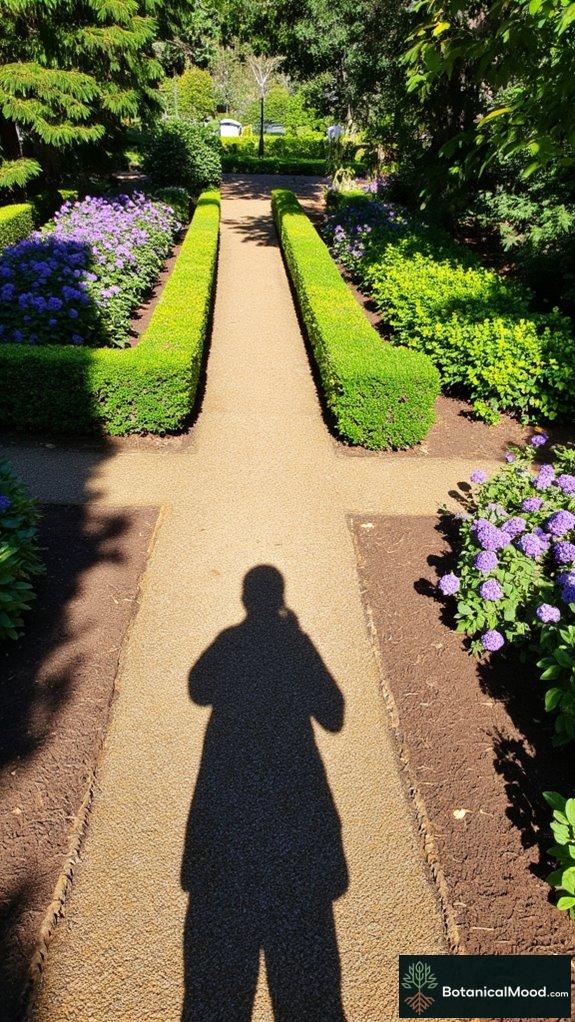
Although gardens can be enchanting sanctuaries, their beauty often demands a dedicated maintenance routine to sustain their appeal.
Effective pest control is essential, safeguarding your plant selection, whether it’s the vibrant Salvia (Salvia spp.) or stately hydrangeas (Hydrangea spp.). Seasonal pruning keeps growth in check and enhances structure, while mulching techniques improve soil health and reduce weed management woes.
Effective pest control, seasonal pruning, and mulching foster a flourishing garden that enhances beauty and minimizes upkeep.
Investing in efficient irrigation systems guarantees dehydration doesn’t mar your garden’s splendor. I often rely on quality garden tools, as they can drastically simplify labor while boosting results.
Don’t overlook landscaping services when your time commitment runs thin, allowing you to relish your garden’s innovation without feeling overwhelmed.
Together, these considerations craft a fascinating, sustainable garden that reflects your aesthetic vision.
Cultural Influence

In shaping a garden’s aesthetic, cultural influences often play an essential part, weaving a narrative that connects personal identity with the natural world.
These gardens reflect the complex tapestry of our cultural heritage while embodying significance in artistic expression. Through a thoughtful blend of traditional practices and contemporary trends, we can create environments infused with meaning.
- Embrace regional diversity to showcase indigenous flora
- Honor symbolic meanings of plants like Magnolia grandiflora for purity
- Integrate area values that respect environmental beliefs
- Cultivate spiritual connections through meditative spaces
Inspired Design Practices

Inspired Design Practices draw from the rich cultural narratives that inform our gardens, enabling us to create spaces that aren’t only visually stimulating but also deeply meaningful.
I find that incorporating inspired materials, such as reclaimed wood or indigenous plants like Echinacea purpurea, can revolutionize our environments. By embracing design experimentation, we challenge traditional aesthetics, allowing for innovative layouts that resonate with the environment and our sensibilities.
Textural contrasts and harmonious color palettes breathe life into areas previously underestimated. Think of vibrant sedums contrasting with the soft greens of moss, creating a tapestry of shades and forms.
At Botanical Mood, I believe each garden is an expression of identity and culture, infused with personal touches that inspire connection and reverence for nature’s artistry.
Garden Design FAQ
What Common Mistakes Should I Avoid in Garden Design?
When designing a garden, I’ve often seen common mistakes that can disrupt the overall beauty.
First, pay attention to your garden layout; avoid overcrowding plants, which can lead to chaos.
Second, color harmony is essential—try blending colors that complement each other instead of clashing.
Finally, I’ve learned that neglecting seasonal dynamics can undermine your design.
Keep in mind, creating an enchanting garden takes thought and careful planning, enhancing both beauty and functionality.
How Can I Incorporate Personal Style Into My Garden?
To incorporate my personal style into my garden, I first choose a color palette that resonates with me—soft pastels or vibrant hues.
I’d explore garden themes like Mediterranean charm with Olea europaea (olive trees) or modern minimalism featuring sleek hardscapes.
I add unique touches, like quirky sculptures or rare plants, creating a vivid tapestry.
What Tools Are Essential for Garden Aesthetics?
For garden aesthetics, I find essential garden tools like trowels, pruners, and weeding forks invaluable.
These help me cultivate aesthetic themes, whether it’s a vibrant cottage garden with *Rudbeckia hirta* or a sleek modern setting highlighting minimalist designs.
High-quality brands like Fiskars guarantee durability and precision.
A well-maintained garden reflects personal style, enhancing beauty through thoughtful design choices and vibrant plant selections, always inspiring my passion for innovation in outdoor spaces.
How Do Seasons Affect Garden Aesthetics and Planning?
Seasons play a crucial role in shaping garden aesthetics and planning.
In spring, vibrant seasonal colors like tulips (Tulipa spp.) and daffodils (Narcissus spp.) emerge, bringing life and excitement.
As winter approaches, I focus on winter structure; evergreens like boxwood (Buxus spp.) provide fundamental green, while ornamental grasses add texture and movement.
Understanding how these seasonal shifts affect my garden helps me create a dynamic environment that captivates year-round, and that’s why I built Botanical Mood.
Can Garden Aesthetics Enhance Property Value?
Absolutely, garden aesthetics can greatly enhance property value.
Think of vibrant flower beds, elegant garden design, and strategically placed outdoor lighting, which together create irresistible curb appeal.
Beautiful flora like Hydrangea macrophylla (bigleaf hydrangea) or colorful perennials can transform ordinary yards into enchanting retreats.
A well-designed garden not only attracts buyers but also fosters emotional connections.
With innovation in mind, I often explore ways to elevate my own green spaces, adding value both creatively and financially.
References
- https://deepgreenpermaculture.com/2025/04/05/the-10-principles-of-aesthetic-garden-design-a-comprehensive-guide-to-creating-beautiful-and-harmonious-spaces/
- https://notanothergardeningblog.com/tag/landscape-design-principles/
- https://extension.psu.edu/principles-of-garden-design/
- https://lucklandscaping.com/what-are-the-10-principles-of-landscape-design/
- https://www.designreview.byu.edu/collections/the-principles-of-garden-design
- https://lofilife.substack.com/p/13-principles-of-great-garden-design
- https://sustainability-success.com/aesthetic-gardens/
- https://www.youtube.com/watch?v=8PaJp8nkjQI