For stunning color harmony in gardens, several layout strategies shine. Monochromatic layouts create calming unity, while complementary pairings, like blue and orange, captivate with contrast. Analogous colors, blending adjacent hues, evoke tranquility. Pastel palettes soothe the senses with soft tones. For vibrant energy, hot colors draw attention, while dynamic arrangements enhance visual appeal. Effective garden maintenance, like soil care and weed control, guarantees these designs flourish. Explore each layout's unique charm to inspire your own beautiful garden.
Quick Takeaways
- Monochromatic layouts create visual unity by using a single color in various shades for depth and interest in the garden.
- Complementary layouts combine contrasting colors, enhancing visual harmony and dramatic effects, while incorporating neutral elements for balance.
- Analogous layouts offer a cohesive aesthetic by using three adjacent colors, promoting tranquility and harmony throughout the garden.
- Pastel layouts evoke calmness with soft, muted tones, effectively integrating green foliage as a neutral backdrop for visual enhancement.
- Themed and nature-inspired layouts express creativity and ecological balance, enhancing overall color harmony while fostering a connection to nature.
Monochromatic Layout
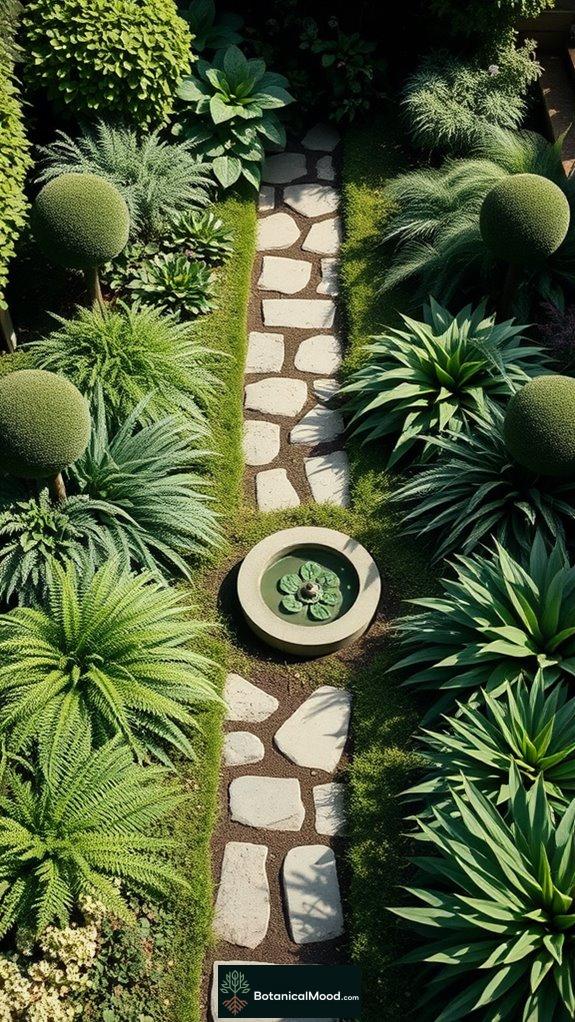
When you think about creating a garden that truly captivates the senses, a monochromatic layout can be an excellent choice. The monochromatic benefits lie in the visual unity it brings, making your garden feel cohesive and calming. By selecting a single color in various shades, I can create depth and interest. However, I've also faced monochromatic challenges, like ensuring enough texture and height variety. Incorporating plants with different shapes, sizes, and foliage adds complexity, while planning for continuous interest keeps the garden lively and engaging. This innovative approach not only beautifies but also inspires my passion for gardening at Botanical Mood. Emphasizing monochromatic color palettes enhances the overall harmony and aesthetic of your garden space.
Complementary Layout
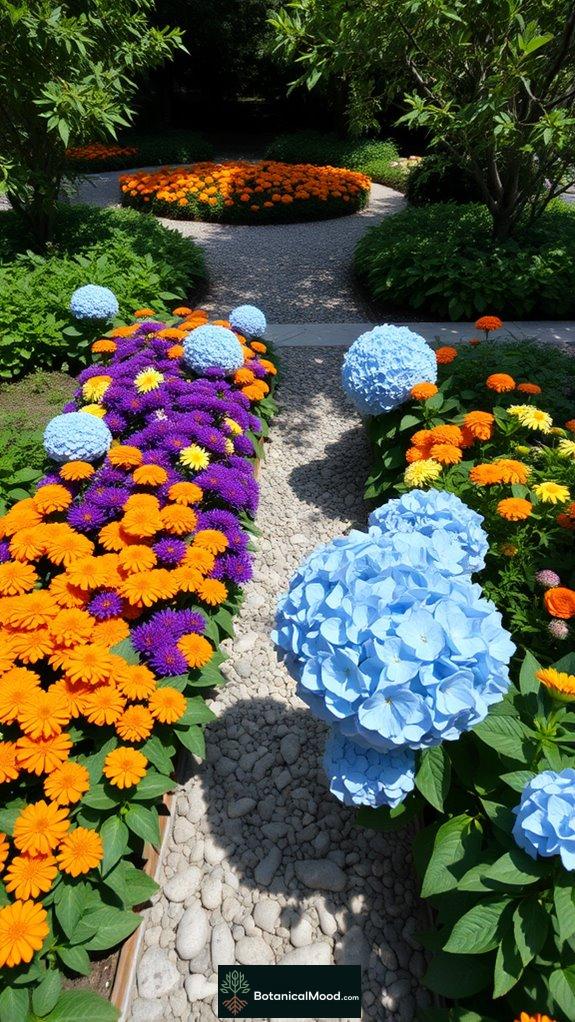
Creating a garden with a complementary layout can truly transform your outdoor space into a vibrant and dynamic oasis.
By understanding complementary color psychology, I've found that pairing colors like blue and orange or yellow and purple creates striking visual harmony. These vibrant color contrasts energize the atmosphere, making every corner pop with life. To achieve balance, I incorporate neutral elements like green foliage, allowing bold colors to shine without overwhelming the senses. Additionally, I embrace a split-complementary design that allows for playful interactions of colors and textures throughout the garden. This technique encourages color blocking principles to enhance the visual impact of the landscape.
I carefully select plants with overlapping bloom times, ensuring seasonal consistency. This thoughtful design approach not only beautifies my garden but also inspires others, which is why I created Botanical Mood.
Analogous Layout
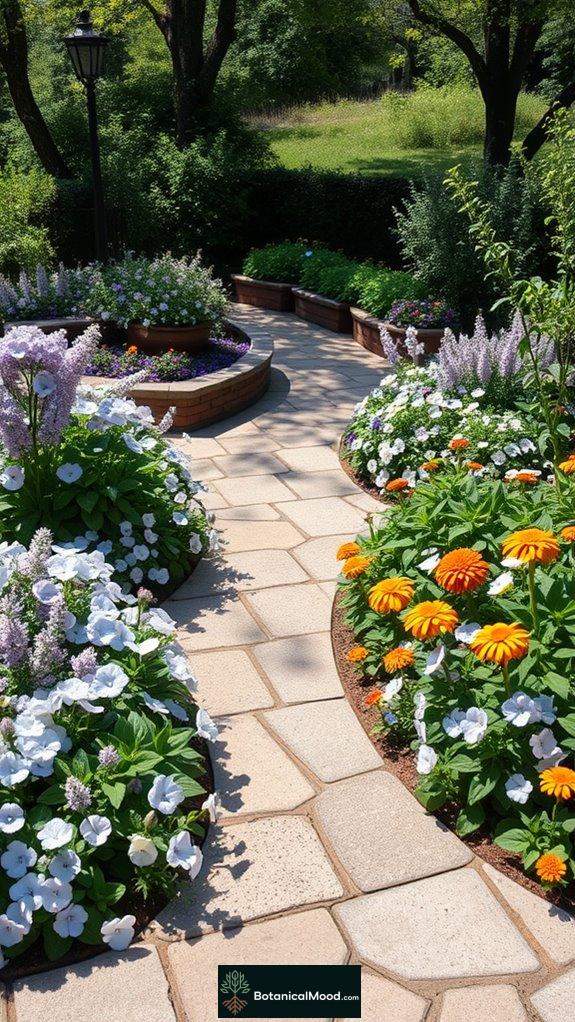
Analogous layouts offer a fascinating way to design your garden, emphasizing harmony and tranquility through color choices. By leveraging the principles of analogous color theory, I can create stunning combinations that soothe the senses. For example, selecting garden plants like lavender, pansies, and petunias can evoke a peaceful atmosphere with cool hues of purple and blue. Alternatively, warm tones like marigolds and zinnias can energize the space. Incorporating three colors side by side ensures a cohesive aesthetic that enhances the overall design. In my experience, considering texture and height enhances the overall appeal, while ensuring plants share similar soil and water needs promotes healthy growth. This approach truly reflects my passion for innovative garden design. Additionally, using vibrant color combinations can elevate the visual impact of your arrangements even further.
Pastel Layout

Pastel layouts in garden design captivate the senses with their soft, muted tones that evoke a sense of calm and tranquility.
The pastel color psychology truly shines here, creating an enchanting atmosphere perfect for relaxation.
Here are three innovative ways to embrace this aesthetic:
- Combine soft pinks, lavenders, and pale yellows for a harmonious palette.
- Integrate pastel garden accessories, like furniture and decor, to enhance your design.
- Use green foliage as a neutral backdrop to make pastels pop, inviting whimsy and serenity into your space.
Additionally, incorporating seasonal color wheel concepts can elevate your garden's aesthetic to new heights.
This balance inspires me to celebrate beauty through my website, Botanical Mood.
Hot Color Layout
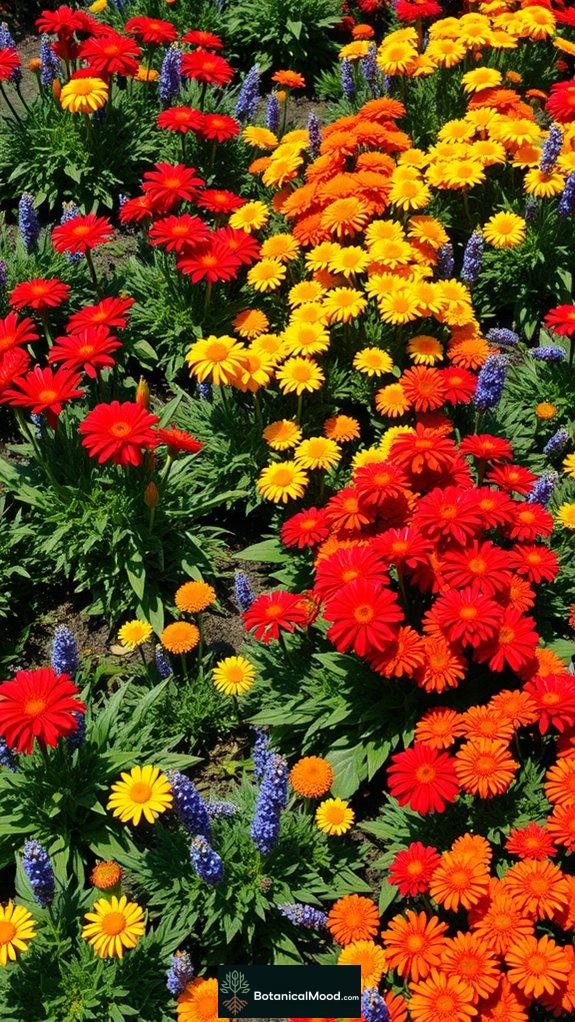
While pastel layouts offer a serene and gentle aesthetic, hot color layouts bring an explosion of energy and vibrancy to garden design.
Embracing hot color psychology, I've discovered that hues like reds, oranges, and yellows can create a stunning visual impact. These colors reflect more light, making spaces feel lively and closer.
I love using vibrant energy to draw attention to specific features, such as Asiatic lilies or red-leaved plants. By mixing hot colors with cool tones, I achieve a dynamic contrast, enhancing depth.
Seasonal planning guarantees my garden remains a vibrant spectacle throughout the year, which is why I created Botanical Mood—to inspire others to explore innovative designs. Incorporating seasonal color harmony ensures that the garden transitions beautifully through the seasons.
Nature-Inspired Layout
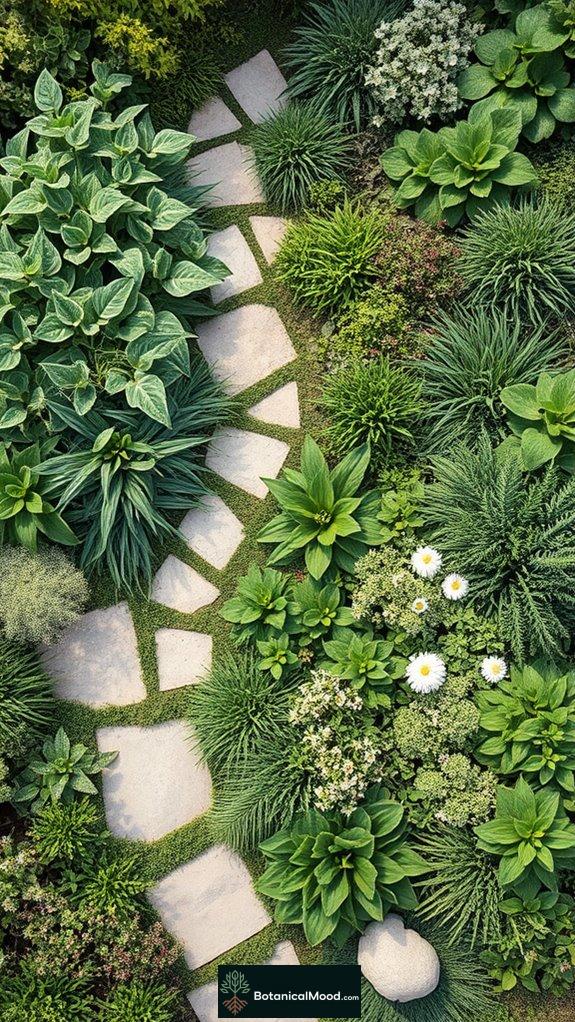
When creating a garden, I often find inspiration in the natural world around me. This leads to the development of nature-inspired layouts that reflect ecological balance and harmony.
These designs embrace nature inspired aesthetics and promote sustainable practices, making them both beautiful and functional.
Here are three elements I love to incorporate:
- Layered Planting: Mimicking natural habitats with multiple plant layers.
- Wild Planting: Creating a spontaneous look by intermingling native plants.
- Eco-Friendly Maintenance: Focusing on sustainability through minimal chemical use and recycling.
This approach not only enhances biodiversity but also fosters a serene atmosphere in my garden. Additionally, implementing regenerative planting techniques can significantly improve soil health and overall garden vitality.
Seasonal Layout

Creating a seasonal layout for a garden not only allows for a dynamic display of colors throughout the year, but it also fosters a deeper connection to nature's rhythm.
In my garden design, I focus on thoughtful plant selection that reflects each season's beauty. Spring bursts with tulips and daffodils, while vibrant daylilies and lavender dominate summer.
Fall brings rich chrysanthemums and warm-toned perennials, and winter showcases the structure of evergreens. By layering plants with varied bloom cycles, I guarantee constant visual interest. This harmonious approach is essential for visual garden planning, inspiring me to create Botanical Mood, where innovative garden designs flourish, encouraging everyone to explore the magic of seasonal layouts.
Mixed Media Layout

Incorporating a mixed media layout into my garden design allows for a vibrant interplay of colors, textures, and forms that creates an immersive experience. This approach sparks my creativity, blending various elements to achieve stunning visual effects. Here are three key components I love to integrate:
- Plant Diversity: Mixing flowers, foliage, and edible plants enhances both beauty and functionality.
- Natural Features: Incorporating stone and wood adds depth and character.
- Artistic Integration: Including sculptures or unique art pieces transforms the atmosphere, reflecting my mixed media inspiration while enriching the overall design.
Additionally, using edible landscaping techniques allows for sustainable gardening that is both visually appealing and productive. Each element contributes to a cohesive, harmonious garden.
Themed Layout

Themed layouts in garden design allow me to express my creativity while crafting spaces that resonate with specific moods and ideas, making each visit an experience to recall.
From cottage gardens bursting with wildflowers to gothic gardens featuring dark decor, the possibilities for themed gardens are endless. I love incorporating seasonal blooms, like tulips in spring or vibrant summer plants, to maintain color harmony.
Garden decor elements, such as pathways and water features, enhance these themes beautifully. Additionally, incorporating natural woodland elements can create a sense of tranquility and connection to nature.
Each unique layout I create fuels my passion for gardening and inspired my website, Botanical Mood, where I share these innovative designs with others.
Zone-Based Layout
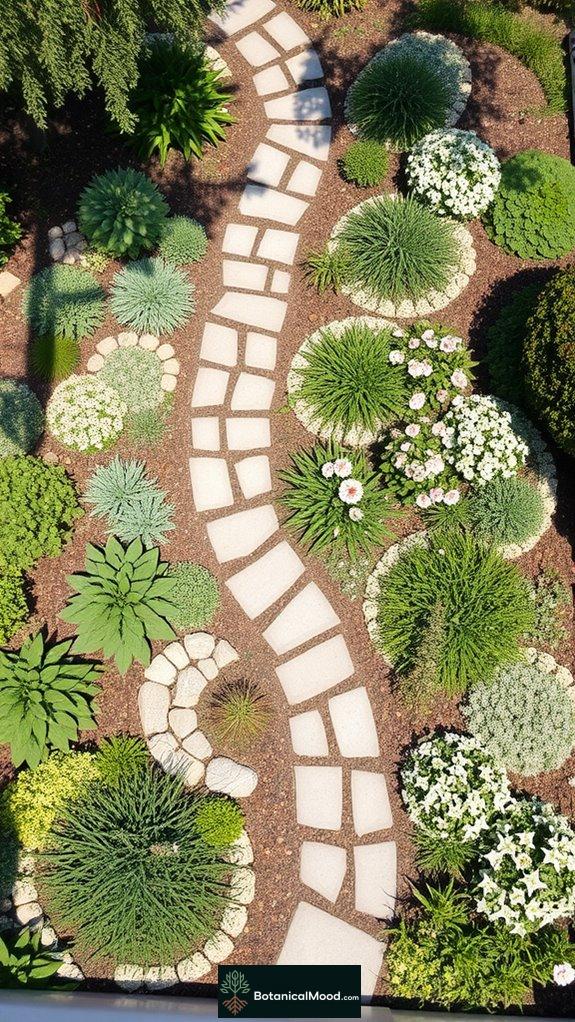
After exploring the imaginative world of themed layouts, it's fascinating to contemplate how a structured approach can enhance garden design.
Embracing zone organization allows for ideal plant placement, ensuring zone efficiency and space optimization.
Consider these three key aspects:
- Climate Adaptation: Choose plants that thrive in your specific environment.
- Soil Health: Regular testing and amendments support robust growth.
- Traffic Flow: Design pathways that allow easy movement between zones.
Additionally, implementing xeriscaping principles can significantly reduce water usage while maintaining a beautiful garden.
Transitional Layout
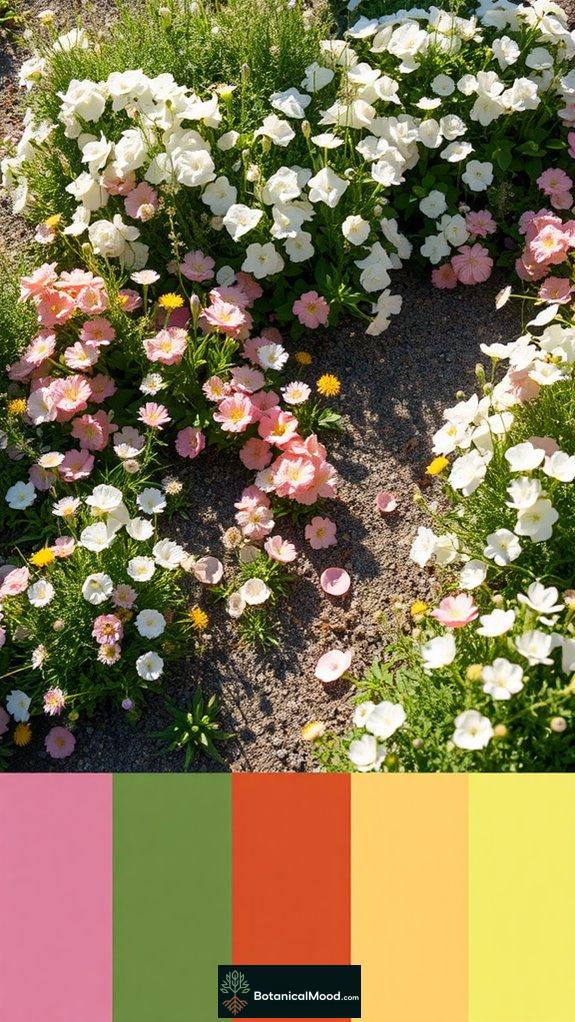
Transitional layouts offer a unique approach to garden design by seamlessly blending various colors and textures, creating a visually appealing environment that evolves with the seasons.
I love how these layouts balance warm and cool colors, ensuring harmony throughout the year. By incorporating neutral shades like white and cream, I soften potential color clashes, guiding the eye effortlessly.
Seasonal shifts introduce pastel tones in spring and warm colors in summer, enhancing the garden's appeal.
Incorporating pastel wildflowers is a wonderful way to add charm and softness to the landscape.
I often experiment with foliage diversity and varying plant heights, crafting layers that provide year-round interest. This innovative design philosophy inspired my website, Botanical Mood, where I share my passion for garden aesthetics.
Gradient Layout
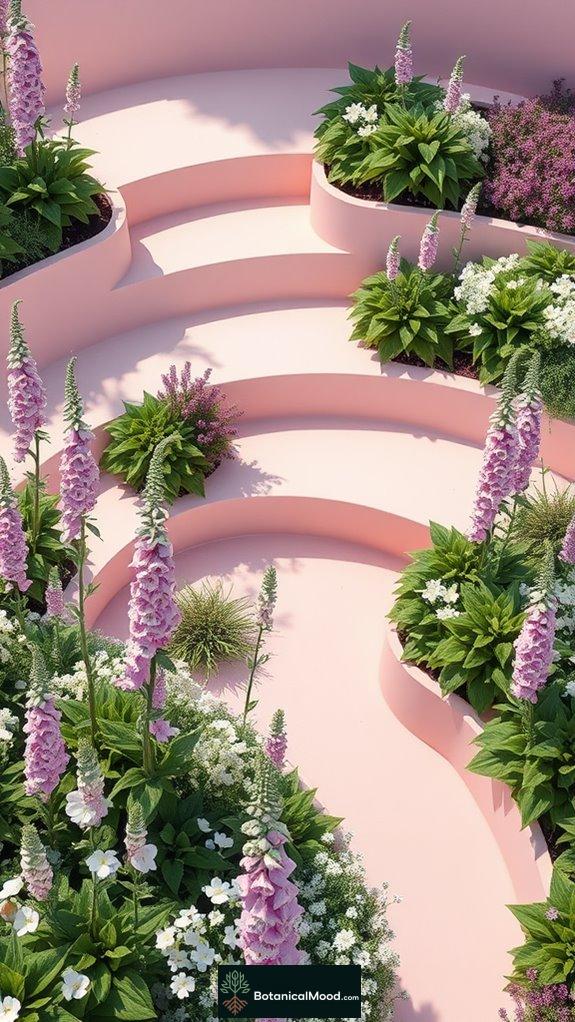
Gradient layouts captivate me because they transform the natural contours of a garden into a harmonious tapestry of colors and textures.
Through innovative gradient design techniques, I can create visual interest that flows seamlessly across the scenery.
Here are three key elements I consider for a stunning gradient layout:
- Gradient plant selection: Choose plants with varied heights and textures, like foxgloves and snapdragons, to add drama.
- Terracing: This maximizes usable space and visual impact.
- Analogous colors: Using shades that complement each other enhances unity and beauty in my garden design, making it an inviting retreat. Additionally, selecting monochromatic plants can further enhance the cohesive feel of your garden space.
Color-Focused Walkways

Color-focused walkways can transform the way we experience our gardens, inviting exploration and admiration.
By blending unique pathway textures, like pavers and gravel, I create striking visual contrasts that draw the eye. Envision smooth glass pieces nestled among colored pebbles, catching sunlight and adding a playful sparkle.
I often choose monochromatic or complementary color schemes, allowing flowers and foliage to enhance these pathways year-round. Incorporating geometric pathway designs can further elevate the aesthetic appeal and structure of the garden.
Using innovative materials, like custom concrete or wooden slabs, I harmonize the walkways with my home's architecture. This thoughtful design not only beautifies my garden but also inspires others, which is why I created Botanical Mood.
Layered Layout
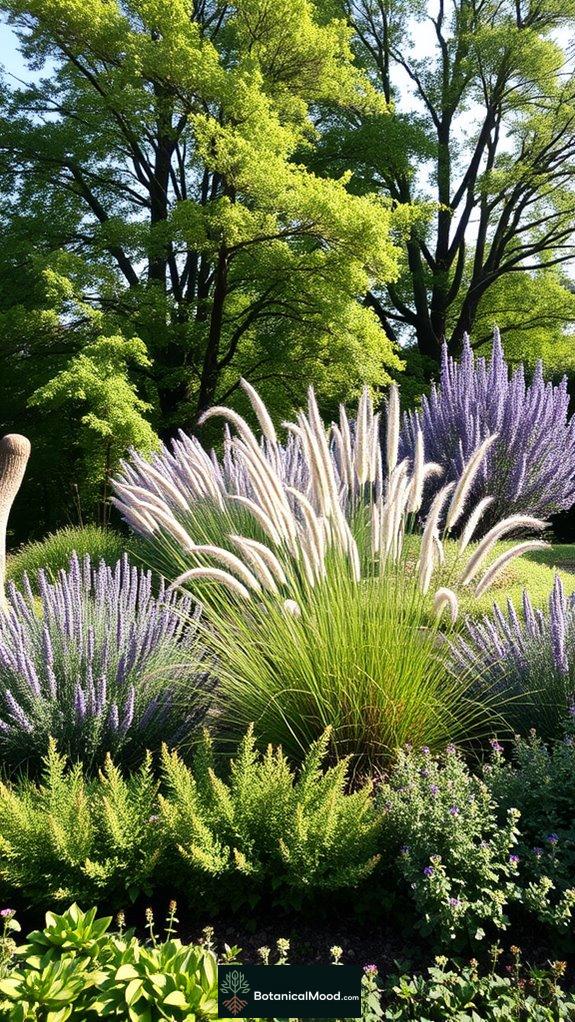
Layered layouts in gardens not only enhance aesthetic appeal but also create a sense of depth and harmony that invites exploration.
By employing a variety of plants at different heights, you can achieve stunning layered textures that captivate the eye.
Here are three key elements to evaluate:
- Tall Specimens: Use trees and tall shrubs to form a striking backdrop.
- Middle Ground Variety: Mix ornamental trees and perennials for dynamic visual flow.
- Foreground Charm: Incorporate low-growing plants for an intimate edge.
This thoughtful layering not only brings beauty but also supports biodiversity, inspiring my passion for garden design through Botanical Mood. Additionally, incorporating native woodland plants into your layered layout can enhance the ecological balance of your garden.
Geometric Layout
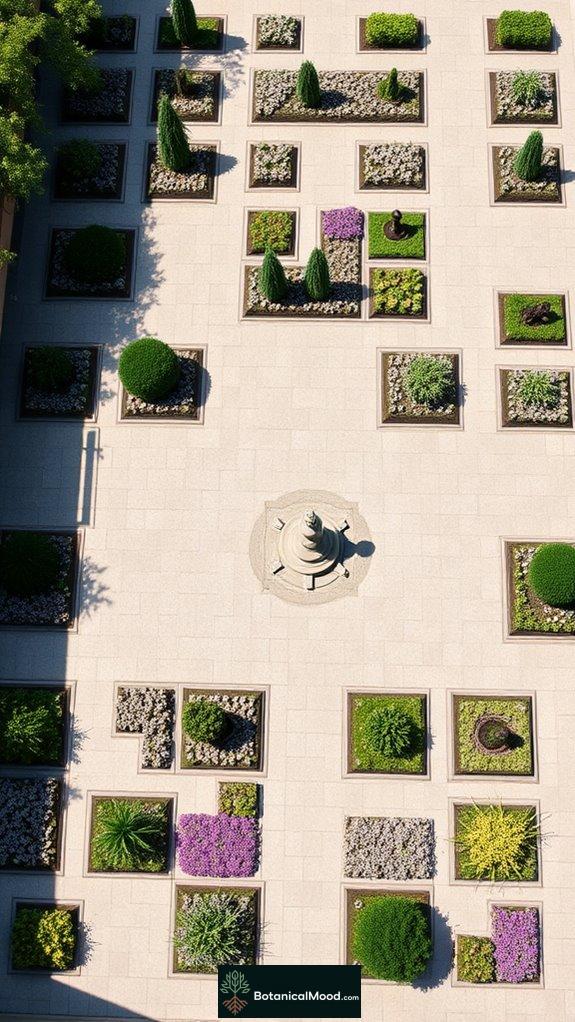
Geometric layouts transform gardens into structured masterpieces, offering a unique blend of order and creativity. They create a sense of geometric harmony, where pathways and planting beds align to enhance garden symmetry.
In my experience, using grids, circular designs, or triangular arrangements not only defines spaces but also guides the eye through stunning features. Incorporating hardscape elements like pavers or fountains adds structure, while columnar trees and low-growing plants maintain visual integrity.
At Botanical Mood, I appreciate how geometric designs maximize beauty and functionality, making them ideal for any garden size, even those with challenging shapes. Additionally, understanding abstract landscape composition allows designers to create more dynamic and visually engaging spaces.
Complementary Color Plantings

When you think about designing a garden, the choice of plant colors can greatly influence its overall appeal.
Complementary color plantings offer a dynamic way to energize your garden using colors from opposite sides of the color wheel. Here are some inspiring pairings:
- Bright yellow sunflowers with violet flowers
- Purple lupines alongside yellow day lilies
- Blue hydrangeas next to vibrant orange flowers
These planting techniques create stunning contrasts, enhancing visual interest.
To maintain harmony, consider using tints or shades, balancing bold colors with softer tones.
I created Botanical Mood to help you explore these innovative design possibilities.
Vibrant Plant Color Arrangements

Creating a garden that bursts with vibrant colors not only draws the eye but also invites a sense of joy and tranquility.
I love crafting vibrant arrangements that play with color psychology, using reds, oranges, and yellows to energize spaces. Balancing these bold hues with softer tones like baby pink or pale peach creates a charming effect, reminiscent of English gardens.
Incorporating green foliage as a backdrop enhances visual harmony, while blocks of solid color near entrances make striking statements.
Complementary Color Planting Strategies
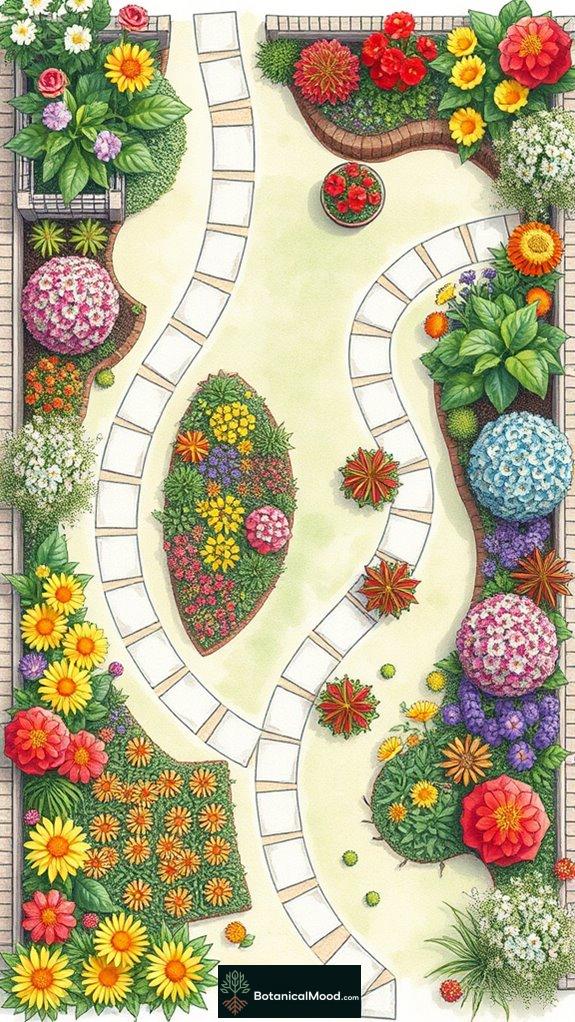
In my experience, utilizing complementary colors in garden design not only enhances visual appeal but also creates a sense of balance that resonates with visitors.
Here are three effective strategies for implementing complementary color pairings:
- Choose Seasonal Blooms: Select plants that bloom at different times to maintain vibrant color throughout the seasons.
- Create Thematic Areas: Divide your garden into sections featuring distinct complementary color schemes for visual interest.
- Incorporate Structures: Use fences or containers in complementary colors to tie your garden elements together.
Complementary Color Planting Design
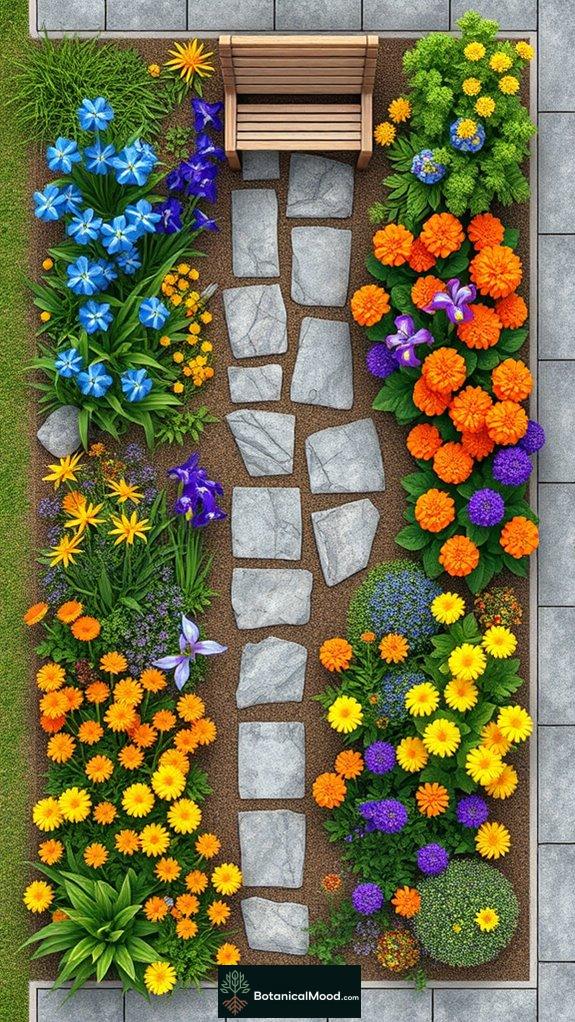
Understanding the principles of complementary color planting design can transform an ordinary garden into a vibrant masterpiece. By utilizing complementary color combinations, like blue and orange or yellow and purple, you can create dynamic contrasts that draw the eye and enhance visual interest.
I often turn to color wheel applications to identify these striking pairs, ensuring a lively atmosphere. By incorporating foliage and structural elements in these colors, I add depth and texture to my designs.
Balancing these bold hues with neutral elements maintains harmony, allowing the beauty of complementary colors to shine throughout the seasons in my garden.
Garden Maintenance Responsibilities

Garden maintenance responsibilities encompass a range of tasks that are essential for keeping a garden thriving and beautiful.
Garden maintenance involves vital tasks that ensure your garden remains vibrant and flourishing throughout the seasons.
- Weed Control: Regularly removing weeds guarantees they don't outcompete desired plants.
- Irrigation Efficiency: Maintaining an effective irrigation system optimizes water usage, while soil testing enhances plant health.
- Seasonal Tasks: Engaging in lawn care, tool upkeep, and composting strategies throughout the year keeps the garden vibrant.
References
- https://www.finegardening.com/article/simplify-your-color-scheme
- https://lifehacker.com/home/plan-garden-by-color
- https://www.monrovia.com/be-inspired/garden-color-palette-guides.html
- https://comegic.org.mx/wp-content/uploads/2023/06/Como-escribir-articulo-cientifico.pdf
- https://extension.uga.edu/publications/detail.html?number=B1396&title=landscape-basics-color-theory
- https://www.gardeningknowhow.com/special/spaces/monochromatic-color-garden.htm
- https://www.academygardendesign.com/blog/how-to-choose-a-color-scheme-for-your-garden
- https://greenwoodplants.co.uk/planting-inspiration/monochromatic-planting-scheme/
- https://alcde.com/2021/04/how-to-design-a-harmonious-flowerbed/
- https://gardengoodsdirect.com/blogs/news/the-basics-of-monochromatic-landscape-design