Looking to turn your shady spot into a woodland paradise?
Trust me, I’ve been there – my garden was more of a dark corner than a serene getaway. Adding native plants has been a game changer!
Wild Ginger creates the ultimate lush carpet—goodbye boring ground! Plus, who doesn’t love fancy Virginia Waterleaf blooms preaching elegance?
And let’s not forget Early Meadow Rue for those high-maintenance vertical vibes. Wild Columbine’s flowers? Pollinator magnets!
It’s like inviting a mini ecosystem to chill in your backyard—seriously. Just don’t ask me to pick a favorite; they all shine in their quirky ways!
Designing a Woodland Garden with Personal Touches
Let me take you back to my first attempt at a shade garden. Armed with garden gloves and reckless optimism, I simply tossed plants in without a plan. Was I desperate for that woodland vibe? Absolutely! Everything looked like a jumbled mess.
After a year of trial and error, I learned to layer plants for depth and texture. Combining Eastern Star Sedge with those wild beauties gave my shady corner character and made it an inviting retreat. This experience taught me that planning doesn’t kill creativity; it elevates it. So don’t shy away from experimenting—you might just grow a slice of paradise!
Quick Takeaways
- Wild Ginger is ideal for dappled light, featuring heart-shaped leaves and maroon flowers that create a lush carpet in shade gardens.
- Virginia Waterleaf flourishes in moist, rich soil, offering gentle elegance with its heart-shaped leaves and delicate blooms from April to June.
- Early Meadow Rue reaches heights of 2-3 feet, attracting pollinators with soft greenish-white blooms and feathery foliage for vertical interest.
- Wild Columbine, with its nodding red and yellow flowers, attracts hummingbirds and butterflies, adding tranquility and whimsy to woodland gardens.
- Eastern Star Sedge thrives in low light and wet soils, providing texture and contrast while requiring minimal maintenance for serene environments.
Wild Ginger (Asarum Canadense Reflexum)

When I think of the serene beauty of shade gardens, Wild Ginger (Asarum canadense reflexum) instantly comes to mind, a remarkable native perennial that thrives in dappled light beneath larger trees.
With its heart-shaped leaves and maroon, hooded flowers, it invites you to explore the subtle elegance found in the forest understory.
Planting Wild Ginger creates a lush, textured carpet that harmonizes beautifully with ferns and hostas. Its ability to tolerate poor soil conditions enhances its charm.
I find it an essential choice for creating tranquility, embodying the essence of a woodland retreat—just the way I envision a peaceful garden setting to share with nature.
Virginia Waterleaf (Hydrophyllum Virginianum)

Virginia Waterleaf (Hydrophyllum virginianum) deserves a place in every shade garden, particularly as it flourishes in moist, rich soil often found in woodland settings. This perennial adds a gentle elegance, with its soft, heart-shaped leaves and delicate, white to lavender blooms that effortlessly capture the eye.
| Attribute | Value |
|---|---|
| Height | 12–18 inches |
| Sun Exposure | Partial to full shade |
| Bloom Time | April to June |
| Soil Type | Moist, well-drained |
| Hardiness Zones | 3 to 7 |
Integrating Virginia Waterleaf can transform your tranquil garden into a lush retreat.
Early Meadow Rue (Thalictrum Dioicum)

Following the enchanting presence of Virginia Waterleaf, Early Meadow Rue (Thalictrum dioicum) unfolds its own unique charm in the shade garden, often gracing a woodland setting with its ethereal beauty.
I’m captivated by its delicate, feathery foliage and its airy blooms that sway gently in the breeze.
Here are four beautiful aspects of Early Meadow Rue:
Discover the enchanting beauty of Early Meadow Rue, showcasing delicate blooms and lush foliage in your shade garden.
- It thrives in moist, well-drained soil.
- The height adds vertical interest, reaching 2-3 feet tall.
- It attracts pollinators, fostering biodiversity in your garden.
- The flowers feature soft greenish-white tones, harmonizing effortlessly with other shade-loving plants.
Wild Columbine (Aquilegia Canadensis)

In the domain of shade gardens, Wild Columbine (Aquilegia canadensis) stands out as a true gem, with its enchanting, nodding flowers displaying a delightful palette of red and yellow hues that beckon both the eye and the soul.
I’ve planted these delicate beauties under the dappled light of mature trees, watching as their whimsical blooms sway gently in the breeze.
They’re not just visually intriguing; their nectar draws in hummingbirds and butterflies, creating a lively atmosphere.
It’s moments like these that inspire my passion for creating tranquil spaces.
Consider incorporating Wild Columbine into your garden; you won’t regret it.
Eastern Star Sedge (Carex Radiata)

As I explore the diverse world of shade plants, Eastern Star Sedge (Carex radiata) captures my attention with its stunning foliage and ability to thrive in low-light conditions.
This resilient sedge offers an ethereal beauty, enhancing my tranquil garden space with its soft, arching leaves.
When considering Eastern Star Sedge, I appreciate its:
- Tolerance for wet soils
- Delicate texture, creating contrast
- Low maintenance requirements
- Ideal growth in dappled sunlight
Incorporating this native plant into your environment not only enriches biodiversity but also offers a serene escape that resonates with the essence of nature’s beauty. Additionally, Eastern Star Sedge is often found in rustic woodland gardens, making it a perfect choice for those seeking to create a peaceful retreat.
Indian Pink (Spigelia Marilandica)

Brightening the shadowy corners of shade gardens, Indian Pink (Spigelia marilandica) stands out with its striking tubular flowers and vibrant green foliage.
These gorgeous blooms, often appearing in clusters, showcase a delightful mix of red and yellow that absolutely draws the eye, inviting you closer. I love how they thrive in moist, well-drained soil, especially under the dappled light of deciduous trees, creating a serene atmosphere.
Planting them alongside ferns or hostas offers an enchanting display, enhancing the tranquil mood we crave in our gardens.
Their enchanting beauty truly embodies the peaceful spirit I aim for in my spaces.
Wild Geranium (Geranium Maculatum)

Wild Geranium (Geranium maculatum) brings a gentle grace to shade gardens, with its delicate yet striking lavender-pink flowers emerging in early spring, creating a soothing palette that harmonizes beautifully with lush greenery. I find them to be perfect companions for a tranquil retreat. Here are four reasons to contemplate adding them to your garden:
- Low Maintenance: They require minimal care once established.
- Naturalize Beautifully: They spread gracefully, creating a soft, flowing look.
- Attract Pollinators: Their blossoms invite bees and butterflies.
- Diverse Foliage: Their stunning, variegated leaves provide interest throughout the growing season. Additionally, these plants thrive in low-maintenance shade gardens, allowing you to enjoy their beauty without excessive upkeep.
Virginia Bluebells (Mertensia Virginica)

Virginia Bluebells (Mertensia virginica) are often considered a quintessential addition to any shade garden, especially for those looking to create a vibrant display in spring. Their delicate, nodding blue flowers bloom in clusters, igniting a sense of tranquility that I find enchanting.
These native perennials thrive in rich, moist soil and appreciate dappled sunlight, making them perfect companions for ferns and hostas.
As they gracefully fade by early summer, their soft green foliage makes way for more robust plants, ensuring a dynamic aesthetic throughout the seasons.
Incorporating Virginia Bluebells into your garden can transform a simple space into a serene retreat.
Solomon’s Seal (Polygonatum Biflorum)
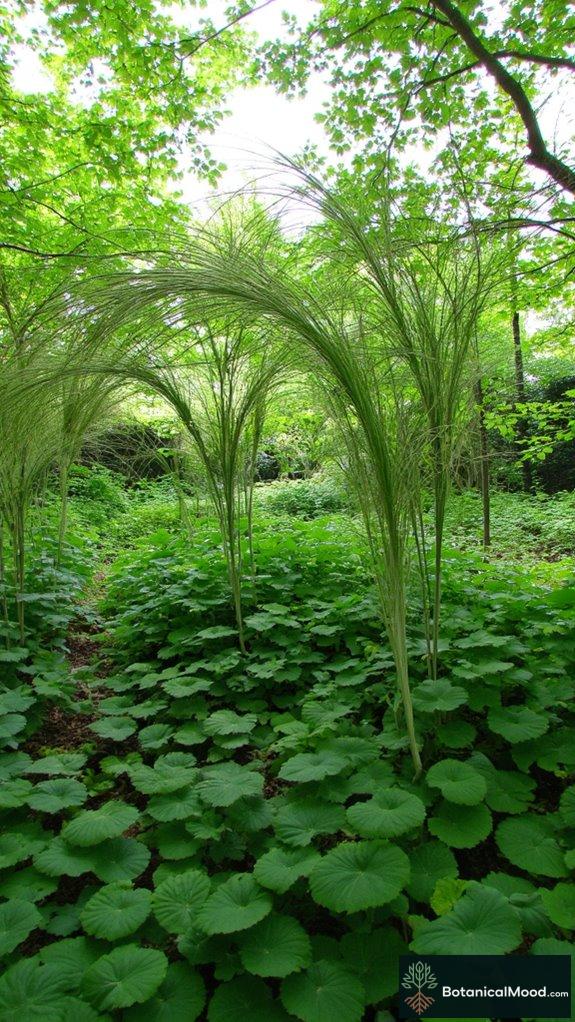
While delving into the charm of shade gardens, one can’t overlook the elegance of Solomon’s Seal (Polygonatum biflorum).
This perennial boasts arching stems adorned with delicate, bell-shaped flowers that exude understated beauty.
If you’re considering adding this gentle plant to your garden, here are a few enchanting features:
- Height: Reaches 1-3 feet, creating layered depths.
- Foliage: Lush, green leaves that gracefully sway with the breeze.
- Wildlife-friendly: Attracts pollinators, enhancing biodiversity.
- Versatility: Thrives in moist, shaded areas, perfectly complementing other woodland plants.
In my journey with Botanical Mood, I’ve admired its serene presence in tranquil settings.
Crested Iris (Iris Cristata)

Nestled among the enchanting foliage of shade gardens, Crested Iris (Iris cristata) stands out with its striking beauty and unique growth habits. This perennial gem thrives in moist, well-drained soil, bringing a delicate charm to your tranquil retreat.
With its stunning, delicate blue-violet flowers, it creates pleasing contrasts against vibrant green leaves, capturing the attention of passersby.
I adore how easily it adapts to varying light conditions, making it forgiving for gardeners like myself. Its creeping rhizomes provide excellent ground cover, filling spaces gracefully.
Placing Crested Iris in clusters enhances the undulating rhythm of your woodland oasis, promoting a serene atmosphere.
Serene Woodland Design Concept
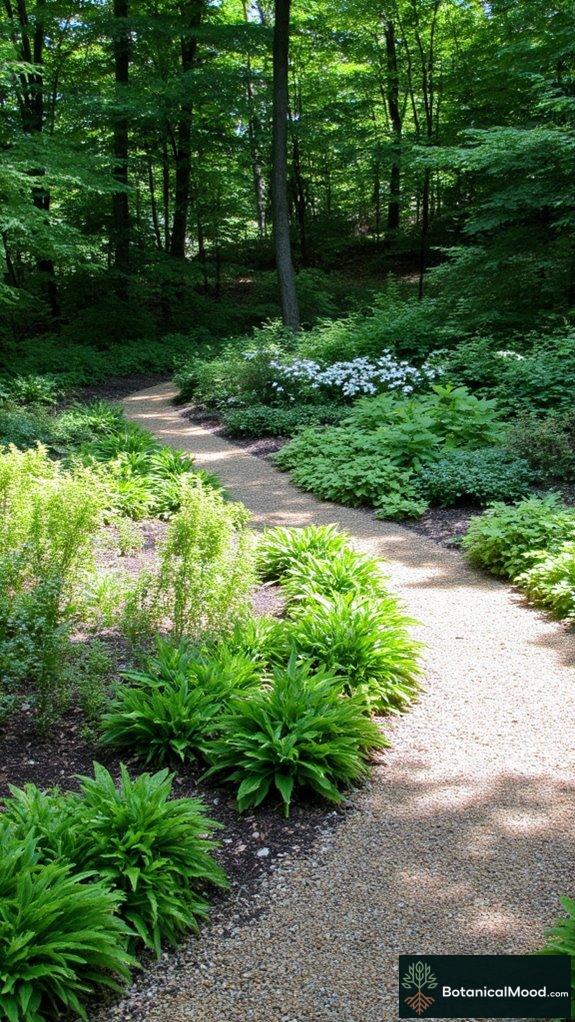
Creating a serene woodland garden requires a careful blend of design principles that respect and enhance the existing scenery.
I truly believe that by embracing natural elements, we foster a more intimate, harmonious environment. Incorporating native plant layouts can significantly improve the ecological balance of the space.
Here are four key considerations for your design:
- Integrate Topography: Allow slopes and contours to guide your layout.
- Use Curving Paths: Create meandering walkways for exploration.
- Natural Materials: Opt for wood chips or gravel to maintain authenticity.
- Focal Points: Incorporate mature trees or small water features for tranquility. Woodland gardens often include native plants that create a symbiotic ecosystem, enhancing the natural beauty of the space.
Such elements invite you to slow down, breathe deeply, and fully engage with the calming beauty surrounding you.
Plant Arrangement for Shaded Areas

To guarantee a thriving shade garden, understanding the layered structure of vegetation is essential, as it mirrors the natural woodland ecosystems that many of us admire.
I begin by selecting native canopy trees—oak, maple, and cherry—to establish the upper layers. Next, I incorporate understory trees like serviceberry and pawpaw for mid-level texture, while using dogwood and spicebush shrubs to enrich biodiversity beneath.
Ground layers, adorned with ferns and herbaceous perennials, create seasonal interest. Proper arrangement enhances aesthetics: taller plants at the back, with mass plantings that mimic nature—this beautiful tapestry captivates, inviting both wildlife and serenity into my garden space. A diverse range of native plants is crucial for attracting pollinators, enriching the ecological value of the landscape.
Meet the Garden Innovator

The owner, Emily Thompson from Michigan, cultivated her passion for native plants through years of exploring local woodlands. This exploration led her to envision a sustainable, vibrant shade garden that would support local ecology.
To design her garden, Thompson meticulously researched native species suited for shaded environments. She engaged in the garden design process by consulting the “Made in the Shade Native Garden” kit, which provided her with essential understanding into plant selection and arrangement.
Thompson conducted thorough research on shaded native species and utilized the “Made in the Shade Native Garden” kit for guidance in her design process.
In creating her garden, Thompson utilized tools like a spade and garden trowel from Fiskars. She combined these tools with accessories such as biodegradable plant markers.
Additionally, she collaborated with local horticulturists, including experts from the Michigan Native Plant Society, to guarantee effective implementation of her design.
Celebrity Garden Favorites

Gardens that capture the eye and heart often originate from the personal preferences of their creators, reflecting an intimate connection to nature.
In my exploration of celebrity gardens, I noticed a fondness for certain plants that embody tranquility and beauty:
- Hostas and ferns, with their lush foliage, offer effortless grace.
- Boxwood ‘Sprinter’ serves as a versatile architectural element.
- The unique flowers of Epimedium x warleyense ‘Orange Queen’ create enchanting ground cover.
- Ligularia’s bold, dramatic leaves infuse life into shaded spaces.
These selections not only reflect individual style but also celebrate nature’s soothing embrace in our serene sanctuaries.
References
- https://westcook.wildones.org/top-10-native-plants-for-shade/
- https://grownative.org/learn/native-landscape-plans/shady-haven/
- https://www.plantnovanatives.org/shade-gardens
- https://www.americanmeadows.com/content/create-an-easy-shade-garden-with-woodlands-patience
- https://www.prairiemoon.com/native-wildflowers-for-shade
- https://www.gardendesign.com/landscape-design/woodland-garden.html
- https://atlturf.com/woodland-landscape-design-and-tips-for-georgia/
- https://ecogardener.com/blogs/news/designing-a-woodland-garden-tips-and-inspiration
- https://www.monrovia.com/be-inspired/design-a-lush-woodland-garden.html
- https://www.youtube.com/watch?v=nGgLmJBg4CY
- https://www.naturalthemes.com/native-plants-for-a-shaded-areas-woodland-gardens/
- https://www.ecolandscaping.org/05/designing-ecological-landscapes/landscape-design/in-the-shade-gardening-with-native-plants-from-the-woodland-understory/
- https://www.epicgardening.com/native-plants-for-shade/
- https://mostlynativeshade.com/woodland-plants/
- https://www.myhomepark.com/products/made-in-the-shade-1
- https://www.prairienursery.com/plants-seeds/site-conditions/shade-partial-shade.html
- https://designsbynaturellc.com/product/woodland-shade-garden-kit/
- https://wildrootsnj.com/blog/designing-a-jersey-friendly-shade-garden
- https://www.housebeautiful.com/lifestyle/gardening/g18665158/shade-loving-plants/
- https://www.youtube.com/watch?v=C7IL2d9uOck
- https://www.epicgardening.com/zone-9-shade-perennials/
- https://www.homesandgardens.com/celebrity-style/audra-mcdonald-low-maintenance-shade-garden
- https://www.youtube.com/watch?v=y-UsHWa5PoY