Ever dreamt of a wildflower garden that looks straight out of a storybook?
Creating my own was a soft pastel adventure in pinks, yellows, and greens. My free spirits—pansies and baby’s breath—dance gracefully with the wind, ensuring every visit feels fresh.
And who doesn’t love a little rustic warmth from reclaimed wood? Adds charm, right?
Choosing sustainable heroes, like Butterfly Weed and Purple Coneflowers, not only gives my garden sass but also invites butterflies—nature’s confetti.
But let’s face it; sometimes plants just refuse to cooperate. Ever had a perennial pull a disappearing act? Hilarious and frustrating.
But that’s gardening, isn’t it?
Finding Balance in Chaos: My Garden Design Journey
A few years ago, I embarked on transforming a dreary backyard into my dreamy escape. I remember staring at a patch of dirt and thinking, “Can I really make magic here?” Spoiler: I did!
I started with whimsical flowers in soft shades, mixing wild and ordered. Picture this: a draping blanket of lavender with pops of sunflower joy peeking through. The first time a butterfly fluttered in? My heart soared!
Yet, I learned the hard way—some plants just didn’t play well together. There I was, knee-deep in weeds, realizing that nature has its own rules. It’s a chaotic dance, balancing beauty and biodiversity—like life itself, right?
Quick Takeaways
- Choose a pastel color palette with soft pinks, lavenders, and creamy yellows to create a harmonious and tranquil atmosphere in your garden.
- Incorporate nostalgic blooms like pansies, phlox, and daisies, along with airy baby’s breath and foxgloves for texture and height.
- Use natural materials such as reclaimed wood and stone paths to enhance the garden’s warmth and sensory experiences.
- Design relaxed cottage-style flowerbeds with diverse heights and native plants to promote biodiversity and attract pollinators.
- Consider including edible flowers like nasturtiums for beauty and utility, ensuring minimal care with a focus on perennial varieties.
Choosing a Pastel Color Palette

When designing a dreamy pastel wildflower garden, selecting the right color palette is essential to creating a serene and inviting atmosphere.
I often find that soft pinks, gentle lavenders, and creamy yellows blend harmoniously, invoking a sense of tranquility.
Consider using hues from brands like Farrow & Ball, which are beautifully muted yet vibrant.
Incorporating faded greens and sandy neutrals as your backdrop allows these pastels to pop while enhancing their delicate charm.
Selecting Nostalgic and Wildflower Blooms

Selecting the right nostalgic and wildflower blooms transforms your pastel garden into a vibrant tapestry of colors and memories.
I love choosing blossoms like delicate pansies, sweet-scented phlox, and pastel-colored daisies, which evoke childhood afternoons spent wandering through lush fields. You can also incorporate airy baby’s breath or whimsical foxgloves for texture and height.
When choosing blooms, consider seasonal varieties for continued interest; early spring brings tulips, while late summer yields lovely asters. Each flower adds a layer of history and emotion, creating a garden that whispers of simpler times, a vision I cherish deeply through Botanical Mood.
Incorporating Natural Materials and Textures

Incorporating natural materials and textures into your pastel wildflower garden elevates its aesthetic and creates a harmonious atmosphere that resonates with nature’s quiet beauty.
Consider using reclaimed wood for raised beds, its weathered grains adding warmth, while stone paths guide you through gently swaying flowers. Incorporating gravel or pebbles brings a soft crunch underfoot, enhancing the sensory experience.
Natural twine can add rustic trellising to support climbing blooms like sweet peas or morning glories, intertwining beauty with functionality. By carefully selecting materials that echo the soft palette, I find an intimacy with nature that inspires every visitor—something I cherish in my own garden, shared here at Botanical Mood. Additionally, incorporating DIY mosaic designs for decorative stepping stones can further enhance your garden’s charm and personal touch.
Designing Relaxed Cottage-Style Flowerbeds

Designing relaxed cottage-style flowerbeds often involves embracing a delightful chaos that pays homage to nature’s untamed beauty. I love creating spaces that feel intimate and inviting, using a mix of blooms, textures, and colors.
Here are some tips I cherish:
- Layering Plants: Use diverse heights for visual interest, layering taller blooms behind shorter ones.
- Seasonal Blooms: Incorporate perennials and annuals to guarantee continual color.
- Natural Edging: Use stones or soft curves instead of rigid borders.
- Ethereal Color Palette: Opt for soft pastels and whites for a dreamy effect.
Incorporating a variety of cottage garden styles not only enhances the aesthetic charm but also creates a harmonious environment.
These elements create a sense of nostalgic charm in any space.
Prioritizing Sustainability With Plant Selection

When you embrace sustainable gardening practices, not only do you contribute positively to the environment, but you also create a lush, vibrant scenery that thrives year after year.
Choosing native plants, like coneflowers and black-eyed Susans, enhances biodiversity, attracting pollinators while reducing water usage.
Select perennial varieties that flourish in your local climate, ensuring they require minimal care.
Incorporating edible flowers, such as nasturtiums, adds beauty and utility to your garden.
I find deep joy in curating lush palettes of soft pastels, creating a serene escape.
To further support local ecosystems, consider incorporating pollinator-friendly native plants that provide essential resources for bees, butterflies, and other beneficial insects.
Join me on this journey to a sustainable, picturesque garden that nourishes both nature and our souls.
Enhancing Tranquility With Water Features
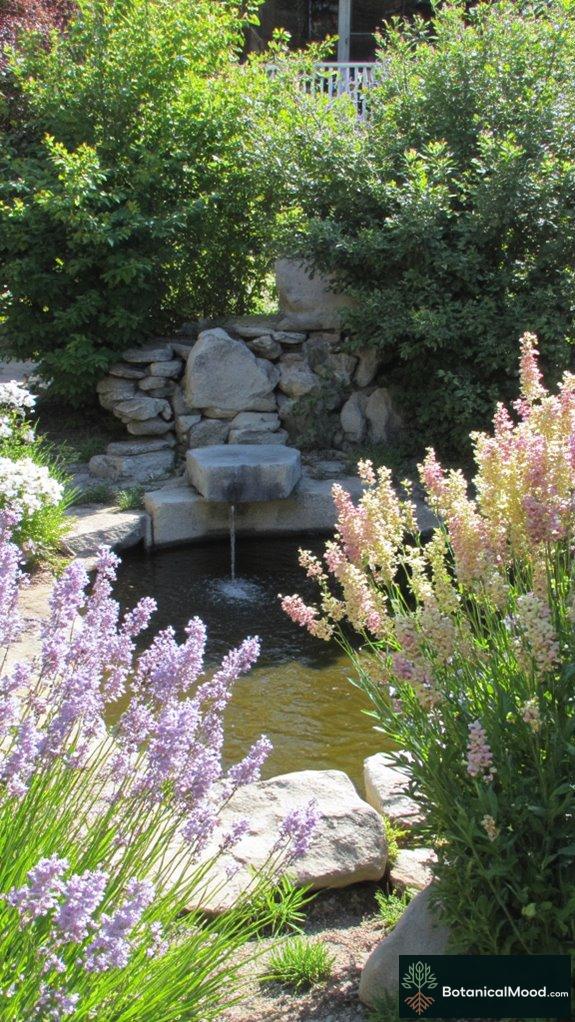
Incorporating water features into your garden not only enhances its aesthetic appeal but also promotes a serene atmosphere that invites relaxation and contemplation. The gentle sound of water can transport you to a tranquil place, filling your space with calm energy. Here are a few ideas to evaluate:
- Garden Ponds – Capture reflections of pastel blooms and sky, creating a serene focal point.
- Fountains – Add soft, bubbling sounds, and contemplate solar-powered styles for sustainability.
- Bird Baths – Attract feathered friends that add life and movement to your garden.
- Waterfalls – Create layered textures while blending beautifully with your wildflower garden.
Additionally, integrating water feature styles can enhance the overall harmony of your outdoor space.
Charming Rustic Flower Arrangements

Creating charming rustic flower arrangements can transform any space into a cozy retreat, evoking the beauty of nature’s simplicity. I love starting with mason jars or antique containers that add a touch of history, while burlap wraps and wooden accents enhance the rustic charm. Choosing focal flowers like deep burgundy dahlias, surrounded by soft ivories and textural fillers like baby’s breath, creates depth and warmth. Preparing your flowers by cutting stems at a 45-degree angle and hydrating them immediately ensures they remain fresh and vibrant throughout the arrangement. Incorporating natural materials like moss and twigs adds authenticity. I often aim for a loose, asymmetrical arrangement that embodies wildness, effortlessly blending earthy colors and varying flower shapes to evoke the serene beauty of a countryside garden.
Garden Path Winding Gently

Rustic flower arrangements weave a delightful narrative into the garden’s tapestry, setting the stage for enchanting elements like gently winding paths that beckon exploration.
To create that perfect pathway, consider these key elements:
- Shape the path with gentle curves that align with natural contours, enhancing the garden’s flow.
- Choose materials proportionate to your space—smaller stones for intimacy, larger pavers for grandeur.
- Incorporate focal points, like raised beds, to encourage visitors’ curiosity.
- Ascertain each path serves a purpose, enhancing accessibility and inviting lingering moments among the blooms.
Embrace the charm of pathways and let your garden guide you.
Meet the Floral Garden Creator

Meet the Floral Garden Creator: Sarah Thompson, hailing from the vibrant state of Oregon, found her passion for gardening after spending childhood summers exploring local wildflower meadows, inspiring her dream of designing serene pastel gardens.
To achieve her garden design vision, Thompson immersed herself in studying ecological gardening principles and plant species. She meticulously planned the layout, selecting seasonal bloom times and integrating native wildflowers to create a lush, biodiverse space tailored to the unique Oregon climate.
Thompson’s dedication to ecological gardening shapes a vibrant, biodiverse landscape that flourishes in Oregon’s unique climate.
Thompson skillfully utilized tools like a garden trowel and soil aerator, while also incorporating decorative elements from brands like Gardena and Fiskars to enhance her garden’s functionality.
Collaborating with local horticulturists, she made certain that her garden design supported pollinators and emphasized natural beauty throughout the seasons.
Popular Perennial Favorites

When considering your garden’s aesthetic, choosing popular perennial favorites is essential for achieving a lush and harmonious pastel wildflower design.
I adore Butterfly Weed, with its vibrant orange blooms enticing butterflies, nestled among Purple Coneflowers’ pink petals, and Shasta Daisies’ classic white. Each plant flourishes in full sun, weaving a rich tapestry of color and life.
Gaillardia adds warm hues, while Lupines bring vertical charm, creating a stunning focal point.
These robust perennials enhance biodiversity, inviting pollinators into my garden. I aim to inspire you through my journey at Botanical Mood, celebrating the beauty of nature intertwined with thoughtful design.
References
- https://www.monrovia.com/be-inspired/garden-style-trends-and-colors.html
- https://www.housebeautiful.com/uk/garden/plants/a62936708/2025-floral-trends/
- https://www.housebeautiful.com/uk/garden/a63419187/garden-trends-2025/
- https://perishablenews.com/floral/monrovia-announces-the-top-garden-design-trends-of-2025/
- https://phsonline.org/for-gardeners/gardeners-blog/global-gardening-floral-trends-2025-flower-show
- https://abbeyroadfarm.com/a-beginners-guide-to-basic-flower-arranging/
- https://www.frenchflorist.com/blogs/rustic-elegance-sunflower-arrangement/
- https://www.arugulatango.com/blog/diy-flower-arrangements-tips-and-tricks-creating-stunning-displays
- https://www.youtube.com/watch?v=uZYlX6jJAj8
- https://ehomemart.com/blogs/news/10-rustic-flower-arrangements-for-your-home-decor
- https://urban-earth.co.uk/garden-pathway-design-ideas/
- https://www.learningwithexperts.com/blogs/articles/how-to-design-garden-paths
- https://gardendrum.com/2012/07/06/designing-garden-paths/
- https://about.oceanstatejoblot.com/paving-the-way-to-paradise-a-guide-to-crafting-modern-garden-pathways/
- https://www.livingetc.com/ideas/garden-path-ideas
- https://www.gardeningknowhow.com/garden-how-to/design/lideas/creating-pastel-gardens.htm
- https://www.youtube.com/watch?v=07JRPln9QX0
- https://www.homesandgardens.com/gardens/wildflower-garden-ideas
- https://lawnlove.com/blog/design-ideas-for-your-wildflower-garden/
- https://lovelygreens.com/how-to-create-a-wildflower-cottage-garden/
- https://www.americanmeadows.com/content/wildflower-gardening/perennial-plants-for-wildflower-meadows
- http://www.nativenurseries.com/blog/2016/2/21/plant-native-perennial-wildflowers-for-long-lived-beauty-in-the-garden
- https://www.shrubhub.com/blog/the-top-wildflower-garden-ideas.php
- https://www.lawnstarter.com/blog/landscaping/a-beginners-guide-to-wildflower-gardens/
- https://costafarms.com/blogs/get-growing/perennial-garden-design-tip