Expert Tips For Placing Backyard AI Garden Pet Cameras
Ever tried to spy on your dog’s backyard shenanigans without feeling like a secret agent?
I mounted my Eufy C120 at 5 ft, IP66‑rated, right where the garden path curves. The 45° corner angle catches every sniff and sprint, while AI filters out wind‑blown leaves that would otherwise scream “intruder!” Night‑vision tests saved me from a blurry midnight mystery, and now my family can peek at the action on any device.
Does it feel weird watching Fido chase a squirrel in ultra‑HD? I’m thrilled—and a little guilty—by the clarity. Still, I admit the perfect spot is a moving target; weather and pet moods keep me guessing.
—
Garden Design Tips: Making Your Backyard Camera‑Friendly
When I re‑landscaped my yard, I added a low‑lying stone path and a few solar‑powered LED strips. The path naturally guides the dog, giving the camera a clear line of sight, while the LEDs boost night‑vision contrast. I chose drought‑tolerant lavender and rosemary—fragrant, low‑maintenance, and visually distinct for AI object detection. The result? A garden that looks good, smells great, and feeds the camera the right data. Want a backyard that’s both Instagram‑ready and pet‑approved? Try pairing functional planting with strategic camera placement.
Quick Takeaways
- Mount cameras 4–6 feet high on elevated brackets to capture ground-level pet activity clearly.
- Position cameras at 45-degree corner angles to maximize garden coverage and reduce blind spots.
- Place cameras along natural pet pathways to capture authentic movement and behavior patterns.
- Use AI detection features to filter false alerts from wind, shadows, and environmental noise.
- Verify IP66+ weatherproofing ratings to protect cameras from moisture, temperature swings, and seasonal elements.
Verify IP66+ Weatherproofing For Outdoor Pet Cameras
When you’re installing an AI pet camera in your backyard or garden environment, weatherproofing isn’t merely a convenience—it’s a fundamental requirement that determines whether your device survives seasonal exposure to rain, humidity, temperature fluctuations, and UV radiation.
I’d recommend verifying IP66+ ratings before purchasing, as this outdoor durability standard guarantees complete dust protection and powerful water jet resistance.
The Eufy C120 exemplifies this specification, delivering reliable weather resistance for garden installations.
You’ll find that IP66-certified cameras withstand harsh conditions, protecting your investment while maintaining consistent pet monitoring across seasons, confirming your backyard surveillance system performs reliably through moisture, temperature swings, and environmental stressors that challenge lesser-rated devices.
Position Cameras 4–6 Feet High To Maximize Coverage
Once your weatherproofed camera‘s installed, you’ll want to position it strategically to capture extensive pet activity across your garden layout.
Mounting at 4–6 feet height—roughly eye level for most pets—provides ideal surveillance of ground-level movement while minimizing blind spots near perennial beds and pathways.
- Elevated mounting brackets position Eufy C120 or aosu P1 Pro models above vegetation, eliminating obstruction from ornamental shrubs and herbaceous layers.
- 360° rotation capability (Furbo, Petlibro) requires unobstructed placement on pergolas or fence posts for complete garden coverage.
- Installation tips: secure cameras on sturdy structures away from direct water spray zones, ensuring clear sightlines across planted areas.
- Wide-angle lens efficiency captures pet behavior near seating areas and garden boundaries without repositioning.
When selecting among outdoor pet cameras, prioritize models with robust weather sealing and durable materials to withstand seasonal temperature fluctuations and moisture exposure in your backyard environment. The best outdoor pet cameras feature advanced AI detection to distinguish between pets and other movement, reducing unnecessary alerts during monitoring.
Mount Near Pet Pathways For Engagement And Movement Capture
Strategic camera placement along your pet’s preferred routes through the garden—whether that’s the worn grass corridor between fence line and patio, the mulched pathway skirting raised beds, or the frequent crossing points near garden gates—captures authentic movement patterns and behavioral engagement you’d otherwise miss.
I’ve found positioning cameras at these natural thoroughfares reveals how your pet interacts with terrain features, vegetation zones, and seasonal changes. Modern camera technology with 360° pan/tilt capabilities and AI pet tracking detects subtle pet behavior shifts across garden microclimates, from shaded understory areas to sun-exposed perennials, enabling preventive health observations and enrichment optimization. Pairing your camera system with anti-tip pet feeders positioned along these pathways ensures your pet’s feeding station remains stable during movement and engagement around the garden.
Use AI Detection To Skip False Wind And Shadow Alerts

Because backyard monitoring systems capture continuous footage across shifting light conditions, wind-rustled foliage, and shadow play throughout the day, you’ll encounter significant false-positive alerts without intelligent filtering—and that’s where modern AI detection capabilities become indispensable for distinguishing genuine pet movement from environmental noise.
- AI bark detection paired with shadow monitoring settings eliminates wind-triggered notifications from rustling vegetation (Hedera helix, Ilex aquifolium)
- Camera sensitivity settings adjustable by zone reduce false alerts from dappled shade patterns across lawn areas
- Wind detection adjustments distinguish pet motion from leaf disturbance, particularly valuable near dense plantings
- Alert customization options enable you to prioritize genuine activity while filtering environmental variables entirely
Your garden monitoring transforms from noise-laden to precision-focused surveillance.
Set Up Multi-Device Access For Family Monitoring
When you’re managing pet activity across multiple household members—whether you’re coordinating care routines, monitoring pets during work hours, or guaranteeing family members can respond to alerts simultaneously—multi-device access transforms your backyard AI camera from a single-operator tool into a collaborative monitoring ecosystem.
Cameras like Skymee support up to eight simultaneous logins, enabling extensive family access policies across smartphones, tablets, and desktops.
Establish clear multi-device configurations designating primary caregivers, secondary monitors, and alert recipients. This distributed oversight guarantees someone responds immediately to barking detection or unusual movement patterns in your garden perimeter, optimizing real-time pet safety coordination throughout your household network.
Test Night Vision Range Before Finalizing Placement
How does your backyard’s ambient light—whether from neighboring streetlights, moon phases, or existing scenery fixtures—actually perform with your chosen camera’s night vision capability?
I’d recommend testing your Furbo 360° (color night vision) or aosu P1 Pro (infrared) across different lighting conditions before permanent installation.
Your placement strategies should account for seasonal variations, vegetation density, and outdoor structures casting shadows.
- Test during new moon phases versus full moon cycles for realistic performance assessment
- Evaluate infrared range against deciduous plants (Acer palmatum) and evergreens creating sight-line obstructions
- Position cameras away from direct porch lighting that causes glare or washes out thermal detection
- Document footage quality at varying distances to optimize 360° coverage without placement compromises
Corner Angle Captures Ground Activity
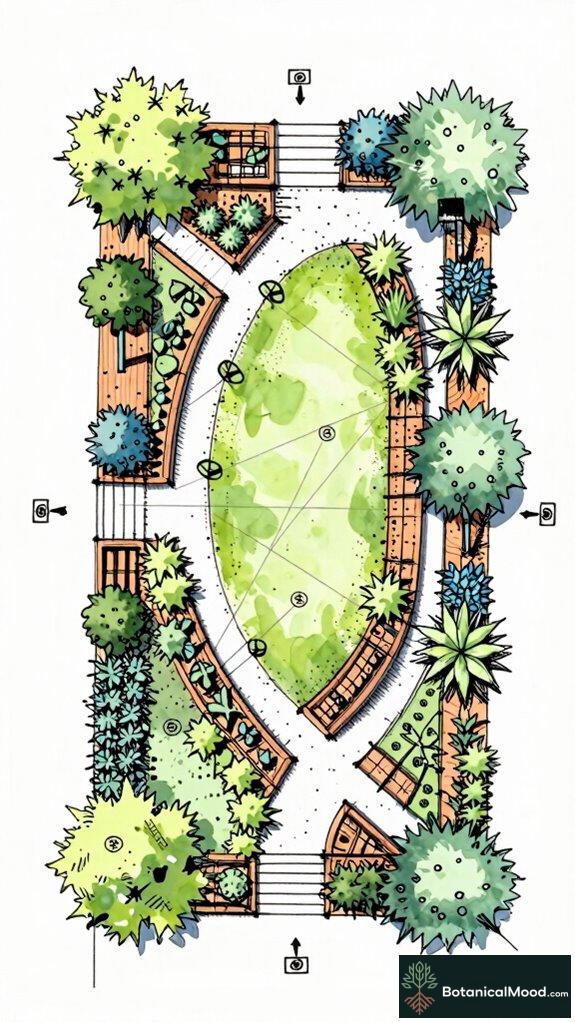
Two strategic corner placements—typically at diagonally opposite yard vertices—create overlapping sight lines that capture ground-level activity your standard centered camera’d miss entirely.
I’ve found that positioning cameras at 45-degree angles toward your garden’s center reveals burrowing behavior, ground-nesting patterns, and low-level pest activity (Lepidoptera larvae, soil-dwelling arthropods) that overhead angles obscure.
Your angle adjustments should account for vegetation density and seasonal growth; what works in spring may require repositioning by summer when herbaceous plants mature. Pairing your cameras with soil moisture sensors helps correlate pet activity patterns with garden hydration needs throughout the growing season.
This camera placement strategy maximizes detection across turf areas, mulched beds, and hardscape shifts, proving invaluable for thorough backyard monitoring without blind spots. Consider integrating solar-powered monitoring systems to ensure your cameras remain operational throughout extended backyard surveillance periods without frequent battery replacements.
Pet-Safe Plant Options Guide
Integrating pet-safe ornamentals into your backyard AI monitoring setup requires understanding which species won’t pose toxicity risks to dogs, cats, and other garden visitors—a consideration I’ve found essential when designing around camera sightlines and ground-level activity zones.
- Non-toxic flowering species: Spider plants (Chlorophytum comosum), Boston ferns (Nephrolepis exaltata), and African violets (Saintpaulia ionantha) provide visual interest without toxicity concerns.
- Strategic garden design positioning: Place pet-safe plants near Eufy C120 or Tapo C120 weatherproofed cameras for ideal ground activity capture. Consider installing fence height barriers to prevent dogs from accessing areas outside your monitored garden zones.
- Native ornamentals: Incorporate dogwood (Cornus), serviceberry (Amelanchier), and coneflowers (Echinacea) for regional adaptation. For year-round garden resilience, winter hardy succulents like sedums and sempervivums offer pet-safe alternatives that withstand cold months while maintaining aesthetic appeal in monitored zones.
- Avoid toxic varieties: Eliminate lilies, sago palms, and oleander from monitoring zones entirely.
Building Raised Beds Safely
Once you’ve established which pet-safe plants thrive in your backyard monitoring zones, you’ll want to build the structural foundation that keeps them—and your pets—secure.
I recommend selecting raised bed materials like untreated cedar, composite decking, or galvanized steel, avoiding pressure-treated lumber that leaches toxins. Your garden layout should incorporate camera positioning strategically—place AI cameras like the Eufy C120 (IP66-rated) at elevated corners for thorough oversight.
Space beds eighteen inches apart, allowing adequate sightlines for 360° pan/tilt rotation. Guarantee structural stability with proper drainage, preventing moisture accumulation that attracts pests. For waste management beneath your garden beds, consider installing underground pet waste digester systems to maintain a hygienic growing environment.
Consider pairing your camera system with training treat pouches worn by you or mounted near garden stations to reward pets for staying within safe zones during monitoring sessions.
This thoughtful arrangement maximizes both plant protection and continuous pet surveillance throughout your developing garden ecosystem.
FAQ
Can I Use Indoor AI Pet Cameras Outdoors With Weatherproof Enclosures?
Yes, you can adapt indoor cameras outdoors with weatherproof enclosures, though I’d recommend prioritizing IP-rated models like Eufy C120 for superior outdoor durability. Strategic camera placement maximizes performance in garden environments.
How Often Should I Clean Camera Lenses in Garden Environments?
I’d recommend cleaning your camera lens weekly in garden environments. Outdoor conditions—pollen, dust, moisture, and debris—accumulate rapidly, degrading image quality. More frequent cleaning during high-pollen seasons guarantees peak AI tracking performance.
What’s the Ideal Camera Refresh Rate for Tracking Fast-Moving Pets?
I’d recommend 30fps minimum for smooth tracking accuracy with pet camera specifications. You’ll want 60fps if your furry friend’s a sprinter—it captures every leap and bound without motion blur, giving you that cutting-edge surveillance experience.
Does Local SD Storage Work Better Than Cloud for Outdoor Footage?
I’d argue local SD storage wins for outdoor footage—it’s your reliability insurance against cloud outages. You’re getting instant access, lower latency, and zero dependency on internet connectivity. That’s the innovation edge you’re seeking.
How Do I Prevent Garden Wildlife From Triggering False Pet Alerts?
I’d configure your camera’s trigger settings to exclude wildlife through motion zones and wildlife recognition filters. You’ll adjust sensitivity thresholds and leverage AI pet detection to distinguish your pet from garden visitors—cutting false alerts dramatically.
References
- https://www.security.org/security-cameras/best/pet/
- https://siipet.com/blogs/knowledge/pet-cameras-for-home-best-smart-options-2026
- https://www.safewise.com/blog/8-pet-cameras-every-pet-owner-should-know-about/
- https://www.eufy.com/blogs/security-camera/storefront-best-backyard-cameras
- https://www.youtube.com/watch?v=2puJQHBCOl4
- https://www.aosulife.com/blogs/smart-home/the-best-pet-cameras-of-2025-smart-picks-every-pet-parent-needs