Learned the hard way when my dog made mulch confetti of toxic cocoa hulls. Never again.
I stick to pine or fir bark now—soft on paws, lasts forever. Coco coir? My cat actually naps on it. Weird, but true.
Cypress and untreated pine straw work for that fluffy “forest floor” vibe. Bugs hate them. Bonus.
Skip the trendy dyed stuff and rubber nuggets. They’re basically ovens in summer. Pine needles? Walked barefoot once. Ouch.
Two to four inches deep, mind your drains, and maybe don’t turn your rooftop into a dog park. Just saying.
—
Pet-Friendly Garden Design Ideas That Actually Work
Last spring I built a raised bed, smug and proud, until my terrier tunneled straight through. Total disaster. Now I bury chicken wire six inches deep— total game changer. Consider pathways of flagstone or cedar chips to direct traffic, shade structures for overheating prevention, and strategic plant barriers using lavender or rosemary (naturally repellent, smells incredible). Your pets will thank you. Probably. They’re cats.
Quick Takeaways
- Choose natural, untreated mulches (pine, coco/coir, fir bark, cypress) for low toxicity, soft texture, and good drainage.
- Avoid cocoa mulch, rubber nuggets, dyed/treated wood, and pine needles due to toxicity, choking, heat retention, or GI injury risks.
- Use 2–4 inch mulch layers in beds and play areas to balance comfort, drainage, and reduced ingestion risk.
- Prefer fine-fiber, resilient mulches (cypress, coco) or cushioning rubber alternatives only for senior pets with supervision.
- Verify product labels for “untreated,” clear ingredients, and third-party safety seals before purchasing.
Best Mulches for Pet Sensory Gardens : Quick Picks
When I design a pet sensory garden, I prioritize mulches that balance soft texture, scent, and safety, so pets can explore without risk; for quick picks I favor natural pine mulch and coco (coir) mulch for their gentle hand-feel, low-toxicity profile, and pleasant aromas.
I often recommend cypress or cedar (Cedrus spp.) where insect resistance and aesthetic color — warm red-browns of Cedarcide-treated cedar or the deeper russet of International Mulch Company NS8RW redwood — matter.
I recommend pine, coco, cypress, and cedar for scent rich experiences and texture variety, citing Kaytee pine bedding, Fir bark resilience, and untreated wood safety. Pine bark mulches offer particular advantages for pet owners seeking both durability and comfort in garden landscapes. For senior pets specifically, tactile garden paths with rubber mulches provide superior cushioning that reduces joint stress during exploration and movement.
Soft, Nose-Friendly Pet Mulches: Pine, Cypress, Coco, Pine Straw
Picking up from my quick picks for sensory gardens, I focus here on four soft, nose-friendly mulches—pine (Pinus spp.) mulch and pine straw, cypress (Cupressaceae) mulch, and coco/coir—that combine gentle texture, pleasant aromatics, and low-toxicity profiles for pets and people alike.
I recommend pine mulch and pine straw for affordability, natural scent, and sparing pet chewing, noting Pinus sustainability and fast growth; cypress benefits include durable, fine fiber, insect resistance and soft footing; coco texture offers resilient, moisture-retentive coir that resists compaction.
Choose untreated, dye-free products, consider color schemes, drainage, and brands with MSC-like verification for terrain safety and longevity.
Risky Mulches for Pets to Avoid: Rubber, Cocoa, Pine Needles, Dyed Wood
Although I warn clients and fellow gardeners about several common mulches, I still see them used in environments and dog runs.
I want to explain why rubber nuggets, cocoa bean mulch, pine needles (Pinus spp. litter), and brightly dyed wood deserve special caution; each poses distinct hazards—rubber and recycled tire products carry choking and intestinal blockage risks and retain heat on sunny pavements.
Cocoa mulch contains theobromine that can induce vomiting and diarrhea in dogs.
Pine needles can puncture or irritate gastrointestinal tracts if ingested and make turf and soil hydrophobic.
Chemically dyed or treated wood may leach preservatives or pigments into soil, affecting pH and plant health.
Innovators should weigh these safety concerns and texture risks, noting brands like Playsafer rubber nuggets and cocoa mulch sources, while prioritizing alternatives that offer softer textures, inert chemistry, and predictable decomposition rates for humane, sustainable environments.
Where to Place Mulch and How to Spot Safe Products and Brands
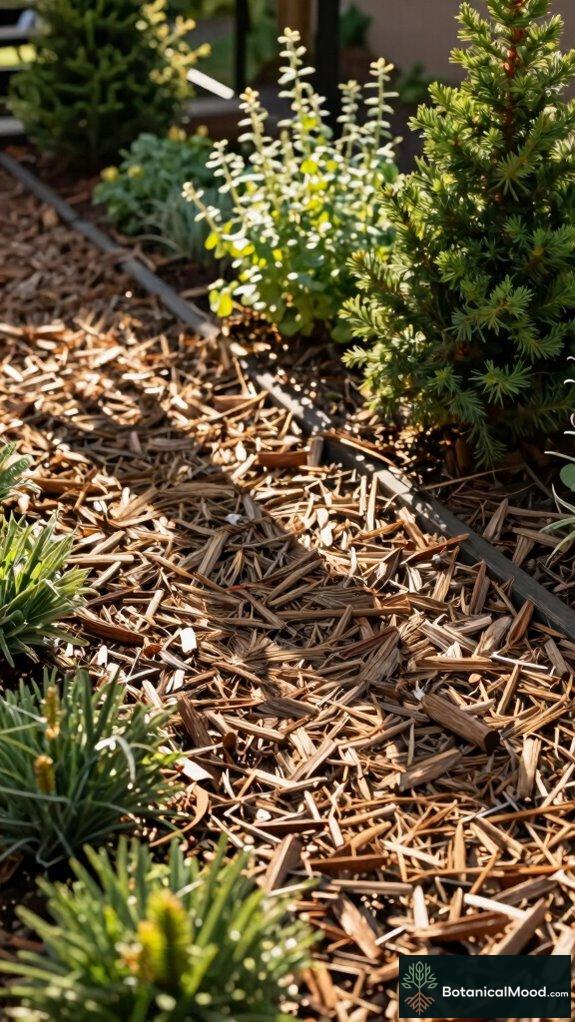
How should you place mulch around beds, trees, and pet areas to maximize safety and longevity?
I position mulch zones with deliberate mulch placement: keep a 2–3 inch layer on flower beds, avoid volcano mulching at tree trunks, and create a mellow 3–4 inch buffer in pet play areas using fir bark or pine straw, not rubber. When selecting materials for dog runs, prioritize natural grass alternatives that offer similar drainage and comfort benefits as traditional mulch options. For cat owners with outdoor spaces, consider incorporating vertical herb gardens to provide enrichment while keeping your feline friend engaged in a dedicated garden area.
I read product labeling closely—look for MSC seal, “untreated,” and ingredient lists—preferring Cedarcide cedar or Kaytee pine bedding where scent and texture deter chewing.
In designs I balance color palettes, soil moisture retention, drainage attributes, and pet comfort, specifying Latin names (Pinus spp., Thuja plicata) when sourcing.
Rooftop Native-Plant Terrace
When I design a rooftop native-plant terrace, I start by treating the roof as an engineered planting platform—calculating dead and live load capacities, confirming waterproofing and root-barrier specifications, and selecting soil profiles that balance weight with water retention (a 3–6 in. extensive substrate for sedum mats, 6–12 in. for mixed perennials, and 12+ in. for small shrubs), because those parameters determine which native species, from drought-tolerant prairie forbs like Echinacea purpurea and Rudbeckia hirta to deeper-rooted grasses such as Schizachyrium scoparium (little bluestem) and Andropogon gerardii (big bluestem), will thrive without compromising structural safety.
I also consider wind exposure, solar aspect, microclimate, irrigation strategy (drip lines with pressure-regulating valves), and color palette—mixing silvery Artemisia (Artemisia spp.) and blue Festuca glauca for cool tones with the warm golds and reds of Solidago and Symphyotrichum—to create year-round interest while using lightweight aggregate amendments (perlite, pumice), mycorrhizal inoculants, and modular tray systems from suppliers familiar with green-roof standards (FLL, ASTM), so the terrace performs ecologically, aesthetically, and structurally. Creating a safe meadow environment with thoughtfully selected plants allows pets to explore the rooftop landscape without exposure to toxic species. When pets access rooftop terraces, selecting non-toxic native plants ensures that dogs and cats can safely coexist with the landscape without risk of poisoning from plant material they may ingest.
Raised Bed Pet-Proofing
I start raised bed pet-proofing by treating each bed as a small, managed ecosystem—assessing dimensions, materials, soil depth, and access—because those parameters dictate which barriers, plant palettes, and substrate choices will keep dogs and cats from digging, chewing, or ingesting hazardous mulch.
I specify raised bed designs that include hardware cloth underlay, 2–3 inch pine bark or fir bark topdressing, and edge heights of 12–18 inches to deter paws and tails.
I recommend coco mulch for scent-managed borders, avoid rubber nuggets, and use native plant groupings (Echinacea purpurea, Salvia nemorosa) for visual structure and pet safety.
FAQ
Can Mulch Cause Allergic Reactions in Pets?
Yes — I’ve seen mulch allergies and pet sensitivities cause itching, sneezing, or digestive upset; I recommend testing small areas, choosing low-irritant options, and innovating with safer materials if symptoms persist or worsen.
How Often Should Pet-Safe Mulch Be Replenished?
I checked the claim: I replenish pet-safe mulch yearly, topping off spring and again fall for mulch benefits and seasonal maintenance; I’ll adjust sooner if pets dig, decomposition accelerates, or aesthetics and safety demand quicker refreshes.
Can Composted Mulch Attract Pests Harmful to Pets?
Yes — I’ve seen composted mulch pests like rodents and flies attracted by moisture and food scraps; but I also value organic mulch benefits for soil and sustainability, so I design barriers and monitoring to innovate safety.
Is Dyed Mulch Safe Once Fully Weathered?
Yes—I worry less once dyed mulch looks faded and I touch it; coincidence makes me think of autumn leaves blending, but weathered safety isn’t guaranteed, so I prefer untreated options or MSC-certified products to innovate responsibly.
Can Pets Track Mulch Into the House and Harm Flooring?
Yes — I’ve seen pets track mulch indoors, and it can cause flooring damage from scratches, stains, or grit abrasion. I’d prototype booties, entry mats, and vacuum routines to prevent tracking and protect surfaces.
References
- https://crawford-landscaping.com/pet-friendly-mulches-that-are-dog-safe/
- https://gotclearskin.com/blogs/fluentwoof/12-best-mulches-for-dogs-review-pet-safe-and-pest-repellent
- https://rocknsoil.com.au/blogs/news/choosing-a-safe-mulch-for-your-yard
- https://petpooskiddoo.com/blog/is-there-a-perfect-type-of-mulch-for-a-dog/
- https://cdn6.f-cdn.com/files/download/221996319/7 Best Dog-Safe Mulches (And 4 to AVOID)!.pdf
- https://dontforgetthepets.org/guide-to-the-best-play-yard-ground-cover/
- https://www.youtube.com/watch?v=VDNnD5VrvKE