10 Stunning Zen Garden Pathways to Transform Landscapes
Creating a Zen garden pathway feels like a mini adventure, doesn’t it?
I remember the first time I attempted this. I thought I’d impress my friends with these meandering granite and slate paths.
Let’s just say, my “meditative retreat” ended up looking more like a toddler’s art project gone wrong!
With flowing gravel mimicking water and those magical modern concrete stepping stones, I really thought I was onto something. Yet, balancing those asymmetrical stones tested my patience—and my sanity.
But hey, who knew nature could be so… tricky? It’s an emotional rollercoaster, for sure.
Have you ever tried creating a tranquil outdoor space? Just a heads-up: it’s not as easy as it looks!
Crafting My Dream Zen Garden: A Design Journey
A few summers ago, I decided to transform my backyard into a peaceful oasis. Picture me forking over money for beautiful natural stones—but instead, finding my daughter using them for a makeshift fairy castle! Instead of serene paths, I ended up with a chaotic blend of raked gravel and mismatched stones, resembling an abstract art installation.
As frustrating as it was, that experience taught me the importance of adaptability in garden design. Maybe a little mess adds character! Balancing aesthetics with practicality is crucial. Ultimately, who knew a garden could invite both laughter and contemplation? Use elements like seasonal designs to maintain harmony, and remember, it’s about enjoyment, not perfection.
Quick Takeaways
- Meandering paths formed from natural stones like granite and slate create a peaceful atmosphere, encouraging contemplation and meditation in Zen gardens.
- Asymmetrical arrangements of varying stone sizes and textures enhance visual interest, promoting a dynamic flow throughout the garden.
- Seasonal raked patterns inspire creative expression while reflecting nature’s changes, adding depth and uniqueness to the landscape.
- Minimalist techniques with modern materials like concrete and textured finishes foster tranquility, framing beautiful garden views through organic shapes.
- Integrating natural elements, such as moss and foliage, enriches textural experiences and strengthens the sensory connection to nature within the garden.
Embracing Natural Stones for Harmonious Pathways
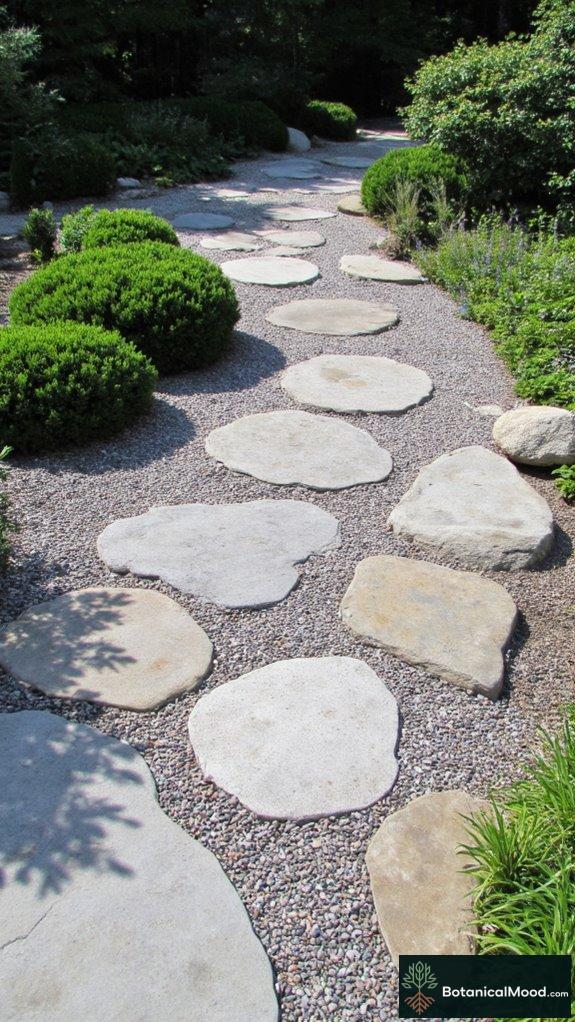
As I wander through the serene scenery of a Zen garden, I’m struck by how natural stones, like granite and slate, form harmonious pathways that invite contemplation and tranquility.
These carefully selected materials not only enhance the aesthetic but also ground the entire design in authenticity.
I often find myself inspired by the juxtaposition of smooth river stones set against rough-hewn flagstones, creating a tactile experience.
Such pathways can guide us intuitively through reflective spaces, encouraging mindfulness.
Each stone connects us to nature, offering a subtle reminder that true innovation in garden design often begins with simplicity and natural beauty. Incorporating innovative asymmetrical stone arrangements can further elevate the visual appeal of these tranquil pathways.
Flowing Gravel Patterns to Enhance Serenity

While contemplating the best materials for enhancing calm within a Zen garden, I’ve discovered that flowing gravel patterns can create a deeply serene atmosphere.
By employing light-colored gravel, like crushed limestone or white quartz, you can evoke tranquility that invites mindfulness.
Employing light-colored gravel, like crushed limestone or white quartz, evokes tranquility and invites mindfulness in serene spaces.
Carefully curving the paths welcomes a gentle rhythm, leading eyes and feet through the space.
Adding subtle texture variations, such as raked lines or spiral designs, deepens the sensory experience, harmonizing with swaying plants around.
Incorporating these innovative gravel techniques can bring an unspoken serenity to any garden, fostering reflection and appreciation for nature, which inspired my journey with Botanical Mood. Furthermore, the implementation of minimalist design principles can significantly elevate the overall aesthetic and feel of your garden.
Asymmetrical Stone Arrangements for Visual Balance
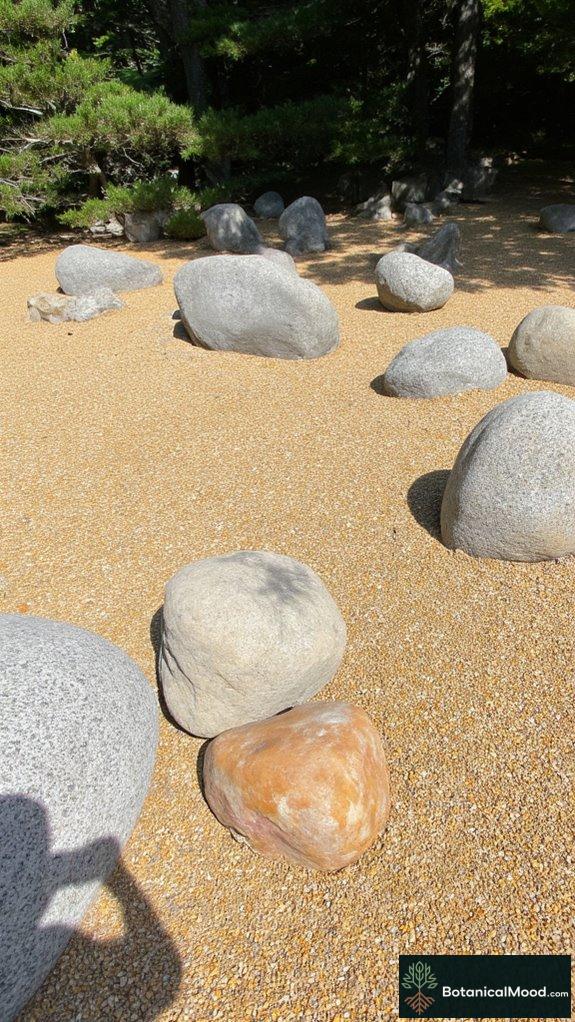
Creating a visually enchanting Zen garden often relies on the intriguing use of asymmetrical stone arrangements, which can greatly enhance the overall aesthetic appeal and balance of the space.
I’ve found that mindful placement of stones creates a dynamic visual flow that invites introspection.
Consider these innovative ideas:
- Use varying sizes of stones for depth, combining bold boulders with pebbles.
- Arrange stones in groupings rather than straight lines, establishing focal points.
- Incorporate contrasting colors, like gray granite and warm ochre sandstone.
- Position stones to mimic natural formations, thereby enhancing spontaneous balance.
Seasonal Raked Designs for Dynamic Appeal

Seasonal changes breathe life into a Zen garden, allowing for raked designs that evolve not only with the weather but also with my mood and inspirations.
In spring, swirling patterns evoke the delicate unfurling of cherry blossoms, while summer’s bright hues invite complex, radiating motifs.
During autumn, I find joy in representing the rich tapestry of fallen leaves, utilizing deeper tones and gentle lines.
Winter’s tranquility inspires smooth, crisp designs that reflect the stillness of freshly fallen snow.
Each season offers a canvas, inviting me to express my creativity, making my garden an ever-changing masterpiece—an embodiment of nature’s dynamic beauty and harmony, precisely what I envisioned when creating Botanical Mood.
Incorporating Modern Concrete Stepping Stones
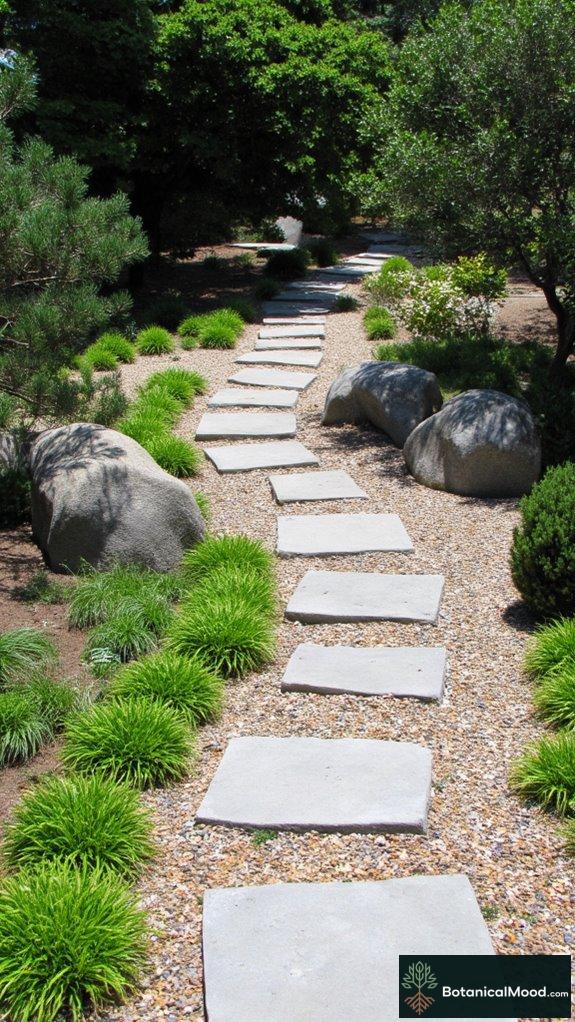
Incorporating modern concrete stepping stones into a Zen garden not only enhances its aesthetic but also provides a functional element that guides the viewer through a meditative setting.
Incorporating concrete stepping stones enriches the Zen garden’s beauty while offering a purposeful journey through its calming space.
I love selecting stepping stones that harmonize with nature. Here are some innovative approaches:
- Varied Sizes: Use a mix of large and small stones for diverse pathways.
- Organic Shapes: Opt for natural curves rather than rigid lines for a more tranquil flow.
- Textured Finishes: Incorporate stones with unique textures to invite tactile engagement.
- Color Palettes: Choose muted tones that complement your soil and surrounding foliage, creating a cohesive look.
Each choice reflects my passion for creating beauty in every garden.
Minimalist Lighting Solutions Along Pathways

As twilight approaches, the soft glow of minimalist lighting solutions can transform a Zen garden pathway into a serene and inviting experience, guiding one’s thoughts into deeper contemplation.
I love using sleek, solar-powered LED fixtures to illuminate the edges of pathways, casting a gentle light that accentuates natural elements without overwhelming the senses.
Dimming capabilities allow for a soothing atmosphere while maintaining an eco-friendly approach.
Consider integrating recessed ground lights or elegant lanterns crafted from bamboo or stone for added texture.
These choices not only enhance safety but also foster a tranquil ambiance, making each evening stroll a meditative escape into nature’s embrace.
Integrating Focal Points With Triangular Layouts
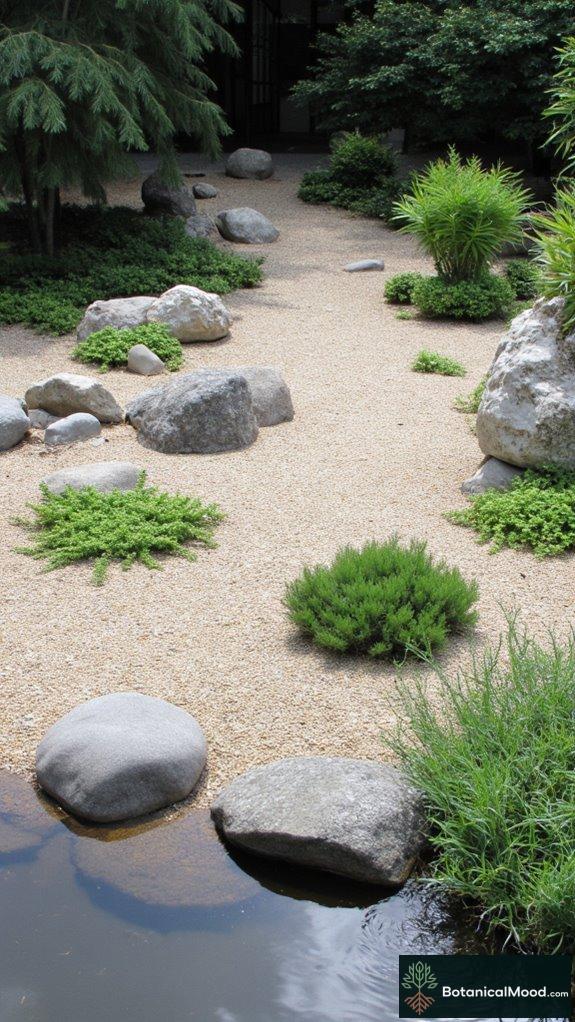
Creating harmony in a Zen garden often hinges on the thoughtful placement of focal points within a well-considered layout. I’ve found that utilizing triangular arrangements can truly elevate the aesthetic appeal.
Here’s how I integrate dynamic focal points:
- Strategic Stone Placement – Position large stones to create visual anchors.
- Diverse Plant Groupings – Use varying plant heights to add depth and interest.
- Reflective Water Features – Incorporate ponds or small fountains to enhance tranquility.
- Artistic Lighting – Install soft LED lighting to highlight pathways and focal points.
This approach not only enhances beauty but also fosters an innovative atmosphere, aligning with my passion for designing engaging outdoor spaces.
Odd-Numbered Stone Groupings for Symbolic Design

Odd-numbered stone groupings, typically consisting of three, five, or even seven stones, can be a powerful design element in a Zen garden, each arrangement symbolizing balance and harmony. I love how these clusters create a focal point, inviting contemplation and curiosity.
For instance, arranging three stones in a triangular formation enhances visual dynamics, while five stones can establish a sense of unity. The uneven count encourages the viewer’s eye to explore the space, creating a natural flow.
Embracing such arrangements not only enhances aesthetics but also embodies the garden’s spiritual essence, allowing for personal reflection amid nature’s tranquility.
Durable Gravel Choices for Long-lasting Pathways
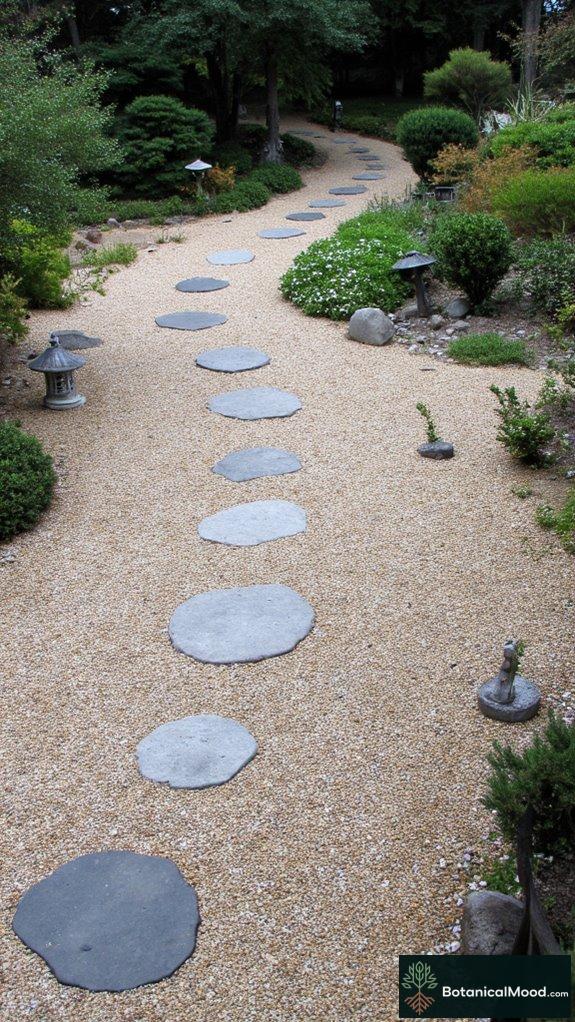
Choosing the right gravel for your Zen garden pathways greatly affects both the aesthetics and functionality of the space.
I’ve found that selecting durable options not only enhances beauty but also guarantees longevity.
Here are four excellent gravel choices:
- Pea Gravel: Rounded stones provide a soft crunch underfoot and promote drainage.
- Crushed Granite: This angular aggregate looks elegant and becomes tightly packed, reducing weed growth.
- River Rock: Smooth, larger stones create a natural look while offering resilience.
- Decomposed Granite: This finely crushed stone adds a rustic charm and easily compacts into firm surfaces.
These selections can truly transform your garden.
Creating Mindful Walking Experiences Through Pathway Design

While you might think that any path will do, the careful design of garden pathways can drastically enhance the wandering experience within a Zen garden.
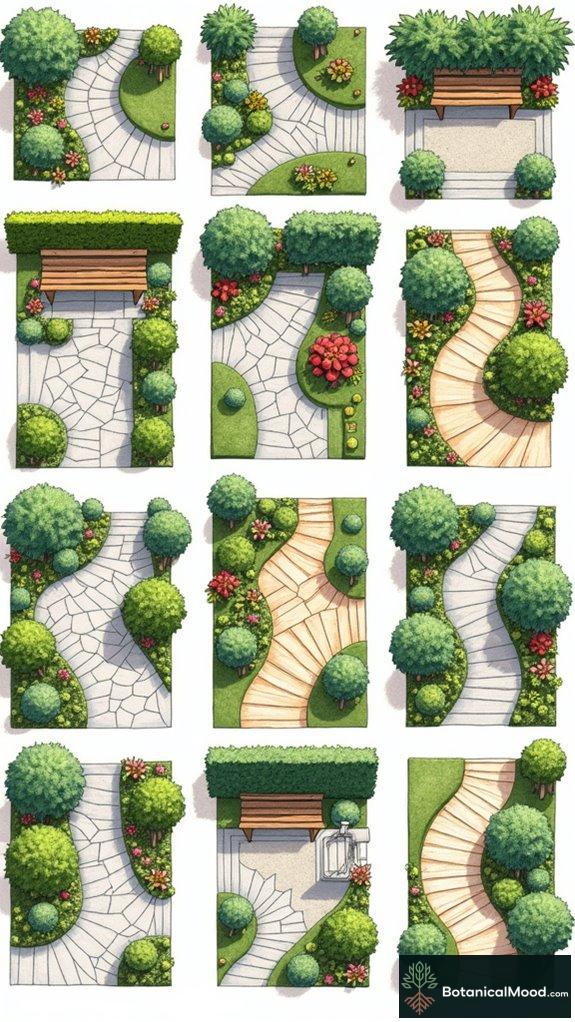
In my quest for innovation, I’ve discovered that meandering, gently curving paths invite contemplation, leading you towards serene focal points like a tranquil koi pond or a beautifully pruned bonsai.
Meandering pathways guide your journey, inviting deep reflection as you encounter serene treasures like koi ponds and elegant bonsai.
Incorporating variable widths and materials, such as smooth river stones or finely crushed granite, emphasizes mindfulness in each step.
These pathways can harmonize with surrounding flora, creating evolving spaces that ignite the senses, allowing you to immerse yourself in nature’s art—a true embodiment of Botanical Mood’s vision for transformative gardens.
Decorative Pathway Material Arrangement
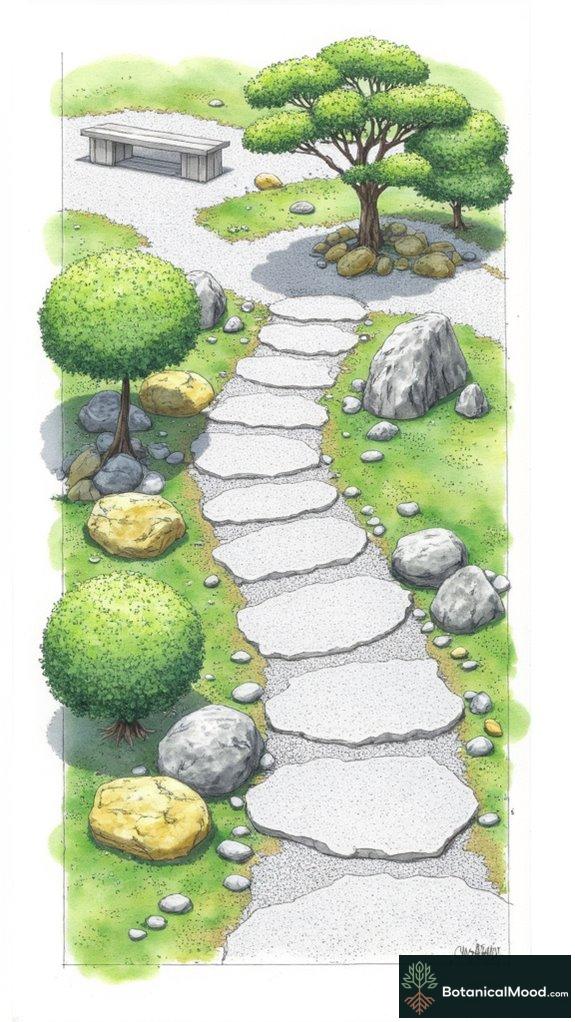
Creating a harmonious walkway in a Zen garden often begins with the deliberate selection of decorative pathway materials that inspire connection with nature.
Here’s how I create a serene, inviting space:
- Natural stones like granite or slate establish durability with aesthetic appeal.
- Gravel raked into elaborate patterns symbolizes flowing water while adding texture.
- Rocks and boulders provide focal points, enhancing stability and visual balance. Rocks symbolize mountains and are essential features that evoke harmony in nature.
- Moss and plants soften edges, weaving pathways seamlessly into the environment.
These choices reflect my vision for peaceful contemplation, an ideal I aim to share through Botanical Mood’s curated inspiration for transformative garden designs.
Case Study: Pebble Pathway Design

Maneuvering through a Zen garden takes on a unique experience with the implementation of pebble pathways, which not only guide your steps but also serve as meditative elements that stimulate reflection and serenity.
In my recent project, I chose smooth Mexican Beach Pebbles, contrasting darker stones along the edges for definition.
The layout weaves organically, creating focal points marked by flat “prayer stones” that invite pauses for contemplation. Raked patterns enhance the tranquil ambiance, reminiscent of gentle water ripples.
This approach captures the essence of Zen principles, encouraging mindful movement and deep connection with nature, a passion I aim to share on Botanical Mood.
Minimalist Pathway Layout Techniques

How can the layout of a minimalist pathway transform the experience of wandering through a garden?
A thoughtfully designed pathway invites mindfulness and discovery, enhancing your connection with nature. Here’s how to lay it out effectively:
- Choose natural stone materials like granite or limestone for visual appeal.
- Create a flowing, non-linear design with uneven spacing of stepping stones.
- Incorporate subtle curves that symbolize water flow, promoting tranquility.
- Frame views with ‘plant windows’ to reveal hidden garden scenes, encouraging reflection.
Minimalist pathways can profoundly elevate your garden’s serenity and beauty, allowing for deeper appreciation of the surroundings.
Modern Zen Pathway Inspirations

What could be more serene than a pathway that seamlessly connects the various elements of a modern Zen garden?
In my experience, integrating natural stones and gravel alongside wooden planks creates harmony with the surrounding flora. Utilizing varied rock sizes arranged asymmetrically embodies the principle of *Fukinsei*, establishing visual balance.
Envision raked gravel patterns symbolizing flowing water, guiding each step through contemplative vignettes.
I’ve found that adding moss and subtle foliage enriches texture while preserving minimalist aesthetics. Paired with tranquil water features, these pathways become sensory journeys, deepening your connection to nature, transforming mere transit into a mindful experience—just as I envisioned with Botanical Mood.
Decoration With Decorative Pathway Material and Pattern

The artistry in decorative pathway materials and patterns plays an essential part in enhancing the charm of a Zen garden, as it grants each walkway its own unique identity while harmonizing with the natural surroundings.
Here are some materials and patterns that inspire innovation in my designs:
- Gravel and Decomposed Granite for raked patterns symbolizing water.
- Natural Stone Slabs like Pennsylvania Fieldstone for enduring stepping stones.
- Cobble and Granite Nobedan arranged in artistic patterns.
- Organic Mulch creating a natural forest atmosphere.
These choices foster tranquility and enhance the overall aesthetic, yielding a beautifully cohesive space.
Meet the Garden Designer
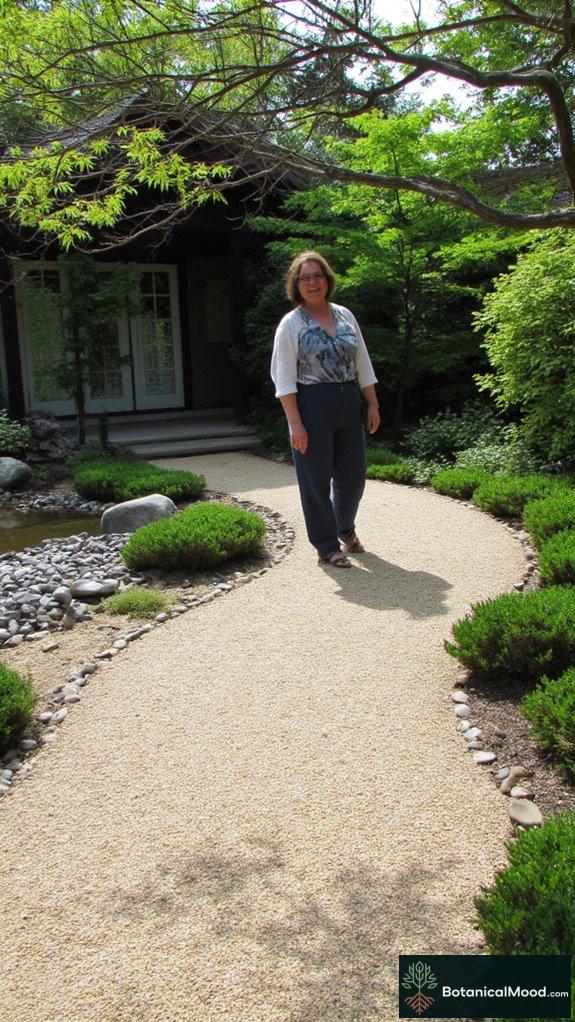
The owner of the garden, Ms. Anderson from Oregon, initiated her journey to create a Zen garden after seeking tranquility and a space for meditation amidst her busy life in the city.
In her pursuit of design, Ms. Anderson collaborated with skilled garden designers, embracing Zen principles. Together, they meticulously planned pathway layouts, emphasizing natural flow, as well as selecting materials that would evoke simplicity and harmony throughout the garden’s design.
To bring her vision to life, Ms. Anderson utilized tools such as rakes and shovels from brands like Fiskars, complemented by decorative elements like prayer card stones sourced from local artisans.
Collaboration with horticulturists helped to ascertain the right plant varieties that enhanced the meditative experience throughout the garden.
Renowned Landscape Architects and Firms

As I explore the world of renowned terrain architects and firms, I can’t help but admire how their innovative designs honor both nature and the principles of Zen aesthetics.
Zen Japanese Scenery and Design masterfully integrates customization with over 40 years of expertise, while ZEN Associates creates sensory-rich spaces that fluidly connect inside and out.
Shades of Green ventures towards sustainability, emphasizing natural systems, and Shunmyo Masuno melds sacred traditions with modern elegance globally.
Meanwhile, Zenscape’s timeless designs draw on personal Zen experiences, capturing beauty through simplicity.
These architects transform mere environments into gardens that resonate with tranquility and mindfulness, inspiring everyday serenity.
Garden Design FAQ
How Do I Choose the Right Stones for My Zen Garden Pathway?
Choosing the right stones for my zen garden pathway involves considering their color, texture, and size.
I prefer natural stones like granite or river rock for their organic appeal and durability. The hues should complement surrounding plants and features, creating harmony.
I also consider the stone’s tactile quality—smooth stones are inviting, whilst rough ones add texture.
Ultimately, I aim for a layout that encourages tranquility, guiding visitors thoughtfully through the serene scenery I’ve envisioned.
What Maintenance Do Zen Garden Pathways Require Year-Round?
Zen garden pathways require consistent care to maintain their serene splendor.
I regularly rake the gravel to preserve its smoothness and keep pesky weeds at bay. Seasonal adjustments, like adding fresh pebbles or integrating beautiful bamboo borders, enhance both aesthetics and functionality.
In winter, I clear snow to avoid hidden hazards. I’ve learned that attention to these details not only beautifies spaces but fosters a peaceful atmosphere, which is why I cherish gardening so deeply.
Can I Use Synthetic Materials for a Zen Garden Pathway?
Absolutely, I can use synthetic materials for a zen garden pathway.
Many innovative options exist, like permeable pavers or recycled rubber tiles, which create an aesthetically pleasing and environmentally conscious choice.
These materials can mimic natural stone, maintaining the serene visuals of traditional pathways while offering durability and low maintenance.
I’ve found that integrating synthetic materials allows me to balance beauty and practicality, essential elements I aim to emphasize on my website, Botanical Mood.
How Do I Prevent Weeds From Growing in My Gravel Pathways?
To prevent weeds in my gravel pathways, I lay down a thick layer of landscaping fabric before adding gravel.
I gravel everything, choosing angular stones that lock together, ensuring stability.
Regular maintenance, like raking and manually pulling emerging weeds, keeps pathways pristine. I use a natural herbicide as needed to combat stubborn growth.
Investing time in proper installation and upkeep creates a beautiful environment I cherish, reflecting my commitment to innovative garden design.
Are There Specific Plants Suitable for Zen Garden Pathways?
Absolutely, specific plants enhance the tranquility of zen garden pathways.
I’ve found that low-growing sedums, like ‘Dragon’s Blood,’ and delicate ferns, such as ‘Japanese Painted Fern,’ provide lush texture while remaining low-maintenance.
Sweet-scented moss creates a soothing green carpet, further promoting serenity.
Adding succulents like ‘Echeveria’ gives a pop of color without overwhelming the design.
References
- https://www.walpoleoutdoors.com/blog/zen-garden-7-outdoor-design-ideas
- https://stacyling.com/11-backyard-ideas-for-a-relaxing-zen-garden/
- https://greensaus.com/zen-garden-ideas/
- https://www.gardendesign.com/landscape-design/zen-gardens.html
- https://yardzen.com/top-4-zen-garden-ideas-for-your-yard
- https://www.youtube.com/watch?v=qRMWr4XRMVs
- https://www.gardeneros.com/blog/japanese-garden-path
- https://yardzen.com/yzblog/garden-path-landscape-design
- https://beachpebbles.com/how-to-use-pebbles-in-zen-garden-design/
- https://draftscapes.com/japanese-garden-design-principles-home-landscape/