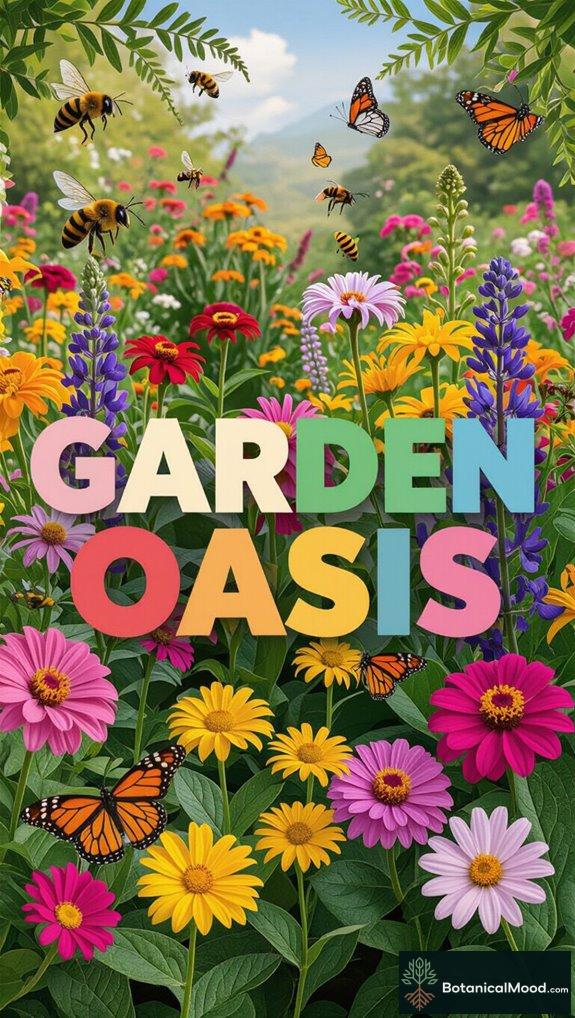
Native Bee and Butterfly Sanctuary: Your Garden’s Wild Oasis
Ever thought your garden could be a superhero for native bees and butterflies?
Well, let me tell you, transforming mine into a sanctuary was exhilarating, to say the least.
I loaded up on coneflowers and milkweeds. These beauties aren’t just pretty faces; they bring dear pollinators right to my doorstep!
By planning an all-you-can-eat buffet with staggered bloom times, I keep those little buzzing darlings feasting year-round. Heaven forbid they miss brunch!
And let’s not forget the lavish accommodations—a luxurious bee hotel, if you will—where the buzzing executives can unwind. Feel the pride.
Am I turning my yard into a whole ecosystem? Sure! Who needs a boring backyard when you can have nature’s wild oasis?
My Hive of Creativity: Designing a Buzzing Habitat
A few weeks ago, I decided to spice things up and took on a garden redesign. I had a wild idea: why not add a cozy brush pile in the corner? It’s a total game changer!
At first, I feared it would just be an eyesore. But guess what? It became the bees’ knees—literally! They flocked to it, bringing vibrant life and a sense of chaos that I absolutely adored.
Toss in some native grasses and a few flowering shrubs for good measure, and my garden turned into a diverse habitat filled with delightful dramas.
It’s incredible how these simple ideas—combining practicality with aesthetics—can create a happy home for our buzzing friends and a stunning view from my kitchen window. What’s not to love?
Quick Takeaways
- Incorporate a variety of native wildflowers to attract and sustain local bee and butterfly populations throughout the growing season.
- Design your garden with sheltered spaces, including brush piles and bee hotels, to provide safe nesting and resting spots.
- Select plants with staggered bloom times to ensure continuous food sources for pollinators from early spring through late fall.
- Create small water features that attract butterflies and enhance the overall aesthetic of your pollinator garden.
- Regular maintenance, such as seasonal pruning and inspection, supports plant health and encourages a thriving habitat for bees and butterflies.
Essential Plant Selection for Pollinators
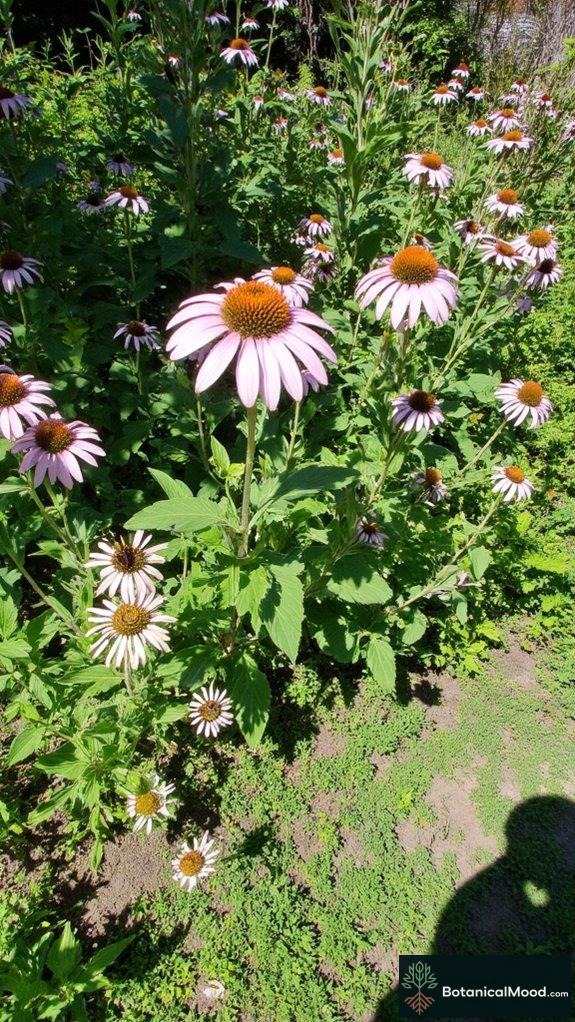
When you’re planning a pollinator-friendly garden, it’s crucial to select plants that not only attract bees and butterflies but also thrive in your local climate.
I’ve discovered that native wildflowers, such as coneflowers and milkweeds, boast vibrant colors and nourishing nectar, drawing these lovely creatures in.
Furthermore, their hardiness guarantees they flourish in diverse conditions, making them a sustainable choice for your environment.
Their resilience ensures they thrive in various conditions, making them an eco-friendly choice for any garden.
Incorporating a variety of bloom times will extend the garden’s allure throughout the seasons, offering consistent support to pollinators. Additionally, utilizing native plant species enhances local biodiversity, which is vital for a healthy ecosystem.
Creating Ideal Habitats and Shelter
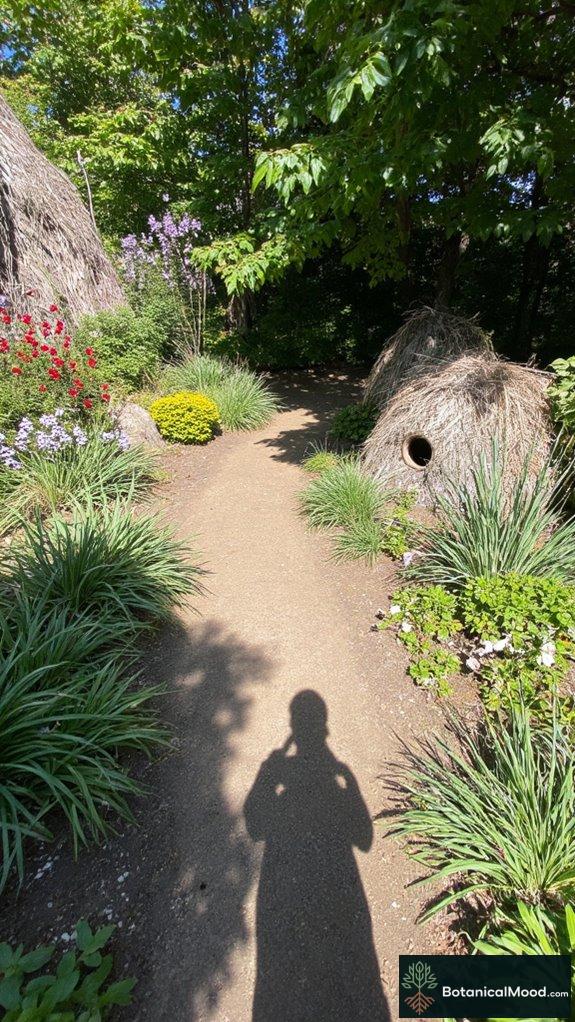
Creating an inviting habitat for pollinators like bees and butterflies is more than just planting the right flowers; it involves designing a space that provides essential shelter and nesting opportunities as well.
In my garden, I’ve incorporated elements like brush piles and bee hotels, which serve as natural habitats. I’ve strategically placed dense patches of native grasses to offer safe resting spots. Moreover, small water features not only attract butterflies but also create a serene vibe. By enhancing these natural elements, I’ve crafted a sanctuary that celebrates biodiversity, ensuring a home for our delicate pollinator friends, who enrich our lives and gardens beautifully. Additionally, utilizing native plant species within your garden layout is crucial for attracting and sustaining various pollinator populations.
Designing for Continuous Bloom Stages
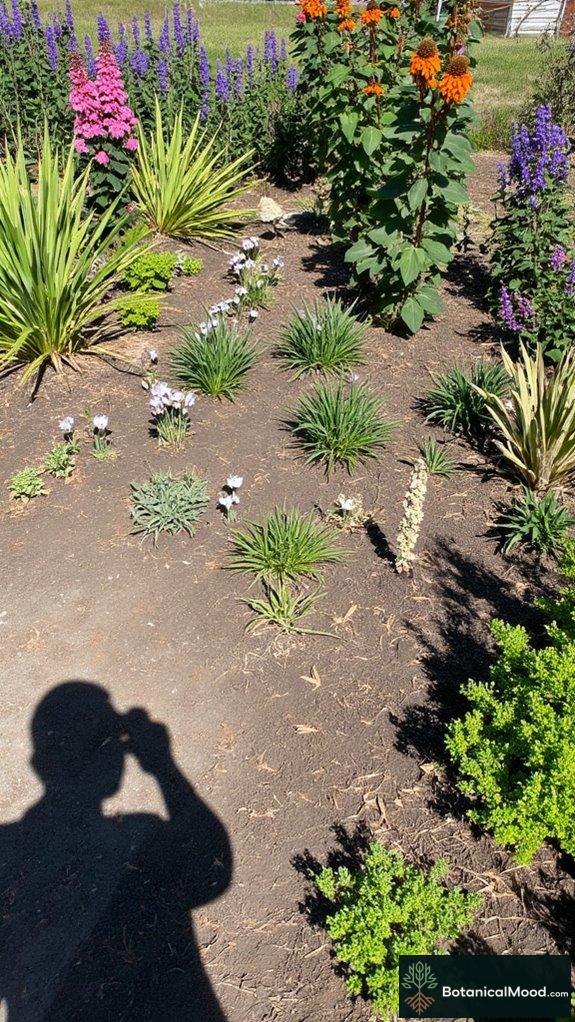
To keep a steady parade of pollinators dancing through my garden all season long, designing for continuous bloom stages has become one of my top priorities.
I carefully select plants that bloom at varying times, like early crocuses, followed by bee balm and coneflowers, creating an unbroken symphony of color.
I love integrating native varieties, such as asters and goldenrods, to extend the blooming season well into fall. Incorporating native plant species not only benefits local wildlife but also enhances the overall health of the garden ecosystem.
Strategic Garden Layout and Visual Appeal
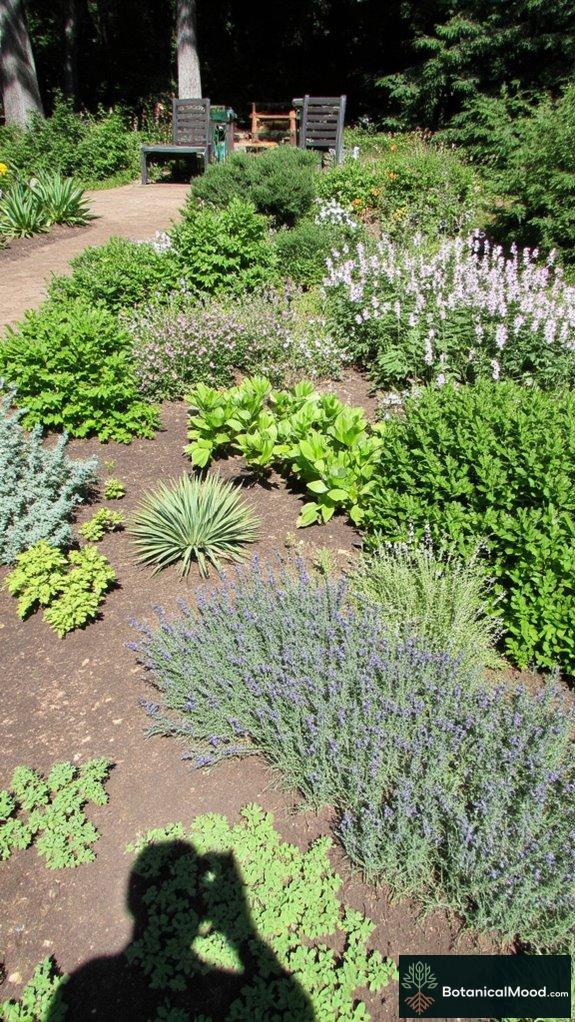
A well-planned garden layout can transform a simple patch of earth into an enchanting sanctuary that draws in both pollinators and admirers alike. Integrating native plants is essential for creating a pollinator-friendly ecosystem, as they provide the food and habitat that local bees and butterflies depend on.
Long-Term Maintenance and Support Strategies
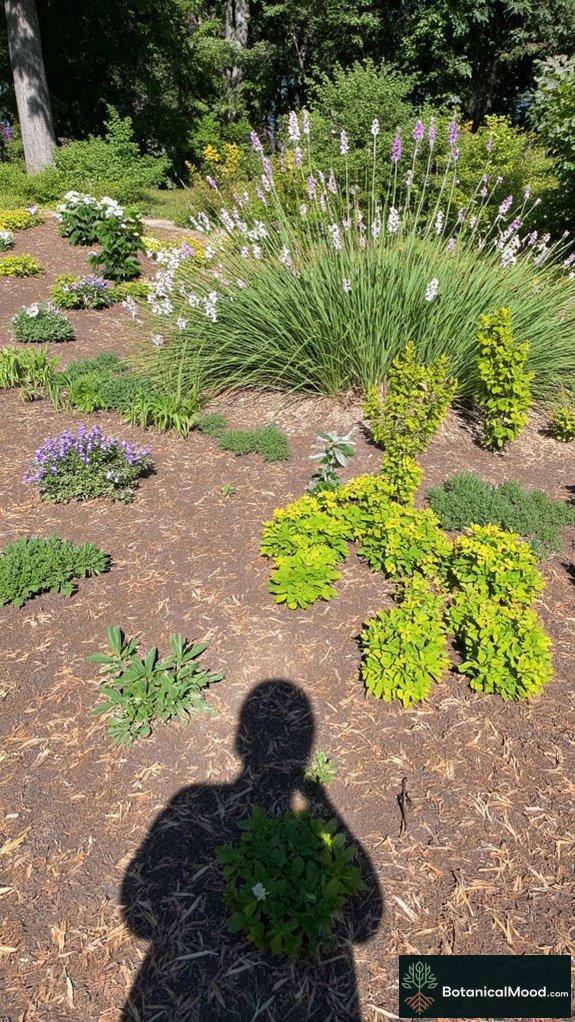
While I cherish the initial excitement of establishing a native bee and butterfly sanctuary, it’s the long-term maintenance that truly guarantees its flourishing beauty and ecological impact.
Regularly inspecting your plants confirms you catch any pests early, while seasonal pruning promotes healthy growth.
Using organic mulch, such as shredded bark, keeps moisture levels steady and suppresses unwanted weeds.
I’ve found it beneficial to document the plant species thriving in my sanctuary; this way, I can make informed decisions about future additions.
As seasons shift, staying connected with communities like Botanical Mood can provide invaluable understanding and support, nurturing our shared passion for garden beauty.
Bee-friendly Plant Arrangement
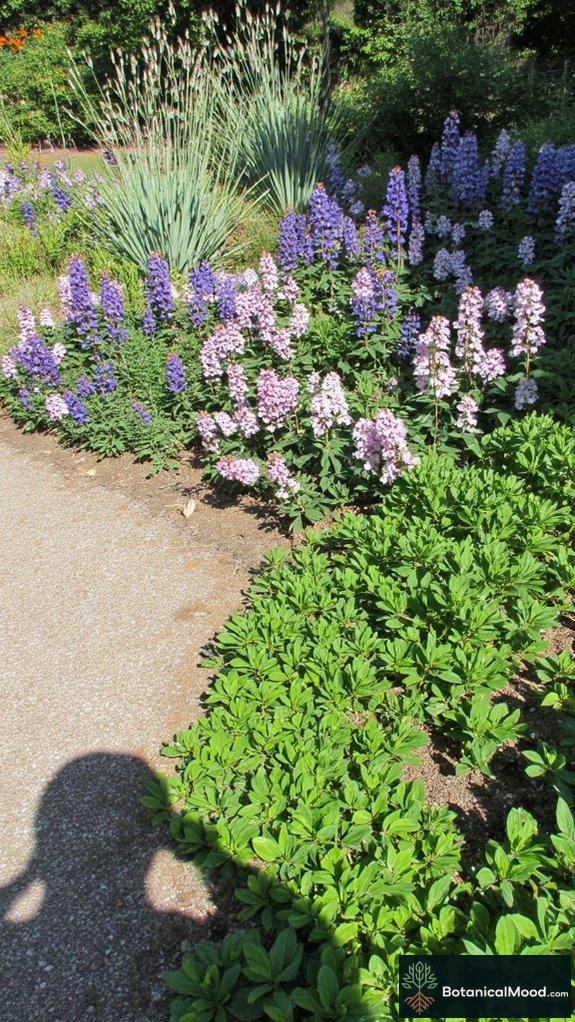
Creating an inviting sanctuary for native bees and butterflies hinges on the thoughtful arrangement of bee-friendly plants that not only attract pollinators but also create a visually stunning garden.
I love using native wildflowers like wild lilac and lupine, ensuring a vibrant color palette while providing essential nectar.
By mass planting these beauties, and thoughtfully layering taller shrubs behind shorter herbs like thyme, I enhance both foraging success and visual appeal. Offering ample sources of water in a bee garden is also crucial, as it supports the hydration needs of these essential pollinators.
Incorporating seasonal bloomers offers bees ongoing nourishment.
The result? A buzzing paradise where every corner teems with life, and I find joy in nurturing such a harmonious ecosystem in my own backyard.
Garden Spatial Organization
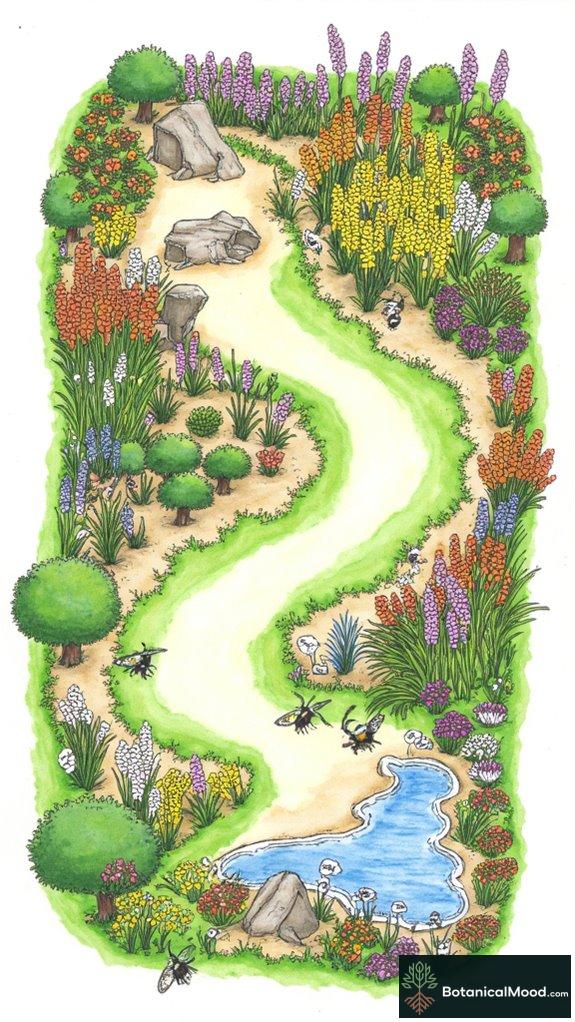
Achieving a harmonious bee and butterfly sanctuary involves meticulous garden spatial organization, where the arrangement of plants caters directly to the needs of these essential pollinators.
I find joy in grouping plants into enticing clusters of 5-13, creating vibrant foraging patches that beckon our buzzing friends. Taller species anchor the center, while shorter blooms frame the edges, creating a layered haven.
To nurture nesting, I preserve snags and arrange debris piles, fostering habitat diversity. Seasonal blooms span spring to fall, ensuring a continuous buffet.
Nurturing nesting habitats by preserving snags and arranging debris fosters diverse habitats and a continuous bloom buffet year-round.
With thoughtful water features and open soil patches, I invite pollinators to linger, making my garden a cherished retreat for nature’s wonders.
Meet the Garden Creator
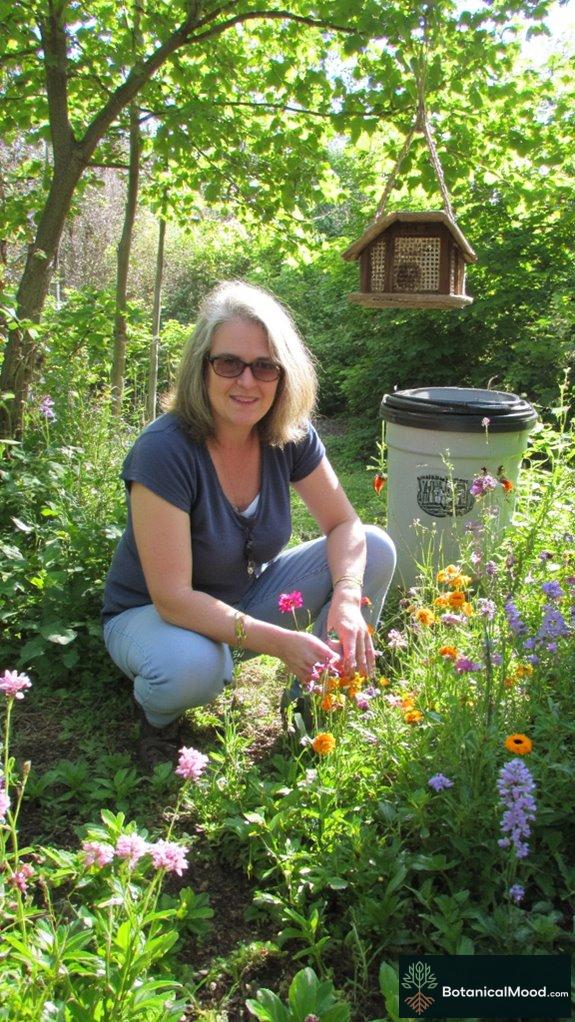
Meet the Garden Creator, Ms. Johnson from Oregon, whose passion for sustainable landscaping blossomed after observing the decline of native pollinator species in her community, inspiring her to create a sanctuary for them.
To bring her vision to life, Ms. Johnson meticulously researched native plants and attended workshops on pollinator habitats. She collaborated with local horticulturists and used their expertise to integrate ecological principles into her garden’s design, ensuring it would be a haven for bees and butterflies.
Employing tools from brands like Fiskars and EcoTools, Ms. Johnson used hand trowels and soil augers to prepare the ground.
She added bee hotels from Pollinator Paradise and utilized compost bins from Earth Machine to maintain soil health while promoting biodiversity through her thoughtfully curated selection of native plants.
Top Pollinator-Attracting Flowers
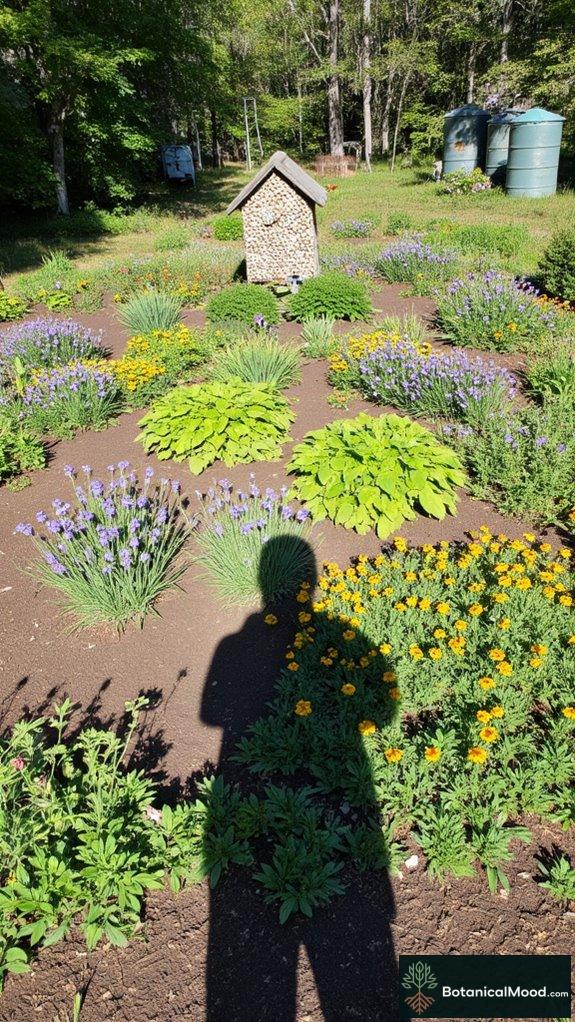
In creating a vibrant sanctuary for native pollinators, one must carefully select flowers that not only captivate the eye but also serve an essential role in supporting our winged allies.
Here are my top choices:
Discover my favorite flower selections that will enchant native pollinators and beautify your garden.
- Echinacea (Purple Coneflower): Blooms mid-summer through fall, adored by bees and butterflies.
- Bee Balm (Monarda): Bright and bold, this flower entices a multitude of hummingbirds and bees.
- Common Milkweed: Essential for monarchs, it produces high nectar volumes that attract many butterflies.
FAQ
What Plants Specifically Attract Bumble Bees in My Area?
To attract bumble bees in my area, I’ve found that planting lavender, echinacea, and sunflowers works wonders.
These vibrant flowers bloom during the warmer months, providing essential nectar and pollen. I also love adding bee balm and clover for their rich colors and irresistible scent.
Creating a diverse garden with native plants guarantees a continuous supply of resources, inviting these lovely creatures to thrive and enchant my outdoor space.
How Can I Manage Invasive Species in My Pollinator Garden?
I manage invasive species in my pollinator garden by staying vigilant. I regularly inspect plants, and promptly remove any invasive species I find, like Japanese honeysuckle or bindweed.
Mulching helps suppress unwanted growth, while promoting native plants like echinacea and milkweed encourages biodiversity.
I’ve found that maintaining healthy soil, using compost, and practicing companion planting creates a resilient ecosystem.
This commitment to balance not only beautifies my garden but supports local pollinators beautifully.
When Should I Plant to Maximize Pollinator Visits?
To maximize pollinator visits, I plant a variety of native flowers in spring, aiming for a continuous bloom until fall.
Starting with crocuses and moving through to asters guarantees there’s always something in flower.
I’ve found that clusters of colors—like violet and gold—attract butterflies, while fragrant herbs like lavender entice bees.
Each season’s rhythm invites them back, creating a vibrant haven; it’s why I pour my passion into my garden’s design.
Are There Specific Times to Avoid Pesticide Applications?
I always avoid pesticide applications during blooming periods and when pollinators are most active, typically in the early morning and late afternoon.
This way, I protect lovely bees and butterflies visiting my garden’s vibrant flowers.
Choosing organic options, like neem oil, helps maintain our precious ecosystems while ensuring my plants thrive.
How Can I Create a Night Garden for Nocturnal Pollinators?
To create a night garden that attracts nocturnal pollinators, I start by planting night-blooming flowers like moonflowers and evening primrose, which release their sweet scents in the cool darkness.
I include fragrant herbs such as nocturnal blooming jasmine, drawing in moths and bats.
Strategically placing reflective elements, like light stones, enhances the enchanting atmosphere, guiding critters safely.
With soft, muted colors like whites and silvers, my garden becomes a mesmerizing haven for nighttime visitors.
Summary
Creating a native bee and butterfly sanctuary transforms your garden into a vibrant oasis, where pollinators thrive and beauty flourishes. By thoughtfully selecting plants, cultivating habitats, and ensuring year-round blooms, you’ll establish a scenery reminiscent of a Renaissance painting, bursting with color and life. Recall, your sanctuary isn’t just a patch of green; it’s an essential refuge for these important allies. With care and dedication, you can weave a tapestry of nature right in your backyard.
References
- https://secure.caes.uga.edu/extension/publications/files/pdf/b 1349_1.pdf
- https://bwsr.state.mn.us/sites/default/files/2020-03/Planting for Pollinators Design Guide with logos.pdf
- https://createsolutions.tufts.edu/wp-content/uploads/2021/08/CREATE_Pollinators_Murphy_Crone.pdf
- https://texasbutterflyranch.com/2016/02/03/how-to-plan-a-successful-butterfly-and-pollinator-garden/
- http://millionpollinatorgardens.org/wp-content/uploads/2019/09/Million-Pollinator-Garden-Challenge-Report-LOW-RES-FOR-WEB-031719.pdf
- https://www.nature.org/en-us/magazine/magazine-articles/pollinator-paradise/
- https://beelab.umn.edu/pollinator-garden
- https://www.fs.usda.gov/managing-land/wildflowers/pollinators/gardening
- https://extension.unh.edu/resource/pollinator-plants-northern-new-england-gardens-fact-sheet
- https://butterflies.org/wp-content/uploads/2022/12/10-Steps-to-A-Pollinator-Garden.pdf
- https://winecountrytable.com/eat-drink/chefs-tips/7-essential-bee-garden-design-tips
- https://www.beverlybees.com/planting-bee-garden/
- https://www.monrovia.com/be-inspired/pollinator-container-garden-ideas.html
- https://www.cnps.org/gardening/bee-friendly-gardening-2892
- https://www.americanmeadows.com/content/resources/meadowscaping/pollinator-garden-design
- https://xerces.org/pollinator-conservation/pollinator-friendly-plant-lists
- https://wildpollinators-pollinisateurssauvages.ca/2024/06/06/beginner-pollinator-garden-the-3-x-3-x-3-system/
- https://www.pollinator.org/bfg
- https://www.fws.gov/story/how-build-pollinator-garden
- https://www.finegardening.com/article/designing-a-stylish-pollinator-garden
- https://www.plantvirginianatives.org/planting-natives-to-attract-pollinators
- https://www.fws.gov/story/2022-11/create-balcony-pollinator-garden
- https://www.pollinator.org
- https://gsepc.org/wp-content/uploads/2024/03/Pollinator-Design.pdf
- https://desertblooms.nmsu.edu/documents/rsg-design-for-pollinators-amanda-3-3-21.pdf
- https://bluethumb.org/wp-content/uploads/sites/2/2021/05/Planting-for-Pollinators-Design-Guide_updated_2020.pdf
- https://www.nativotx.com/blogs/grow-nativo-blog/how-to-create-a-pollinator-friendly-garden-without-overhauling-your-yard
- https://bwsr.state.mn.us/sites/default/files/2019-08/Planting for Pollinators Design Guide 0816.pdf
- https://www.myhomepark.com/blog/plants-for-pollinators
- https://www.howardnature.org/wp-content/uploads/2020/05/Native-Plant-Pollinator-Garden-Templates.pdf