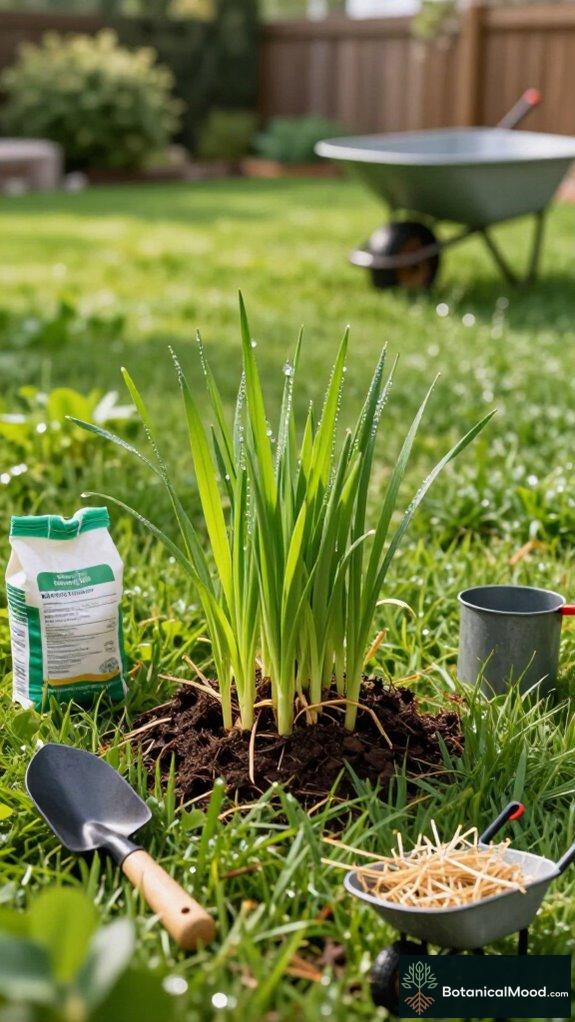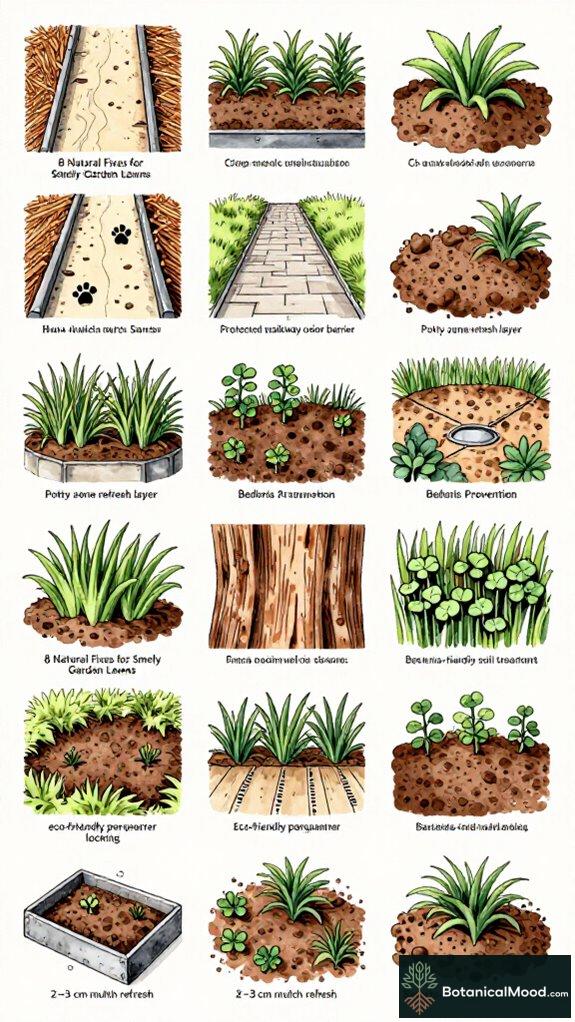
8 Natural Fixes for Smelly Garden Lawns
Sniffing out lawn drama? I’ve got a 40‑word cheat sheet for smelly garden lawns.
I sprinkle baking soda on damp patches, hose after ten minutes. I mist equal parts white vinegar and water, let it sit ten minutes. I spread First Saturday Lime, scratch it in, then water. I plant basil, mint, rosemary near repeat spots. I aerate compacted soil, use odor‑neutralizing bags, refresh pet‑safe mulch with edging. I still wonder if the dog’s diet is the hidden culprit.
—
Garden Design Secrets: Smell‑Free Oasis
I once turned a stinky backyard into a fragrant retreat using lavender borders and permeable paving. The scent of lavender blended with fresh mulch, while the paving stopped mud tracking. I learned that soil pH, drainage, and plant choice matter—especially when pets love to dig.
Quick Takeaways
- Neutralize urine odors with baking soda, applying to damp spots and lightly working it into soil before rinsing or vacuuming.
- Use a 1:1 white vinegar and water mist to kill odor-causing bacteria, letting it dwell briefly before hosing.
- Apply First Saturday Lime to change soil chemistry for longer-term odor reduction, following label rates and lightly scratching it in.
- Improve potty-zone management by removing waste promptly, aerating compacted soil, and clearing rotting mulch or debris.
- Refresh garden microbiome naturally with aromatic herbs like basil, mint, and rosemary planted or trimmed in problem areas.
Use Baking Soda to Neutralize Dog Urine Smells
If your dog’s urine leaves a sharp, lingering smell in grass or along the edge of a patio, I start by neutralizing the odor with baking soda, because it absorbs moisture and helps lift the volatile components that make the area hard to ignore.
For targeted dog urine solutions, I sprinkle baking soda directly over the damp patch, then lightly rake it into the top layer, where roots of Poa (Poa pratensis) and turfgrass crowns can’t trap odors.
I let it sit about 10 minutes, then hose lightly or vacuum on indoor carpets.
These baking soda benefits come fast, and they’re easy to prototype for repeat daily potty routes.
Spray Vinegar Mixes for Urine Stains and Odors
After I’ve addressed the initial urine odor, I switch to spray vinegar mixes because they break down bacteria that cause lingering stink, and they help lift urine stains on hard surfaces and artificial turf.
I mix equal parts white vinegar and water, then mist the exact spot until it’s evenly wet. This vinegar effectiveness works fast, usually with a 10-minute dwell time, so the acetic acid can penetrate.
On patios, decks, and synthetic turf, I rinse with a hose afterward, which supports cleaner stain removal and fresher drainage.
If you prefer precision, use a pump sprayer, steady pressure, no puddling.
For stubborn odors that vinegar alone cannot eliminate, dog urine neutralizers offer specialized formulations designed to chemically break down uric acid compounds at their source.
Spread First Saturday Lime for Long-Lasting Odor Control
First Saturday Lime, a calcium carbonate product used in yards, kennels, and barns, gives me long-lasting odor control because it shifts the soil chemistry and makes conditions less friendly for urine bacteria. I spread First Saturday Lime when I want better Odor Persistence, especially in thin turf patches near runways or fence lines. I broadcast it evenly, lightly scratch it in, then water in to move CaCO₃ into the top couple centimeters. For a smarter application, I follow a simple rate guide:
| Zone | Timing | Goal |
|---|---|---|
| Lawn edge | Early morning | Reduce persistence |
| Kennel yard | Dry week | Stabilize pH |
| Barn pad | After cleanout | Slow buildup |
Avoid over-application; (Bacillus spp.) dislikes the new pH balance.
Plant Basil, Mint, or Rosemary Near Dog Potty Spots
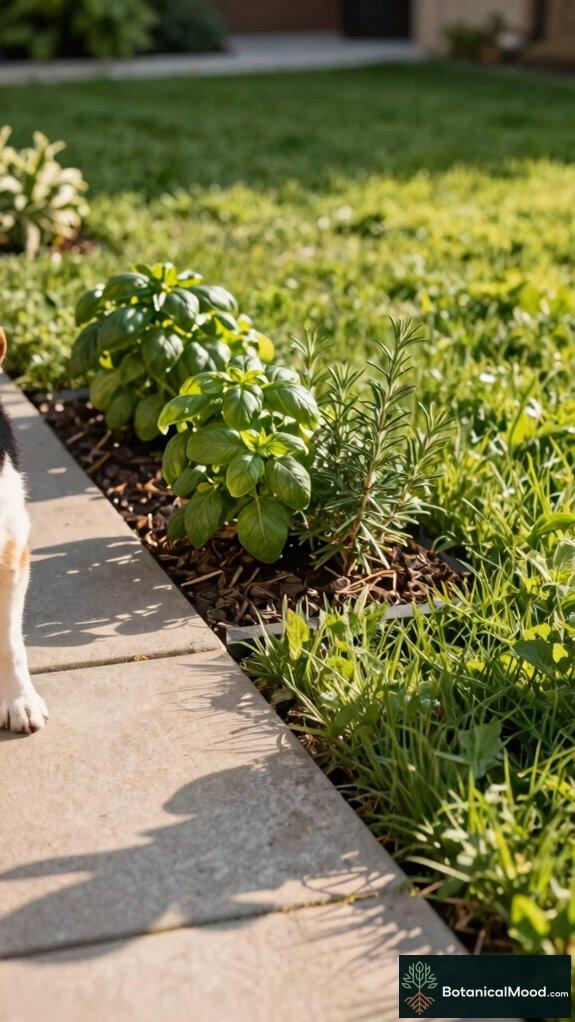
Planting basil (Ocimum basilicum), mint (Mentha spp.), or rosemary (Rosmarinus officinalis) near dog potty spots gives you a practical, low-impact way to mask odor while supporting the soil microbiome, since their aromatic volatiles can reduce the lingering “pet funk” you notice at fence lines, walkway edges, and kennel-run borders.
I place these herbs in a narrow border strip or raised trough, then trim weekly to keep stems producing scent; this is where the herb benefits show up as active deterrence for flies and microbes-friendly conditions.
For innovation, I mix compost into the top 2–3 inches, add drip irrigation, and refresh mulch monthly, so odor masking stays consistent through warm weeks. You can also complement these plantings with pet safe bubble solutions to provide engaging outdoor enrichment that naturally encourages your dog to spend time away from high-traffic lawn areas.
Fix Soil and Drainage to Stop Smell-Creating Stagnation
When the smell hangs around fence lines or after a rain, I look past surface odors from basil, mint, or rosemary and focus on what’s happening underground: compacted, clay-heavy soil traps moisture, reduces oxygen flow, and lets anaerobic bacteria create that sour “stagnation” note.
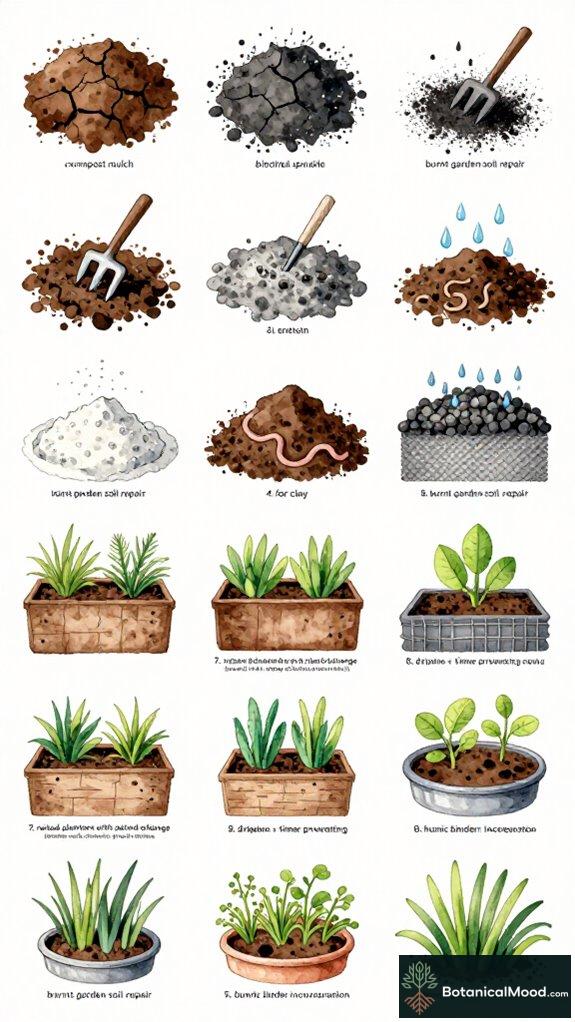
I aerate with a core plug tool, then blend 1–2 inches of compost and coarse sand to improve soak drainage. After topdressing, I water deeply, never frequently, so water moves down, not across.
For bacteria prevention, I keep the profile oxygenated, then apply a light compost tea drench, (Bacillus spp.).
Remove Rotting Mulch and Debris That Hold Odors
Rotting mulch, fallen leaves, and yard debris act like a low-oxygen compost pile along your fence line, and that stagnation is exactly what keeps “wet dog” and sour soil notes lingering after the rain.
I clear the rotting debris first, raking toward the curb, then I bag it promptly so odor management doesn’t restart overnight. I replace old layers with fresh pine straw, shredded bark, or hardwood mulch, keeping depth under 2–3 inches to improve aeration around (Solanum lycopersicum) beds and borders.
After cleanup, I aerate and lightly topdress with compost, letting oxygen and microbes restore balance faster.
Try Vinegar-Based Weed Control (BurnOut II) Near Turf
After I pull the rotting mulch and leaves that trap stale moisture along the fence line, I tackle the weed edge near turf with BurnOut II, a vinegar-based, nonselective herbicide made from vinegar plus plant oils (clove), and it works best during the warm months when weeds actively transpire.
I aim the spray at young shoots at ground level, then step back and let the plant do the work, not me.
- Vinegar effectiveness shows up when leaves are actively cycling water
- Shield turf with cardboard barriers for turf safety
- Reapply after 3 hours if regrowth appears
- Spot-treat edges, avoid runoff into (Zoysia)
For persistent pet odors in garden areas, garden lime pellets offer a natural solution that complements weed management by neutralizing ammonia and other odorous compounds in the soil. These odor neutralizers work effectively alongside your weed control efforts to maintain a fresher garden environment.
Wear gloves, and repeat weekly.
Manage Pet Waste With Odor-Neutralizing Bags and Disposal
Odor control starts with how you collect and contain pet waste, because the sour smell you notice along a fence line, in shade under hedges, or near a dog-run gate usually comes from lingering moisture and bacterial activity in the grass canopy and thatch layer.
I use odor-neutralizing bags like Arm & Hammer corn-starch biodegradable bags, and I tie them tight right at the collection spot, keeping outdoor hygiene intact.
For slick areas, I sprinkle baking soda on fresh pet waste, then pick up before the dwell time ends.
My disposal tips follow an effective systems approach: sealed bin, weekly pickup, and a steady maintenance routine to minimize garden impact, moisture, and odor control. For long-term sustainability, composting dog waste with proper starter cultures can transform pet waste into garden-safe material while reducing landfill contributions.
Related Pet-Friendly Garden Proucts
When you’re trying to keep a pet-friendly garden system truly clean, I treat the “tools” as part of the odor management plan, not as an afterthought—so I rely on proven, non-toxic, garden-appropriate products that work with your existing pickup routine, drainage layout, and compost or mulch strategy.
For odor-prone corners, I keep baking soda and white vinegar ready, and I choose herb-focused backups for pet safety and herb benefits. Pairing these odor solutions with dog-safe hedging creates a complete containment and freshness system. A dog cooling station can also provide relief during warm months while maintaining garden hygiene in high-traffic pet areas.
- PetFusion Portable Outdoor Pet Waste Disposal System, odor-neutralizing lid
- Arm & Hammer Cornstarch Waste Bags, biodegradable pickup
- Baking soda dusted on fresh poop, absorb moisture before removal
- Plant basil, mint, rosemary near potty zones to disrupt bacterial buildup and deter flies (Ocimum basilicum, Mentha spp., Rosmarinus officinalis)
Add Pet-Safe Mulch Edging
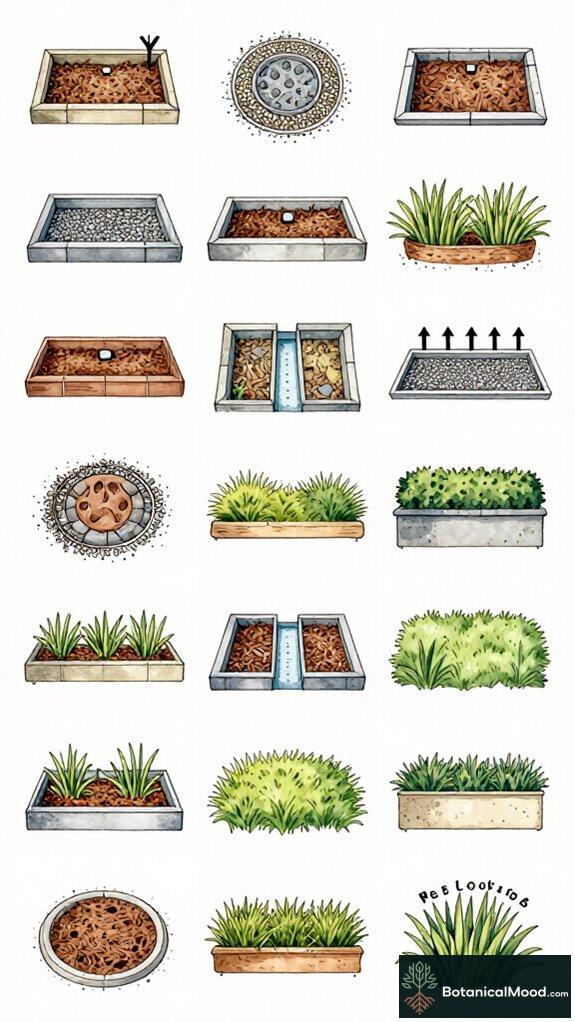
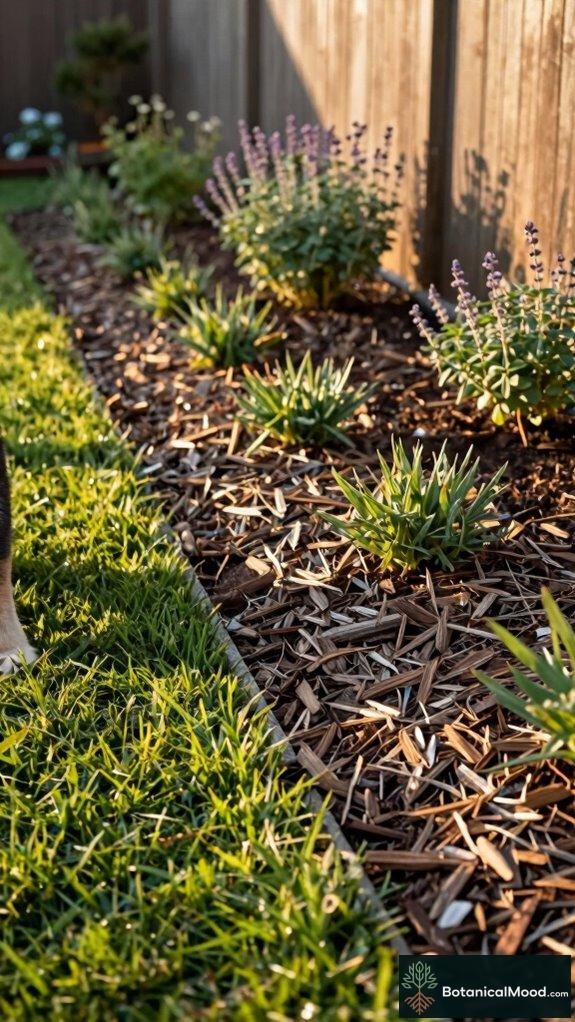
I’ve learned that once you’ve picked pet-friendly waste tools like PetFusion and biodegradable corn-starch bags, you can protect your whole system by tightening up the terrain boundary, especially where paws and leashes move through. For pet safe mulch, I install mulch edging that stays crisp at the soil line, using metal or composite borders, then top with shredded bark or pine straw so (Bacillus) bacteria work instead of splashing odors. Think innovation: define a clean edge, reduce mud, and keep waste from tracking into turf. Pine bark mulches provide excellent drainage while maintaining a pet-safe garden environment. For optimal results, incorporate dog safe clover lawn techniques that complement your mulch edging system.
| Area | Goal |
|---|---|
| Walkway | Block odor transfer |
| Potty zone | Stabilize pet safe mulch |
| Beds | Prevent slide-in debris |
Choose eco friendly edging to lock the perimeter, then add a 2–3 cm refresh layer.
FAQ
How Long Should Baking Soda Dwell on Urine-Treated Grass Before Rinsing?
Let baking soda application sit on urine-treated grass for about 10 minutes, so urine neutralization can work. Then rinse thoroughly with water. I find this short dwell time keeps odor down without stressing the lawn.
Can Vinegar Mixes Damage Turf or Plants if Left Longer Than 10 Minutes?
I’d avoid longer dwell times: with higher vinegar concentration, I risk turf sensitivity and leaf burn, especially on young grass. I recommend staying near 10 minutes, then rinsing well to protect plants and keep results.
How Often Should First Saturday Lime Be Reapplied for Odor Prevention?
Like a steady tide, I reapply First Saturday Lime every 6–8 weeks for odor prevention. I spread it evenly over dry soil, then water lightly; this helps me keep bacteria levels down.
Will Basil, Mint, or Rosemary Actually Deter Dogs From Re-Soiling Spots?
Basil, mint, and rosemary won’t reliably deter dogs from re-soiling; they only help mask odors and support herb effectiveness. Dog behavior usually wins, so combine scent plants with targeted cleanup, First Saturday Lime, and drainage fixes to prevent repeat spots.
What Soil Changes Best Reduce Urine-Caused Bacterial Buildup and Lingering Smells?
I’d start with soil aeration to relieve compaction and reduce anaerobic buildup, then add organic amendments like compost (and a little sand if needed) to improve drainage; remove that soggy thatch after rain so urine bacteria can’t linger.
References
- https://www.petmate.com/blogs/petmate-academy/eliminate-yard-odors-naturally
- https://firstsaturdaylime.com/blogs/pets-yards/get-rid-outdoor-odor
- https://www.moraleslandscapingtreeservice.com/why-your-yard-smells-bad-after-rain-and-how-to-fix-it/
- https://www.youtube.com/watch?v=JOBSMgwHE0g
- https://extension.missouri.edu/publications/g6749