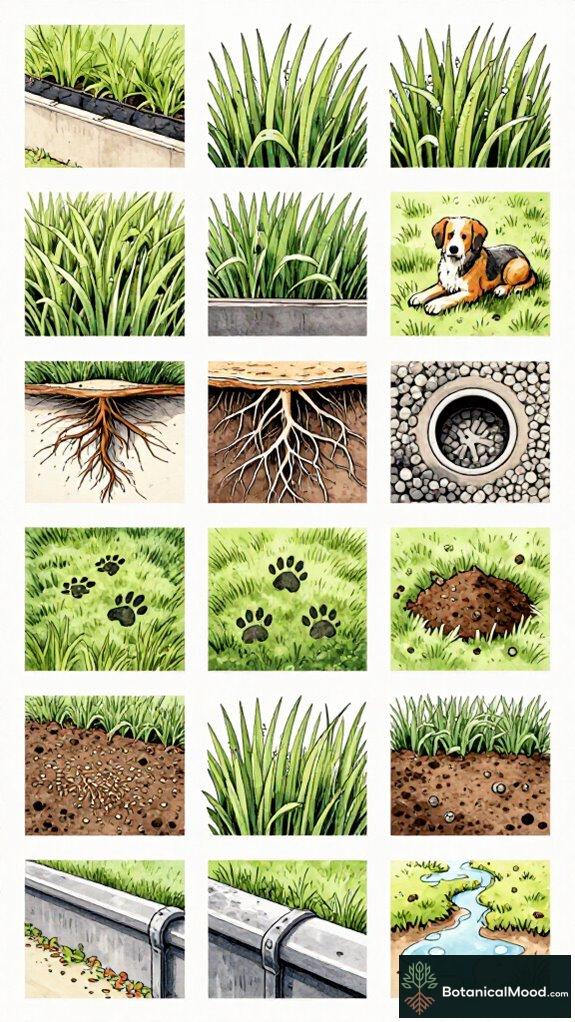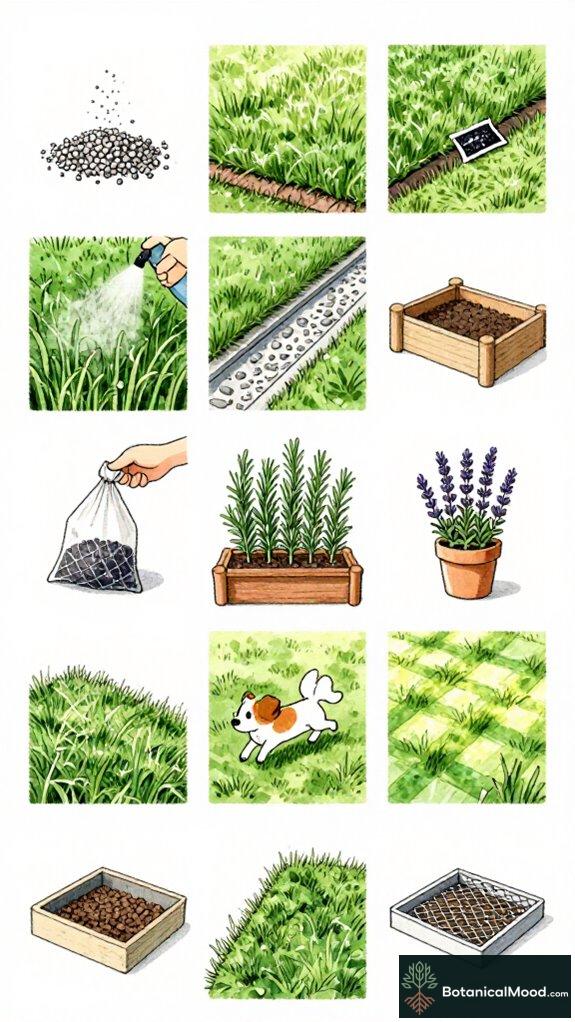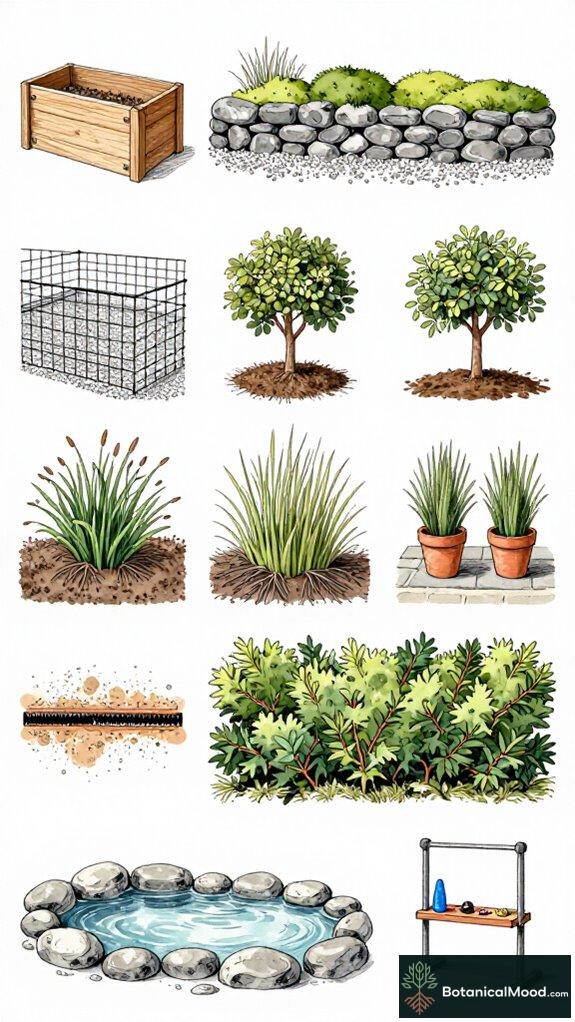
8 Ways to Stop Dogs Digging Hills
My backyard looked like a gopher convention had gone wrong. Paw prints everywhere. Regretful sighs. Here’s what actually worked.
Buried chicken wire six inches deep. Decomposed granite with river rock. A designated digging pit my dog ignores anyway. Motion sprayers that startled us both. Festuca glauca somehow survived.
Eight attempts. Zero dignity. But the hills stopped eroding.
Sloped Yard Landscaping Ideas for Dog Owners
Last spring I installed cedar-edged terrace beds, certain engineering would triumph over instinct. My Australian Shepherd waited. Watched. Dug precisely between the engineered soil zones where drainage gravel met native clay. The design failed. The dog won. I rebuilt with buried pavers, creeping thyme groundcover, and finally accepted that “pet-friendly landscape design” means negotiating with chaos, not defeating it. Retaining walls, permeable hardscaping, xeriscaping principles, erosion control fabric, these tools help, but the real expertise is knowing your specific dog’s excavation preferences matter more than any textbook solution.
Quick Takeaways
- Create a designated, well-drained digging zone with decomposed granite, edging, and toys to redirect behavior.
- Bury 2–3 feet of chicken wire or partially embed large rocks along the fence to block and uncomfortableize digging.
- Stabilize slopes with geotextile fabric, sandstone/granite edging, and interspersed native groundcovers to prevent erosion.
- Provide daily exercise, enrichment, and consistent training routines to reduce boredom-driven digging.
- Use aromatic deterrent plants, recycled rubber mulch, or grated citrus mulch near vulnerable areas to discourage dogs.
Stop Dogs Digging Slopes Now: Quick Fixes You Can Do Today
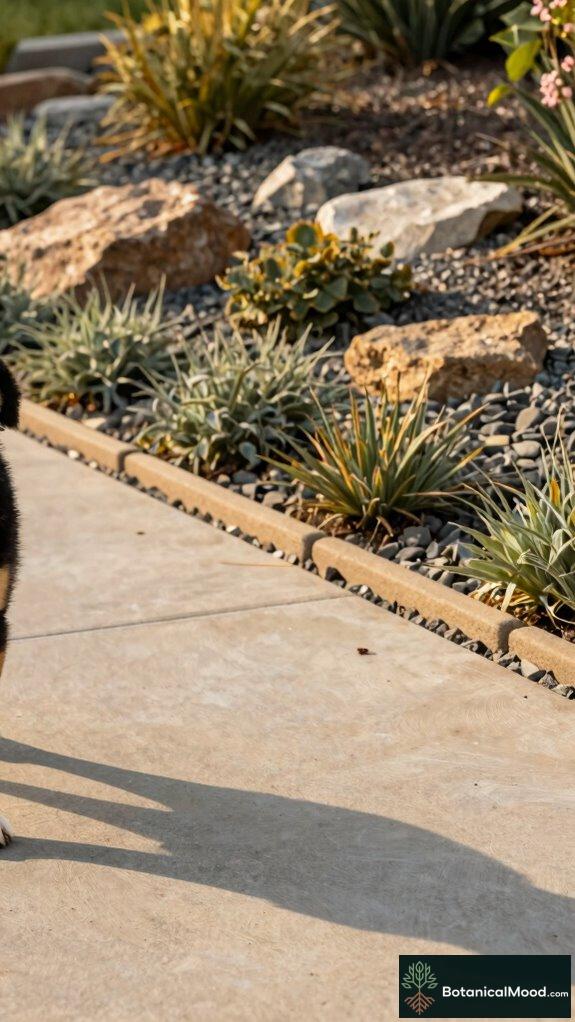
When I tackle a slope where a dog keeps digging, I start with quick, practical fixes you can do today that both deter the behavior and stabilize the soil, such as laying 2–3 feet of chicken wire (hardware cloth) along the fence base, partially burying large fieldstones or paving slabs to create an uncomfortable digging surface, and scattering river rock (smooth, 1–3 in. diameter) across the most disturbed strip to add weight and prevent erosion.
I recommend combining digging prevention with slope management: install terraces of crushed gravel, plant mat-forming groundcovers like Sedum spurium, use geotextile fabric, and edge with sandstone or granite for durable, low-maintenance reinforcement.
Block Dogs From Digging Slopes With Buried Chicken Wire
I often begin slope repairs by laying a strip of buried chicken wire (hardware cloth, 1/2–1 in. mesh, galvanized) along the fence line, because it gives immediate physical resistance to a dog’s paws and helps hold soil on shallow embankments. For a steep 2–3 ft. high batter, I recommend unrolling a 2–3 ft. wide band, trenching it 6–12 in. deep, folding the top back toward the fence, and anchoring with galvanized staples or rebar every 12–18 in. This creates a downward barrier dogs won’t easily push through while also stabilizing the surface against small-scale erosion.
I combine this with native groundcovers like Festuca glauca and Pachysandra terminalis for slope stabilization, and specify 18–24 in. overlaps, UV-resistant galvanized mesh, and corrosion-rated fasteners. This creates a durable digging prevention system that integrates with terrain grading, color palettes, and long-term erosion control.
Add Large Partially Buried Rocks to Deter Digging and Stabilize Soil
Although large partially buried rocks are an obvious visual anchor, I find they serve multiple practical roles in a dog-friendly environment: they create an uncomfortable digging surface that discourages persistent paws, add mass to stabilize shallow slopes and prevent small-scale erosion, and provide durable edging that blends with materials like river rock, flagstone, or decomposed granite. Ground anchor pins offer additional reinforcement for slopes prone to significant dog activity and erosion. I plan rock placement with soil reinforcement in mind, selecting granite boulders, sandstone slabs, or basalt cobbles for texture, color, and mass, embedding them partially for stability, and pairing with native plants (e.g., Festuca, Salvia) to integrate form and function.
- Choose irregular shapes to interrupt paw leverage
- Embed 30–50% of rock volume below grade
- Orient flat faces parallel to slope contours
- Use crushed drain rock behind boulders for drainage
- Coordinate tones with paving and plant palette
Cover Hotspots With River Rock or Paving Stones for Durable Groundcover
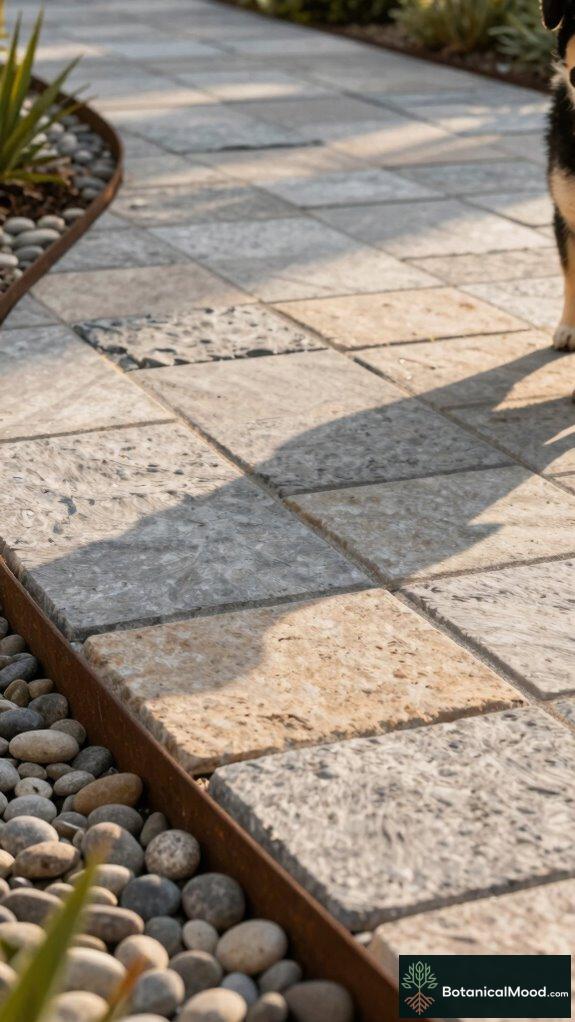
A durable groundcover of river rock or paving stones can transform a dog’s favorite digging hotspot into a low-maintenance, erosion-resistant surface that still looks intentional in the scenery.
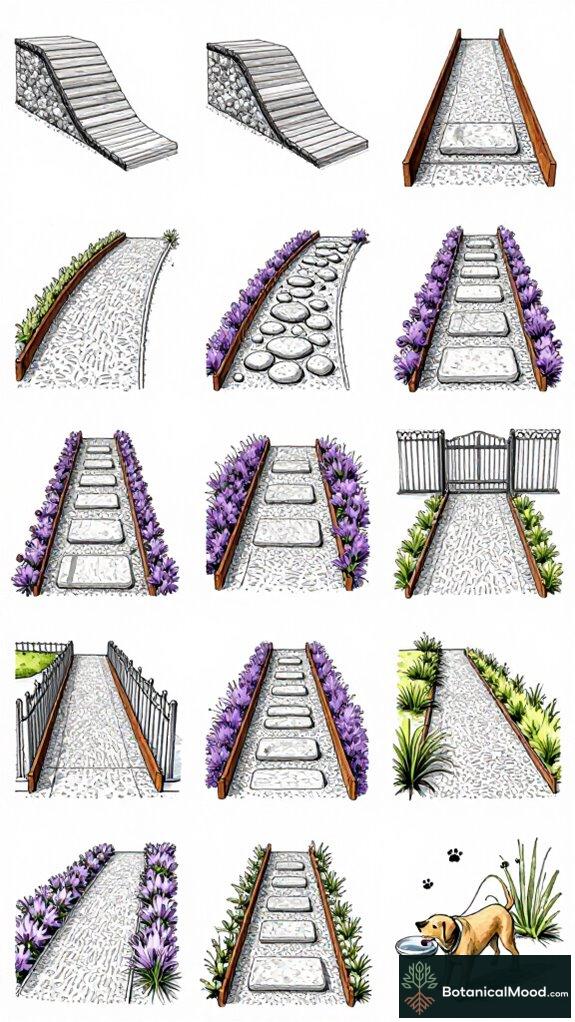
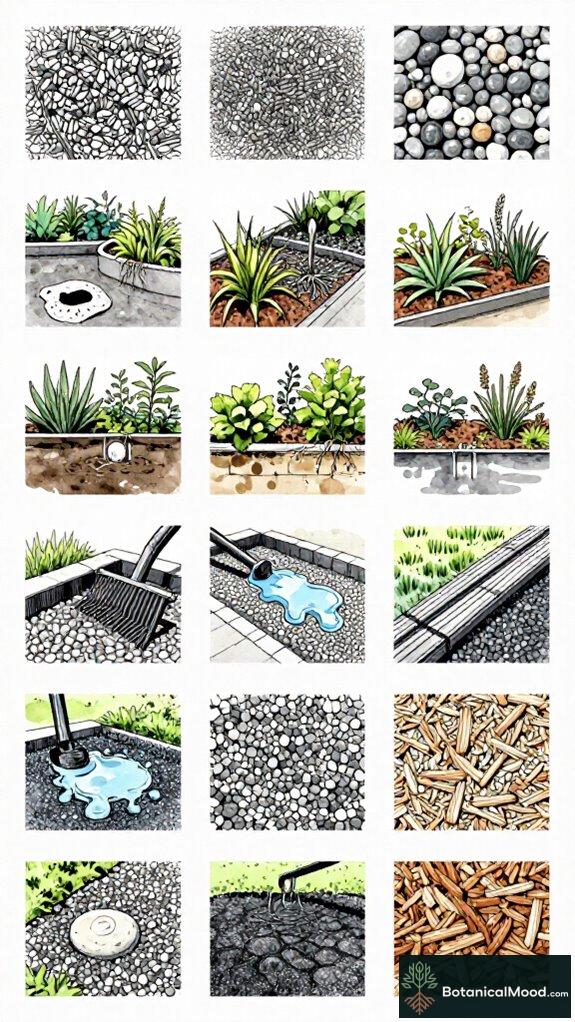
I propose using smooth river rock (3/8″–1″), decomposed granite base, or 12×12 bluestone pavers to create a functional, modern dog friendly groundcover that resists paws and stabilizes slopes, a practical durable landscaping solution. Stylish dog paths can be designed using crushed granite gravel and these same materials to create cohesive, intentional garden layouts throughout your yard.
I specify edging (steel or corten), geotextile fabric (nonwoven), and gravel depth (2–4 inches) for drainage, pairing neutral greys with warm sandstone tones.
I also recommend maintenance tools, suppliers, and installation steps for efficient, lasting results.
Create a Flat Designated Digging Zone and Redirect Your Dog There
When I lay out a flat, clearly defined digging zone—typically a 4–6 foot square sandbox or a shallow kiddie pool filled with screened play sand or loose loam—I’m giving both the dog and the environment a practical compromise that preserves turf, protects slopes, and simplifies maintenance.
I position the zone in a corner, edge it with timber or low fence, select pale sand for contrast against lawn, and rotate textures seasonally to sustain interest, offering sandbox alternatives like pea gravel or decomposed granite for drainage and aesthetics. For optimal results, consider incorporating dog-friendly grass seed in surrounding areas to reduce erosion and create a cohesive landscape.
This designated area also prevents concentrated urine spots that can damage grass, so you might consider combining digging zone management with eco-friendly odor solutions for comprehensive yard care.
- Bury safe toys and treat caches as digging rewards.
- Train with verbal cue, “dig here,” and immediate praise.
- Use visual markers, flagstone edging, or corten steel trim.
- Monitor soil compaction; replenish 2–4 inches annually.
- Combine with exercise, enrichment, and supervised practice.
Plant Pet‑Safe Shrubs and Groundcovers That Resist Digging and Prevent Erosion
After setting a defined digging square and training your dog to use it, I recommend planting a perimeter of low, pet‑safe shrubs and dense groundcovers to both discourage off‑zone digging and lock slope soils in place, creating a layered defense that’s attractive year‑round.
I favor compact species like lavender (Lavandula angustifolia) and dwarf boxwood (Buxus microphylla), paired with groundcover options such as creeping thyme (Thymus serpyllum) or ajuga (Ajuga reptans), whose fibrous roots stabilize slopes and deter paws. Lavender’s aromatic properties and resilience make it particularly valuable in dog-friendly gardens where both aesthetics and pet safety are priorities. When selecting aromatic plants, verify that safe aromatic plants are non-toxic to dogs and won’t cause digestive upset if ingested during play.
Use terraces, native grasses, river rock, and color-contrasting foliage to enhance erosion control, durability, and aesthetic cohesion.
Use Motion Sprayers, Citrus Repellents, and Other Non‑Harmful Deterrents

Motion‑activated deterrents and natural repellents offer practical, non‑harmful options I often recommend for gardeners and dog owners who want to protect beds, slopes, and borders without injuring wildlife or pets.
I combine motion activated deterrents like Orbit and Havahart water sprayers with citrus combinations—fresh orange and lemon peel mixes or diluted citrus essential oil sprays—to create multi‑sensory barriers that deter digging, preserve soil structure, and complement plant palettes such as lavender (Lavandula angustifolia) and sedum (Sedum spp.), while maintaining slope stability and visual cohesion. These same water sprayer deterrents can also protect pet water bowls from unwanted wildlife visitors in your garden. For dog runs specifically, natural grass alternatives like clover blends or recycled rubber mulch can reduce digging damage while providing comfortable, safe surfaces for active pets.
- Integrate timed, adjustable range sprayers for targeted coverage.
- Use grated citrus mulch near borders.
- Rotate repellents monthly to prevent habituation.
- Select corrosion‑resistant hardware for coastal gardens.
- Pair deterrents with decorative rocks for erosion control.
Train, Supervise, and Schedule Exercise to Change Digging Behavior
I prioritize a structured routine, because consistent training, vigilant supervision, and scheduled exercise form the backbone of changing a dog’s digging behavior, especially in gardens where plantings like lavender (Lavandula angustifolia), sedum (Sedum spp.), and native grasses must be protected from repeated disturbance.
I use evidence-based training techniques, tailored exercise routines, and clear supervision strategies to reshape dog behavior. Twice-daily walks, 30–60 minutes of active play with balls or discs, and focused mental drills reduce digging drive.
Meanwhile, a designated digging zone, systematic redirection, and progressive fading of supervision create durable habits that preserve soil structure, plant palette, and slope stability. Natural deterrents like aromatic plants can also discourage dogs from approaching flower beds and other garden areas you want to protect. Using weed pullers to remove toxic plants from your yard ensures dogs cannot accidentally ingest harmful vegetation while exploring garden spaces.
Rooftop Raised-Bed Layouts
Bringing the routines and containment strategies I outlined for ground-level gardens up to a rooftop, raised-bed layout asks for careful planning around weight, drainage, and plant selection.
To start, I begin by mapping the roof area, noting dimensions, load limits from the building engineer (often expressed in pounds per square foot), existing parapet heights, and prevailing wind exposure. This lets me allocate bed sizes, choose lightweight growing media such as an engineered lightweight mix (70–90% pumice/perlite blends with 10–30% composted bark or coir), and situate modular planters—Galvanized steel troughs, rotomolded HDPE containers, or timber beds made from rot-resistant cedar (Cedrus spp.)—to form functional zones for ornamentals like Lavandula angustifolia, Sedum spp., native grasses (e.g., Schizachyrium scoparium), and shallow-rooted edibles.
- Integrate structural engineer load specs, e.g., 20–40 psf live load.
- Design modular zones for elevated planting and circulation.
- Prioritize drainage layers: geo-fabric, drainage board, filter fleece.
- Select wind-tolerant species and root depth limits (10–30 cm).
- Use lightweight irrigation: drip with pressure regulator, rainwater capture.
Install Raised Cedar Planters
Several well-placed cedar planters can transform a rooftop or backyard into an organized, low-maintenance growing area. I’ll walk you through the practical decisions — dimensions, board thickness, joinery, and finish — that determine durability and planting success.
I chose Western red cedar, 2×8 boards for 24–30 inch deep beds, stainless-steel screws, and tongue-and-groove corners to maximize raised planter benefits and resist rot. I line with breathable terrain fabric, add crushed gravel drainage, and engineered soil mixes for soil stability.
For aesthetics, I recommend natural cedar stain, slate-gray gravel paths, and plantings like lavender (Lavandula angustifolia) and sedum.
FAQ
Can Digging Damage Buried Utilities on Slopes?
Yes — I’ve seen digging hazards threaten buried lines, yet innovation lets me pair smart utility protection with terrain design; I’ll reinforce slopes, use barriers and sensors, and monitor activity to prevent costly breaks and outages.
Will Deer or Wildlife Be Harmed by Chicken Wire Barriers?
No — I don’t think well-installed chicken wire will harm deer or wildlife if monitored; I prioritize deer behavior and wildlife safety, so I design barriers innovatively with visibility, smooth edges, and escape gaps to prevent entanglement.
Are Planting Roots Enough to Stop Severe Erosion Long-Term?
Hit the nail on the head: I don’t think planting roots alone will stop severe erosion long-term. I’ll combine planting techniques with engineered erosion solutions, innovative soil anchors, terraces, and rockwork to secure slopes reliably.
Can Deterrents Like Citrus Harm My Dog or Plants?
Yes — citrus toxicity can affect dogs and some plants; I avoid concentrated peels or oils, use dilute sprays sparingly, test plant safety first, and prefer motion deterrents or barriers for innovative, safer results.
How Do I Transition a Dog From Unsupervised Digging to No Digging?
Like a Victorian inventor, I’ll shift by supervising, interrupting instantly, and rewarding with positive reinforcement; I’ll offer engaging alternative activities, gradually increasing freedom as reliability grows, iterating like an experiment until digging stops.
References
- https://www.webmd.com/pets/dogs/how-to-prevent-a-dog-from-digging
- https://www.hkdogtraining.net/7-proven-fixes-to-stop-your-dog-from-digging-up-the-yard/
- https://www.hillspet.com/dog-care/behavior-appearance/how-to-stop-dog-from-digging
- https://rcdas.org/sites/g/files/aldnop301/files/2023-03/Stop-Your-Dog-Digging.pdf
- https://www.k9coach.dog/blog/stop-digging
- https://www.youtube.com/watch?v=dqYl_0TEJlY