11 Smart Strategies for Drought-Resistant Garden Design
Ever tried keeping a garden alive during a drought? Spoiler: it’s not easy!
I remember my first attempt; I planted a bunch of spring flowers, only to find them withering faster than my enthusiasm.
Now, I stick to plants like Echinacea purpurea and Salvia nemorosa. They practically thrive on neglect!
By using organic compost and biochar, my soil retains moisture like a champ.
And let’s not forget the magic of mulch—my garden’s secret weapon.
Using drip irrigation feels like I’m throwing a gardening party, minus the soggy guests!
Can you believe how blissful a xeriscape layout can be?
I’m still learning, and each season brings new challenges—and more plant parent failures!
The Beautiful Struggle of Designing My Drought-Resistant Garden
One summer, I thought I was a garden whisperer. I decided to tackle drought-resistant design for real. Armed with a vision and questionable Pinterest photos, I dove into selecting native plants, thinking, “This will be easy!”
Little did I know, my obsession with patio succulents would challenge me more than I imagined. The first month was a total flop; the plants looked sadder than my first attempt at baking!
But then, I learned the importance of layered soil and timely irrigation. The beauty of a sustainable garden? It became a serene escape from my own chaotic life.
Sometimes, my inner gardener doubts whether I’m on the right path. But with every new bloom, I rediscover the joy of resilience.
Quick Takeaways
- Choose native and drought-tolerant plants like Echinacea purpurea and Salvia nemorosa to enhance biodiversity and resilience.
- Enrich soil with compost and biochar to improve water retention and support healthy plant growth.
- Employ mulching techniques using shredded bark or straw to conserve moisture and enhance soil health.
- Implement drip irrigation systems to provide efficient, direct watering and minimize evaporation losses.
- Participate in local workshops to learn and share best practices for creating drought-resistant gardens.
Smart Plant Selection for Local Conditions

When considering how to cultivate a drought-resistant garden, I believe the foundation lies in smart plant selection tailored to local conditions.
Embracing native plants, such as Echinacea purpurea or Salvia nemorosa, enhances local biodiversity while promoting plant resilience. These drought-tolerant varieties not only thrive in specific climates but also support seasonal blooms that inspire admiration.
Embracing native drought-tolerant plants enriches biodiversity and fosters resilient, stunning gardens that celebrate seasonal beauty.
Utilizing permaculture practices, I create environments that echo ecological gardening principles, harmonizing beauty and sustainability. Drought-resistant native plants are often adapted to local soil types and rainfall patterns, ensuring their success in a xeriscape setting.
Choosing regional favorites fosters robust gardens that require minimal maintenance. I leverage sustainable landscaping techniques to optimize water use and reduce ecological footprints.
Enhancing Soil for Better Water Retention

To cultivate a drought-resistant garden, enhancing soil for better water retention becomes an essential component that I prioritize in my design process.
I incorporate high-quality soil amendments, such as compost and well-rotted manure, enriching the soil with organic matter that boosts its water-holding capacity. This combination helps clay soil become more porous, while sandy soil gains critical nutrients.
Adding materials like biochar (Charcoal) not only enhances moisture retention but also aids in healthy microbial activity, imperative for plant health.
I advocate for incorporating native plants, such as Echinacea purpurea and Rudbeckia hirta, which thrive in adapted soil conditions. Additionally, using drought-resistant landscaping techniques ensures that my garden remains sustainable and minimizes water usage.
With these strategies, my garden flourishes even in the harshest conditions, marrying beauty and resilience in a powerful symbiosis.
The Importance of Mulching

While many might overlook mulching as a mere aesthetic layer in garden design, I view it as an essential strategy for enhancing water conservation and soil health. Utilizing various mulch materials, like shredded bark (Quercus), straw (Hordeum vulgare), or gravel, I’ve discovered their profound impact on moisture retention and weed suppression.
Here’s a brief benefits analysis:
| Mulch Material | Benefits |
|---|---|
| Shredded Bark (Quercus) | Retains moisture, enriches soil |
| Straw (Hordeum vulgare) | Adds nitrogen, prevents erosion |
| Gravel | Effective for heat retention, drains |
Efficient Irrigation Techniques

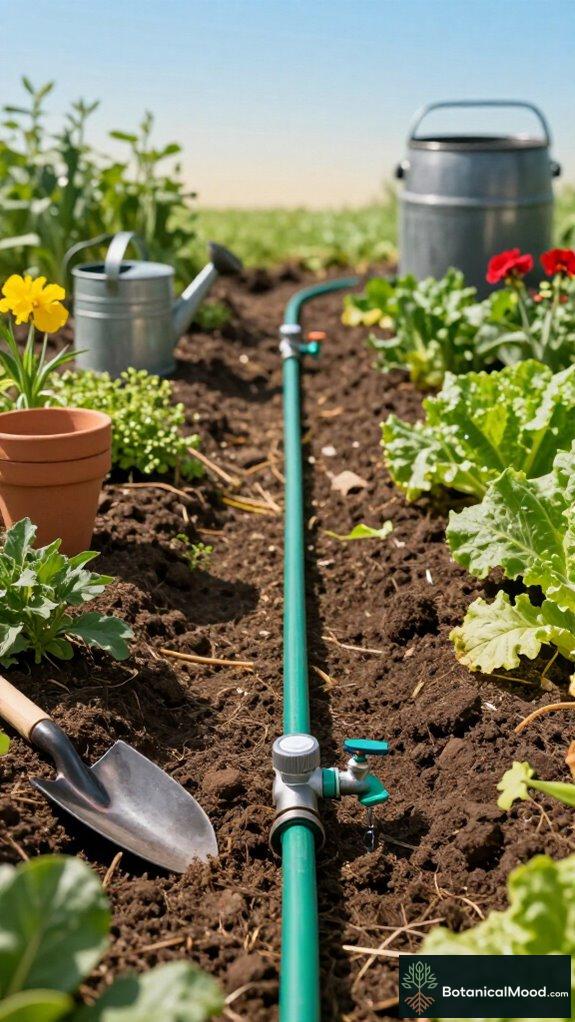
Efficient irrigation techniques are essential, especially in our era of increasing drought conditions and water scarcity. I’ve found that implementing a drip irrigation system truly transforms how your garden thrives.
Unlike traditional methods, drip irrigation delivers water directly to the roots of each plant, minimizing evaporation and ensuring maximum efficiency.
Drip irrigation revolutionizes watering by directing moisture to plant roots, reducing evaporation and maximizing efficiency.
Moreover, integrating greywater reuse into your garden setup can greatly enhance sustainability. Collecting water from your household, like from baths or sinks, helps to nourish hardy plants such as Lavandula angustifolia (lavender) and Salvia officinalis (sage).
These strategies not only conserve water but also empower you with a smarter, more resilient garden.
Creating a drought-resistant haven becomes feasible when we leverage these modern techniques effectively; together, they create a sustainable oasis.
Creating Functional Hardscapes

Creating beautiful and sustainable outdoor spaces often begins with well-designed hardscapes, which serve as the foundation for a drought-resistant garden.
By thoughtfully incorporating functional pathways and aesthetic structures, I guarantee my garden remains both practical and visually appealing.
Here are some critical elements to reflect on:
- Durable materials: Opt for permeable pavers or natural stone that withstands the elements.
- Integrated seating areas: Create inviting nooks for relaxation amidst your greenery.
- Strategic placement: Position hardscapes to control water runoff and conserve moisture.
- Vertical elements: Introduce trellises or arbors to enhance visual complexity.
- Naturalistic design: Blend hardscapes with the surrounding environment for seamless beauty.
Grouping Plants by Water Needs

Hardscapes form the backbone of any drought-tolerant scenery, guiding not just aesthetics but functional water management.
When I group plants by their water needs, I harness their drought advantages and optimize garden performance. For example, I pair drought-resistant species like lavender (Lavandula spp.) with succulents such as agave (Agave spp.), creating harmonious plant companioning that enhances each plant’s resilience. This strategic arrangement reduces competition for moisture, ensuring each type thrives.
Grouping plants by their water needs fosters resilience and optimizes garden performance, creating a thriving, drought-tolerant ecosystem.
I also consider color and texture, creating aesthetically compelling vistas while prioritizing efficiency. Employing a combination of deep-rooted xerophytes alongside shallow-rooted perennials can create a layered system that captures rainwater more effectively.
Ultimately, a well-planned grouping empowers my garden, making it both striking and sustainable.
Utilizing Rainwater Harvesting Features

While exploring the nuances of drought-resistant gardening, I’ve found that integrating rainwater harvesting features can greatly enhance both water conservation and garden aesthetics.
By collecting rainwater, we not only conserve an essential resource but also infuse our gardens with unique beauty.
Here are some powerful elements to take into account:
- Construct rainwater storage systems to maximize utility
- Employ decorative barrels, such as those from Reclaimed Wood Exchange, for style and functionality
- Install rain chains as both art and function
- Set up cisterns discreetly within the terrain
- Utilize pervious surfaces in collection areas to enhance runoff capture
These features not only support our hydrological needs but also elevate overall garden design, creating a dynamic space that resonates with nature’s rhythm.
Choosing Permeable Paving Materials

Selecting the right permeable paving materials can profoundly impact both the functionality and aesthetic appeal of a drought-resistant garden.
I often find myself drawn to eco-friendly options like permeable concrete or porous pavers, which not only allow rainwater to drain but also enhance the garden’s look. Features like surface permeability, essential for managing runoff, can dramatically affect soil hydration and plant health.
Consider materials such as permeable brick pavers (e.g., Belgard) or gravel combined with stabilizers, offering durability while promoting natural drainage.
Explore the durability of permeable brick pavers and gravel stabilizers, enhancing natural drainage in your garden design.
These choices not only contribute to a sustainable environment but can transform a plain path into a striking design element. Embracing these strategies guarantees that my garden thrives as a vibrant, eco-conscious haven.
Incorporating Aesthetic Elements in Design

Creating a beautiful, drought-resistant garden often involves more than just selecting hardy plants; it’s about weaving aesthetic elements into every aspect of the design.
I believe a superb garden balances functionality with visual appeal, offering an experience that’s both enriching and pragmatic.
To elevate your design, consider integrating:
- Colorful containers (e.g., terracotta or ceramic) for vibrant plant arrangements
- Artistic pathways (e.g., decomposed granite or flagstone) that guide the eye
- Diverse textures with ornamental grasses and succulents
- Vertical elements like trellises for climbing plants (e.g., Passiflora edulis)
- Ambient lighting to enhance evening tranquility
These design choices transform the ordinary into the extraordinary, creating spaces that captivate and inspire, reinforcing my commitment to empowering sustainable beauty in every garden I envision.
Engaging With Local Incentive Programs

Engaging with local incentive programs can greatly enhance your drought-resistant garden while also contributing to community sustainability efforts.
These programs often provide local grants that enable you to invest in water-efficient landscaping techniques and resilient plant choices.
For example, consider attending a community workshop focused on xeriscaping, where experts share transformative methods using native species such as Salvia (Salvia spp.) and Agastache (Agastache spp.).
Promoting Community-Wide Drought-Resistance Initiatives

As communities increasingly grapple with the impacts of climate change, fostering a culture of drought resistance becomes essential for our shared surroundings.
Promoting initiatives through community workshops and local partnerships can amplify our collective efforts. Together, we can create a more resilient environment that withstands drought.
By cultivating community engagement and partnerships, we can build a stronger, drought-resistant environment together.
Here are some impactful strategies I believe in:
- Host engaging community workshops to educate on drought-resistant techniques.
- Form local partnerships with nurseries specializing in xeriscaping (e.g., Agave americana).
- Initiate neighborhood challenges to transform yards into water-efficient spaces.
- Collaborate with local governments for funding on drought initiatives.
- Share success stories to inspire others toward sustainable practices.
These steps empower us to reshape our communities and create a vibrant, drought-resistant future.
Sustainable Garden Planning

Sustainable garden planning not only focuses on aesthetics but also embodies a commitment to ecological responsibility. By integrating strategies such as crop rotation, I can considerably enhance soil fertility while minimizing pest problems, thereby ensuring a thriving environment for my plants.
Implementing quality soil amendments like compost and biochar (Charcoal, Biochar, and Organic Matter) further enriches the soil, promoting healthy root development.
To create a truly impactful design, I also consider native species that require less water, which aligns seamlessly with my goal of drought resistance. Each element I’ve chosen reflects a balance of beauty and sustainability.
Through my journey in establishing Botanical Mood, I endeavor to inspire a movement towards environments that celebrate natural beauty while preserving our precious ecosystem.
Drought-Resistant Plant Selection Tips

Choosing the right plants for a drought-resistant garden can feel like a complex puzzle, yet it’s essential for creating a sustainable and visually appealing scenery.
I recommend focusing on native species that thrive naturally and have deep roots for maximum water absorption. Native species are adapted to local conditions and often require less maintenance and water.
Consider these selection tips:
- Choose plants with small, waxy leaves to minimize water loss.
- Prioritize deep-rooted varieties for improved drought resilience.
- Group plants with similar water needs to streamline care practices.
- Select species that adapt well to your specific soil type and local climate.
- Incorporate drought-tolerant ornamental grasses like California Fescue (Festuca californica) for texture and beauty.
Incorporating these selections will guarantee your garden flourishes, even in challenging conditions.
Xeriscape Garden Layout Essentials

Crafting a xeriscape garden layout is a transformative journey that not only enhances the beauty of your outdoor space but also promotes responsible water use. By applying the xeriscape principles, I strategically analyze my site, marking property lines and identifying sun and shade patterns to guarantee that each plant thrives in its ideal condition.
Dividing the garden into zones based on water needs—Oasis for highwater plants, Shift for moderate, and Xeric for drought-tolerant varieties—creates an efficient, functional design.
For enhanced garden aesthetics, I group plants with similar requirements and incorporate mulch to improve moisture retention. This intentional layout brings forth the vibrant interplay of colors while conserving resources, ultimately reflecting my commitment to sustainable gardening practices.
Water-Wise Garden Visionary

Margaret Lawson, a resident of Denver, Colorado, developed her passion for garden design after witnessing the devastating effects of drought on her neighborhood. This experience inspired her to create a sustainable, water-wise garden.
To achieve her vision, Lawson conducted a thorough site analysis, mapping out her property’s sun exposure, soil type, and existing vegetation. She collaborated with local horticulturists to select drought-resistant native plants from Colorado’s water-wise plant lists, ensuring that her garden would thrive under the local climate conditions while minimizing water usage.
The transformation of her garden utilized tools such as a soil amender from Miracle-Gro, drip irrigation systems installed with Rain Bird products, and the expert knowledge of Horticulturist David Mizejewski.
California’s Desert Botanical Garden

Amidst the arid beauty of California’s terrains lies the Desert Botanical Garden, a sanctuary dedicated to showcasing the stunning diversity of drought-tolerant flora that thrives in harsh climates.
Here, I marvel at the splendid representation of native species and desert flora, which hold remarkable adaptations for survival.
A splendid showcase of native species reveals the remarkable survival adaptations of desert flora in this arid paradise.
Consider these striking features of the garden:
- Brittlebush (Encelia farinosa) and Ocotillo (Fouquieria splendens) provide visual drama.
- Desert Marigold and Penstemon offer vibrant year-round color.
- Yucca species, essential for pollinators, showcase their architectural beauty.
- Layered planting strategies diminish evaporation.
- Gravel paths enhance drainage, mimicking natural conditions.
This garden exemplifies sustainable design, brilliantly merging aesthetic allure with environmental resilience, reminding us of the power of nature’s ingenuity, especially in arid habitats.
References
- https://tamuradesigns.com/drought-tolerant-landscape-design/
- https://extension.psu.edu/designing-the-home-garden-for-drought-resilience/
- https://www.monrovia.com/be-inspired/drought-tolerant-landscape-design.html
- https://scholarship.claremont.edu/cgi/viewcontent.cgi?article=4076&context=cmc_theses
- https://www.justsprinklers.com/blog/2025/september/modern-drought-resistant-landscaping-ideas/
- https://www.c2es.org/wp-content/uploads/2018/10/resilience-strategies-for-drought.pdf
- https://www.savingwaterpartnership.org/drought-tolerant-garden-design-tips-and-ideas/
- https://www.bbg.org/article/drought-proofing_your_garden
- https://www.nidwater.com/plan-ahead-for-a-drought-resistant-garden
- http://www.highplainsgardening.com/plants/plant-selection-checklist
- https://patuxentnursery.com/blog/creating-a-drought-tolerant-landscape/
- https://www.createacademy.com/studio-notes/guide-to-drought-tolerant-gardens
- https://dennis7dees.com/drought-tolerant-plants/
- https://www.rhs.org.uk/plants/for-places/drought-resistant
- https://ucanr.edu/blog/garden-notes/article/drought-tolerant-vs-drought-resistant-gardens
- https://twinoaksonline.com/blog/drought-resistant-plants-a-guide-for-sustainable-gardening/
- https://dpw.lacounty.gov/wwd/web/Documents/DroughtTolerantPlants.pdf
- https://lilysflorist.com/blog/drought-resistant-plants-in-your-gardens/
- https://sensorex.com/xeriscape-gardens-principles/
- https://outdoormakeover.net/landscape-revolution-xeriscape-designs-for-modern-eco-conscious-homes/
- https://engagement.source.colostate.edu/7-principles-of-xeriscaping-horticulture-expert-explains/
- https://www.brightview.com/resources/article/7-principles-xeriscaping
- https://www.highcountrygardens.com/content/waterwise/how-to/plan-a-garden-xeriscape
- https://redbuttegarden.org/media/documents/Xeriscape_Article.pdf
- https://www.denverwater.org/residential/rebates-and-conservation-tips/remodel-your-yard/xeriscape-plans
- https://www.cityofdouglas.org/DocumentCenter/View/37/Xeriscaping-101?bidId=
- https://extension.usu.edu/cwel/principles
- https://cmg.extension.colostate.edu/Gardennotes/411.pdf
- https://www.bewaterwise.com/assets/mwd_waterwise-garden_california_friendly_landscape_handbooksm.pdf
- https://www.pubs.ext.vt.edu/426/426-713/426-713.html
- https://parkcity.gov/departments/planning/code-amendments/water-wise-landscaping-resources/-fsiteid-1
- https://www.cityofnapa.org/587/8-Basic-Principles-of-Water-Wise-Landsca
- https://www.fws.gov/project/teaching-water-wise-landscape-design-conserve-water
- https://www.energy.gov/energysaver/landscaping-water-conservation
- https://landscape-water-conservation.extension.org/elements-and-principles-of-design-for-a-water-wise-landscape/
- https://www.gardenia.net/guide/desert-flowers-bringing-year-round-color-to-dry-gardens
- https://www.monumentalwd.com/choosing-and-cultivating-desert-plants-for-landscaping/
- https://photobotanic.com/living-book-library/plants-celebrated/natures-inspiration/real-desert-garden/
- https://dbg.org/tag/drought-resistant/
- https://www.azplantlady.com/category/drought-tolerant