Creating a woodland oasis? Oh boy, I remember diving into this delightful chaos myself.
Picture me knee-deep in soil, surrounded by native sunflowers and wildflowers—talk about a biodiversity bonanza!
Cozy nooks with rustic benches were my secret weapon for relaxation, because who doesn’t love an outdoor nap? Paths wound around like an adventure, leading to charming discoveries.
But let’s be real; it was also just a great excuse to avoid chores.
I learned from legends like Jo Thompson. Trust me; you can cultivate your own serene retreat without losing your sanity (most days, anyway).
The Magic of Layered Planting: A Personal Journey into Garden Design
One summer, I was determined to create my little escape. I started layering plants, thinking it was just for looks. Spoiler alert: it was a game-changer! I planted ferns, creeping thyme, and climbing vines.
The textures and heights transformed my garden into an enchanting space. Every morning, I sipped my coffee, the sounds of birds and rustling leaves making me feel like a forest queen.
Life’s chaos melts away in that garden. Now, I find joy in how every detail—like a bee buzzing around—adds its own magic. So, rediscover your love for gardening, and bring nature home!
Quick Takeaways
- Layered planting with native species fosters biodiversity and visual appeal, enhancing the serene atmosphere of your woodland oasis.
- Cozy nooks with rustic seating and gentle lighting create inviting spaces for relaxation and reflection within the garden.
- Meandering pathways encourage exploration and discovery, guiding visitors through enchanting corners of the woodland retreat.
- Incorporating climbing vines adds vertical interest and attracts pollinators, enriching the overall ecological experience of the garden.
- Sustainable design practices, such as selecting resilient plants and water features, contribute to a tranquil and harmonious woodland environment.
Embracing Nature With Layered Planting
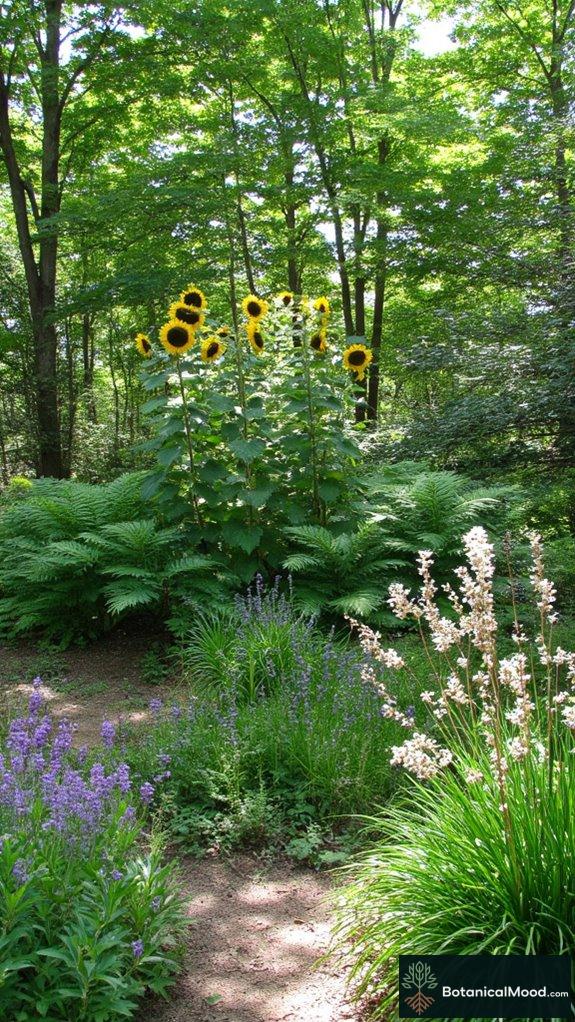
Layered planting transforms a garden into a vibrant tapestry of colors and textures, and if you’re like me, you appreciate the artistry that emerges from a well-thought-out design.
By combining tall plants like sunflowers with mid-height ferns and low-growing wildflowers, I’ve found that each level contributes its own unique charm, creating depth and interest.
Inspired by renowned designers like Piet Oudolf, I’ve experimented with native species, ensuring they thrive in harmony.
This layered approach not only enhances visual appeal but also promotes biodiversity, making it essential for creating a serene woodland garden.
Fostering a sense of liberation, it invites all to connect with nature in a meaningful way.
Cozy Nooks: Designing Relaxation Spots
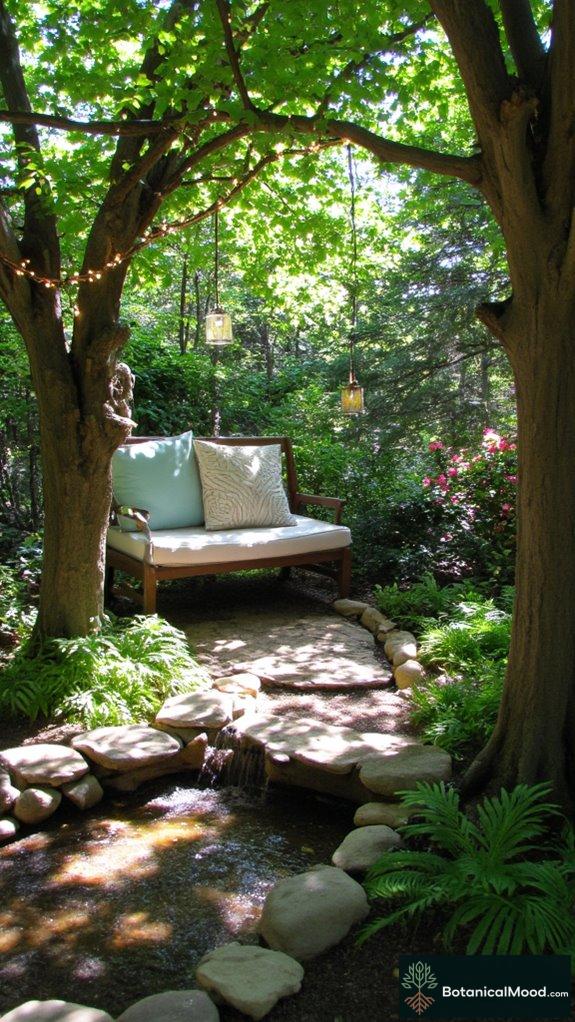
Creating inviting spaces within a garden can elevate the overall experience, turning an ordinary outdoor area into a personal retreat. Cozy nooks beckon us to unwind, providing sanctuary amidst nature’s embrace. To enhance the sense of tranquility in these areas, consider incorporating elements of zen garden spatial harmony, as they promote balance and peace.
| Element | Description |
|---|---|
| Seating | A rustic wooden bench, adorned with plush cushions |
| Ambiance | Soft, twinkling fairy lights wrapped around tree trunks |
| Surroundings | Lush ferns and colorful blossoms that frame the nook |
| Accessories | A small, tranquil water feature creating a soothing sound |
| Decor | Whimsical lanterns and aromatic candles for evening charm |
Designing these retreats inspires liberation, urging us to rejuvenate and connect with our surroundings, a vision inspired by nature’s beauty that I share through Botanical Mood.
Pathways That Invite Exploration
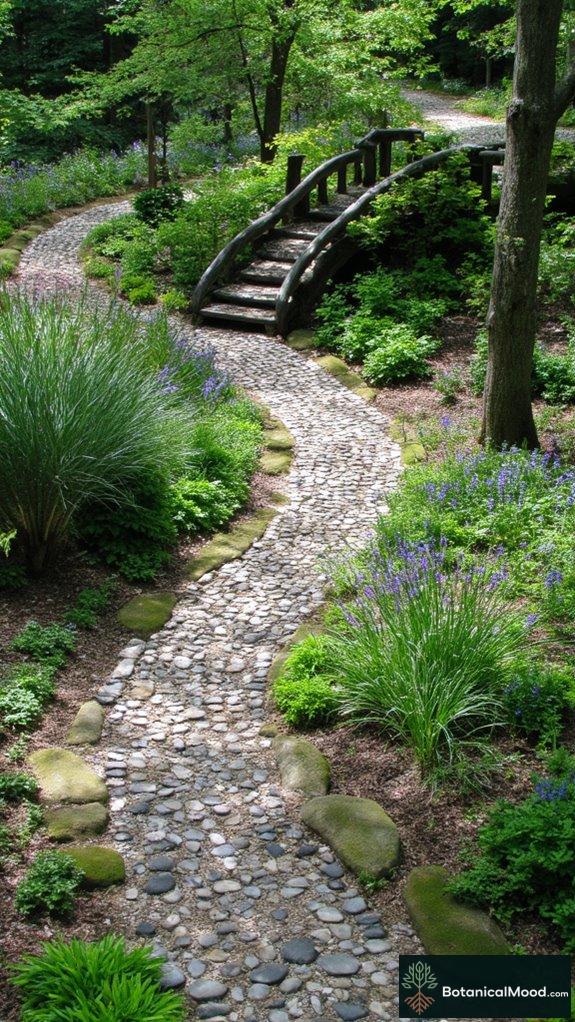
As you wander through a garden, pathways invite exploration, guiding you from one enchanting corner to another, much like the carefully curated designs of famous terrain architect Gertrude Jekyll.
These paths can spark curiosity, beckoning you to uncover hidden gems in your woodland oasis. Visualize strolling along:
- Winding cobblestone trails leading to secret benches
- Rustic wooden bridges arching over shimmering streams
- Soft, moss-covered routes framing vibrant flower borders
Each pathway not only shapes the garden’s character but also transforms your experience, allowing you to connect with nature.
At Botanical Mood, I’ve sought to celebrate these liberating elements in every design.
Groundcovers for Texture and Color
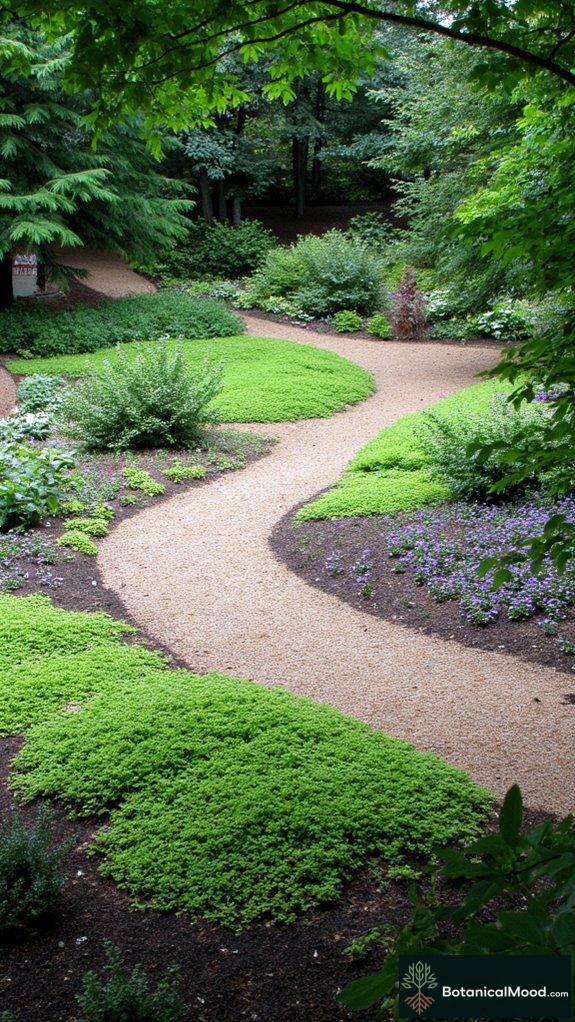
While exploring the complicated layers of a woodland garden, you’ll find that groundcovers play an essential role in enhancing both texture and color, transforming ordinary spaces into vibrant carpets of life.
Consider lush options like creeping thyme or ajuga, with their rich greens and stunning purple blooms, offering both beauty and function.
Renowned designer Piet Oudolf champions the use of native groundcovers, promoting sustainable environments teeming with life.
By layering these plants, I create a sensory experience that invites exploration and connection.
Through my website, Botanical Mood, I hope to inspire others to cultivate their own serene escapes, celebrating nature’s artistry in every garden design.
Vertical Interest With Climbing Vines
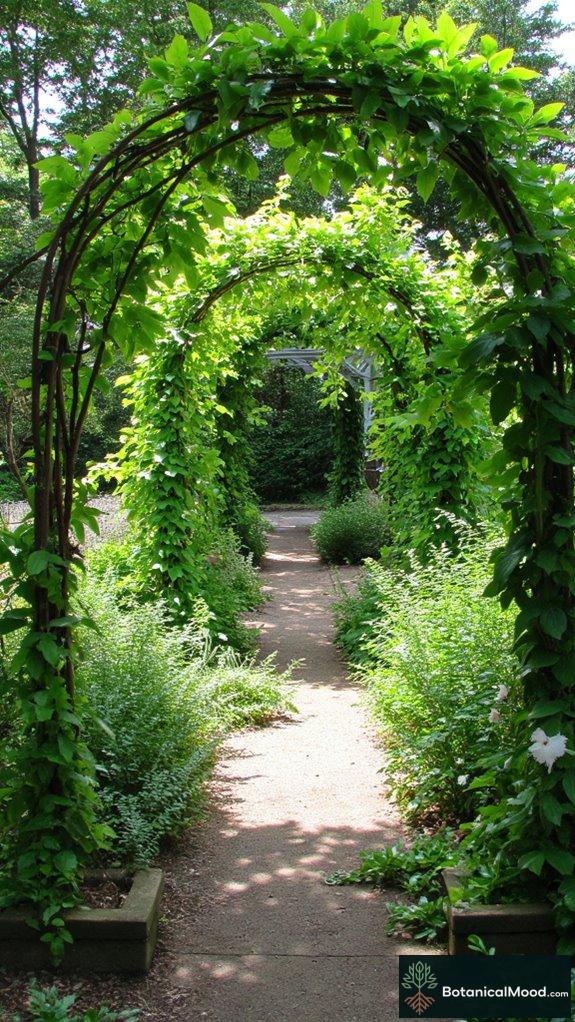
Incorporating climbing vines into your woodland oasis adds both vertical interest and dynamic beauty, breathing life into garden spaces that might otherwise feel flat.
I envision:
- Lush, green tendrils of clematis weaving around rustic trellises, showcasing stunning blooms.
- The enchanting fragrance of honeysuckle inviting butterflies and hummingbirds to dance about.
- Bold, vibrant hues of trumpet vines cascading over pergolas, draping the space in a natural tapestry.
These magical elements create a sense of liberation, transforming your garden into an immersive retreat.
As someone deeply inspired by nature, I created Botanical Mood to celebrate these stunning design possibilities.
Natural Stone Elements for Rustic Charm
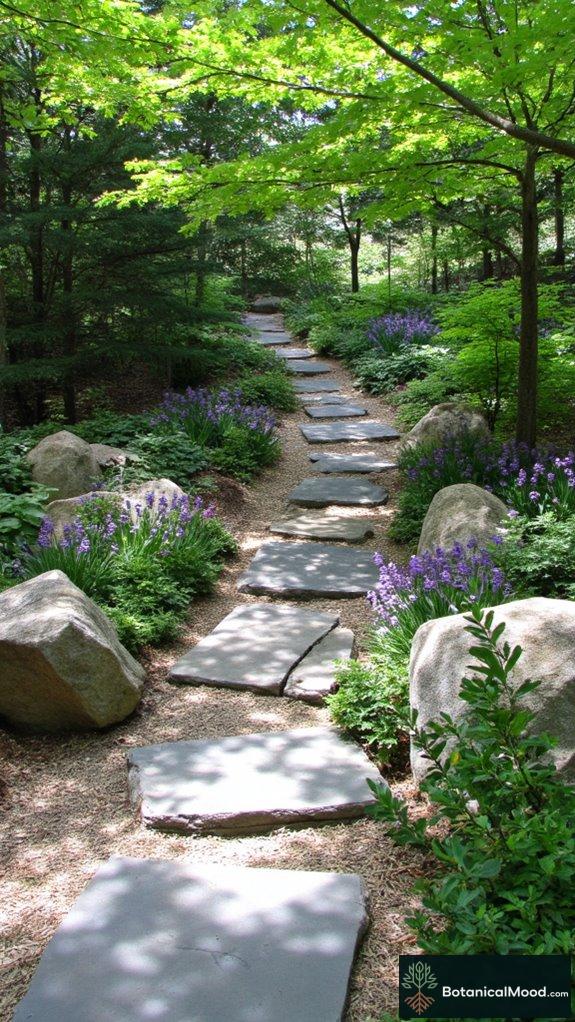
Creating a woodland oasis often benefits from the natural elegance that stone elements provide, as these materials harmoniously blend with the earthy hues and textures of surrounding flora.
When I incorporate granite boulders or slate stepping stones, I feel a deeper connection to nature, instantly elevating the rustic charm. Brands like Belgard offer beautiful options for patio stones that complement lush greenery, adding both function and beauty.
Inspired by environment designers like Piet Oudolf, I’ve discovered how strategically placed stone pathways guide visitors through serene settings, inviting exploration.
With every stone, I achieve a tranquil retreat that embodies the essence of freedom in nature’s embrace.
Year-Round Interest With Evergreen Choices
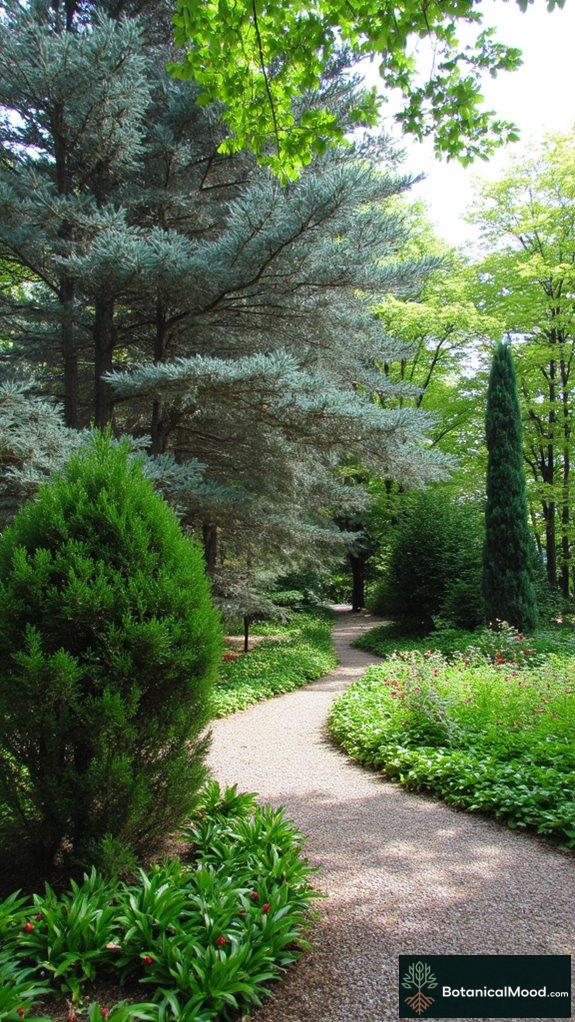
An enchanting garden isn’t just a summer delight; it can captivate and inspire year-round, especially with the right choice of evergreens.
Think about the transformative power of lush greenery amidst winter’s chill.
Consider incorporating:
- Hollies with their vibrant red berries for a splash of color
- Blue Spruce, which adds a delightful silver hue
- Sky Pencil Juniper, a vertical accent perfect for small spaces
These choices create a serene retreat, showcasing beauty and tranquility regardless of the season.
I’ve dedicated this space on Botanical Mood to celebrate such harmonious designs, igniting your garden journey with year-round inspiration.
Woodland Retreat Layout Ideas
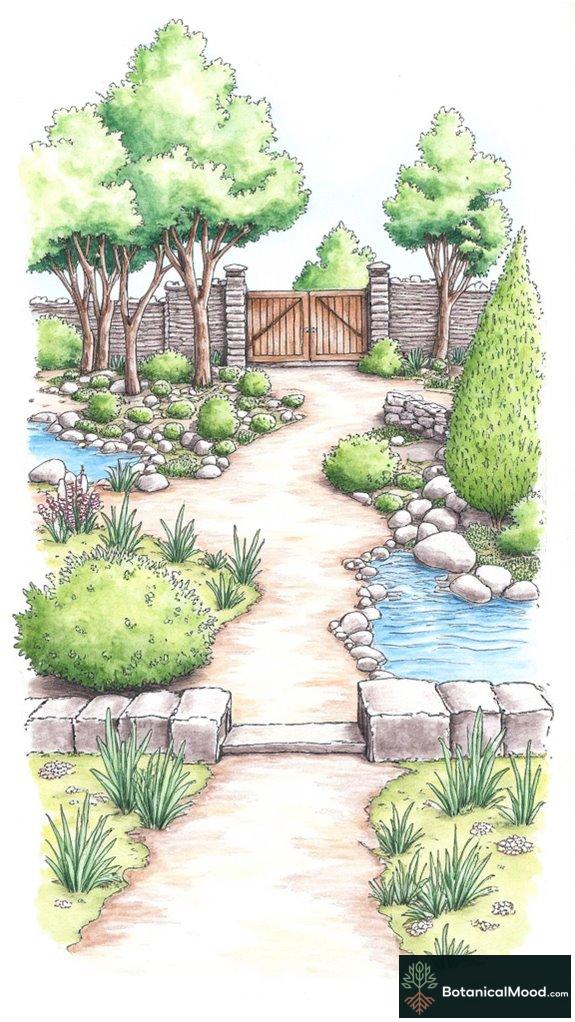
Woodland gardens often evoke a sense of mystery and tranquility, and it’s truly rewarding to layout your retreat in a way that invites exploration and serenity.
I define boundaries using weathered wooden gates and stacked logs, creating a rustic charm. Layering native plants with towering trees and mid-sized shrubs not only enhances visual depth but also supports local wildlife. Incorporating ground cover plants helps suppress invasive weeds and provides minimal maintenance, allowing for a more vibrant ecosystem.
I like wide, sweeping paths—made of river rock—to guide you through various mini-retreats tucked under trees or near gentle water features. With thoughtfully positioned seating near aromatic plants, I craft spaces that invite quiet contemplation, embodying the beauty of nature’s design.
Shade Garden Pathway Ideas
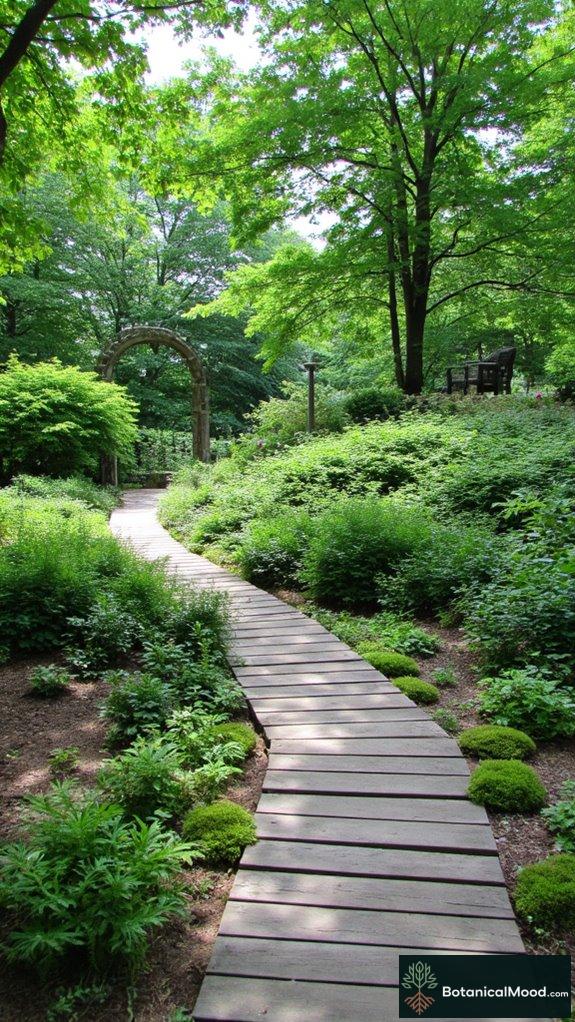
Shade gardens offer a unique opportunity to explore pathways that weave through serene scenery, where cool, filtered light creates a tranquil atmosphere.
Imagine stepping onto a winding trail bordered by:
- Soft, lush ferns brushing against your legs as you walk
- Shimmering pebbles reflecting dappled sunlight, guiding your way
- Rustic wooden planks blending harmoniously with the natural surroundings
As I curate my own woodland oasis, I’ve drawn inspiration from renowned designers like Piet Oudolf.
These elements invite liberation, letting us escape the chaos of daily life, while savoring nature’s beauty.
It’s why I created Botanical Mood— to inspire you in your garden journey.
Forest Garden Retreat Blueprint
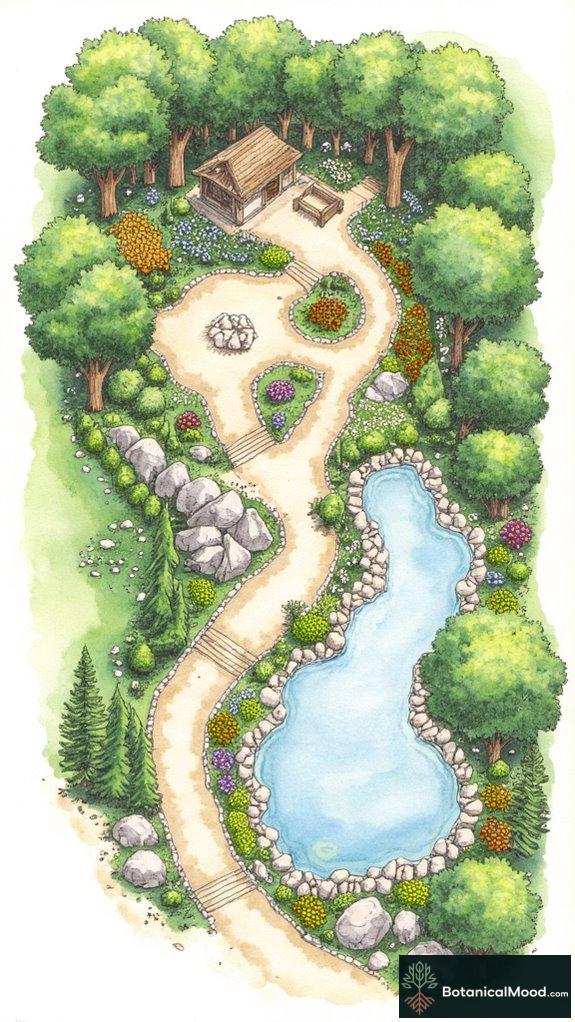
Creating a forest garden retreat can transform your outdoor space into a lively ecosystem while offering a tranquil escape from everyday stress. To begin, I define my primary goals—whether it’s food production, community gathering, or education—guiding my design choices. I also choose varied plant species to mimic natural layers, ensuring accessibility with paths and seating. Incorporating native and woodland plants fosters biodiversity and enhances the overall health of the landscape.
| Element | Purpose |
|---|---|
| Canopy Trees | Provide shade and habitat |
| Understory Shrubs | Enhance structure and food source |
| Herbaceous Plants | Add beauty and attract pollinators |
| Water Features | Support wildlife and provide serenity |
Serene Forest Retreat Concepts
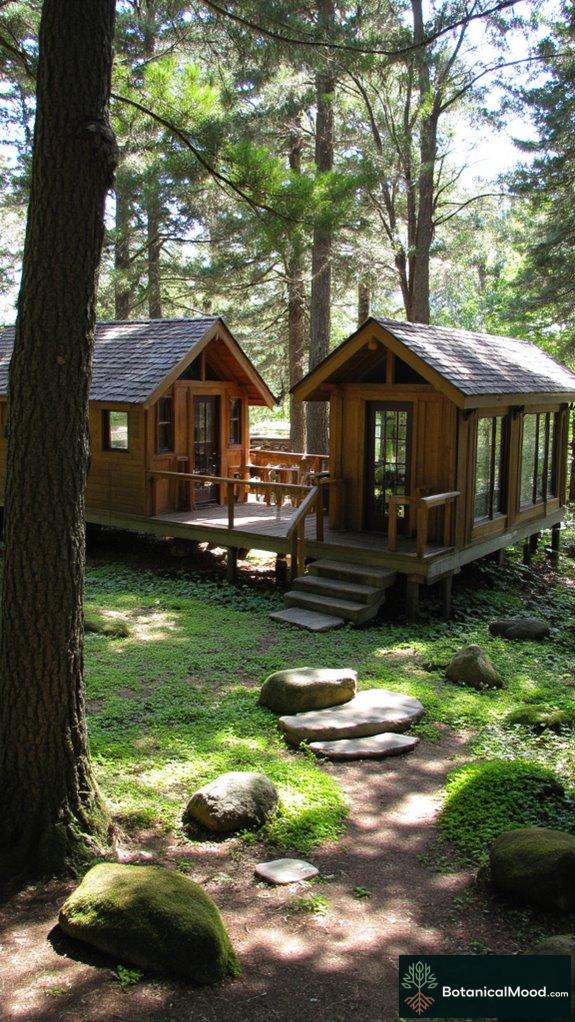
In our quest to design serene forest retreats, I find it rewarding to focus on how architecture harmonizes with the natural environment, embracing both beauty and functionality.
Imagine a tranquil escape featuring:
- Elevated cabins blending with treetops using charred shingles and heavy timber.
- Panoramic windows inviting morning light, while lush vegetation thrives on rooftops.
- Outdoor meditation spaces surrounded by nature, inspiring peace and reflection. This connection to the forest fosters the secluded experience that fosters liberation.
As I explore these concepts, I’m reminded of the enchanting sceneries designed by renowned figures like Piet Oudolf, encouraging us to celebrate the artistry of natural settings within our own retreats.
How To Design Creating a Tranquil Forest Garden Retreat Design
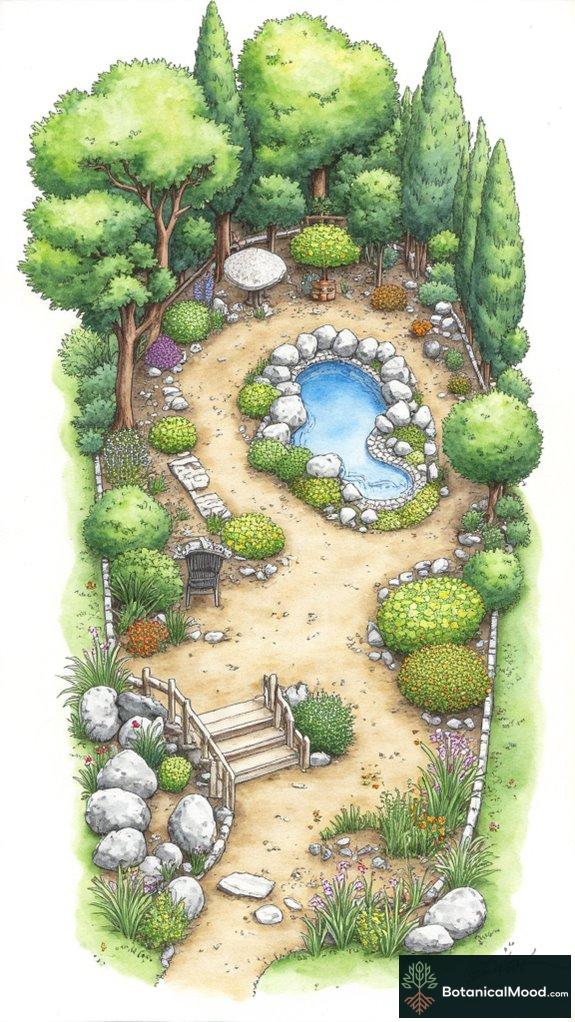
Designing a tranquil forest garden retreat calls for a thoughtful approach that speaks to both nature and personal well-being. I start by evaluating the site—considering soil type, sunlight, and moisture levels—to select native, resilient plants that enrich the ecosystem. Layering trees, shrubs, and groundcovers mimics forest structure, providing depth and seasonal interest. A woodland garden gently, meandering pathways invite exploration while maintaining privacy. Sensory elements like fragrant herbs and soothing water features create an immersive experience. I cherish the beauty inspired by renowned garden designers, ensuring every aspect fosters tranquility, harmony, and a liberating connection to our vibrant natural world.
Meet the Garden Visionary
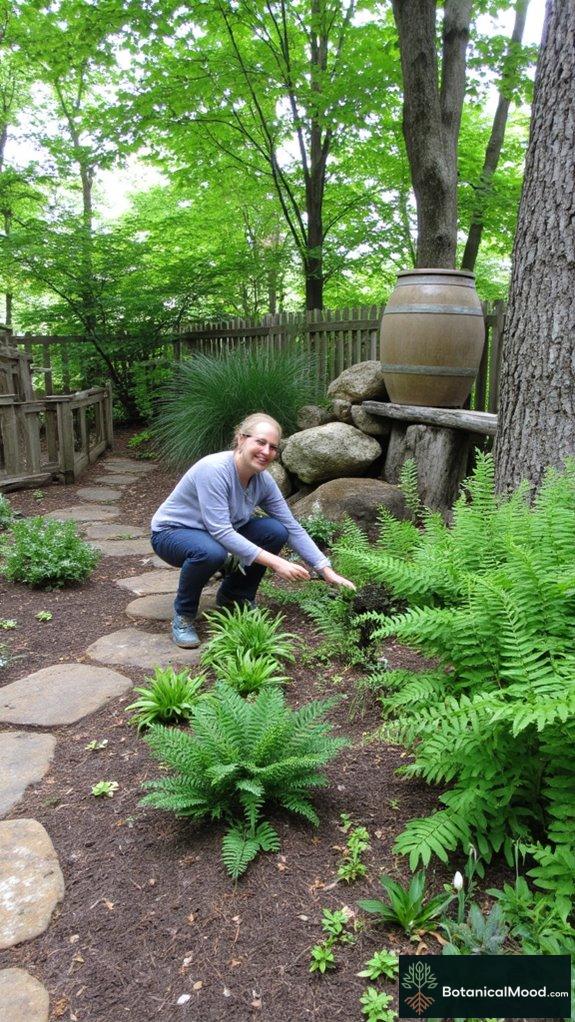
Meet the Garden Visionary: Anne Thompson from Oregon found solace in nature while hiking, sparking her desire to create a private woodland oasis that embodies peace and reflection.
To realize her vision, Anne immersed herself in garden design, collaborating with local horticulturists and scenic architects. She conducted extensive research on native flora, studied sustainable practices, and drafted blueprints to seamlessly integrate her property’s natural surroundings with artistic design principles. Inspired by Gertrude Jekyll’s ability to combine formal design elements with natural features, she incorporated similar techniques into her own plans.
Anne utilized tools from brands like Fiskars and DeWit for planting and maintenance, incorporating accessories such as rain barrels and decorative boulders.
Horticulturists from the Oregon State University Extension Service helped advise on plant selection, ensuring a resilient and biodiverse garden that flourished in its woodland environment.
Notable Garden Design Innovators
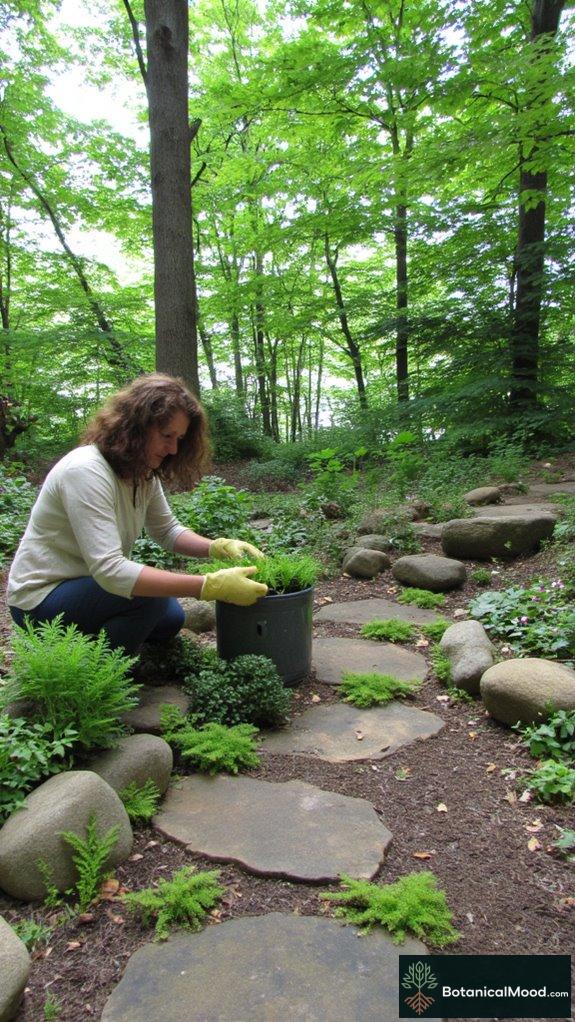
Notable garden design innovators play a significant role in shaping our understanding of how natural spaces can enhance our daily lives.
These creative minds are transforming our green spaces into vibrant escapes:
- Jo Thompson’s romantic, timeless gardens blend seamlessly with nature.
- Lulu Urquhart emphasizes ecological restoration, championing native biodiversity.
- Sarah Eberle’s Anglo-Japanese gardens prioritize peace and healing through thoughtful design.
I created Botanical Mood to celebrate such innovations, connecting people with the beauty of gardens.
As these designers continue to inspire, they illuminate paths towards a more liberated, harmonious relationship with nature’s artistry, allowing us to escape the chaos of everyday life.
Garden Design FAQ
What Are the Best Native Plants for Woodland Gardens?
I love using native plants like ferns, trilliums, and wild geraniums in my woodland garden. They thrive in shade, support local wildlife, and create a beautiful, natural atmosphere that feels liberating and serene.
How Can I Attract Wildlife to My Woodland Oasis?
I invite diverse wildlife by planting native flowers, creating water sources, and providing shelter with shrubs and logs. It’s fulfilling to see butterflies and birds thrive, transforming my woodland oasis into a vibrant sanctuary.
What Maintenance Is Required for a Woodland Garden?
Maintaining a woodland garden requires regular weeding and mulching. I’ve found that clearing dead leaves fosters soil health, allowing 50% more light to reach plants, which liberates both flora and fauna to thrive naturally.
How Do I Optimize Soil Health in My Woodland Retreat?
I focus on adding organic matter like compost and mulch. It retains moisture, boosts nutrients, and fosters beneficial microbes. I also test pH levels regularly, ensuring my woodland retreat thrives naturally and harmoniously.
Can Woodland Gardens Thrive in Urban Environments?
Urban woodland gardens can absolutely thrive, like whispers of nature weaving through concrete jungles. I’ve seen how diverse plant selections, thoughtful design, and community care can transform even the busiest city spaces into serene retreats.
Share Your Own Garden
Creating my woodland oasis lets me connect with nature’s beauty. I imagine ferns, wildflowers, and climbing vines making my space a peaceful retreat. With inspiration from great designers, I focus on crafting my serene getaway amid the greenery.
I’d love to hear about your experiences designing your own woodland escape—what elements did you find most inspiring?
Feel free to share pictures of your gardens, along with your design approach!
References
- https://www.gardendesign.com/landscape-design/woodland-garden.html
- https://www.struckequipment.com/these-8-woodland-garden-ideas-could-help-you-create-a-stunning-backyard/
- https://www.youtube.com/watch?v=RC_xLuCaoaA
- https://www.finegardening.com/article/a-woodland-garden-design
- https://www.backyardboss.net/plants-you-should-add-to-your-woodland-garden/
- https://www.greenslatedesign.com/woodland-landscape-design-for-a-serene-outdoor-escape/
- https://se.pinterest.com/pin/958633470674683937/
- https://attra.ncat.org/publication/introduction-to-forest-garden-planning-design-and-maintenance/
- https://nationalforestgardening.org/forest-gardening/principles-of-forest-gardening/
- https://www.permaculturegardens.org/how-to-design-a-meditation-garden