Revamping my tiny yard into a drought-friendly oasis was kinda like trying to send a cat to the vet—awkward but necessary!
First, I ditched the boring turf for lively drought-tolerant buddies—like the charming Sedum and those stunning purple coneflowers (Echinacea purpurea). I mean, who wouldn’t want their lawn to feel like a party?
Then came the mulch, three inches thick—like frosting on a cake. It magically kept the moisture in and weeds out! Plus, I finally felt like a drip irrigation expert. Seriously, it’s like gardening’s version of cheat codes.
Tell me, have you tried this out? Flipping a water-hogging yard into a sustainable garden?
My Journey with Compact Xeriscaping: A Garden Design Story
In my quest to make my small yard a drought haven, I experimented with compact xeriscape designs that knocked my socks off. I remember this one time I planted a mix of colorful succulents and hardy desert plants—all to make a statement to my neighborhood.
As I toiled in sweat, I learned the hard way that not every cute plant thrives when it’s hot. My Echinacea was practically throwing shade! But through trial, error, and a lot of internet searches, I found the perfect balance. Who knew gardening could be such a personality test?
Now my garden is not just drought-resistant; it’s a conversation starter. How’s your garden story unfolding?
Quick Takeaways
- Remove traditional turf to significantly reduce water consumption and optimize space for drought-tolerant plants.
- Choose native and drought-tolerant plants like Sedum, Agave, and Echinacea for water-efficient landscaping.
- Utilize mulching techniques, applying 3 inches of organic mulch to conserve moisture and suppress weed growth.
- Implement drip or soaker irrigation systems to enhance water efficiency and target watering practices.
- Incorporate visual elements such as permeable paver walkways for aesthetic appeal while improving water infiltration.
Remove Turf and Replace With Drought-Tolerant Plants or Groundcover
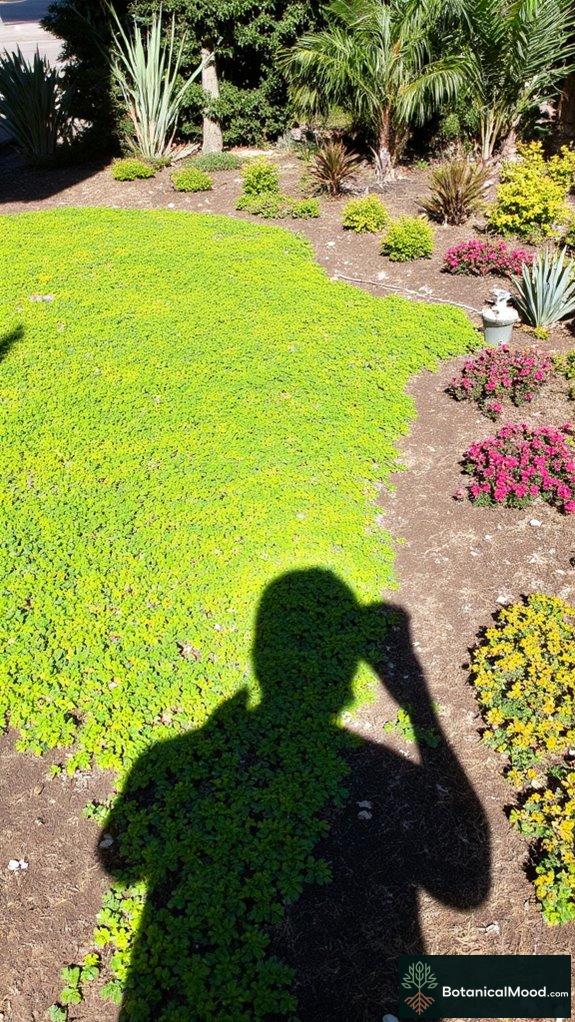
When considering how to enhance a small yard while using water wisely, removing traditional turf and replacing it with drought-tolerant plants or groundcover can be a transformative choice.
I’ve found that turf removal not only decreases water consumption but also allows for the selection of resilient species that thrive in our climate. Consider tough contenders like Sedum (Sedum spp.) or Lantana (Lantana camara) to craft a vibrant environment.
Turf removal cuts water use and opens doors to resilient plants like Sedum and Lantana for a vibrant garden.
They provide texture and color, reducing the maintenance often associated with conventional grasses. Groundcover like creeping thyme (Thymus serpyllum) or ornamental sedge (Carex spp.) can create a lush yet low-water garden that’s visually appealing.
Incorporating drought-resistant native plants can further enhance the sustainability of your garden while fostering local biodiversity. This approach empowers not just your yard but also your commitment to a sustainable future, a philosophy that resonates deeply with my vision for Botanical Mood.
Use Native and Drought-Resistant Plant Species
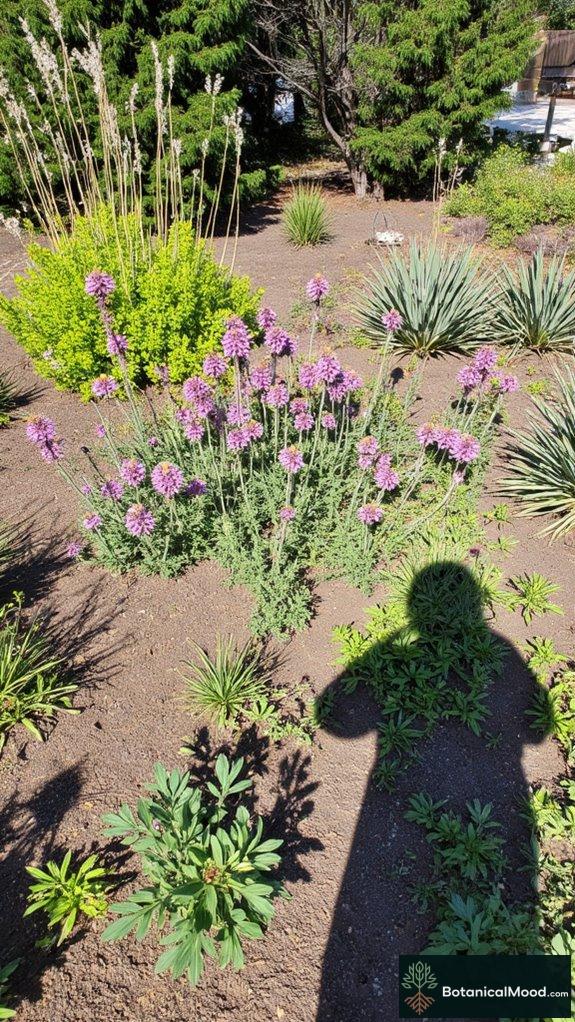
Opting for native and drought-resistant plant species can elevate your small yard’s aesthetic while promoting sustainability. Choosing plants like Agastache foeniculum or Echinacea purpurea not only enhances beauty but also strengthens local ecosystems.
Native species thrive in our environment, requiring less water and care, which means less maintenance for you. Their deep-root systems improve soil structure and promote biodiversity. Furthermore, they attract essential pollinators, such as bees and butterflies, enriching your garden’s ecology.
Landscaping with plants like Asclepias tuberosa or Rudbeckia hirta offers vibrant color and texture without taxing precious water resources. Additionally, drought-resistant native gardens often require fewer chemical inputs, which benefits the surrounding wildlife.
In essence, selecting these power-packed plants optimizes your outdoor space while respecting our planet, exemplifying the ethos behind my vision for Botanical Mood.
Amend Soil to Improve Water Retention
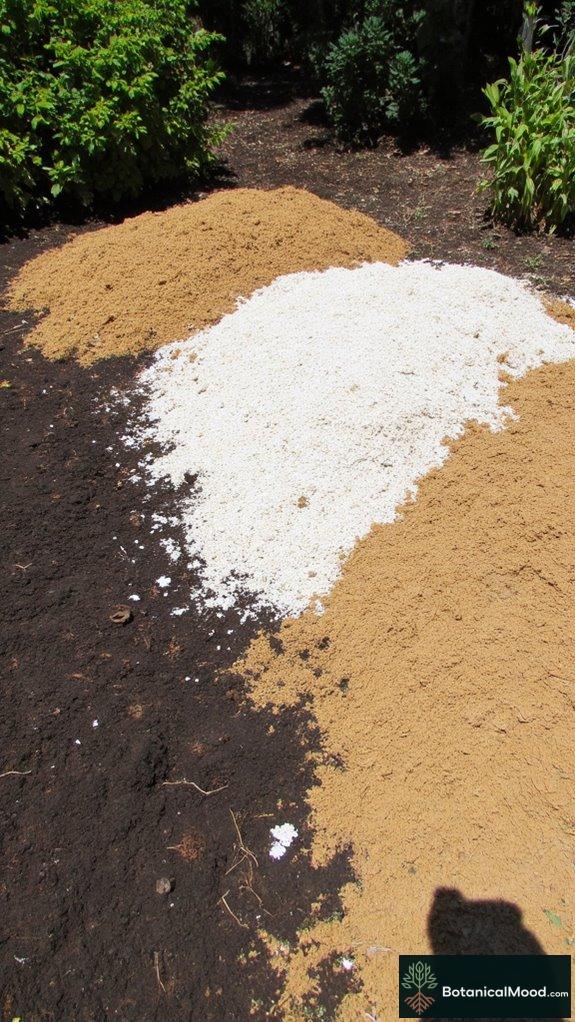
To create a resilient environment that thrives in the face of drought, I can’t stress enough the importance of amending your soil for improved water retention. Using strategic soil amendments elevates your garden’s capability to hold moisture, ultimately transforming your surroundings into a vibrant ecosystem, despite parched conditions.
Here’s a quick guide to effective amendments:
| Amendment | Benefits | Application Method |
|---|---|---|
| Organic Matter | Increases moisture retention | Mix into topsoil |
| Gypsum | Improves soil structure | Spread over surface |
| Peat Moss | Enhances moisture retention | Blend with existing soil |
| Coconut Coir | Holds water effectively | Incorporate into soil |
| Vermiculite | Maintains moisture balance | Mix into garden beds |
Embrace these strategies, and watch your plants flourish, even during dry spells. Keep in mind, healthy soil sets the foundation for stunning, drought-friendly environments.
Apply 3+ Inches of Mulch for Moisture Retention

Applying mulch is one of the most effective strategies to maintain moisture levels in your garden, particularly in challenging drought conditions. By applying 3 inches or more of organic mulch—such as wood chips from Quercus (oaks), straw, or shredded leaves—you can greatly enhance moisture conservation.
Applying 3 inches of organic mulch effectively conserves moisture and combats drought in your garden.
The mulch creates a barrier that reduces evaporation, while also suppressing pesky weeds that compete for precious resources. This simple yet powerful method translates to healthier soil and promotes essential microbial activity, enriching your garden ecosystem.
I’ve seen firsthand the mulch benefits in my own yard, where I’ve transformed parched patches into thriving spaces.
With thoughtful choices, you can create an oasis that thrives under the sun, demonstrating the beauty of drought-tolerant design.
Install Drip or Soaker Irrigation Systems for Efficiency

While traditional sprinkler systems can be wasteful, installing drip or soaker irrigation systems can greatly enhance water efficiency in a small yard, especially during drought conditions.
I’ve found that the following benefits make a compelling case for drip systems and soaker hoses:
- Targeted Watering: These systems deliver water directly to the plant roots, minimizing evaporation.
- Water Conservation: You’ll reduce water usage considerably, which is vital during droughts.
- Time-Saving: Set timers to automate watering schedules, freeing up your precious time.
- Reduced Weeds: They minimize water on surrounding soil, discouraging weed growth.
Incorporate Water Retention Features Like Bioswales

Incorporating water retention features like bioswales can transform a small yard into a sustainable oasis, effectively managing rainwater runoff and enhancing the environment’s resilience during drought conditions. These natural, scenery elements serve as a sustainable solution, allowing you to harness nature’s power while beautifying your space.
| Bioswale Benefits | Stormwater Management Solutions | Implementation Tips |
|---|---|---|
| Reduces flooding | Infiltration trenches | Use native plants (e.g., Carex spp.) |
| Enhances biodiversity | Permeable pavers | Integrate rocks for stability |
| Improves air quality | Rain gardens | Plant strategically for runoff capture |
| Low maintenance | Green roofs | Regular check on plant health |
Bioswales not only contribute to aesthetics but empower you to manage stormwater efficiently, ensuring your garden thrives through any drought.
Avoid Non-Permeable Surfaces and Artificial Grass
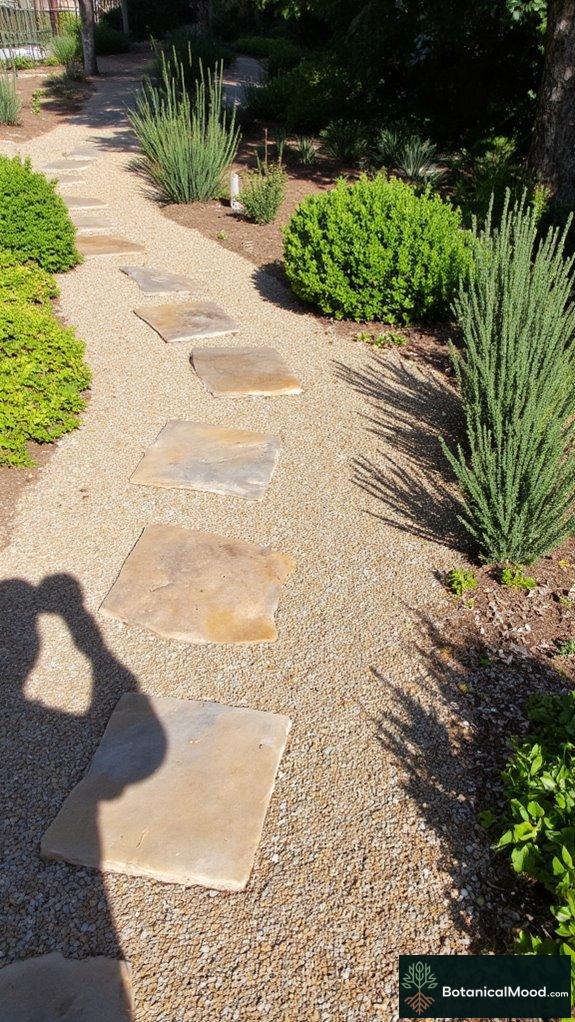
When landscaping a small yard, avoiding non-permeable surfaces and artificial grass can greatly enhance both its functionality and aesthetics. Instead of artificial options, consider these non permeable alternatives that adapt beautifully to drought conditions:
- Natural stone pathways (like flagstone) that allow water to filter through.
- Gravel or decomposed granite for versatile, water-friendly surfaces.
- Pervious concrete, which permits infiltration while offering a solid base.
- Native plant beds, which require minimal irrigation and enrich biodiversity.
I understand the artificial turf concerns; it may look pristine initially, yet it overheats and drains poorly.
Follow Local Watering Regulations and Restrictions
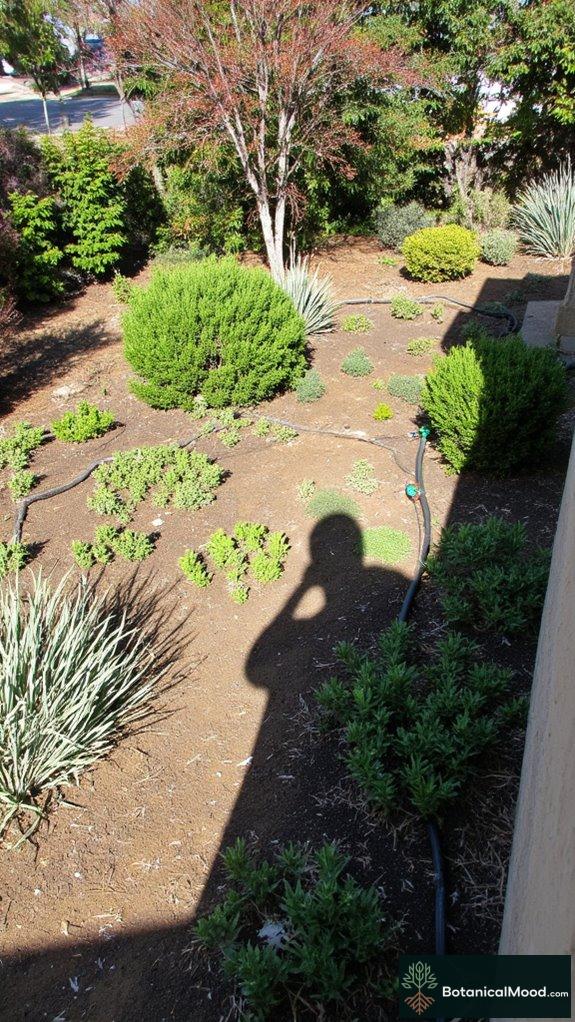
Landscaping a small yard in a drought-prone area requires more than just aesthetic considerations; it also involves awareness of local watering regulations and restrictions that help in conserving water resources.
By adhering to these local guidelines, you not only guarantee compliance with authorities but also become a steward of sustainable gardening. Look closely at the specific water restrictions in your region—some areas may limit watering times or frequency, while others might encourage using gray water systems or drip irrigation (e.g., with plants like Lavandula angustifolia).
Incorporating native plants, which demand less water, plays a significant role in your design, allowing you to embrace beauty while following the rules that protect our precious water supply.
Recall, your responsible choices can inspire others.
Use Landscape Design to Encourage Neighborhood Adoption

Crafting an inviting environment not only elevates your own small yard but also sets a precedent for your neighbors, encouraging them to adopt similar water-efficient practices.
When we enhance our surroundings, we ignite community involvement and inspire action. Here’s how you can catalyze this change:
- Host Neighborhood Workshops – Share knowledge on drought-tolerant landscaping techniques.
- Use Eye-Catching Plants – Select striking, low-water flora that showcases beauty and resilience.
- Create a Community Garden – Foster collaboration and share resources for sustainable landscaping.
- Incorporate Visual Elements – Utilize paths (such as gravel or mulch) and decorative stones to unify individual efforts, reinforcing your neighborhood’s commitment to eco-friendly practices.
Engaging others through thoughtful design encourages a collective movement toward sustainability, demonstrating that beautiful landscaping and conservation can coexist harmoniously.
Select Plants Suited for Local Soil and Climate Conditions

Selecting plants that thrive in your local soil and climate conditions is essential for creating a sustainable and beautiful yard, especially when water conservation is a priority.
Conducting soil testing is a powerful first step; it informs you about nutrient levels and pH balance.
Opt for native plants like Echinacea purpurea or Salvia nemorosa, as they boast impressive climate adaptation capabilities.
These resilient species require considerably less water and foster local biodiversity.
Incorporating hardy perennials such as Agastache spp. can further enhance your environment’s aesthetic while ensuring ecological stability.
Maintain With Minimal Watering, Pruning, and Feeding Only When Needed
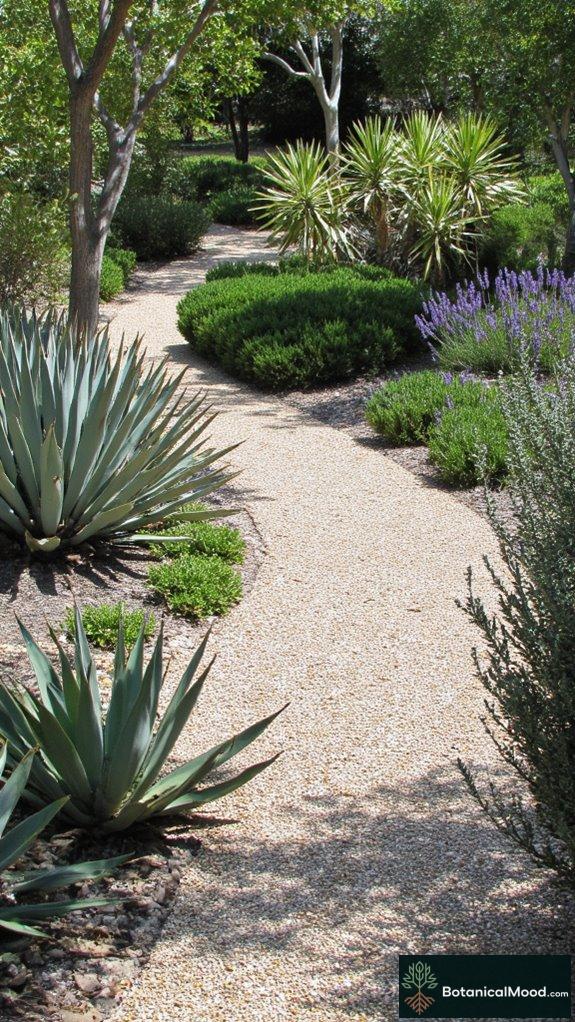
Maintaining a yard with minimal watering, pruning, and feeding saves time and resources while still enhancing the beauty of your space.
By applying effective water conservation techniques, I guarantee my plants flourish without excess input. Here are my go-to strategies:
- Water Early or Late: Watering my yard during cooler hours reduces evaporation.
- Select Drought-Tolerant Species: Choosing plants like Agave (Agave americana) and Lavender (Lavandula angustifolia) helps minimize water use.
- Efficient Pruning Methods: Only prune when necessary to promote healthy growth without stress.
- Fertilize Sparingly: Feeding my plants only when they show signs of malnutrition keeps them thriving and saves on costs.
This approach not only conserves resources but also enhances the aesthetics, fueling my passion for drought-resistant landscaping.
Sustainable Garden Planning

While planning a sustainable garden, a well-thought-out approach not only enhances aesthetic appeal but also promotes environmental health through efficient resource use.
By integrating sustainable practices such as native plants (e.g., Echinacea purpurea), I create a vibrant yet water-efficient setting that mirrors nature’s beauty.
To maximize impact, I focus on layering textures and colors with diverse plant selections, avoiding chemical fertilizers and opting for organic amendments, which can improve soil quality and plant vigor.
Using mulching techniques, I reduce evaporation and maintain moisture in the soil, harmonizing functionality with garden aesthetics.
This balanced strategy not only fosters a resilient ecosystem but also inspires others to journey toward sustainable gardening, ultimately contributing to our shared environment.
Water-Efficient Plant Selections

To create an inviting, water-efficient garden, I turn my focus to plants that thrive with minimal irrigation, ensuring sustainability without sacrificing beauty.
I favor robust plant groupings that withstand drought while offering seasonal interest. Here are my top four selections:
- Succulents: Plants like Agave (Agave spp.) and Echeveria store moisture in their fleshy leaves.
- Mediterranean Herbs: Rosemary (Rosmarinus officinalis) and Lavender (Lavandula spp.) add a fragrant touch and culinary appeal.
- Ornamental Grasses: Ponytail grass (Beaucarnea recurvata) sways gently, infusing movement and texture.
- Native Trees and Shrubs: Ceanothus (Wild Lilac) enhances wildlife interaction and offers diverse visual elements. They are known to thrive without summer water and improve the overall health of your garden.
Embracing these choices transforms each small yard into a resilient oasis, maximizing beauty and ecological impact effortlessly.
Compact Xeriscape Design Strategies

Creating a compact xeriscape in your small yard can be a transformative experience, as it allows you to design a sustainable space that thrives on minimal water input. I recommend starting with a blueprint that maps your yard, identifying sun exposure and existing features. Integrating a compact layout guarantees visual cohesion while efficiently utilizing space.
| Design Elements | Benefits |
|---|---|
| Permeable paver walkways | Reduce runoff, enhance structure |
| Layering with native plants | Maximize biodiversity and beauty |
| Mulching with decomposed granite | Optimize moisture retention |
Garden Creator Unveils Innovations

Garden creator Julia Thompson, hailing from Santa Fe, New Mexico, commenced on her journey toward drought-friendly gardening after witnessing the impact of climate change on water resources in her community.
To bring her vision to life, Julia carefully researched drought-tolerant native plants like grevillea and catmint, collaborating with local horticulturists. She utilized garden design software to plan a xeriscaped layout that accommodates efficient water use by grouping plants based on their hydration needs.
To construct her stunning garden, Julia employed tools like a drip irrigation system from Rain Bird, customized stone pathways with Decomposed Granite, and decorative boulders from a local quarry.
Her choice of materials and eco-friendly practices emphasizes sustainability, creating a vibrant outdoor space that complements her home.
Desert Botanical Garden, Phoenix

The Desert Botanical Garden in Phoenix, Arizona, stands as a representation of innovative drought-resistant gardening and remarkable desert ecology. It exemplifies how a small yard can thrive sustainably.
- Garden Design: The layout features three distinct zones, harmonizing with the natural topography and showcasing the beauty of Sonoran desert plants.
- Sustainable Practices: Trails highlight effective soil improvement and ecological gardening techniques, including drought-resistant plants and smart irrigation.
- Drought-Resilient Flora: Iconic species like *Carnegiea gigantea* (saguaro) and *Parkinsonia florida* (palo verde) thrive on minimal water, offering striking visuals.
- Calm Water Features: Reflective elements create serene spaces while utilizing recycled water, enhancing both aesthetic appeal and sustainability.
This dynamic garden inspires powerful and practical approaches for anyone interested in transforming their environment.
References
- https://scholarship.claremont.edu/cgi/viewcontent.cgi?article=4076&context=cmc_theses
- https://www.justsprinklers.com/blog/2025/september/modern-drought-resistant-landscaping-ideas/
- https://ucanr.edu/site/center-landscape-urban-horticulture/drought-water-conservation-landscape-water-use-some
- https://scotts.com/en-us/lawn-care-101/Xeriscaping-for-a-drought-tolerant-yard.html
- https://www.swansonsnursery.com/blog/drought-tolerant-plants-trees-and-shrubs
- https://bowerandbranch.com/blogs/landscape-design/inexpensive-drought-tolerant-landscaping-ideas
- https://www.youtube.com/watch?v=gY5F3omkt04
- https://www.waysidegardens.com/collections/drought-tolerant-plants
- https://www.houzz.com/discussions/1390913/need-ideas-for-a-very-small-and-narrow-drought-tolerant-garden
- https://www.provenwinners.com/learn/drought-tolerant-plants
- https://www.budgetdumpster.com/blog/how-to-xeriscape-your-yard
- https://planetdesert.com/blogs/news/xeriscaping-guide-drought-tolerant-landscaping-design
- https://www.lawnstarter.com/blog/landscaping/xeriscaping-ideas/
- https://engagement.source.colostate.edu/front-yard-xeriscape-ideas-with-photos-of-drought-tolerant-colorado-landscapes/
- https://www.monrovia.com/be-inspired/xeriscape-design-ideas-are-lush-vibrant.html
- https://www.youtube.com/watch?v=kuKTfma6mfA
- https://www.landscapingnetwork.com/landscape-design/xeriscape.html
- https://oasislawncareservice.com/landscaping-services-blog/urban-xeriscape-for-small-spaces/
- https://www.gardendesign.com/trends/2025.html
- https://envisionlawnandtree.com/2025-landscape-hardscape-trends/
- https://www.fypower.org/drought-tolerant-landscape-design-ideas/
- https://www.novatr.com/blog/top-landscape-design-trends
- https://www.allstate-landscape.com/innovative-drought-tolerant-landscaping-designs-for-2025
- https://verticallandscaping.net/blog/drought-resistant
- https://www.minnesotalandscapes.com/post/top-2025-twin-cities-landscaping-trends-to-incorporate-into-your-yard-this-spring-summer
- https://spurlock-land.com/projects/desert-botanical-garden-ottosen-entry
- https://dbg.org/a-treasure-within-the-garden/
- https://www.petalandpoem.com/locations/a-guide-to-visiting-desert-botanical-garden-phoenix-usa
- https://dbg.org/visit/garden-trails-galleries/
- https://growingjoywithmaria.com/desert/
- https://dbg.org
- https://www.phgmag.com/designs-on-nature-desert-beauty-inspires-camelback-mountain-area-landscape/
- https://dbg.org/sustainable-landscapes/
- https://dbg.org/sounds-of-serenity/