Ever tried gardening in a drought? Talk about a challenge!
I’m all about crafting drought-smart gardens with a splash of ecological wisdom.
Using resilient native plants like Echinacea purpurea feels like having a secret weapon. They practically laugh in the face of water shortages!
Then there’s the magic of good soil—organic compost and biochar work wonders for moisture retention. I swear by drip irrigation; it’s almost like giving my plants a little drink on demand. Don’t forget a solid 2-4 inch layer of mulch. It’s like a cozy blanket, keeping the moisture in and the weeds out.
Sure, it feels complex, but isn’t that part of the fun?
Transform Your Dry Patch into a Lush Oasis
Last summer, I turned my sad, baked patch of earth into a vibrant patch of life. I thought, “Why not?” I picked up some local wildflower seeds and experimented with planting them, not knowing if they would even survive.
To my surprise, not only did they sprout, but they flourished! It was a riot of color and life, attracting butterflies and bees, which I’d sadly missed in my old garden. Drought-proof? More like drought-fabulous!
Incorporating biodiversity and companion planting led to unexpected, beautiful blooms. Now, my garden isn’t just surviving; it’s thriving—and I feel like a proud plant parent. 🌱
Quick Takeaways
- Choose drought-resistant native plants and climate-adaptive species to enhance biodiversity and conserve water needs in your garden design.
- Improve soil health by using organic compost, coconut coir, and biochar to maximize water retention and support healthy plant growth.
- Apply organic mulch to suppress weeds and maintain soil moisture, typically at a thickness of 2-4 inches for optimal results.
- Implement efficient irrigation systems, such as drip irrigation and rainwater harvesting, to promote water conservation and sustain healthy plants.
- Design microclimates by strategically placing plants and using hardscaping solutions, ensuring compatibility of water needs and maximizing ecological benefits.
Smart Plant Selection for Drought Resilience

When I think about creating a drought-smart garden, I realize that choosing the right plants is essential for both sustainability and beauty.
Native plant benefits extend beyond aesthetics—they flourish in our local climate, requiring less water and maintenance than non-natives. Incorporating climate adaptive species, such as Salvia (sage) or Echinacea (coneflower), not only conserves resources but enhances biodiversity. Additionally, selecting drought-resistant native plants contributes to the overall resilience of the local ecosystem.
Native plants thrive in our climate, needing less water and care while boosting biodiversity with climate-adaptive species.
I make decisions based on hardiness zones and soil requirements, ensuring each selection thrives in its environment.
Crafting a garden that mirrors our ecosystem fosters a sense of control, allowing beauty to coexist with environmental responsibility, a principle I emphasize through my website, Botanical Mood.
Enhancing Soil for Optimal Water Retention

To guarantee that my drought-smart garden can thrive with minimal water, I focus on enhancing soil properties that promote ideal water retention. By applying specific soil amendments, I create a foundation that guarantees my plants have the moisture they need. Incorporating xeriscaping techniques not only optimizes water use but also encourages the growth of native plants that are well-suited to dry conditions.
Here’s how I incorporate various soil enhancements:
| Soil Amendment | Retention Technique |
|---|---|
| Organic compost | Improves soil structure |
| Coconut coir | Adds moisture-holding capacity |
| Perlite | Enhances drainage while retaining water |
| Zeolite | Absorbs nutrients and water |
| Biochar | Increases porosity and aeration |
With these strategies, I confidently create a garden that flourishes.
Effective Mulching Techniques for Moisture Conservation
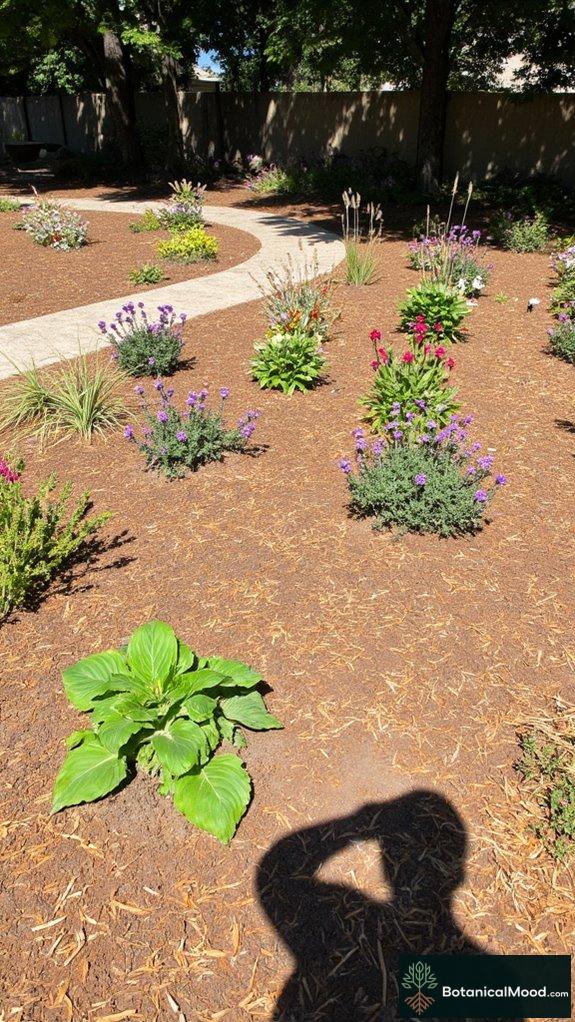
Effective mulching techniques play an essential role in my drought-smart garden, as they help to conserve precious moisture and enhance the overall health of my plants. I prioritize using beneficial mulch, like shredded bark or straw, to suppress weeds and moderate soil temperature.
My seasonal application strategy guarantees I refresh the mulch layer, optimizing its moisture-retaining benefits.
- Choose organic materials for added nutrients
- Apply mulch around perennials (e.g., Echinacea purpurea) and annuals
- Maintain a thickness of 2-4 inches for best results
These strategies not only support my plants but also create an attractive garden aesthetic.
Implementing Efficient Irrigation Systems

While tending to my drought-smart garden, I’ve discovered that implementing efficient irrigation systems not only conserves water but also promotes the healthy growth of plants.
For instance, using drip irrigation allows me to deliver water directly to the roots of my Helianthus annuus (sunflowers) and Lavandula angustifolia (lavender), reducing waste considerably.
I also embrace rainwater harvesting, capturing precious precipitation with barrels strategically placed beneath downspouts. This eco-friendly technique not only replenishes my garden but gives me control over water sources, ensuring my plants thrive during dry spells.
Every drop counts, and with these systems, I’m creating a lush, sustainable oasis.
Creative Hardscaping Solutions for Sustainable Gardens

Creating a sustainable garden involves more than just choosing the right plants; it often starts with thoughtful hardscaping that complements the natural surroundings while promoting environmental benefits.
Sustainable gardening begins with thoughtful hardscaping that enhances the environment and supports ecological benefits.
I’ve found that incorporating elements like:
- Permeable paving for reducing runoff and allowing water to recharge the ground
- Raised beds to enhance soil quality and improve drainage
- Natural stone pathways that blend with the environment and provide durability
These creative hardscaping solutions not only contribute to sustainability, but they can also give you control over your garden’s aesthetics and ecological impact.
Trust me, your garden will thrive beautifully!
Drought-Resistant Plant Selection
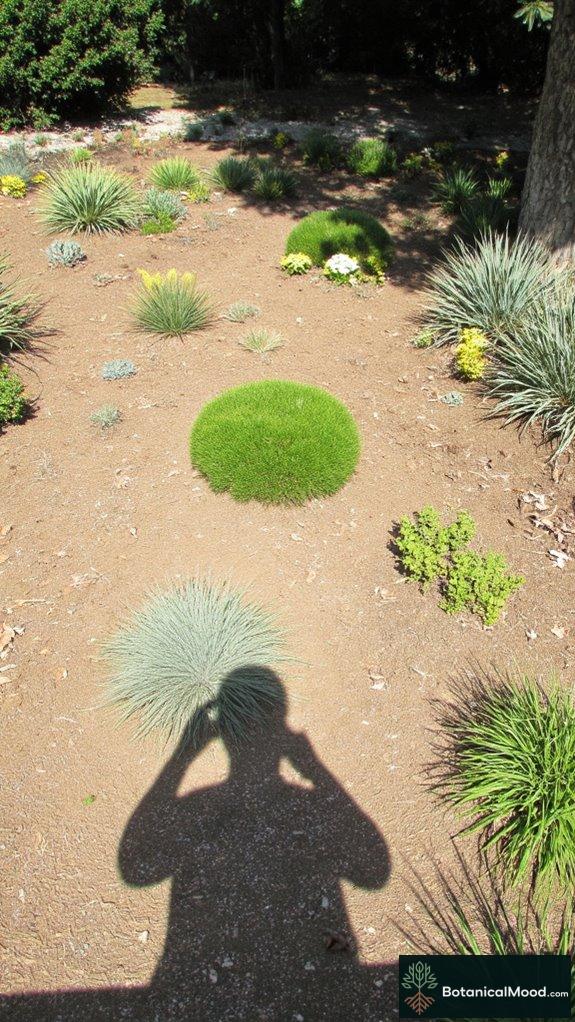
Selecting drought-resistant plants is vital for creating a garden that can flourish even in the most arid conditions.
By choosing plant diversity, particularly native species, I can guarantee my garden thrives with minimal water. For instance, California Fescue (*Festuca californica*) and Russian Sage (*Perovskia atriplicifolia*) not only brighten spaces with their colors but also attract beneficial pollinators.
Their deep root systems enhance water uptake, reducing irrigation needs considerably. By integrating these resilient options, I create a sustainable environment that’s not only beautiful but also ecologically responsible, aligning perfectly with the principles I aim for at Botanical Mood.
Zoning for Moisture Retention

Effective zoning for moisture retention is essential for cultivating a garden that not only thrives but also conserves precious water resources.
Effective moisture zoning not only supports a flourishing garden but also conserves invaluable water resources.
When I implement moisture mapping and strategic plant grouping, I create tailored microenvironments for different plants.
To enhance moisture retention, I focus on:
- Grouping drought-tolerant species together, facilitating efficient watering.
- Using organic mulches to minimize evaporation and suppress weeds, enhancing soil moisture.
- Designing irrigation zones that align with each plant’s water needs, encouraging deeper root development.
Meet the Garden Visionary
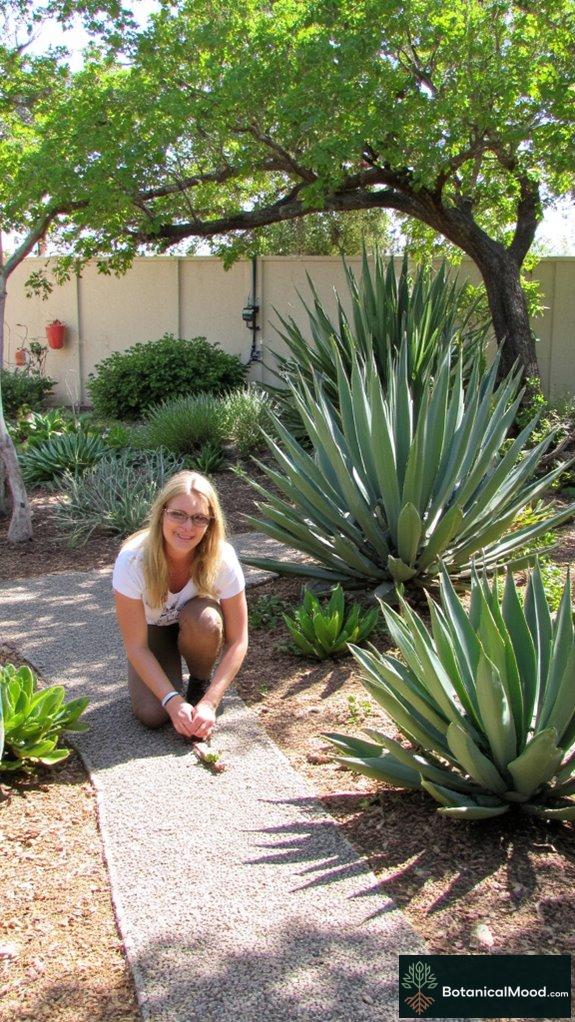
Jennifer McAllister, a native of Tucson, Arizona, cultivated her passion for drought-resistant gardening after witnessing the devastating effects of prolonged droughts in her community, inspiring her to create a sustainable oasis.
To achieve her dream garden, McAllister meticulously researched xeriscaping techniques, consulted with local horticulturists, and planned the layout by selecting native plants that thrive in arid conditions. She emphasized harmony with the environment while ensuring the garden remains aesthetically pleasing.
Using tools like the Fiskars garden spade and Felco pruners, McAllister implemented high-quality irrigation solutions from Rain Bird.
Collaborating with horticulturists from the University of Arizona, she strategically incorporated drought-tolerant species such as agave and succulents to enhance sustainability.
Compact Urban Garden Solutions
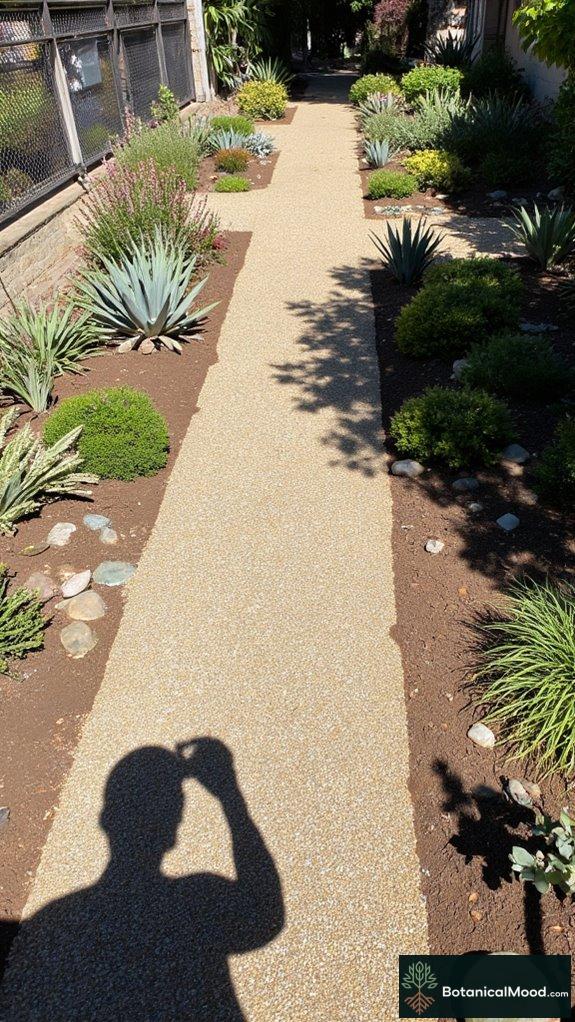
Transforming a small urban space into a thriving garden oasis might seem challenging, yet it can be done with thoughtful planning and a strategic approach.
I’ve found that vertical gardening techniques—like trellises and wall planters—maximize even the most confined areas, allowing for a flourishing urban agriculture experience.
Opting for dwarf plant varieties and utilizing raised beds not only conserves water but guarantees efficient growth.
Choosing dwarf plants and raised beds promotes water conservation and ensures effective growth in limited spaces.
Implementing drip irrigation and planting drought-tolerant species, such as Echeveria (Echeveria spp.), enhances resilience.
Summary
Designing my drought-smart garden is both practical and rewarding. I’m excited to choose drought-resistant plants like *Sedum* and incorporate thoughtful hardscaping. This space will reflect my commitment to sustainability and beauty, creating a vibrant oasis in tune with nature.
I’d love to hear about your experiences with drought-smart gardening. What have you learned along the way?
Share your own garden designs with us. Include some pictures and describe how you approached your project!
References
- https://tamuradesigns.com/drought-tolerant-landscape-design/
- https://extension.psu.edu/designing-the-home-garden-for-drought-resilience/
- https://www.epa.gov/system/files/documents/2021-12/ws-outdoor-water-smart-landscapes.pdf
- https://www.monrovia.com/be-inspired/drought-tolerant-landscape-design.html
- https://campbelllandscape.com/6-key-principles-for-drought-tolerant-landscape-design/
- https://planetdesert.com/blogs/news/xeriscaping-guide-drought-tolerant-landscaping-design
- https://suscon.org/wp-content/uploads/2021/06/2019GardenGuide-SustainableConservation.pdf
- https://extension.usu.edu/cwel/principles
- https://dennis7dees.com/drought-tolerant-plants/
- https://hicksnurseries.com/perennials/drought-tolerant-perennials-garden/
- https://www.monrovia.com/be-inspired/beautiful-drought-tolerant-plants-for-all-zones.html
- https://www.shrubhub.com/blog/the-ultimate-drought-tolerant-plants-for-the-driest-locations.php
- https://dpw.lacounty.gov/wwd/web/Documents/DroughtTolerantPlants.pdf
- https://www.provenwinners.com/learn/drought-resistant-landscaping
- https://ngb.org/drought-tolerant-gardening-best-plants/
- https://www.epa.gov/watersense/what-plant
- https://www.youtube.com/watch?v=0DvZYoEer44
- https://www.woollets.net/blog-woollets/understanding-water-retention-soil
- https://www.growveg.com/guides/3-ways-to-minimise-soil-moisture-loss/
- https://aggie-horticulture.tamu.edu/earthkind/drought/efficient-use-of-water-in-the-garden-and-landscape/
- http://theturfgrassgroup.com/soil/managing-soil-moisture-levels-in-spring-a-guide-for-gardeners-and-farmers/
- https://www.highmowingseeds.com/blog/5-water-retention-methods/
- https://forum.soilforwater.org/threads/resources-for-retaining-water-on-hilltops.101/
- https://www.summerwindsnursery.com/ca/inspire/blog/regulating-moisture-in-garden-beds/
- https://www.gardenia.net/gardens/tolerance/drought-tolerant
- https://www.lawnstarter.com/blog/landscaping/drought-tolerant-landscape-ideas/
- https://www.houzz.com/photos/small-drought-tolerant-landscaping-ideas-phbr2-bp~t_728~a_13-13790–30-231
- https://www.finegardening.com/article/gorgeous-drought-tolerant-garden-plans-and-ideas
- https://www.gardeningknowhow.com/garden-how-to/lideas/8-cheap-drought-tolerant-landscaping-ideas
- https://engagement.source.colostate.edu/front-yard-xeriscape-ideas-with-photos-of-drought-tolerant-colorado-landscapes/
- https://www.houzz.com/discussions/1390913/need-ideas-for-a-very-small-and-narrow-drought-tolerant-garden