Concrete block garden beds—who knew they could look so chic while being practical?
I’ve got to say, my veggie garden has never looked better!
When I decided to grow my own food—hello, tomatoes (Solanum lycopersicum) and bell peppers (Capsicum annuum)—I had no idea how much fun I’d have. With all the aesthetics of a modern art installation, these beds are darn easy to assemble, too.
Plus, their magical ability to insulate roots? A total bonus. Anyone else tried companion planting with basil? It totally feels like a game of vegetable chess!
But, is it truly foolproof? Well, my first lettuce experiment was a hilarious flop.
Designing a Thriving Garden: My Tiered Success Story
One Saturday, I thought I’d get adventurous and create a tiered garden bed. I envisioned a leafy paradise, with herbs and veggies cascading like a dreamy waterfall. It took a few hours (and a bit of creative swearing), but the result was glorious.
I paired tomatoes with marigolds and discovered that my peppers thrived! The complexity of companion planting amazed me—who knew plants could be such social butterflies? If you’re designing your garden, consider height and spacing carefully! It’s all about balancing sun exposure and air circulation. Trust me, it’s worth the effort when you bite into that first homegrown tomato!
Quick Takeaways
- Concrete block garden beds provide durability and excellent drainage, making them ideal for growing vegetables like tomatoes and peppers.
- The modular design allows for various shapes and configurations, enhancing both function and visual appeal in the garden.
- Effective planting techniques involve grouping similar plants and using companion planting to improve growth and pest resistance.
- Proper maintenance includes regular weeding, moisture monitoring, and annual crop rotation to maintain soil health and productivity.
- Incorporating features like trellises and vertical gardening maximizes space and boosts vegetable yields in concrete block beds.
Benefits of Using Concrete Blocks for Vegetable Garden Beds
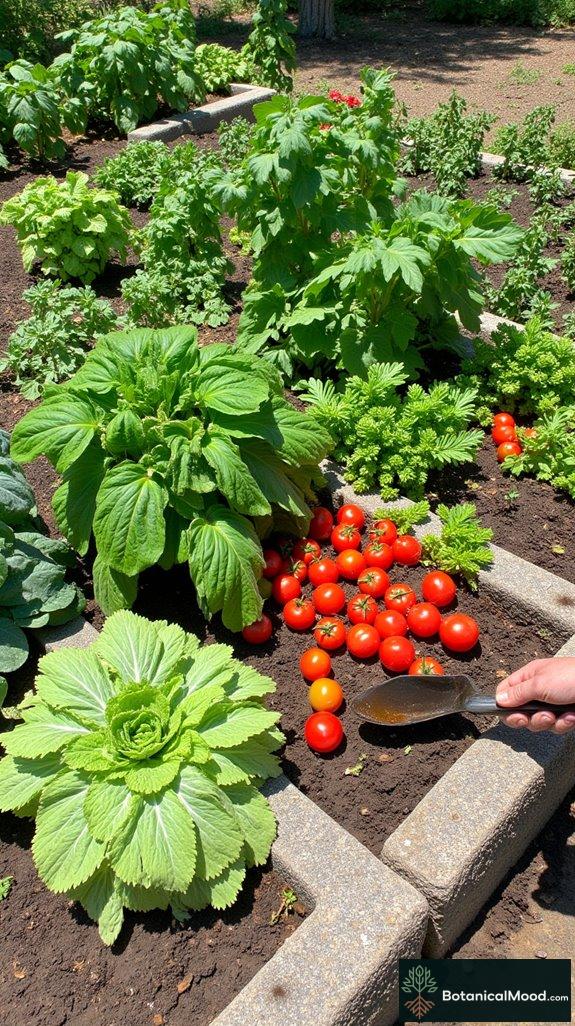
Concrete block garden beds are a practical choice for growing vegetables, offering durability and versatility. Typically, these beds are 4 to 6 feet wide and can be arranged in various shapes—square, rectangular, or tiered—depending on your garden layout. Constructed using interlocking concrete blocks, they require minimal assembly and can be filled with rich soil and compost. The sturdy walls help retain moisture while providing excellent drainage, making them suitable for a variety of vegetables such as tomatoes, peppers, and leafy greens. Additionally, modular herb beds can also be created using this method to diversify your gardening experience.
Concrete block garden beds provide a durable and versatile solution for cultivating a variety of vegetables.
Selecting Plants for Concrete Block Beds
When selecting plants for your concrete block garden bed, consider the sunlight, soil conditions, and available space.
Here are some recommendations:
- Tomatoes
- Lettuce
- Spinach
- Bell peppers
- Radishes
Designing Your Concrete Block Garden Bed
Design a stunning concrete block garden bed by first determining the sunlight availability in your area.
Plan the layout with taller plants at the back and shorter ones in the front. Tips for effective design include:
- Use a grid pattern for organization.
- Space plants 12-18 inches apart to promote airflow.
- Incorporate companion planting to enhance growth.
- Consider drip irrigation systems for efficient watering.
Maintaining Concrete Block Garden Beds
Proper maintenance of concrete block beds is essential for peak plant health.
Regularly check for weeds, monitor moisture levels, and refresh soil nutrients.
Concrete beds can influence soil temperature, so be mindful of temperature-sensitive plants.
Designing a Modular Raised Bed With Concrete Blocks

Creating a modular raised bed with concrete blocks offers both durability and a stylish design. Typically, these beds measure 4×4 or 4×8 feet and can be arranged in various layouts depending on your garden’s aesthetics. Constructed using hollow concrete blocks, they provide excellent drainage while retaining heat for ideal plant growth. Fill the interior with high-quality soil mixed with compost to nurture your vegetables. Ideal plants for this bed include tomatoes, lettuce, peppers, and herbs like basil and oregano, ensuring a productive garden all season long. Additionally, using hollow concrete blocks in your construction can enhance airflow through the soil and improve root development.
Selecting Plants for Your Concrete Block Bed
When selecting plants, consider your climate, growing season, and companion planting strategies. Here are some plant suggestions:
- Tomatoes
- Zucchini
- Carrots
- Spinach
- Peppers
Designing Your Modular Raised Bed Garden
To design your modular raised bed, start by sketching the layout and considering sun exposure.
Pro tips include:
- Grouping plants with similar watering needs.
- Ensuring adequate space between plants (typically 12-18 inches apart).
- Incorporating vertical gardening techniques with trellises for climbing plants.
- Rotating crops annually to prevent soil depletion.
Exploring Other Gardening Techniques
Raised beds promote better drainage and soil quality while minimizing weed growth.
Consider integrating companion planting, organic pest control, and crop rotation. This holistic approach not only maximizes space but also contributes to a sustainable gardening experience.
Integrating Square Foot Gardening With Concrete Block Beds
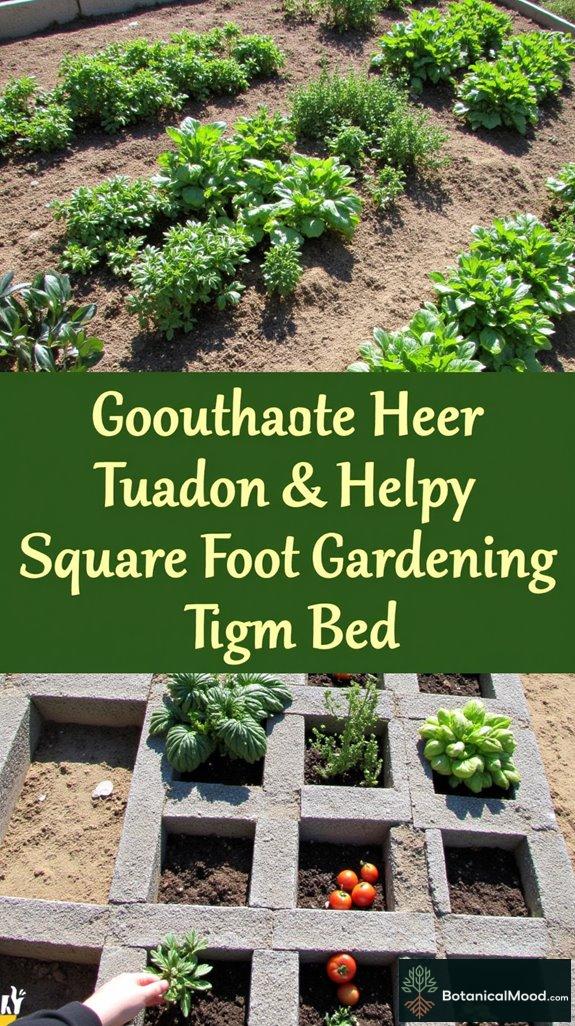
Concrete blocks create versatile planting beds for square foot gardening, typically sized at 4×4 or 4×8 feet. Arrange the blocks in a sturdy rectangular formation, leaving spaces for pathways. Your layout allows for soil depths of about 12 inches, ideal for vegetables.
Use high-quality potting soil and compost to fill the beds, ensuring proper drainage and nutrients. This construction requires minimal tools—just a level and a shovel. Additionally, customizable cinder block gardens allow you to expand your growing options as your gardening skills progress.
Selecting Plants for Concrete Block Beds
When choosing plants for your concrete block gardens, consider both growth habits and space. Opt for:
- Tomatoes
- Peppers
- Lettuce
- Carrots
- Radishes
- Spinach
These plants thrive in compact environments and complement square foot gardening principles.
Designing Your Concrete Block Garden Bed
To design your planting bed, start by sketching a layout.
Consider light exposure and access to water. Tips to enhance your design include:
- Grouping plants with similar sunlight and water needs
- Using a grid system for easy spacing
- Allowing a minimum of 12 inches between each plant
Pro tip: Interplant fast-growing crops like radishes with slower-growing vegetables, maximizing your productivity and space.
Inspiring Garden Layouts for Beginners
Exploring creative garden layouts can spark inspiration.
Vertical gardening, container planting, or trellised veggies maximize small spaces. Incorporate companion planting for pest control and enhanced growth. Embrace garden features like pathways, decorative stones, and innovative watering systems.
Creative Shapes and Configurations for Your Concrete Bed
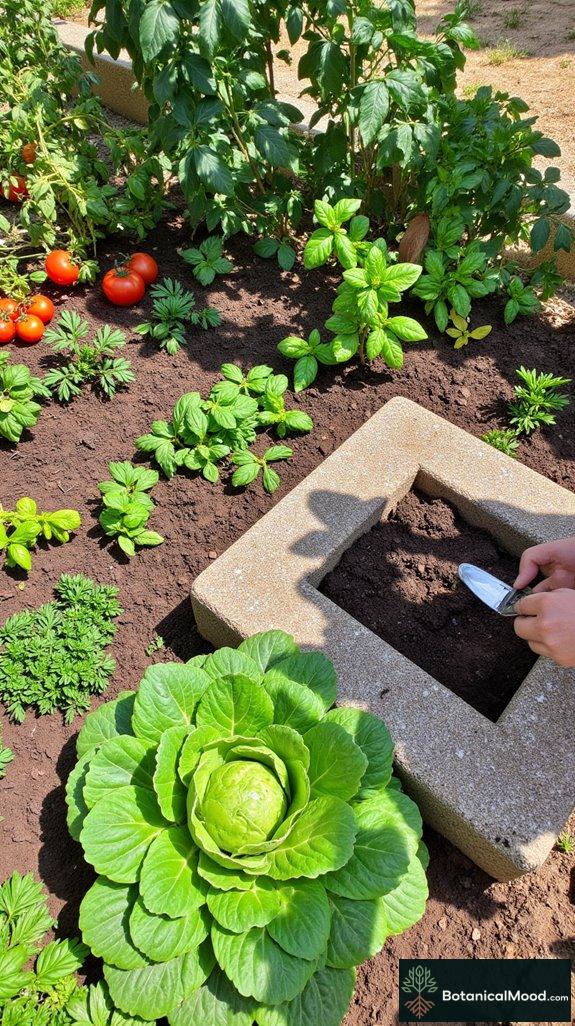
Concrete block garden beds offer an innovative way to grow vegetables, combining durability with design flexibility. These beds can be built in various sizes and shapes—rectangular, circular, or even tiered. Typically constructed using concrete blocks, these beds allow for excellent drainage and insulation, promoting healthy root growth. Additionally, these modular concrete block gardens can create unique visual appeal while providing practical gardening solutions.
The layout can be customized according to your available space, and you can plant a variety of vegetables, from tomatoes to lettuce.
Selecting the Best Plants for Concrete Beds
When selecting plants for your concrete block garden bed, consider the following suggestions:
- Tomatoes
- Peppers
- Lettuce
- Spinach
- Herbs like basil and parsley
Choose plants that thrive in your climate and can benefit from the warmth retained by concrete.
Designing Your Concrete Garden Bed
Designing your concrete garden bed can be a fun adventure! Here are some tips:
- Plan the layout based on sunlight exposure.
- Space taller plants, such as tomatoes, on the north side to avoid overshadowing shorter varieties.
- Utilize companion planting to maximize space and minimize pests (e.g., plant basil with tomatoes).
- Leave adequate space for airflow and access for maintenance.
Exploring Other Garden Innovations
Vertical gardening is another space-efficient technique that can complement concrete beds. By growing plants up walls or trellises, you’ll create a dynamic garden space.
This method can enhance your garden’s aesthetics and increase yields in a compact area, making it ideal for small gardens.
Enhancing Soil Quality in Concrete Block Gardens
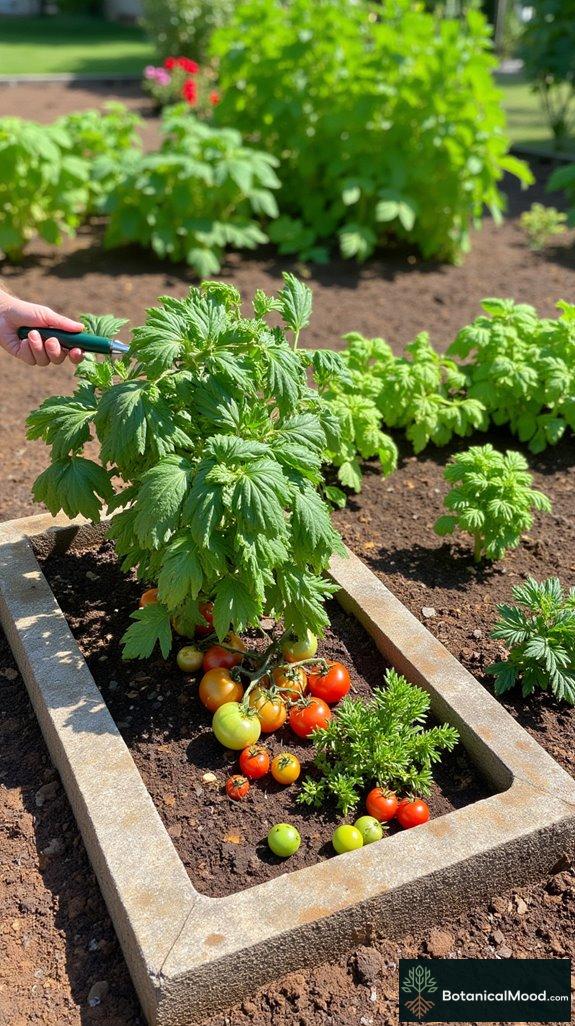
Concrete block garden beds, typically measuring 4 feet by 8 feet, provide an excellent structure for growing vegetables. Made from durable concrete blocks, these beds offer good drainage and excellent insulation for plant roots. The layout can be arranged in various shapes, including rectangular or L-shaped configurations. Fill the bed with a mix of compost, topsoil, and aged manure to enhance soil quality and nutrient availability.
Additionally, raised garden beds contribute to healthier root systems, allowing for better overall plant growth.
How to Select Plants for Concrete Block Beds
When selecting plants for your concrete block garden, consider the following options:
- Tomatoes
- Peppers
- Lettuce
- Spinach
- Carrots
- Herbs like basil and cilantro
Choose plants based on your climate, space, and sunlight availability.
Designing Your Concrete Block Garden Bed
To design an effective concrete block garden bed:
- Begin with a level site that receives at least 6 hours of sunlight daily.
- Space plants 12-18 inches apart for peak growth.
- Group plants with similar water and nutrient needs together.
- Incorporate taller plants on the north side to prevent shade.
Pro tip: Use companion planting techniques to boost yields and deter pests!
Related Topic: Benefits of Raised Garden Beds
Raised garden beds provide improved drainage, easier soil management, and less bending while gardening.
They also keep plants protected from pests, leading to healthier, more productive vegetable growth.
Consider integrating raised beds into your backyard setting for a visually appealing and functional garden space.
Adding Trellises for Vertical Gardening in Concrete Beds

Concrete block garden beds offer durable and sustainable spaces for vegetable gardening. Typically measuring 3 to 4 feet wide and 8 to 12 feet long, these beds are stacked to create a sturdy structure.
The arrangement is modular, allowing for various layouts like rectangular, square, or L-shaped designs. The blocks can be left exposed for a rustic look or painted for added aesthetics. Constructed with concrete masonry units (CMUs), these beds provide a solid environment for drainage and insulation.
Ideal plants include tomatoes, cucumbers, and beans, which benefit from the support of trellises.
Selecting Plants for Concrete Beds
When selecting plants for concrete block beds, it’s essential to take into account sun exposure and growth patterns. Here are some suitable plants:
- Climbing beans
- Tomatoes
- Cucumbers
- Peppers
- Squash
Designing and Planning Your Garden Bed
To design a successful concrete block garden bed, keep these tips in mind:
- Plan for vertical space by incorporating trellises.
- Space climbing plants 8-12 inches apart.
- Group plants by height to maximize sun exposure.
- Use companion planting to optimize growth.
Pro Tip: Think about companion planting, such as tomatoes with basil, to enhance flavor and deter pests!
Additional Garden Features to Enhance Productivity
Integrate features like compost bins and rainwater collection systems near your concrete beds. Additionally, consider using hugelkultur techniques such as integrating decomposing wood for improved moisture retention.
These attributes not only promote sustainability but also improve soil quality and irrigation efficiency. Creating a harmonious ecosystem can greatly enhance your vegetable garden’s productivity.
Choosing the Right Materials and Brands for Your Project
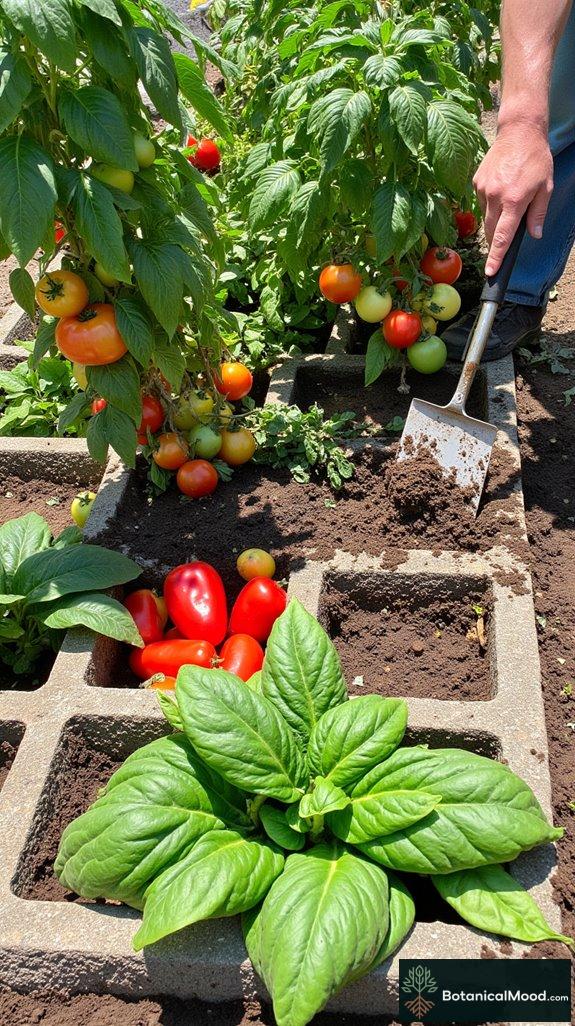
Concrete block garden beds are durable, versatile, and ideal for growing vegetables. Typically measuring 4 feet by 8 feet, these beds can be arranged in various layouts to maximize sunlight and space.
Constructed using hollow concrete blocks, they offer excellent drainage and insulation for plant roots. Fill the beds with high-quality soil and compost to create a nutrient-rich environment. Popular vegetables to grow in these beds include tomatoes, peppers, zucchini, and lettuce.
Selecting Plants for Concrete Block Beds
When selecting plants for your concrete block garden bed, consider their growth habits and spacing needs. Here are some great options:
- Tomatoes
- Bell Peppers
- Spinach
- Carrots
- Basil
Designing Your Concrete Block Garden Bed
To design an effective concrete block garden bed, follow these tips:
- Plan your layout based on sunlight exposure.
- Allocate space for plants to grow; tall plants like tomatoes should be placed towards the back.
- Use companion planting to mix vegetables that benefit each other.
Pro tips:
- Space plants 12 to 18 inches apart for airflow.
- Incorporate a trellis for climbing plants.
Beyond the Garden: Benefits of Raised Beds
Raised beds provide improved drainage, enhanced soil quality, and easier access, making them an excellent addition to any garden.
They can transform your outdoor space into a thriving vegetable haven while reducing weeds and pests.
Periodic Soil Amendment Updates
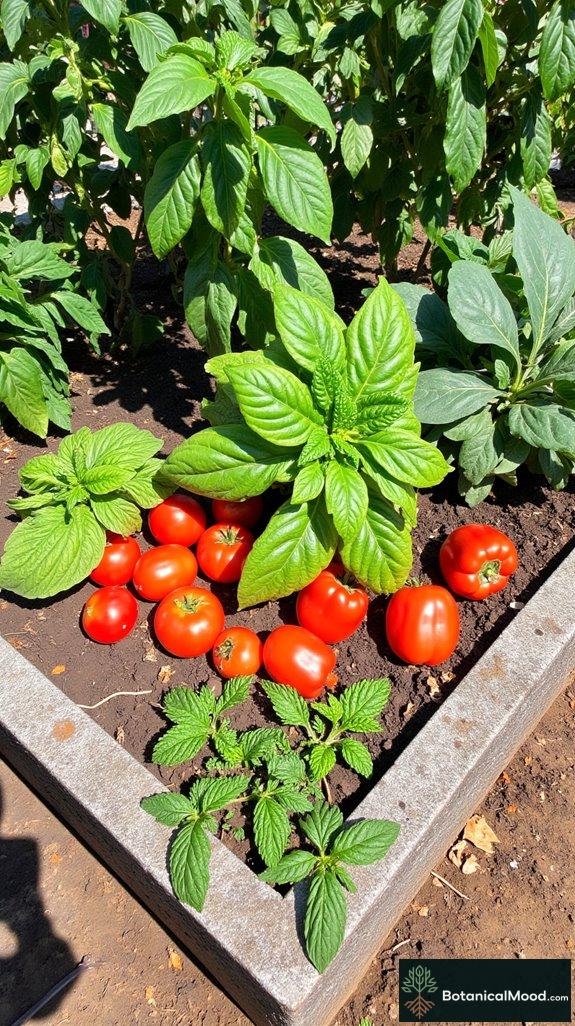
To guarantee your concrete block garden beds thrive season after season, I recommend implementing periodic soil amendments, especially since the soil’s nutrient profile can change markedly over time.
Conducting soil testing helps identify specific nutrient deficiencies and pH levels, allowing us to tailor our amendments effectively.
I prefer organic amendments, like composted manure (Bos taurus) or green manure cover crops, which enrich the soil with essential micronutrients and improve its structure.
Regularly renewing these amendments enhances moisture retention and promotes beneficial microbial activity, creating a thriving ecosystem for our plants.
Trust me, your vegetables will flourish with thoughtful attention to soil health!
Summary
Using concrete blocks in my vegetable garden turned my space into a productive haven. They are tough and versatile, helping me create a unique design while building healthy soil. It’s exciting to see my creativity shine through as I harvest my homegrown veggies.
I’d love to hear about your experiences with concrete block gardening. What worked for you?
Feel free to share pictures of your garden and tell us how you designed it!
References
- https://orangepavers.com/blog/5-benefits-of-using-concrete-blocks-for-garden-projects/
- https://gubbahomestead.com/gardening/pros-and-cons-of-different-raised-garden-beds/
- https://gardeningsolutions.ifas.ufl.edu/design/landscaping-for-specific-sites/square-foot-gardening/
- https://mylittlegreengarden.com/how-to-plan-a-square-foot-garden/
- https://whatthecraft.com/how-to-build-a-raised-bed-with-concrete-blocks/
- https://acultivatednest.com/diy-saturday-concrete-block-raised-beds/