Ever tried walking a dog who thinks a concrete slab is a runway?
I design dog‑friendly paths that feel like a five‑star spa for pups. I start with scent‑rich mulch, then layer in stabilized decomposed granite and porous asphalt—because drainage matters as much as a good chew toy. I carve out clear zones: “big‑dog arena” and “tiny‑tail corner,” each bordered by double‑gated fencing. Native trees throw shade, keeping paws cool, while puzzle feeders and a Kong hide in the grass for surprise treats. I tweak the layout each season—because who knows when a summer heatwave will turn the path into a slip‑n‑slide?
Do you ever wonder how a simple trail can turn a walk into an adventure? I’m still figuring out the perfect balance between safety and spontaneity, but the wagging tails say I’m on the right track.
—
Garden Design Tips for Dog‑Friendly Outdoor Spaces
When I transformed my backyard into a dog‑approved garden, I mixed hardy lavender (for scent enrichment) with low‑maintenance ornamental grasses that hide drool‑proof toys. I installed a drip‑irrigation system that keeps the soil moist without turning the lawn into a mud pit—perfect for my German Shepherd’s muddy paws. A shallow, permeable gravel pit doubles as a splash zone and a drainage solution, while a raised herb bed of rosemary and mint doubles as a natural deterrent for pests. Balancing aesthetics with durability, I learned that a well‑planned garden can be both a visual feast and a canine playground.
Quick Takeaways
- Prioritize scent-rich, engaging routes with varied textures to stimulate dogs during walks and paths.
- Use durable, non-slip materials like concrete pavers and stabilized decomposed granite for longevity.
- Design clear sightlines and separate zones for large and small dogs to enhance safety and flow.
- Incorporate shade, drainage, and comfortable seating for owners to improve park usability.
- Implement portable enrichment along paths (puzzle feeders, scent trails) and track usage to adapt over time.
Define Canine Enrichment Goals for Your Park
I begin by articulating clear canine enrichment goals that align with the park’s design foundation and site selection criteria, focusing on activities that stimulate scent work, problem-solving, and social interaction while maintaining safety and accessibility.
I address canine behavior through scent trails, puzzle feeders, and social rotations, ensuring play activities promote confidence and motivation without overstimulation.
Readers feel intimate, as I describe tactile textures, scent-dense mulch, and shaded scent hubs near seating.
I reference professional terms like Canis familiaris (domestic dog) behavior patterns, enrichment graphs, and positive-reinforcement protocols, noting brands such as Kong and Outward Hound for durable puzzle toys.
Additionally, creating an eco-friendly area can transform pet potty areas into visually appealing and functional spaces that contribute positively to the surrounding environment.
Select a Practical, Linear Path Layout
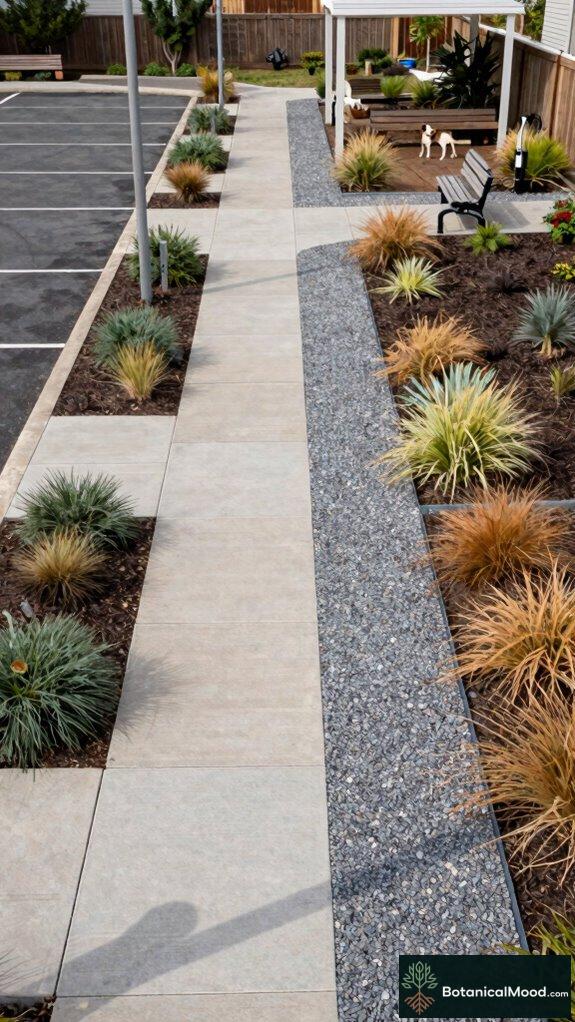
A practical, linear path layout begins with placing a primary circulation belt that runs along a straight axis, linking parking areas, entry thresholds, and dog-exercise zones while preserving sightlines to keep both dogs and owners oriented and safe.
I write to you in intimate, direct terms, noting pathway materials that endure foot and paw traffic, from concrete pavers (Pavimentum opus) to stabilized decomposed granite, cataloged by brands like Sakrete and Belgard. Different types of crushed granite gravel offer unique textures and colors, allowing for aesthetic versatility in design.
User flow matters; clear intersections with benches or shade structures heighten comfort.
I describe grasses, mulches, drainage considerations, and species selections that support seasonal color and harmony.
Plan Size-Segregated Areas, Fencing, and Gates
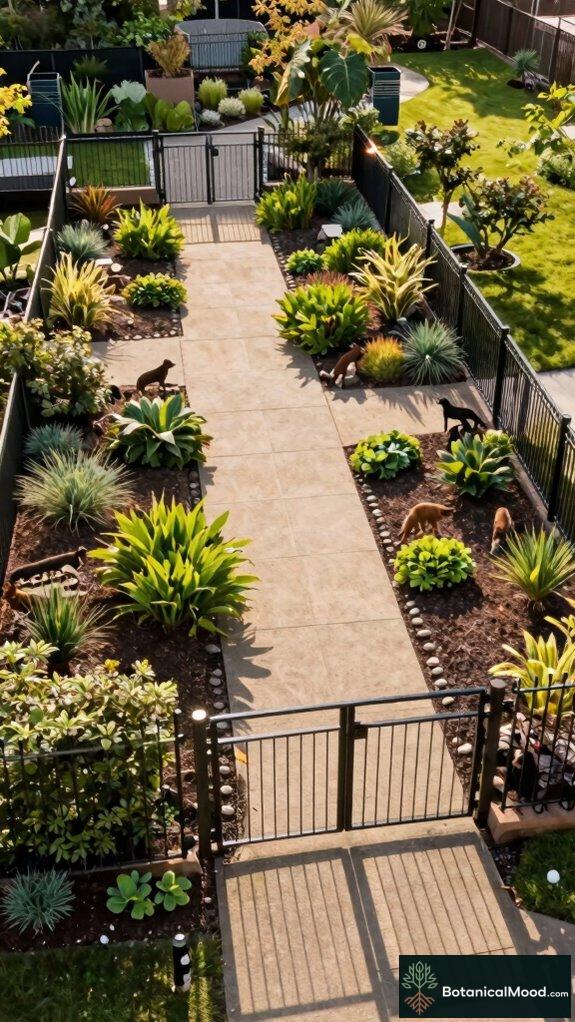
Size-segregated zones must be planned with precise proportionality, ensuring roughly 60–70% of total area is allocated to large-dog facilities and 30–40% to small-dog areas, so that size-matched interactions reduce injuries while preserving usable space for concurrent activities.
This balance, informed by peak-hour usage models and per-dog allocations of 75–100 square feet during maximum capacity periods, guides the placement of separate enclosures, buffer zones, and access points.
- Fencing selection and placement
- Double-gated entrances for safety
- Clear sightlines and illumination
To further enhance safety and aesthetics, consider incorporating natural solutions that effectively deter dogs from flower beds while allowing them to navigate designated paths.
Choose Surfaces, Drainage, and Shade
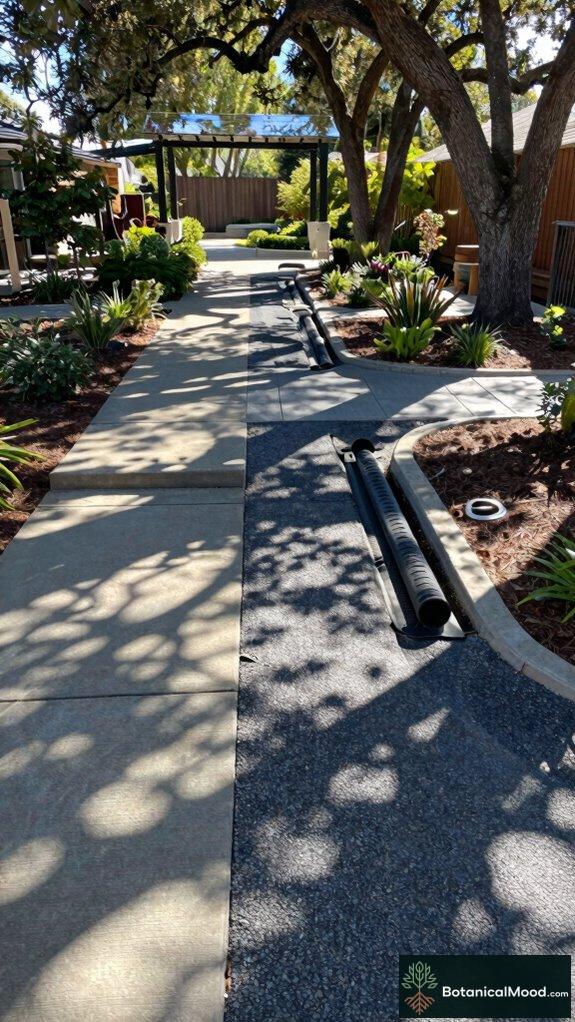
Choosing Surfaces, Drainage, and Shade begins with aligning walking surfaces to daily dog-park rhythms while ensuring durability under varied weather patterns.
I speak directly to you, inviting you into a tactile conversation about non slip surfaces, drainage solutions, and consistent footfall comfort. In practice, I weigh concrete pavers (3, 5 cm), decomposed granite, and porous asphalt, noting maintenance cycles for brands like QUIKCRETE and Sakrete, plus local suppliers in Sonoma, CA.
Drainage is strategic: swales, perforated pipes, catch basins, and graded adjustments.
Shade is layered—native oaks (Quercus spp.), maple canopies (Acer saccharum), and reflective pergolas.
Incorporate Shade, Vegetation, and Sensory Features
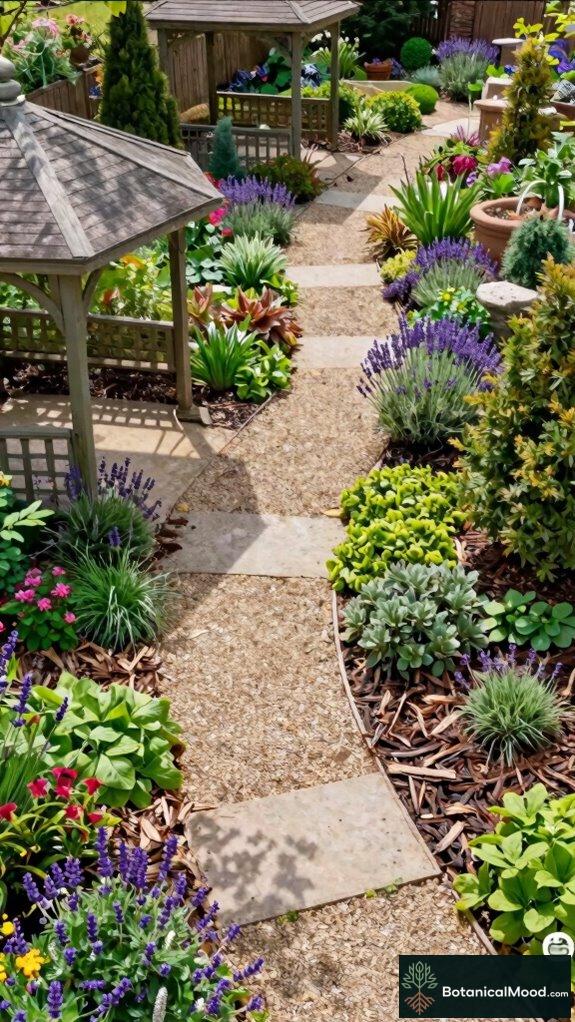
Incorporating shade, vegetation, and sensory features requires a deliberate layering of elements that harmonize microclimates with human and canine comfort.
So I start by selecting a mix of native and drought-tolerant species that offer year‑round canopy, seasonal color, and tactile variety.
- Shade structures (gazebos, pergolas, lattice canopies)
- Sensory plants (Lavandula angustifolia, Monarda didyma, Salvia sclarea)
- Textural groundcovers (Arctostaphylos uva-ursi, Festuca glauca, Viola odorata)
I prioritize durable textures, eye‑level contrasts, and whispering breezes, inviting calm, exploration, and shared joy. Additionally, creating natural shade solutions can enhance the wellbeing of outdoor dogs by providing them with comfortable and safe spaces to relax during warmer months.
Measure Impact and Adapt Over Time
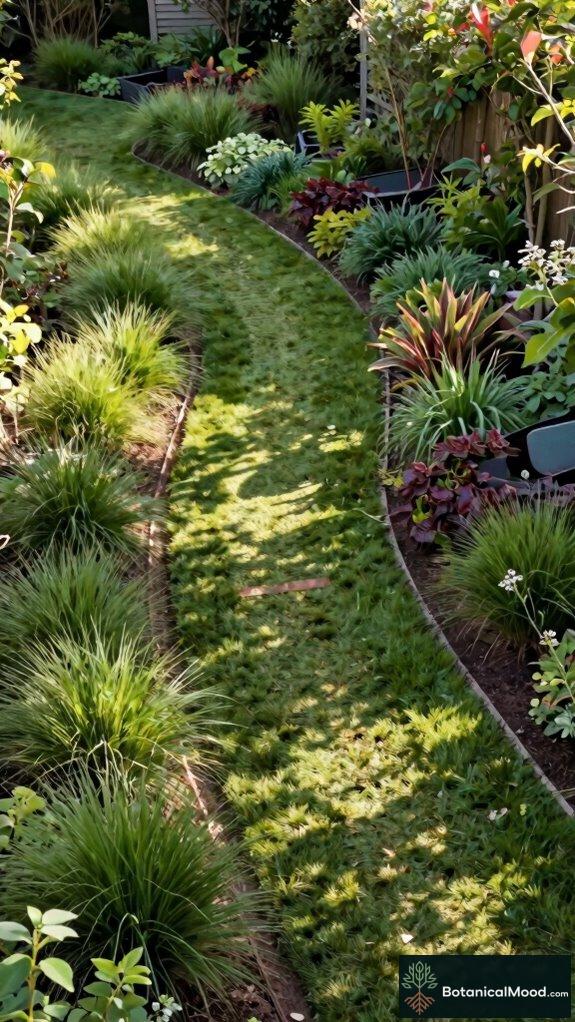
To measure impact and adapt over time, I track usage patterns, soil and surface conditions, and safety indicators across seasons, then translate those observations into targeted adjustments that preserve habitat integrity while enhancing user experience. Additionally, selecting the right tall fescue variety can offer durability and resilience, making it a suitable option for pet gardens.
| Observation focus | Adaptation action |
|---|---|
| User analytics, engagement spikes | Rebalance paths, add shading, adjust seating |
| Soil moisture, compaction | Improve drainage, reroute heavy-use zones |
| Safety indicators (lighting, visibility) | Upgrade lighting, prune sightlines |
| User feedback (preferences) | Implement small, testable changes, monitor responses |
Curved Stepping-Stone Route Design
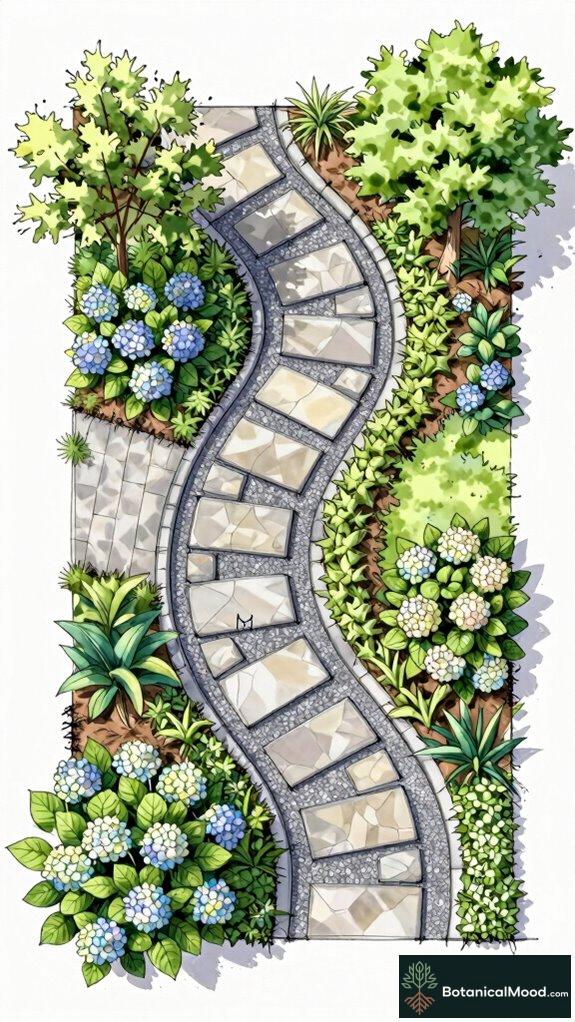
Observe smooth shifts and playful patterns, ensuring hand-damped curves frame hydrangea (Hydrangea macrophylla) borders, while flagstone textures contrast with decomposed granite fills. Observe landscape condition In addition, consider incorporating garden stepping stones to guide your furry friends safely through the landscape. Orient headlands toward sheltering trees (Quercus rubra) and perennial borders for year-round interest. Use mortar-set curves to secure durable, elegant alignments, maintaining gentle gradients.
FAQ
How Do I Budget for Maintenance and Ongoing Park Improvements?
I budget by doing a detailed cost analysis and setting a realistic maintenance schedule. I estimate annual tasks, prioritize safety upgrades, and build in reserve funds, so you feel confident about ongoing improvements without surprises.
What Governance Structure Ensures Consistent Safety Policies?
I guarantee safety policies by adopting a governance structure with clear safety regulations and proactive risk management, and I’ll share steady progress with you, inviting intimacy as I describe how we safeguard every barking heartbeat along our paths.
Which Metrics Best Track Dog and Owner Satisfaction?
Owner feedback and satisfaction surveys best track dog and owner satisfaction. I value candid notes, unify metrics like ease of use and safety, and share results openly, inviting you to help shape improvements with honest, timely responses.
How Can Volunteer Programs Sustain Long-Term Park Vitality?
Volunteer programs sustain park vitality by fostering community involvement, rewarding consistent participation, and empowering members with clear roles. I’ll share stories, recognize effort, and tailor tasks to volunteer motivation, building intimate connections that keep our dog parks flourishing.
What Partnerships Maximize Funding and Community Engagement?
Collaboration feels like sunlight pouring through a courtyard, guiding my hands. I pursue collaborative initiatives and diverse funding sources, inviting you to join me, share stories, and strengthen our community’s dog paths with shared purpose and trust.
References
- https://pmc.ncbi.nlm.nih.gov/articles/PMC9455081/
- https://academic.oup.com/cdj/advance-article/doi/10.1093/cdj/bsaf016/8179354
- https://parknpool.com/blog/dog-parks-are-on-the-rise-design-tips-and-statistics-for-municipalities-to-consider
- https://www.wagbar.com/dog-park-design-development-complete-guide-to-building-successful-community-dog-parks
- https://www.aarp.org/livable-communities/livable-in-action/info-2023/designing-and-using-dog-parks.html
- https://www.a2gov.org/media/hvqhrksg/recommendations-and-guidelines-for-dog-park-site-selection-updated-4-10-15.pdf
- https://www.fairfaxcounty.gov/parks/sites/parks/files/assets/documents/plandev/dog park study/dog park study design section.pdf
- https://www.youtube.com/watch?v=eina9DhTEcY
- https://www.landdesigns.com/stepping-stone-path/
- https://www.houzz.com/discussions/1956017/seeking-advice-for-garden-path-compatible-with-big-dog