I thought I’d finally mastered the art of “dog‑friendly fragrance” until my pup turned my lavender patch into a chew‑toy buffet.
Now I’ve got eight sun‑loving, urine‑tolerant plants that keep the yard smelling fresh without turning my dog into a chemical hazard.
- Lavandula (Lavender) – calming, low‑alkaloid, perfect for post‑walk chill‑outs.
- Rosmarinus officinalis (Rosemary) – resinous, hardy, and surprisingly urine‑resistant.
- Melissa officinalis (Lemon Balm) – bright citrus notes that make my dog’s nose twitch with delight.
- Salvia officinalis (Sage) & Salvia rosemarinus (Autumn Sage) – tough aromatics that survive even my dog’s “accidental” sprinkler sessions.
- Thymus vulgaris (Thyme) – a tiny, cool‑sniff herb that refuses to wilt.
- Mentha spp. (Mint) – refreshing, and yes, I’ve learned to keep it away from the digging zone.
- Tropaeolum majus (Nasturtium) – edible blooms that add a pop of color and a safe snack for curious snouts.
I rotate them seasonally, pair them with stone pathways, and watch my dog sniff, explore, and occasionally roll in the scent trail. Curious how it works? Give it a try—just remember, nature isn’t always predictable, and my dog’s curiosity sometimes beats my garden plans.
Designing a Scent‑Smart Garden: Tips from My Own Yard Make
When I first tackled a “dog‑safe scented garden,” I started with a sun‑lit, well‑drained corner near the patio, laying down permeable gravel to keep urine from pooling. I planted lavender and rosemary in the back for structure, then filled the front with mint and thyme for easy access. Adding a low‑maintenance rosemary hedge created a natural barrier, while nasturtium vines draped over a trellis for visual pop and edible flowers. The result? A garden that smells amazing, stays resilient, and invites my dog to explore without turning the space into a toxic mess. Incorporating drip irrigation, raised beds, and seasonal rotation keeps the scent trail fresh year‑round, balancing aesthetics with pet safety.
Quick Takeaways
- Choose dog-safe, non-toxic plants with strong but gentle scents like lavender, rosemary, and lemon balm to create calming, sniff-friendly aromas.
- Pair aromatic companions (rosemary and lemon balm) along sensory paths to create layered, enjoyable fragrances for dogs.
- Include hardy, low-maintenance aromatics such as sage, thyme, and autumn sage for durable canine-friendly trails.
- Add mint for a cool scent and nasturtiums for edible blooms, underplanting sunlit areas to diversify aroma and texture.
- Design bed borders with durable evergreens and groundcovers, plus seasonal rotations, to sustain fragrance and garden safety.
What Makes a Dog-Safe Fragrant Plant List
To craft a dog-safe fragrant plant list, I start with a framework that prioritizes non-toxicity, scent strength, and garden performance, ensuring each selection supports both canine safety and sensory enrichment. In this framework, plant characteristics matter: durable foliage, stable resins, and low alkaloids. Scent properties guide pairing—refreshing citrus notes meet herbaceous depth, while resinous oils provide lasting nuance. We weigh climate tolerance (drought resistance, sun exposure), soil preferences, and propagation ease, noting brand familiarity (Great Garden Plants, Logee’s) and Latin nomenclature (Lavandula angustifolia, Rosmarinus officinalis). Additionally, incorporating non-toxic plant selections can enhance the overall safety of your garden while providing a fragrant atmosphere. This method yields actionable palettes for canine-friendly environments, balancing aesthetics with practical safety guarantees.
Lavender: Calming Scents for Sniffing Journeys
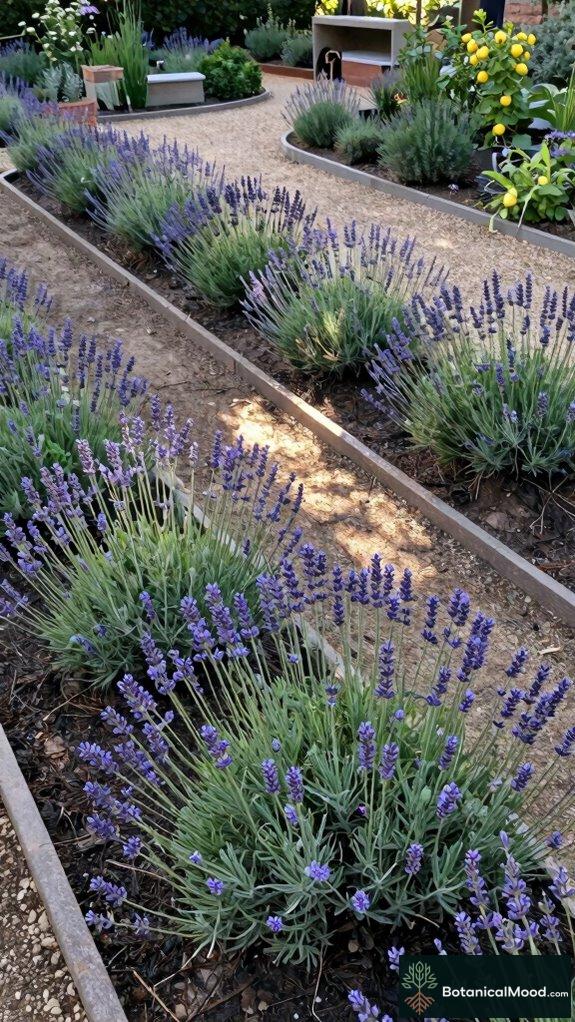
Lavender (Lavandula angustifolia) presents a calming, complex aroma that elevates canine sniffing journeys without overwhelming acute sensitivities, making it a cornerstone in dog-friendly sensory gardens. Lavender soothes nerves through aromatic benefits, guiding sensory exploration with a soft, persistent veil that caresses nasal passages and reduces stress responses. I observe its slender spikes, bluish-lavender inflorescences, and fine, fuzzy leaves that mass the air with tranquil notes. Garden design emphasizes well-drained loam, sun exposure, and compact cultivars for paths. For canine-safe landscaping, pair with rosemary (Rosmarinus officinalis) and lemon balm (Melissa officinalis) to balance intensity and maintain edible, aromatic harmony. Additionally, Lavender is favored for its dog-friendly properties, ensuring your garden remains a safe, enjoyable environment for your furry friends.
Table:
| Column 1 | Column 2 | Column 3 |
|---|---|---|
| Aroma | Texture | Safety |
| Calming | Delicate | Non-toxic (small amounts) |
| Sniffing aid | Ground cover potential | Low-maintenance |
| Mood | Foliage color | Attracts pollinators |
| Zone | Height | Care routine |
Rosemary and Lemon Balm: Spatial Aromas for Enrichment Paths
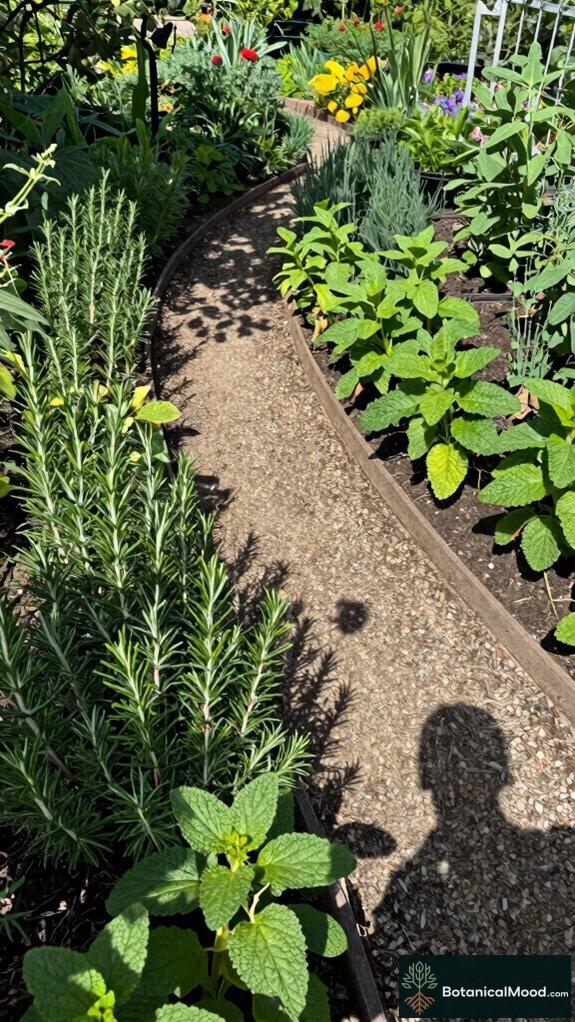
Rosemary (Rosmarinus officinalis) and Lemon Balm (Melissa officinalis) form a spatial pairing that enriches canine sniffing journeys with layered, complementary aromatics.
When positioned along sensory paths, their volatile oils rise in gentle, persistent wafts that guide dogs through shaded corridors and sunlit borders alike. Incorporating aromatic plants like valerian can also provide non-toxic enjoyment for your pet while enhancing the sensory environment.
- spatial design considerations for planting palettes, sun exposure, and mulch textures
- sensory exploration of scent trails, wind corridors, and plant interactions
- maintenance rhythms, drought tolerance, and seasonal bloom timing for durable paths
This pairing engages dogs clinically, creating immersive, edible-fragrance waypoints for enrichment and observational study.
Sage, Thyme, and Autumn Sage: Hardy Aromatics for Low-Maintenance Trails
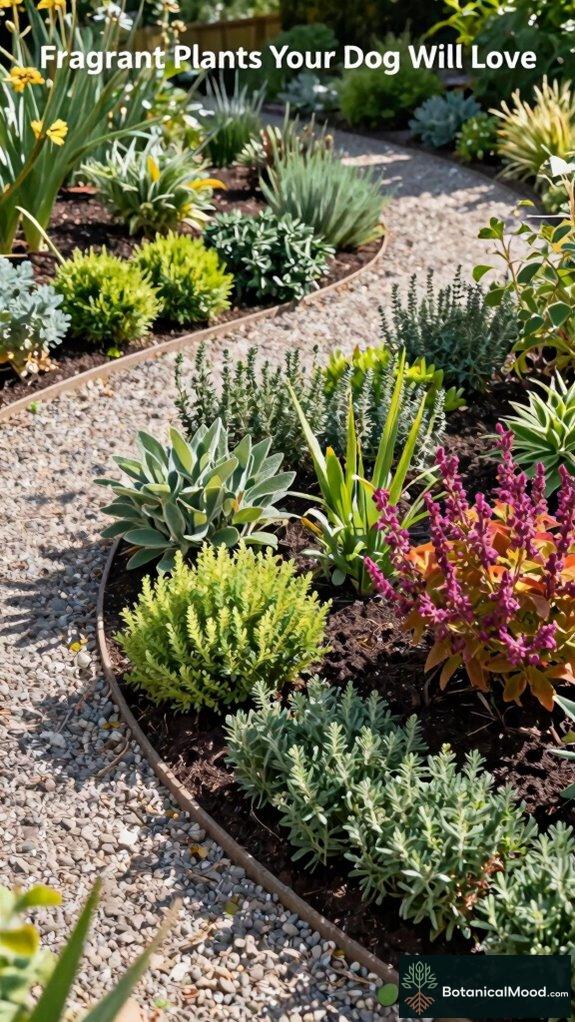
Sage (Salvia officinalis), Thyme (Thymus vulgaris), and Autumn Sage (Salvia greggii) form a hardy trio ideal for low-maintenance canine trails, delivering dense evergreen textures, drought tolerance, and persistent aromatics that reward sniffing without demanding high inputs.
I narrate how sage benefits emerge through robust foliage, resinous oils, and pollinator-friendly blooms, while thyme varieties offer compact habit, lime-green mantles, and compact flowering for borders adjacent to paths. Additionally, these plants are pet-safe succulents that can enhance any winter-ready garden while keeping your furry friends safe.
This trio suits rock gardens and xeriscapes, pairing with mulching but avoiding water-gouging irrigation. For dog-friendly aesthetics, prioritize well-drained soils, sun, and resilient, low-input maintenance.
Mint and Nasturtiums: Edible Aromatics for Safe Sniffing
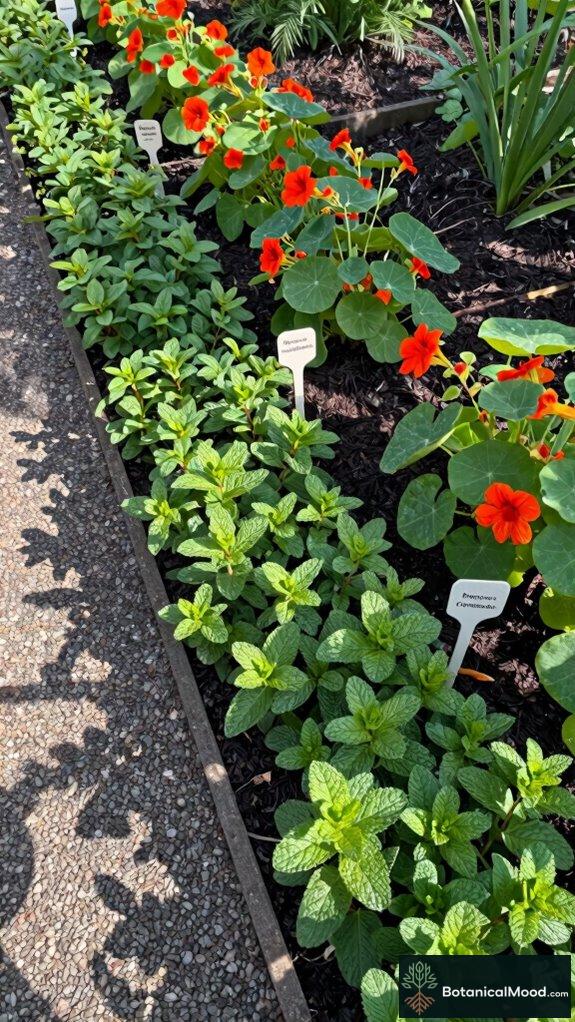
I favor a pairing that emphasizes edible leaves and peppery blooms, since mint (Mentha spp.) provides a cool, invigorating fragrance while nasturtiums (Tropaeolum majus) contribute bright, edible blossoms and a spicy peppery note.
- mint benefits: I detail foliage chemistry, essential oils, and cooling vapor that supports sniffing curiosity without overwhelming canine noses.
- nasturtium uses: edible petals and punctuating color, with peppery spice that complements greens in herb beds and border plantings.
- garden design: underplanting in sunlit borders, with Latin names, cultivars, and pest-resilient strategies for safe sniffing.
Calendula, Freesia, and Petunias: Colorful Fragrance for Dog Walks
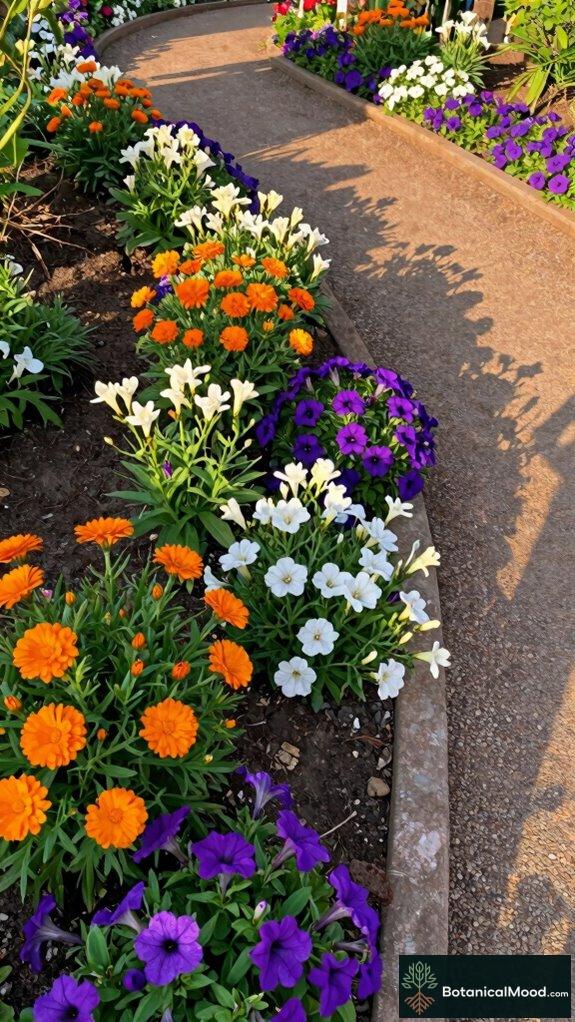
The trio of calendula (Calendula officinalis), freesia (Freesia spp.), and petunias (Petunia × hybrida) offers a vivid palette and a fragrant lift to dog-walk borders, blending warm, sunny notes with peppery sweetness that invites sniffing without overwhelming noses.
I describe calendula benefits as cheerful, medicinal petals that brighten borders and soothe sensory nerves; freesia care centers on crisp bulbs, upright stems, and sweet spice with clean, lasting aroma.
Petunias contribute soft, cascading color and resilient habit. Together, these companions enhance pathways, encourage exploration, and enrich canine experiences with gentle fragrance and visual harmony.
Creating the Scent Path: Plant Placement, Resilience, and Seasonal Interest
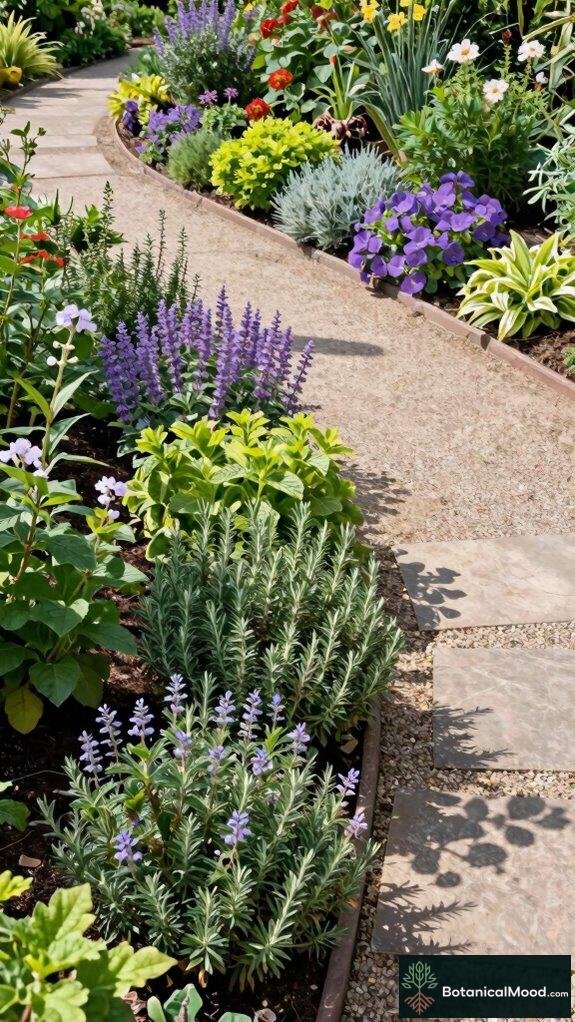
A well-planned scent path begins with intentional plant placement that guides noses along a walk, aligning fragrance strength with seasonal interest and resilient performance under variable dog-garden conditions.
I share how I layer scented pathways through thoughtful plant combinations, from cool-season mints (Mentha spicata) to sun-loving sages (Salvia officinalis) and woody rosemaries (Rosmarinus officinalis).
Observe how blooms shift color and aroma from spring to autumn, sustaining sensory appeal. Additionally, consider incorporating cat-friendly flowering plants into your garden to ensure harmony and safety for all pets.
- Map sun, shade, and wind corridors to maximize fragrance exposure
- Pair drought-tolerant, low-maintenance species for steady scent
- Rotate seasonal interests with flowering herbs and ornamental perennials
Safety, Maintenance, and Best Practices for Pet Owners
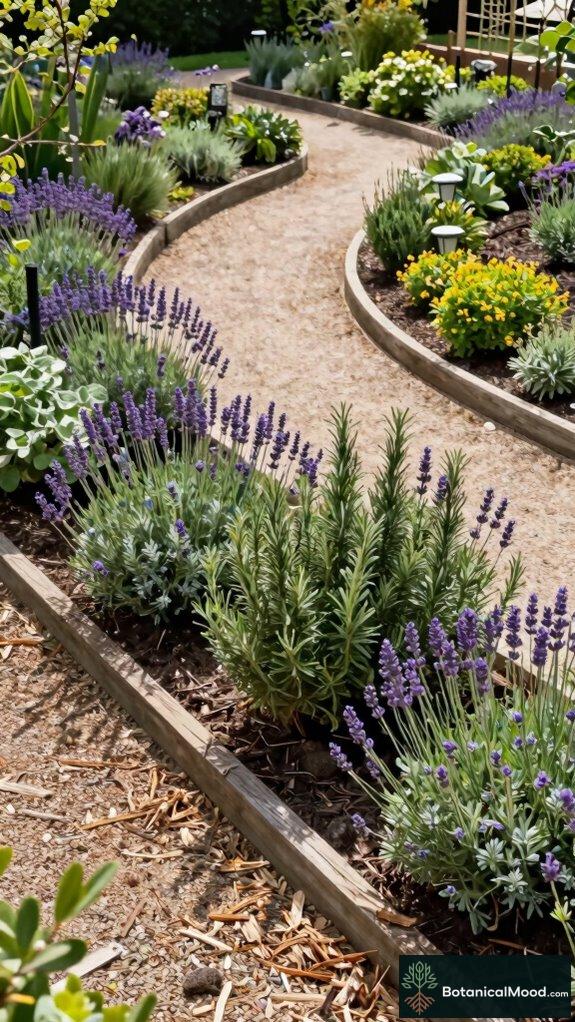
When selecting fragrant, dog-safe varieties, I emphasize practical safety alongside scent strength, ensuring your outdoor rooms remain inviting without inviting trouble for curious canine noses. I discuss plant toxicity, maintenance tips, and routine checks, because preparedness protects both plants and paws. Maintain mulch depth, prune before bloom surge, and quarantine new specimens from high-traffic zones. Observe dogs closely around volatile taxa (Lavandula angustifolia, Rosmarinus officinalis, Melissa officinalis) to detect irritation. Table below highlights quick-reference safety traits, care priorities, and potential hazards. Additionally, using biodegradable poop bags can help keep your garden clean and eco-friendly while promoting responsible pet ownership.
| Safety | Maintenance | Best Practice |
|---|---|---|
| Low toxicity | Watering cadence | Supervise visits |
| Odor calm | Fertilizer timing | Routine pest checks |
| Non-toxic nectars | Soil testing | Seasonal rotation |
Dog-Friendly Bed Borders

Border arrangements define the first impression of a dog-friendly garden, so I shape bed borders with durable, scent-aware plantings that tolerate paws and predictable traffic patterns.
1) Groundcovers that whisper fragrance, like Isotoma fluviatilis and Hakonechloa macra, weave through borders while maturing into soft, walkable carpets.
2) For structure, choose evergreens such as Pittosporum Golf Balls and Camellia, creating dense edges that resist urine and offer year-round texture.
3) Accent with colorful perennials—Heuchera, Salvia (Caradonna), Astrantia—to provide seasonal scent and visual interest along dog-friendly borders. Additionally, incorporate edible flowers in your garden to provide a safe and tasty snack for your pets while they explore the landscape.
FAQ
Are These Plants Truly Safe if Chewed or Eaten?
Yes, some are safe in small amounts, but I’d never rely on them for consumption. I watch for signs of plant toxicity and avoid letting dogs chew chewed leaves; safe consumption isn’t guaranteed, so supervise closely.
How Much Fragrance Is Enough for Enrichment Without Overload?
Fragrance fairly fuelsfinding focus, friend; I’ve found moderate fragrance intensity suits sniffing noses without overwhelm. I consider scent sensitivity and start softly, slowly scaling up, sharing signals as I sense calm curiosity, avoiding hyper-arousal during enrichment.
Which Seasons Maximize Scent Along Canine Pathways?
Seasons with peak seasonal scents maximize dog friendly pathways: spring blooms and summer herbs, autumn sage, and winter Evergreens. I design with varied textures, cultivating continuous fragrance so your pup enjoys accessible, intimate sniff-time throughout the year.
Can Aromatic Paths Be Located Near Dog Water or Play Zones?
Yes, I can place aromatic paths near water or play zones. I consider your dog’s aromatic preferences and scent sensitivity, choosing safe, soothing scents while keeping paths separate from wet areas to minimize mess and distractions for you both.
Do Any of These Plants Require Special Toxicology Care or Pets?
I’d softly note that most listed plants pose minimal risk, but I treat scent sensitivity and plant toxicity seriously; I monitor dogs closely, choosing non-toxic varieties and avoiding heavy spice like mint near curious noses.
References
- https://www.greatgardenplants.com/collections/dog-friendly
- https://www.logees.com/collections/pet-safe-plants
- https://discover.hubpages.com/living/Top-Aromatic-Plants-for-a-Sweet-Smelling-Dog
- https://www.embracepetinsurance.com/waterbowl/article/dog-friendly-outdoor-flowers-plants
- https://southernlivingplants.com/plan-your-garden/pet-friendly-southern-living-plants-2/
- https://www.homedepot.com/b/Outdoors-Garden-Center-Outdoor-Plants-Garden-Flowers-Perennials/Dog-Safe/Fragrant/N-5yc1vZc8ryZ1z1c1onZ1z1pjws
- https://www.shrubhub.com/blog/10-must-have-dog-safe-outdoor-plants.php
- https://www.rover.com/blog/10-safe-plants-dogs-can-add-almost-garden-right-now/
- https://www.monrovia.com/be-inspired/create-a-dog-friendly-backyard-landscape.html
- https://www.sotogardens.com/blogs/soto-journal-inspiration/creating-a-pet-friendly-garden-care-guide