Ever tried turning your backyard into a dog‑spa resort?
I’m a self‑appointed canine comfort architect, and I’ve just nailed five garden cooling stations that would make even a heat‑stroke‑prone pooch sigh in relief.
First, I swapped clunky zinc steel for breathable shade cloths (think lightweight, UV‑blocking, and far less “industrial”). I paired those with towering Juniperus chinensis hedges and hardy Musa basjoo banana plants for all‑day canopy—no wilted leaves in sight.
Next, I laid down cool porcelain pavers and installed whisper‑quiet evaporative misters, creating a micro‑climate that keeps the steel bowls frosty without a power surge. A splash‑zone pool, a misting arch, and a wet‑foot pathway give my dog a spa‑day vibe while staying non‑toxic—Lavandula angustifolia for scent, not just looks.
Honestly, I’m still amazed at how a simple shade‑cloth can turn a sweltering yard into a canine oasis. Have you ever watched a dog chase a mist droplet like it’s the last piece of pizza? It’s pure joy, and a reminder that design isn’t just about aesthetics—it’s about feeling.
—
H2: “Dog‑Friendly Garden Design: From Heat‑Wave to Chill‑Zone”
Last summer, my Labrador, Milo, turned my garden into a personal sauna. I responded by re‑imagining the space: I introduced a pergola of reclaimed cedar, draped with UV‑rated shade cloth, and added a low‑profile, solar‑powered misting system. I planted drought‑tolerant lavender and rosemary for fragrance and shade, and installed a shallow, recirculating pool with a stainless‑steel bowl for hydration. The result? Milo now lounges under the pergola, sipping water from the bowl, while I enjoy the scent of rosemary and the sight of a cooler, greener yard. This project taught me that combining sustainable materials, smart irrigation, and pet‑centric layout creates a garden that’s both Instagram‑worthy and dog‑approved.
Quick Takeaways
- Elevated, breathable shade cots with removable covers provide cool, breezy resting spots for dogs.
- Shade cloths over frames create persistent shaded zones, paired with evaporative misters for cooling air.
- Water-based stations with kiddie pools, misters, and porous wet zones offer immediate, safe relief during heat.
- Non-toxic, pet-friendly plant layouts and curved pathways reduce stress while enhancing cooling microclimates.
- Proactive safety plan: shaded fresh-water access, monitoring hydration, vitals, and temperature/humidity tracking to refine cooling strategies.
Heat Risk and What Counts as Cooling for Dogs
Heat risk is the essential baseline for any cooling strategy, because when ambient temperatures rise, dogs can progress from discomfort to heatstroke far more quickly than people expect, especially in direct sun or confined spaces; I’ve learned to map heat tolerance across breeds and ages, noting how shading and airflow alter outcomes.
Cooling methods range from porcelain pavers (Carolineas, Gardenia) to evaporative misters near wattle fences, always prioritizing shade cloths and elevated cots. I monitor humidity, plan for early morning walks, and employ water bowls with splash zones, ensuring safe intervals for hydrated, content companions.
Your garden design matters.
Shade Surfaces and Elevated Nooks That Stay Cool
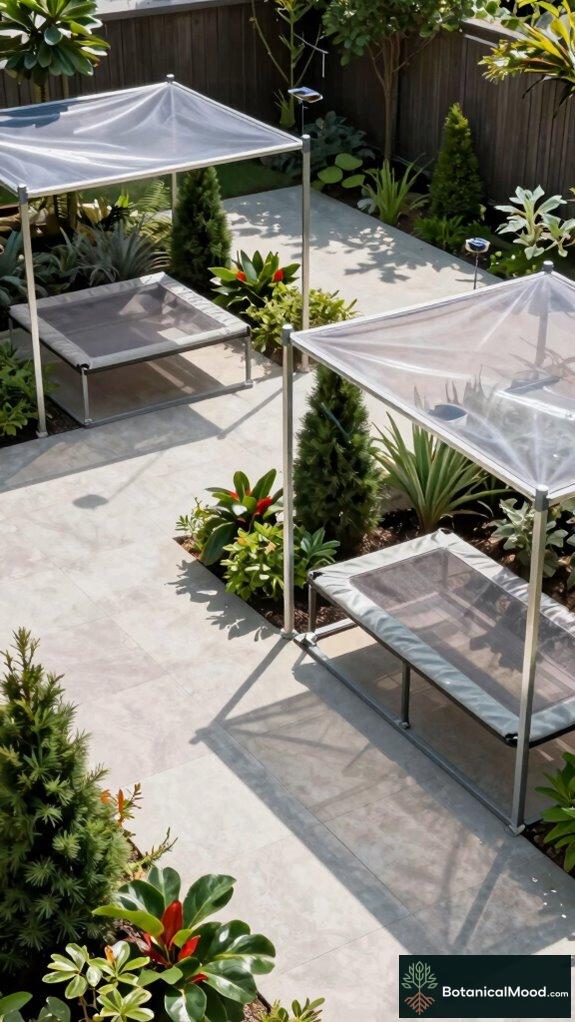
A practical approach centers on shade surfaces and elevated nooks that stay cool, combining strategic ground cover with elevated rests to foster airflow and tactile relief for dogs during hot spells.
I recommend elevated cots with breathable mesh and removable covers, paired with shade cloths stretched over lightweight frames to create cool, shadowed zones. In my garden, corralled porches use Juniperus chinensis and Musa basjoo mingling with porcelain pavers, so shade persists.
Materials matter: zinc-treated steel frames resist humidity, while soft acrylic fabrics minimize heat retention. Additionally, consider integrating solar-powered misting systems to further enhance your dog’s comfort during high temperatures.
For professionals, document Latin names: Ginkgo biloba, Aesculus hippocastanum, and Salix babylonica.
Water-Based Stations: Pools, Misters, and Wet Zones
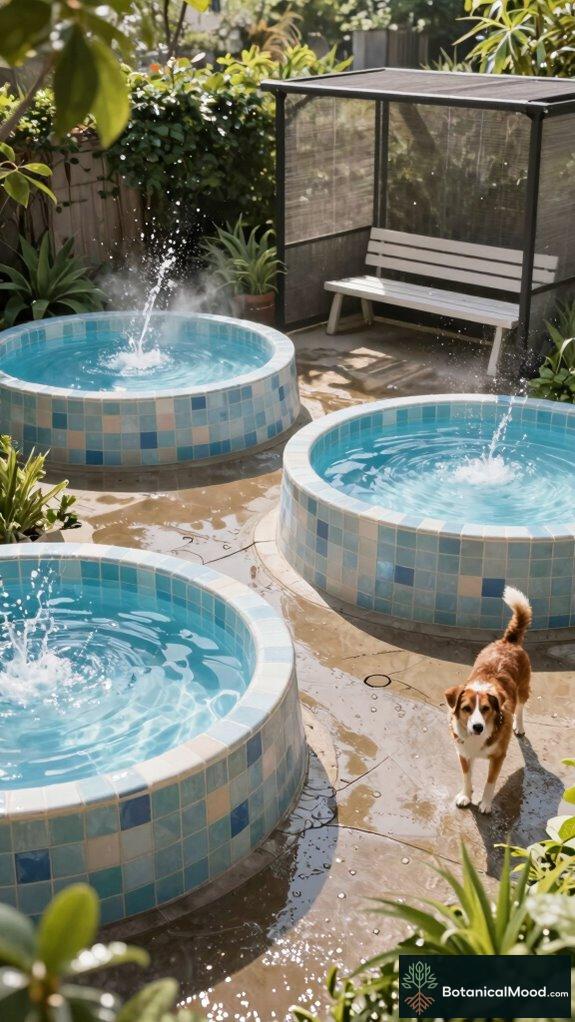
Pools, misters, and wet zones transform outdoor dog spaces into revitalizing refuges during heat waves, offering immediate relief through evaporative cooling and tactile splash zones. I describe kiddie pools as shallow, insulated basins, ideal for safe splash play, while outdoor misters release a fine veil that lowers microclimates around shaded seating. Wet zones include porous concrete, sprayed pavers, and misted hollows, guiding dogs toward relief without excess humidity. Furthermore, integrating pet cooling mats into these zones can enhance comfort and provide additional cooling options for your furry friends.
A curated table below visualizes setup:
| Element | Placement | Benefit |
|---|---|---|
| Pool depth | Shade alignment | Cooling efficacy |
| Mister intensity | Flow control | Evaporative comfort |
| Wet zone design | Material choice | Safety considerations |
Safe, Non-Toxic Plants and Planting Layouts for Pet Comfort
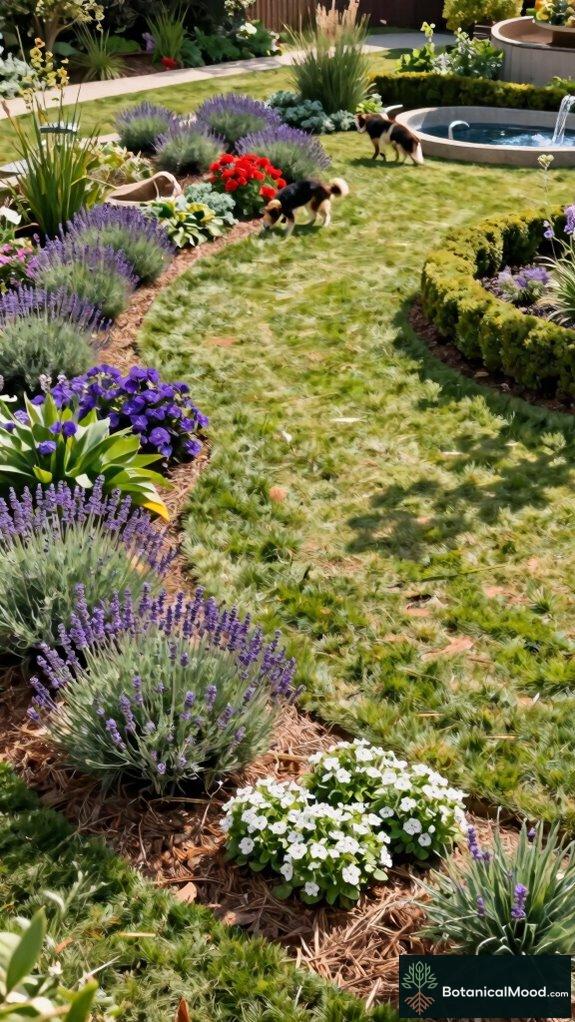
In this space, I prioritize safe, non-toxic plantings that harmonize with canine comfort, selecting species known for low toxicity and unobtrusive textures.
I favor pet friendly flora that pair with garden aesthetics, arranging beds in curved, sun-dappled layouts to invite gentle sniffing without crowding. Aegopodium podagraria safeguards boundaries, while Sarcoscypha coccinea hints add color from late winter through early spring; Lavandula angustifolia releases calming aromas nearby.
I document Latin names (for professionals) like Plantaginaceae and Nepeta cataria, ensuring non-toxic selections with durable textures. Importantly, selecting non-toxic native plants for dogs can greatly enhance their safety while enjoying the garden environment.
Mulch choices include pine needle or coconut coir to minimize ingestion risk and maintain soil health.
Safety Protocols: Hydration, Monitoring, and Sunscreen for Outdoor Dogs
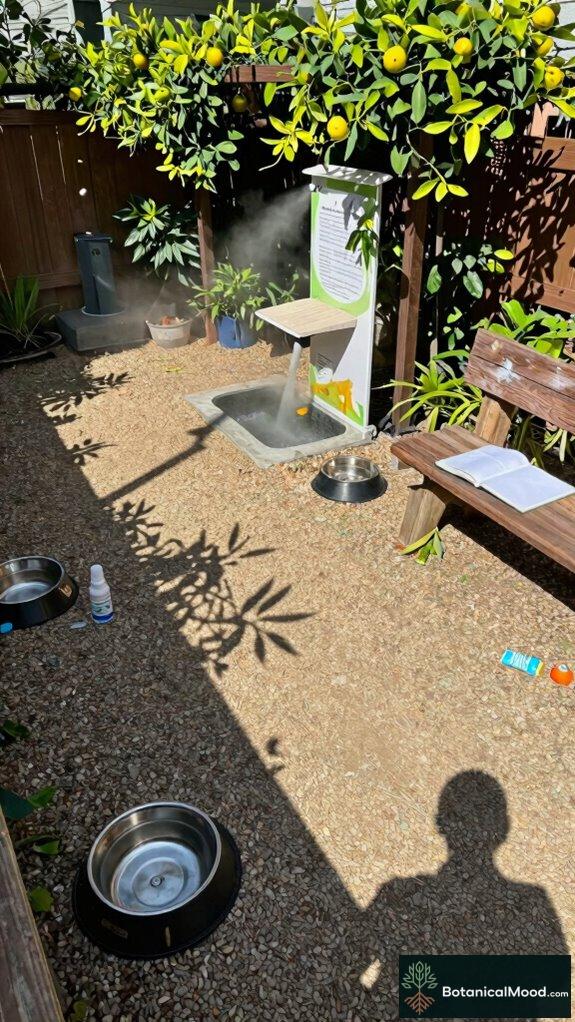
Outdoor safety hinges on proactive hydration, vigilant monitoring, and practical sunscreen strategies, and I implement these with a disciplined routine that blends routine checks with readily accessible resources.
I guide you toward hydration techniques that honor canine physiology, offering fresh water from stainless steel bowls (Keter, 1.0–1.5 L) and shaded stations near the espalier (Citrus × aurantium) trellis, paired with evaporative cooling misters during peak hours.
Sunscreen application is selective, using Petkin SPF15 where fur parts expose skin, avoiding nostrils, eyes, and ears.
I monitor pulse, mucous membranes, and hydration cues, noting temperatures and humidity (25–28°C, RH ~60%), documenting responses in garden logs for ongoing refinement.
Sunny Shade Layout Plan
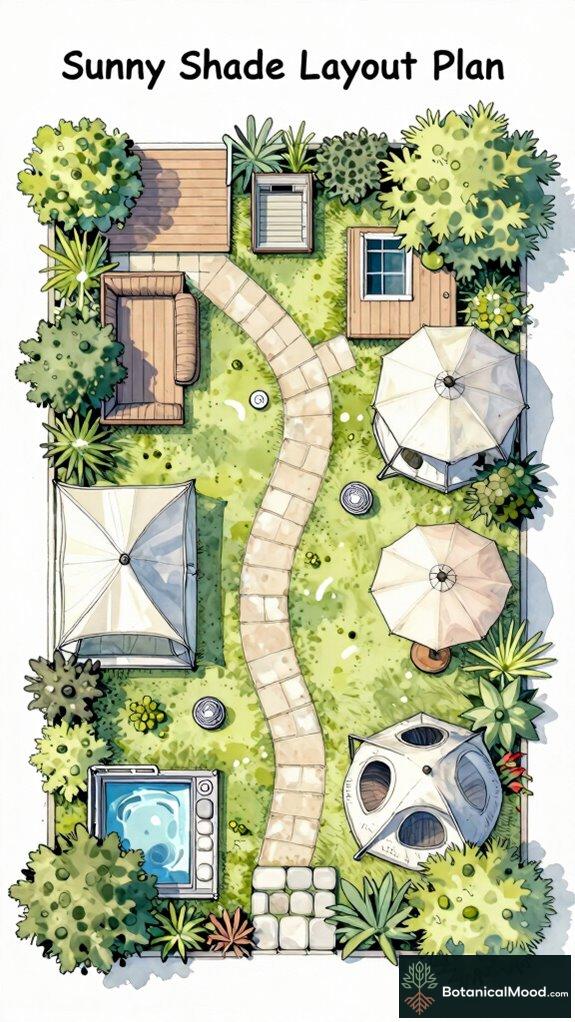
I guide the reader through a cohesive plan that positions shaded dog zones along cool, breathable pathways, leveraging a balanced mix of elevated beds, pop-up tents, shade cloths, and umbrellas to create discrete, climate-smart retreats within a single garden schema.
- Elevated surfaces: raised dog beds with quick-dry fabrics, positioned on shaded porches or under deciduous canopies
- Portable shelters: foldable pop-up tents with roll-up windows, zipper doors, and vented poles
- Shade textiles: UV-stable shade cloths, garden umbrellas, and secured tarps over patio edges
- Strategic spacing: breezeways near open windows and cooler basements as cooling anchors
- Materials harmony: porcelain slabs, stone bathmats, and metal frames for thermal mass
Integrating USB rechargeable fans into these shaded areas can further enhance comfort for your pets during warmer days.
FAQ
How Often Should Cooling Stations Be Rotated for Dogs?
Cooling frequency matters like a heartbeat: I rotate stations every 2–4 hours in heat, ensuring fresh hydration and comfort. I watch for signs of fatigue and temperature, keeping you and your dog hydrated, connected, and calm together.
What Signs Indicate a Dog Is Overheating Despite Shade?
Overheating can sneak up even in shade. I notice panting behavior and excessive drooling, plus glazed eyes or weakness. If temps stay high, move to cool water, offer shade, and contact a vet promptly for guidance.
Can Dogs Swim in Kiddie Pools Safely With Supervision?
Yes, I’ve got you—dogs can swim in kiddie pools safely with supervision. I’ll cover dog swimming safety and kiddie pool precautions, staying close, providing shade, fresh water, and never leaving them unattended around the water.
Which Materials Are Best for Heat-Resistant Outdoor Flooring?
Composite decking and natural stone are my go-tos for heat-resistant outdoor flooring; they stay cooler under sun, feel sturdy, and invite trust. I’d choose these, and I’d tell you why they suit intimate, sunlit chats outside.
How to Avoid Chronic Heat Exposure During Peak Sun Hours?
To avoid chronic heat exposure during peak sun hours, I monitor heat stress indicators and seek shade, scheduling walks early or late. I sip water, carry hydration tips for you, and guarantee pets have cool, fresh water.
References
- https://www.pavingdirect.com/info/how-to-create-cooling-corner-garden-pets-summer/
- https://www.countryliving.com/uk/wildlife/pets/a40283576/create-dog-cooling-corner-garden/
- https://www.pawsitivedawgwalking.com/post/how-to-create-a-pet-cooling-station-at-home
- https://permies.com/t/118294/quest-ultimate-hot-weather-dog
- https://petharmonytraining.com/cool-down-paws-up-creating-heat-safe-spaces-for-your-pet/
- https://www.rover.com/blog/ways-to-transform-your-backyard-into-a-dogs-summer-paradise/
- https://www.instructables.com/How-to-build-a-dog-house-w-air-conditioning/
- https://www.youtube.com/watch?v=2Ar5CwbbFu0