Ever wondered why your dog looks like a sun‑baked raisin after a summer stroll?
I’m the guy who tried a cheap tarp once—dog melted, I panicked. Now I swear by USA Shade’s UV‑blocking canopies and Shade Systems Inc.’s breathable HDPE sails. They blend with maple (Acer saccharum) and red oak (Quercus rubra) shade, creating a perfect microclimate. I’ve even added Vinca minor ground cover and raised cot beds for paw‑soft comfort. CoolNet™ fabric keeps things cool, while vented panels let breezes dance.
Think you can handle dappled light? I’m still figuring out the exact placement, but the results are paws‑itively amazing.
—
Garden Design Tips: Creating a Pet‑Friendly Oasis
When I revamped my backyard last spring, I paired a pergola with a sun‑responsive sail from Shade Systems Inc., then tucked in a drought‑tolerant grass mix (festuca and blue fescue) for texture. I added a low‑profile water feature—because a thirsty pup is a happy pup—and scattered lavender for scent and mosquito control. The layout balances shade, scent, and visual interest, turning the space into a multi‑sensory retreat for both humans and four‑legged friends. The key? Layering elements—shade, ground cover, and scent—so the garden feels alive, not just a dog‑run.
Quick Takeaways
- Shade structures combine durability and aesthetics with UV-blocking fabrics and breathable designs for pet comfort.
- Canopies, pergolas, and sun sails create stylish, functional shade over paths, seating, and play areas.
- Quick-setup options like portable canopies and freestanding umbrellas offer flexible, pet-friendly shading.
- Integrating trees and ground-cover enhances natural shade while maintaining soil health and airflow.
- Safety and maintenance routines ensure long-lasting shade solutions with regular inspections and materials like HDPE and CoolNet.
Foundations: Why Dogs Need Shade and How Sun Exposure Affects Safety
Shade is essential for canine comfort and safety, because dogs regulate temperature primarily through panting and paw contact with cool surfaces, making shade an imperative refuge during peak sun hours and in open play zones.
I speak softly to you, reader, guided by evidence and observation, embracing shade benefits as a practical cornerstone of canine welfare. Sun exposure influences dermal health and metabolic balance, so I prioritize shade as sun safety in every garden plan, from concrete courtyards to lush beds.
We discuss microclimates, ventilation, and reflective surfaces, integrating brands like USA Shade and Shade Systems Inc. for reliable, durable protection.
Natural Shade Foundations: Trees, Ground Cover, and Microclimates

In shaping outdoor spaces for canine comfort, I observe how mature trees, ground coverings, and microclimates form a living framework that governs shade dynamics across the day, seasons, and sun angles.
Tree types vary—from Acer saccharum to Quercus rubra—each offering leaf density, branch pattern, and root spread that sculpt shade subtly. Fast-growing willow trees, known for their rapid growth rates, are particularly effective in providing quick shade for pets.
Ground cover like Vinca minor, Thuja occidentalis mulch, and fine moss modulates soil temperature and moisture, enhancing microclimate benefits.
I note prevailing winds, dappled light, and thermal mass differences, then pair species with shelter spots, elevating comfort, shelter, and visual harmony for pets and people alike.
Baseline Cooling for Paws: Mats, Damp Towels, and Water Access
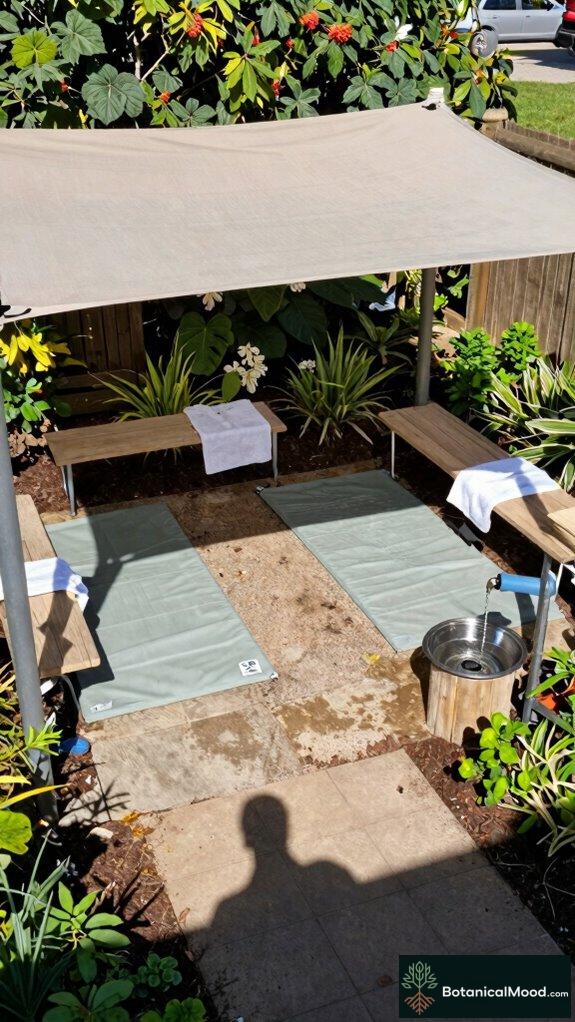
A practical baseline for paw comfort starts with accessible cooling options—mats, damp towels, and reliable water access—so I arrange a small, shaded zone where dogs can pause, drink, and settle.
In practice, cooling mats deliver low-profile relief on hot concrete, while damp towels provide immediate evaporation and surface coolness, reducing paw fatigue.
Hydration stations near shaded borders guarantee steady intake, especially during peak sun, and reinforce paw comfort through routine access.
I mix breathable fabrics, durable rug underlays, and metal bowls, aligning with microclimates and garden paths.
Additionally, investing in washable pet cooling covers offers an effective solution for long-lasting comfort and hygiene.
This baseline supports safe, contented explorations for canine companions in warm seasons.
Shade Structures 101: What to Look for in Dog-Friendly Shelters
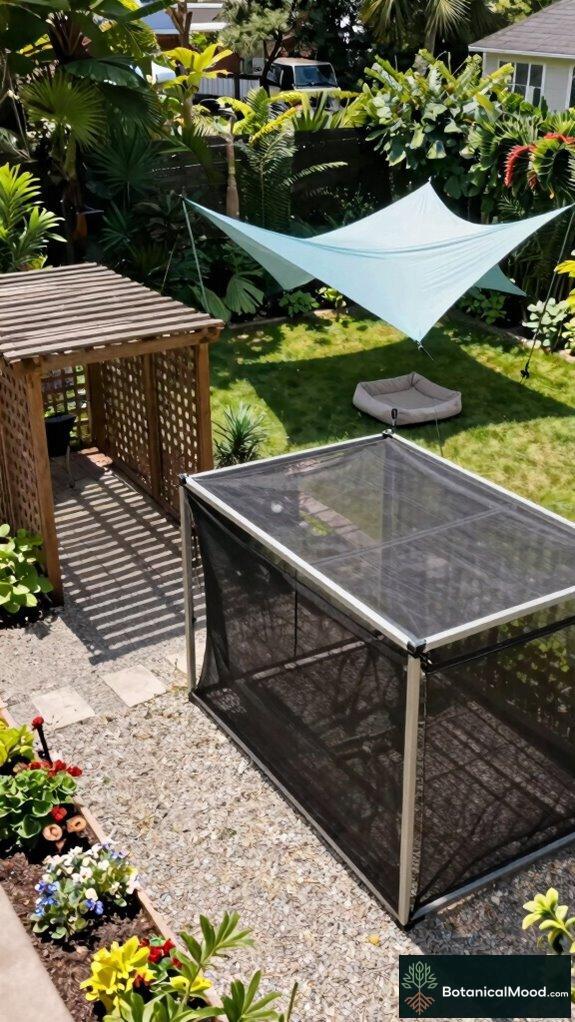
Ever wondered which shelter features truly protect dogs from heat while enhancing garden aesthetics?
I guide you through choosing durable shade structures that blend with borders, paths, and sun-softened lawns, prioritizing shade materials and design aesthetics.
I observe how fabrics, metals, and woods interact with microclimates, noting UV resistance, airflow, and pet comfort.
- Ideal UV-blocking canopies with breathable mesh and powder-coated frames
- Wooden pergolas with lattice panels that invite dappled shade and plant integration
- Fabric sails in cool tones anchored by robust anchors for windy days
These choices honor function, form, and natural harmony. Additionally, selecting sun shade sails can provide a stylish and effective way to protect your pets from harmful UV rays while enhancing your outdoor space.
Budget DIY Pergolas and Pallet Ideas
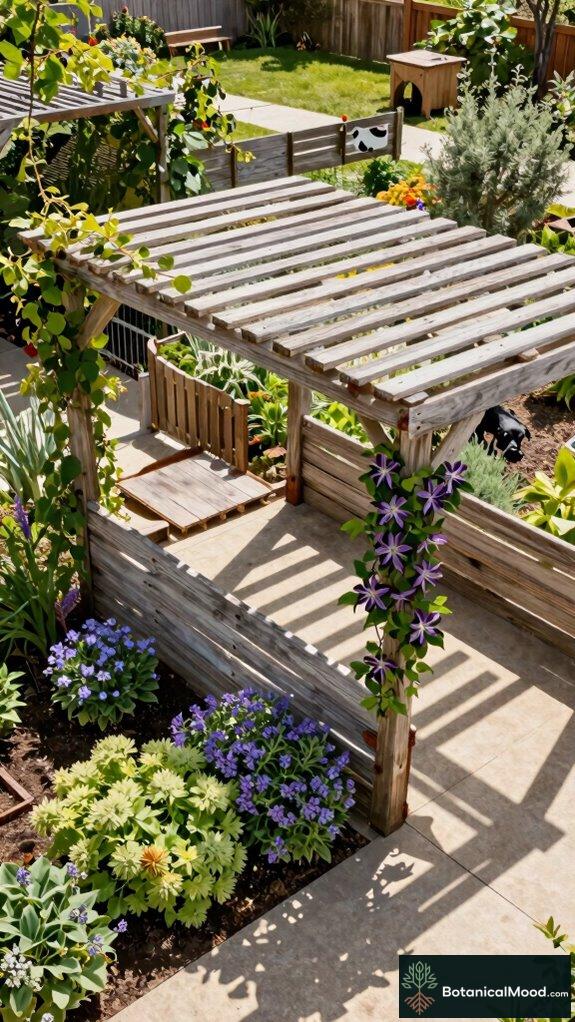
My approach centers on practical, cost-conscious structures that still read as intentional terrain features; I’ve built pet-friendly, air-swept pergolas from wooden pallets (Pallet Pergola, Shading Texas / Marygrove) that maximize breeze under open slatted roofs, while leaving space for creeping vines (Lonicera spp., Clematis spp.) and drought-tolerant plantings. In pallet designs, I prioritize knot-free boards, weathered finishes, and secure joinery, using basic DIY plans, galvanized screws, and rust-resistant brackets. These budget strategies pair with drought-tolerant companions like Sedum telephium and Nepeta cataria, creating durable, pet-safe microhabitats that age gracefully. By incorporating decorative dog-friendly fencing, you can further enhance the pet-centric aesthetic of your outdoor space while ensuring your four-legged friends have plenty of room to roam.
Portable Shade Options: Canopies, Sails, and Umbrellas for Flexibility
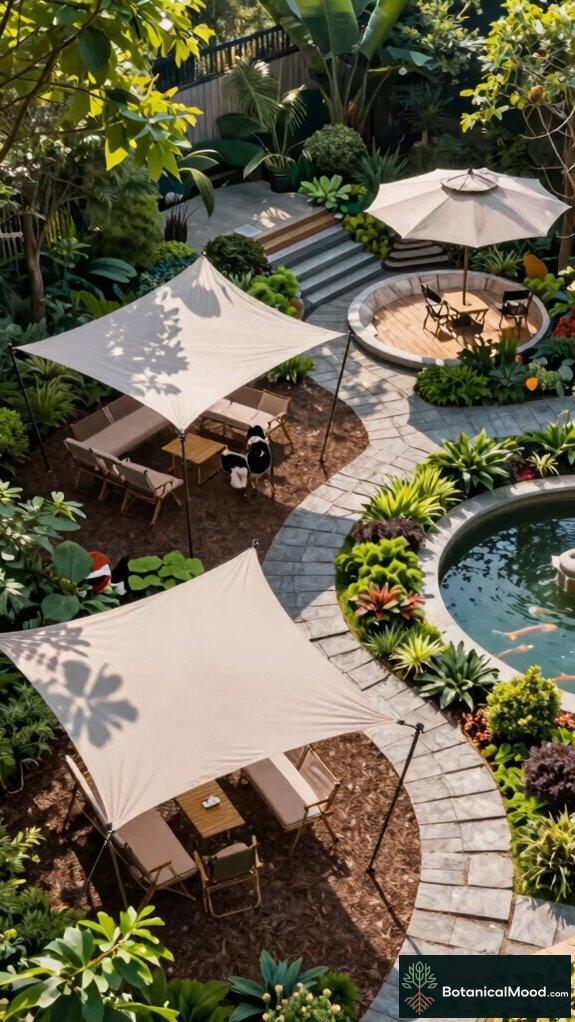
Portable shade options offer adaptable protection for pets and people alike, with canopies, sails, and umbrellas that are quick to set up, reposition, and store between uses; I’m drawn to how canopy flexibility and umbrella portability blend form with function in real gardens.
- Lightweight, weather-ready frames guiding breathy airflow over mulch and patio stones
- Triangular Sun Sail networks that span paths, inviting gentle dappled shade
- Cantilever and freestanding umbrellas enabling intimate seating nooks beside koi ponds
These choices pair UV-blocking fabrics with breathable fibers, enhancing outdoor rituals. Additionally, architectural shade sails provide a stylish and effective way to create shaded areas that can keep pets cool during hot days.
Ground-Level vs Elevated Comfort: Raised Cot Beds and Low-Profile Shelters
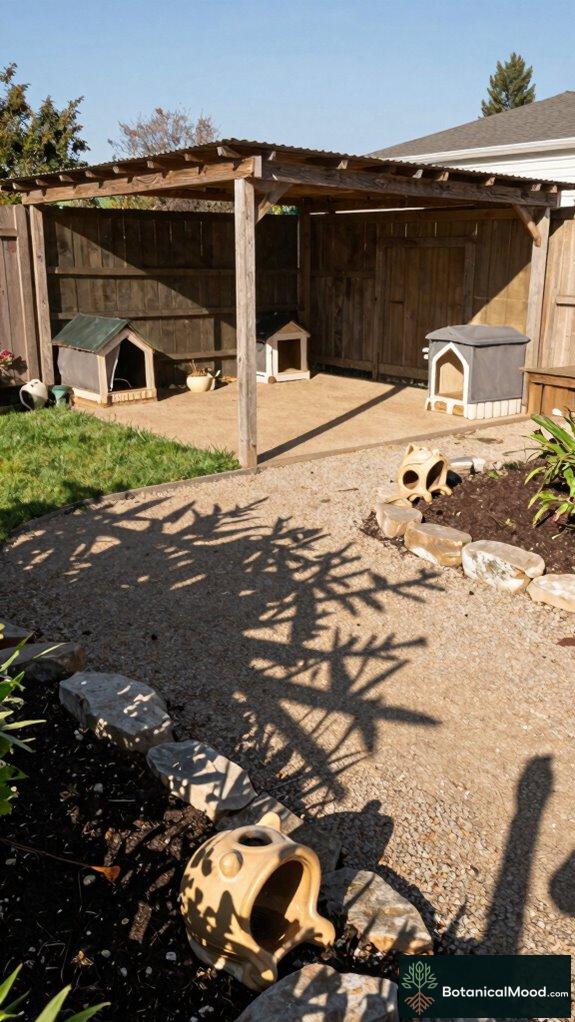
Ground-level comfort often prioritizes immediate accessibility and interaction with the outdoor environment, but elevated solutions like raised cot beds offer distinct advantages in pet handling and microclimate control that can be decisive in hot or uneven terrain.
I describe ground level comforts as intimate, tactile, and responsive to paw-sense; elevated advantages manifest as airflow beneath, shade canopy coordination, and simplified grooming passages. Raised cot beds from brands like Elevated Cot with Canopy (USA) enhance ventilation, while low-profile shelters with integrated drip edges reduce soil splash. One notable feature of some garden setups is incorporating ceramic toad houses, which can create inviting habitats for natural pest control.
Readers notice material durability, weathering, and ease of cleaning, aligning with garden design goals and humane enclosure layouts.
Breezes and Water Integration: Ventilated Shelters and Hydration Zones
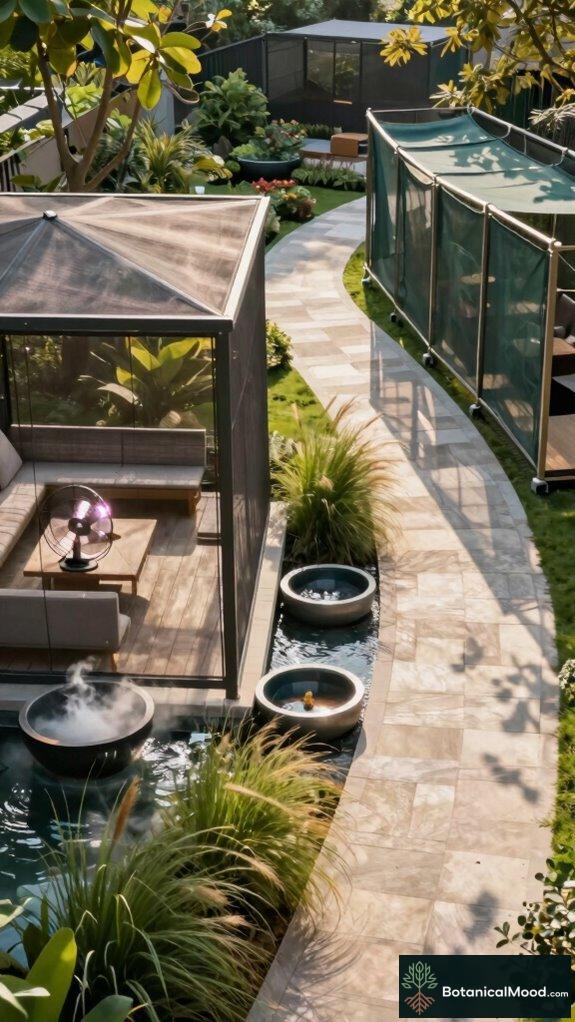
Breezes and Water Integration prove their value when ventilated shelters coordinate with hydration zones, enabling dogs and their people to enjoy outdoor time without overheating or dehydration.
I guide you toward shaded airflow and accessible refills, pairing ventilated shelters with clearly marked hydration zones, so canine comfort becomes a design signature.
- ventilated shelters mesh with misted basins, producing invigorating microclimates around seating
- hydration zones use elevated bowls and shaded casings, positioned at paw-height for quick drinks
- breathable fabrics, such as CoolNet™ and UV-blocked textiles, accompany wind corridors near paths
This approach blends ergonomics, shade, and thirst-quenching logic for serene outdoor moments. Additionally, incorporating solar powered fans enhances airflow, making shaded areas more comfortable for pets.
Safety, Maintenance, and Case Studies: Real-Life Setups and Best Practices
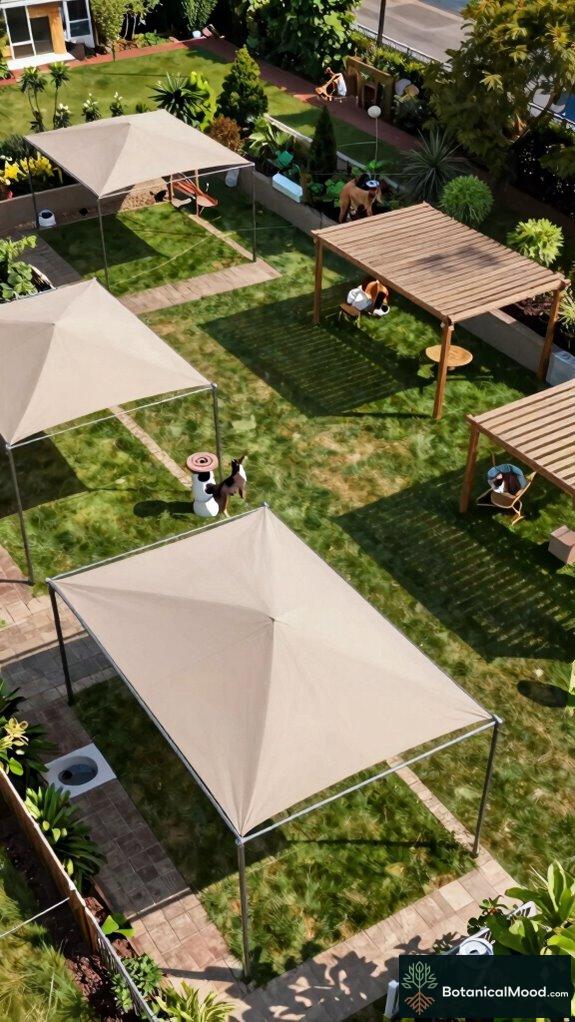
In this session, I’ll anchor safety, maintenance, and case-study viewpoints to real-world setups where shade structures meet rigorous upkeep and demonstrable outcomes.
I’ll draw on practical benchmarks from parks, pet-boarding yards, and community gardens that deploy UV-blocking canopies, retractable sun shades, and pergola systems to sustain canine comfort and owner confidence.
I’ll discuss shade safety, maintenance tips, and case studies with brands like USA Shade, Shade Systems Inc., Gyms for Dogs, and Sun Sails, noting materials (HDPE, CoolNet™), routines, inspections, and seasonal checks.
Additionally, I will cover documented outcomes, metrics, and observer notes from municipal dog parks and boarding facilities. Furthermore, monitoring your pet’s hydration is crucial, especially in warmer climates, as smart water sensors can help ensure they always have access to fresh water.
Harvesting Tree Shade Basics
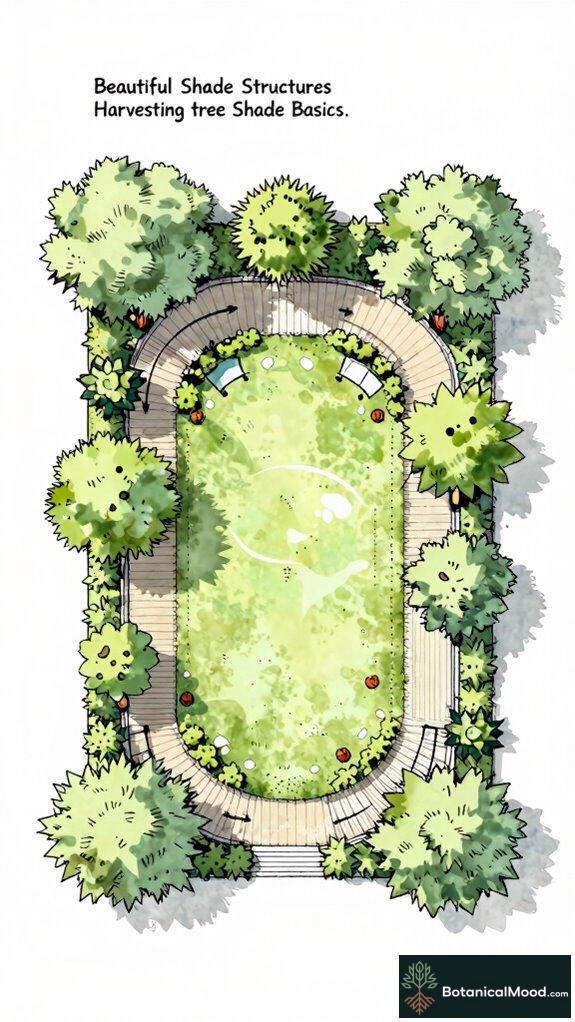
Strategic harvesting of tree shade begins with a measured understanding of how canopy architecture translates into microclimates for pasture, yards, and animal housing. Therefore, I evaluate species, growth rates, and sun paths to maximize cooling without compromising forage or visibility.
- Tree placement guides shade density across daylength, season, and wind patterns, shaping microclimates for livestock and pets.
- Canopy gaps filter light for preferred turf and forage growth, balancing photosynthesis with cooling heat loads.
- Basal spread and root architecture (Quercus alba, Fagus sylvatica) influence soil moisture, evaporation, and shelter integrity.
- Fast-growing trees can significantly enhance shade availability, improving overall comfort for pets and promoting their well-being during hot days.
FAQ
How Do Shade Structures Affect Dog Behavior and Exercise Patterns?
Shadows cradle my dogs like a whispered lullaby, and shade benefits bloom in their steps. I notice behavior enhancement, calmer play, and steady exercise impact, as comfort levels rise—their curiosity returns, and confident strides follow.
Which Materials Minimize Overheating During Peak Sun Hours?
I minimize overheating by using insulating materials and reflective surfaces, reader. I prefer breathable fabrics layered with shade, and reflective panels that deflect heat, so your pet stays cooler. I’m listening—tell me which setup feels closest to you.
How to Estimate Shade Need Based on Yard Orientation and Trees?
Ever wondered how to estimate shade need based on yard orientation and trees? I perform a shade analysis, mapping sun paths and tree placement, then tailor timing. I’ll guide you—intimately—toward cooler, shadowed comfort.
What Maintenance Practices Extend the Life of Outdoor Dog Shelters?
I maintain shelter designs by cleaning, inspecting, and repairing seams, hinges, and fabrics, because shelter designs matter for pet comfort. I seal UV fabrics, rotate sun exposure, and store extras to guarantee long-lasting, cozy, reliable shelter performance for you.
How Can Shelters Integrate Rain Protection Without Reducing Airflow?
Rain-proofing shelters can’t be easier, I swear—yet I keep airflow blazing. I’d blend drainage solutions with ventilation designs, so rain drains away while wind breathes through. You’ll feel intimate comfort, not soggy chaos, promise.
References
- https://www.usa-shade.com/project-category/parks-and-recreation/dog-park/
- https://www.shadingtexas.com/10-easy-dog-shade-ideas/
- https://shadesystemsinc.com/dogparks-and-petboarding/
- https://marygrove.com/backyard-shade-for-dogs/
- https://www.gymsfordogs.com/product-category/shade/
- https://www.pdsa.org.uk/what-we-do/blog/how-to-make-a-diy-outdoor-sun-shelter-for-your-pet
- https://www.youtube.com/watch?v=AhUa1qNEKuU
- https://shadyface.com/shadypaws
- https://www.epa.gov/sciencematters/throwing-shade-exploring-benefits-trees
- https://www.propagateag.com/blog/tree-shade-is-critical-for-grazing-animals