Ever tried turning your backyard into a dog‑friendly dig‑spot without ending up with a dusty mess? I’ve been there—my golden retriever once turned my patio into a sand‑storm, and I swore off “play sand” forever.
So I built a safe garden digging zone using washed play sand from Quik‑Sand (low‑dust, contaminant‑free), loamy soil from Miracle‑Grove, and pea gravel for drainage. I anchored everything with fir boards, laid a weed barrier, and added perforated underlayment with shallow sumps. The result? A comfortable, mud‑free playground that keeps my pup’s paws happy and my sanity intact.
Do you think it’s easy to balance texture, moisture, and durability? I’d love to hear your thoughts—there’s a lot more nuance than you’d guess.
—
Garden Design Tips for Dog‑Friendly Dig Sites: Real‑World Lessons
When I redesigned my garden for my border collie, I realized that aesthetics and function can coexist. I chose a raised edging of reclaimed cedar, which not only looked sleek but also prevented the sand from spilling onto the flower beds. Adding a rain‑garden basin collected runoff, feeding the surrounding lavender and rosemary—plants that are both scent‑friendly for dogs and low‑maintenance. I also installed a solar‑powered water fountain to keep the area moist without over‑watering. These tweaks turned a simple dig pit into a cohesive, eco‑friendly landscape that my dog loves and my neighbors admire.
Quick Takeaways
- Use a layered mix of washed sand, loose soil, and pea gravel for drainage, cushioning paws, and dig-friendly texture.
- Seal edges with fir boards and weed barrier to create stable, contained, and low-dust boundaries.
- Choose low-dust, non-toxic materials (play sand, safe mulch) to reduce inhalation and contact risks.
- Ensure proper drainage with perforated underlayment and shallow sumps to prevent water-logging and mud.
- Maintain safety via routine dust control, edge checks, and dated safety inspections for a durable pit.
Why a Safe Dog Dig Zone Matters
Creating a Safe Dog Dig Zone matters because it provides a controlled environment where your canine companion can indulge instinctual digging without exposing them to hazards, while you preserve surrounding lawns, plantings, and soil health. I want you to picture a dedicated pit framed by fir boards and pea gravel, a microcosm of order within the garden ecosystem. This zone offers health benefits through regular exercise and cooling cycles, while delivering behavioral enrichment via scent layers, varied textures, and predictable boundaries. In practice, choose clean play sand and safe mulch, monitor moisture, and maintain consistent supervision for ideal harmony. Additionally, incorporating safe digging materials can further enhance your dog’s digging experience while minimizing risks.
Criteria for Safe Dog Materials and Design
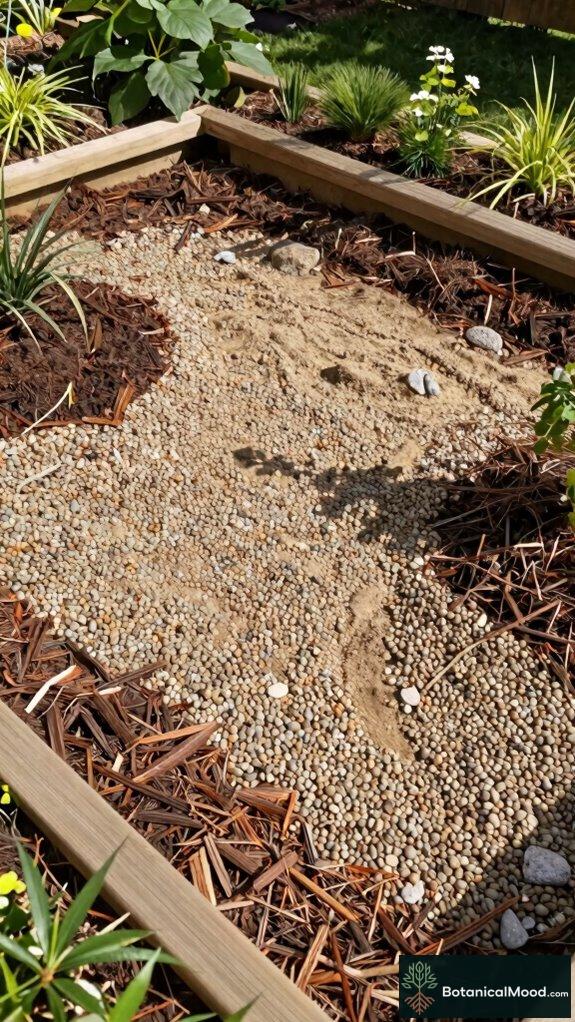
In selecting materials and designing a safe dog digging zone, I prioritize contaminant-free substrates, stable boundaries, and predictable moisture management that together minimize dust, ingestion risk, and paw wear.
Criteria assessment guides every choice, balancing porosity, drainage, and surface hardness against comfort and accessibility.
Material comparison reveals subtle differences: pea gravel (rounded, 2–8 mm) offers drainage with gentle paw impact; play sand (BS EN 1177 quality) minimizes dust yet requires moisture control; safe mulches (pine, cedar, fir, coco) deter ingestion but vary in tannin content and odor. Ensuring that the substrates are also cat-safe succulents prevents potential hazards in mixed-use areas.
I document brands, suppliers, and soil tests, then design with professional precision (Latin names included) for durable, safe habitats.
Safe Material Options: Sand, Soil, and Mulch
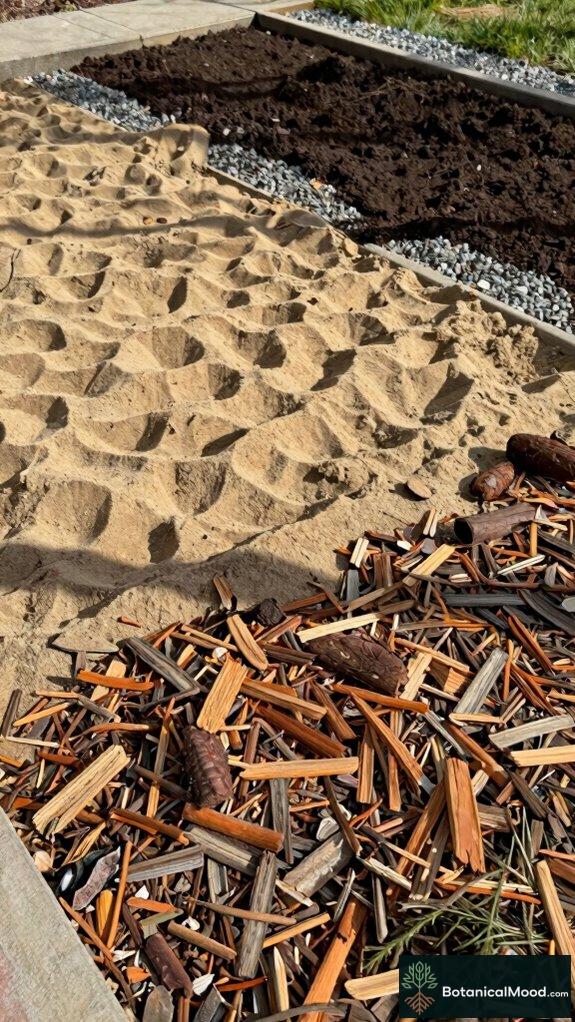
Safe material options hinge on three substrates that balance safety, usability, and maintenance: sand, soil, and mulch.
I address you directly, inviting careful choice as I describe each option in practical terms. For children’s play sand, I favor washed, dust-free blocks from reputable brands like UltraPlay or Play Sand Co., noting non-toxic, low-dust properties suitable for face and paw contact.
Loose soil offers dig-friendly ease, with amendments that blend with sand for stability. Pea gravel provides natural drainage and paw-safety benefits, while safe mulches—pine bark, cedar, fir, coco mulch (Cocos Nucifera)—offer surface durability and aroma.
Building the Pit: Layering, Containment, and Drainage
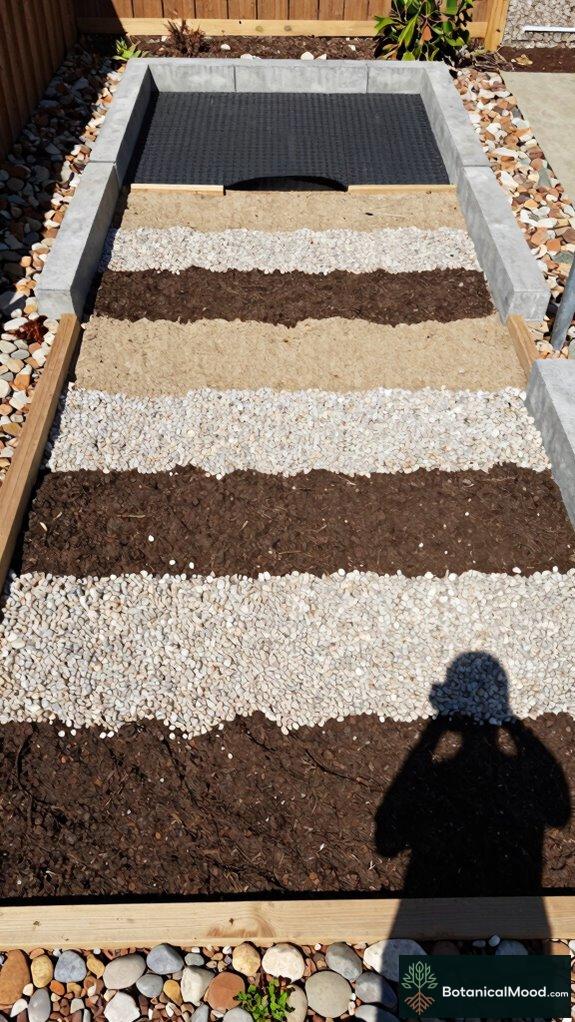
Building the pit starts with a precise layering plan that guarantees stability, drainage, and a safe digging surface; I lay out the sequence so you can visualize the mass, the density, and the proportion of each layer before any material goes in.
I describe layering techniques as I assemble sand, soil, and pea gravel with careful ballast, then seal edges with fir boards (2×10 in) and weed barrier fabric.
Drainage solutions include perforated underlayment and a shallow sump. Concrete blocks provide containment, while ground reinforcement uses landscaping stones and timber edging.
This method creates a predictable, safe, and accessible digging zone.
Maintenance and Safety: Keeping the Zone Clean and Inviting
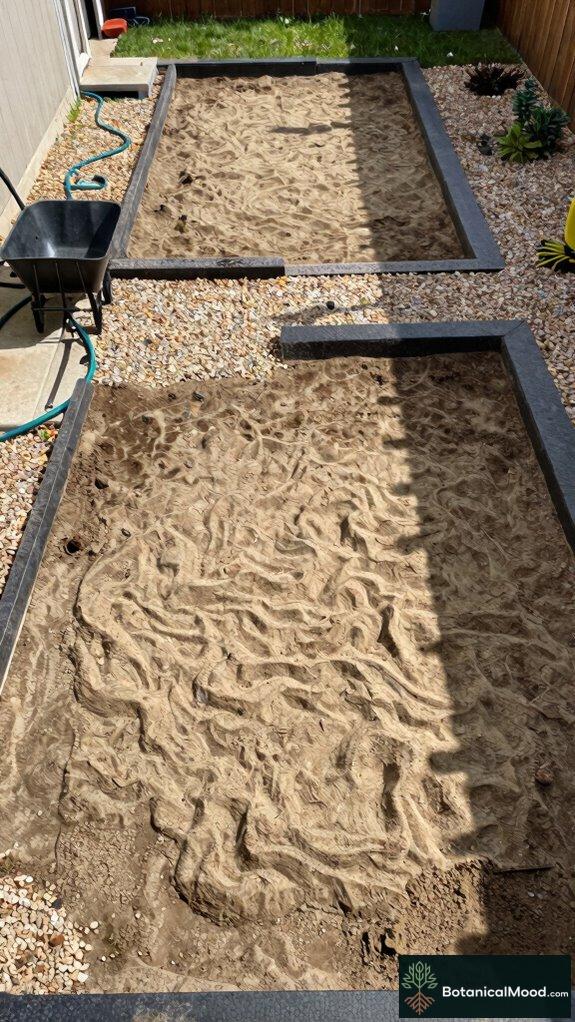
Setting a routine is essential to keep the digging zone clean, safe, and inviting. I supervise daily dust control, dampening schedules, and debris removal to maintain an even texture and consistent playability.
I emphasize cleaning routines that minimize dust clouds from play sand (CE EN 1177, if applicable) and pea gravel, while documenting safety inspections with date stamps, wear checks, and equipment logs.
I narrate maintenance steps to readers, noting PPE usage, hose-down durations, and weed-barrier integrity.
Regular assessments note edge stability, drainage, and shade patterns, ensuring a serene, pet-friendly habitat that invites ongoing exploration. Additionally, implementing specific cleaning products can help control odors caused by dog urine in grass areas.
Durable Substrate Layout Plan
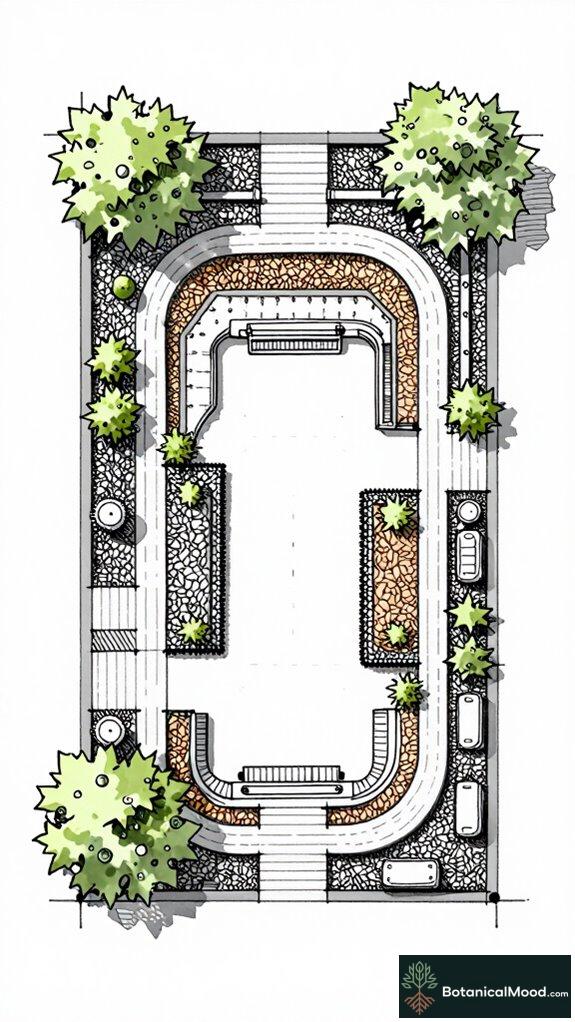
Selecting a suitable substrate requires balancing stability, drainage, and safety, so I start with a firm sub-base of compacted aggregate or crushed stone to guarantee excellent drainage and minimal heave. Then layer weed barrier fabric and old newspapers or geotextile to suppress weeds while preserving accessibility for maintenance checks.
- Durability-focused materials: crushed stone (limestone, 20 mm), geotextile beneath, weed suppression
- Drainage solutions: perforated drainage pipe, gravel interlayer, bottom filter fabric for longevity
- Sandbox alternatives: pea gravel, decomposed granite, clean play sand in measured volumes for safe dig zones
This layout emphasizes stability and accessibility, with professional-grade specs for ongoing care. Additionally, proper drainage solutions are essential to prevent water accumulation, ensuring a safe and enjoyable environment for your dog.
FAQ
How Often Should the Pit Be Refreshed With New Medium?
I refresh the pit every 2–4 weeks, depending on use, to keep it clean and inviting. I monitor digging frequency and adjust maintenance, adding fresh material as needed so your dog stays safe and curious during play.
What Signs Indicate Unsafe Materials Are Present?
If I spot unsafe substances and harmful debris, I panic a little and then check closely, because unsafe substances can lurk in mulch or sand; I’d test for dust, toxins, and foreign objects before letting my dog dig.
Can the Area Double as a Pet-Friendly Play Zone?
Yes, the area can double as a pet-friendly play zone, with playful markings guiding kids and dogs. I’ll plant pet friendly plants and guarantee soft edges, safe materials, and supervision for shared, cozy, intimate outdoor moments.
Which Tools Are Best for Regular Digging Zone Maintenance?
I’d say my go-to tools are different shovel types and targeted digging techniques; I keep a hand trowel for detail work and a sturdy scoop for efficiency, then use precise digging techniques to maintain a safe, tidy zone.
How to Recycle or Dispose of Old Digging Substrate Safely?
I recycle old digging substrate by composting safe organic portions, storing non-toxic mixes for future DIY projects, and disposing of contaminated material at local disposal sites; recycling tips emphasize separation, while safe disposal guarantees no pet exposure.
References
- https://www.piedpipersdogtraining.com/post/here-s-how-to-create-a-great-digging-pit-for-your-dog
- https://www.whole-dog-journal.com/behavior/solutions-for-a-dog-who-digs-the-yard/
- https://dontforgetthepets.org/guide-to-the-best-play-yard-ground-cover/
- https://britishdogfields.com/sand-pits-for-dogs-common-mistakes/
- https://www.datadrivendogs.com/digging-pit
- https://www.fox28spokane.com/build-your-dog-a-digging-pit/
- https://www.sheltermedicine.com/library/resources/what-are-your-preferred-substrates-for-dog-play-yards-if-grass-isn-t-an-option
- https://sheltermedicine.wisc.edu/library/resources/what-are-your-preferred-substrates-for-dog-play-yards-if-grass-isn-t-an-option
- https://hellogravel.com/best-material-for-a-dog-run-base-is-sand-a-good-option/