I thought my garden was a dog‑friendly sanctuary—until Baxter turned my roses into a chew‑toy.
I now carve eight gentle, dog‑friendly strategies into the garden’s daily rhythm. First, I line the digging zones with 2×4 timber edging (or steel yard edging) so anxious paws stay out of trouble. Then I lay tactile gravel paths that dampen digging impulses—because a little crunch is better than a shredded petal. I raise beds 18–24 inches, plant dense perennials like Phlox paniculata and Sedum spp., and install Gardena moisture sensors for steady hydration.
If you keep exploring, you’ll discover more design cues and plant palettes.
Have you ever watched a dog stare at a flower like it’s a forbidden snack? I have, and it’s both hilarious and heartbreaking.
I’m not claiming a flawless system—soil, weather, and canine curiosity are messy, unpredictable forces. But these tweaks have turned my garden from a battlefield into a calm oasis, and I’m still learning.
—
Garden Design Secrets: How I Turned a Chaos‑Prone Yard into a Dog‑Friendly Oasis
When I first moved into a 0.3‑acre lot, my Labrador’s energy turned my tulips into a demolition site. I started with a 2‑foot‑wide gravel walkway, edged with reclaimed cedar, which gave my dog a clear “no‑go” line. I added raised beds (20 inches high) filled with a mix of lavender, coneflower, and dwarf ornamental grasses—plants that are both fragrant and resilient. A drip‑irrigation system from Rain Bird kept the soil moist without overwatering, and a motion‑activated sprinkler surprised Baxter just enough to keep him away from the seedlings. The result? A thriving garden that feels like a sanctuary for both plants and pup, proving that thoughtful design can tame even the most enthusiastic digger.
Quick Takeaways
- Create dog-safe zones with digging boxes and 18–24 inch containment beds to channel digging away from flowers.
- Use dense plantings, raised beds, and natural barriers to shield blooms from paws and disturbances.
- Install clearly defined pathways with low-impact edging and tactile markers to guide dog movement.
- Implement consistent moisture control and soil health practices to reduce plant stress and maintain vitality.
- Schedule regular seasonal checks, adjust irrigation, and rotate maintenance to minimize disruptions and keep flowers thriving.
Dog-Proof Your Garden: Build Digging Zones
To dog-proof your garden, I start by partitioning the space into dedicated Digging Zones that redirect canines away from valuable plantings, using clearly defined borders and durable materials like 2×4 timber edging or steel yard edging to create 18–24 inch containment beds. I describe dog behavior with calm, practical terms, linking garden enrichment to safe soil turnover and structured exploration. You’ll notice tactile boundaries, gravel pathways, and sunken mulch rings that dampen digging impulses. In dense beds, Latin names like Rosa rugosa (R. rugosa) and Camellia sinensis frame the plan, guiding maintenance, irrigation, and pet-safe routines. Adding digging boxes in these zones can provide your dog with a safe outlet for their natural instincts while keeping your garden intact.
Assess Your Space: Goals, Foot Traffic, and Dog Habits
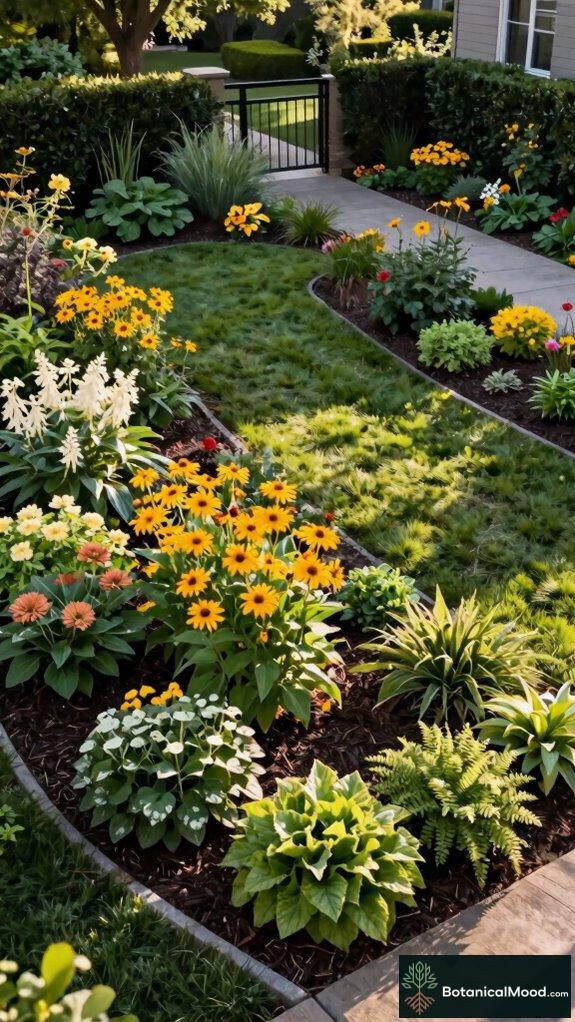
Evaluating the space starts with a clear map of goals, foot traffic patterns, and dog habits, because understanding how people move and how canines explore informs every design choice from planting palettes to barrier placement.
I share flower goals, prioritizing resilient color schematics in beds with sun exposure (Helianthus annuus, Hemerocallis) and shaded understories (Astilbe, Ferns).
In a traffic assessment, I note gate openings, path widths, and scent-marking zones, then adjust access and sightlines.
I track digging habits, delineating digging zones with mulch borders; space evaluation evolves with seasonal shifts, irrigation runs, and pet behavior data.
Core Design Principles for Dog-Friendly Beds
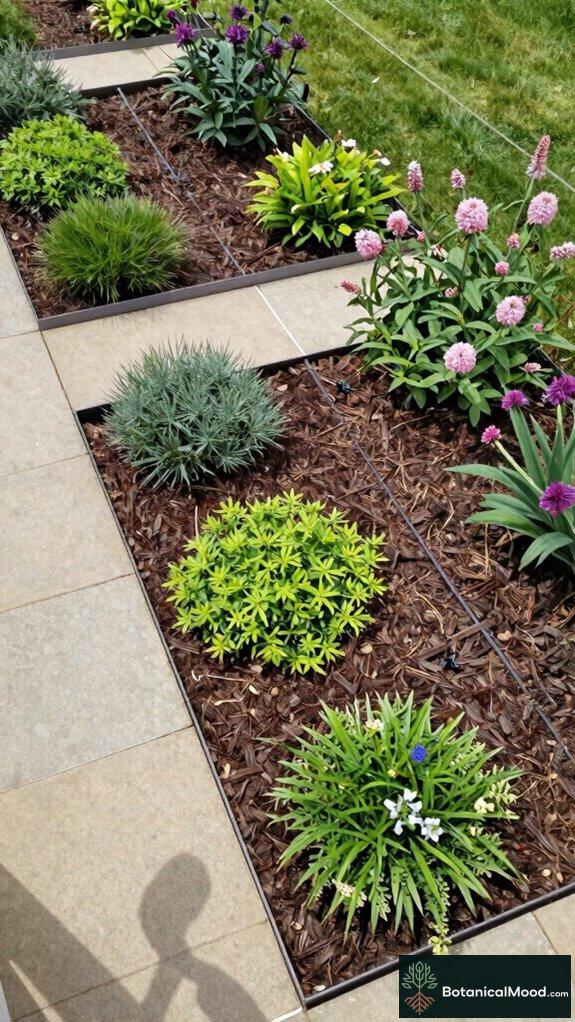
For dog-friendly beds, I prioritize resilient structure, predictable maintenance, and tactile contrast, selecting plants and layouts that tolerate trampling while still delivering color and textural interest.
I guide readers toward low-traffic pathways, durable mulches, and beds edged with steel or stone to contain dig zones, while integrating water-wise perennials like Phlox paniculata and Sedum spp. to reduce repair needs.
Emphasizing flower textures and scent varieties, I favor foliage cadence, repeated bloom motifs, and layered heights.
In professional terms, consider Lamiaceae and Asteraceae groupings, Latin nomenclature in parentheses, and brand choices such as Gardena irrigation systems for consistent moisture control.
Plan and Place Integrated Digging Zones
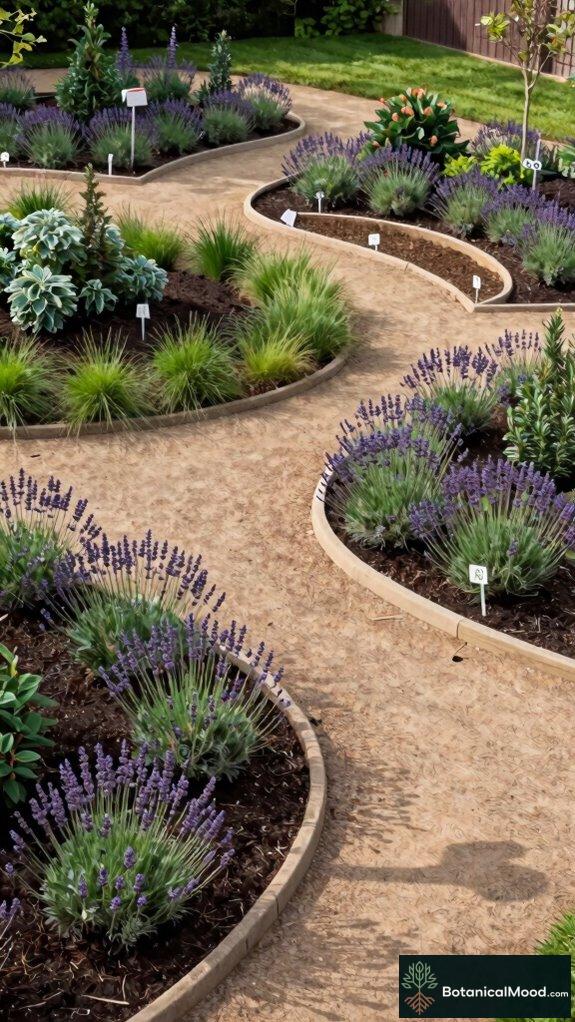
Efficiently planning where digging zones sit within a dog-friendly bed starts with mapping the site’s traffic patterns, soil profiles, and sun–shade mosaic.
Then layering protected zones around main plant masses to contain activity without breaking visual unity. I design flower bed layouts that emphasize clear access paths, mulch barriers, and permeable edging, using digging zone strategies that neighbor perennial borders (Lavandula angustifolia, Rosmarinus officinalis) with defined footprints.
I label soil horizons (A, B, C) and reference brands like Espoma and Miracle-Gro for consistent amendments. The approach blends aesthetic balance, practical durability, and plant health, guiding readers toward cohesive, resilient, pet-safe environments. Additionally, incorporating natural grass alternatives can provide a suitable surface for dogs while preserving delicate flower beds.
Paths, Borders, and Visual Cues to Guide Dogs
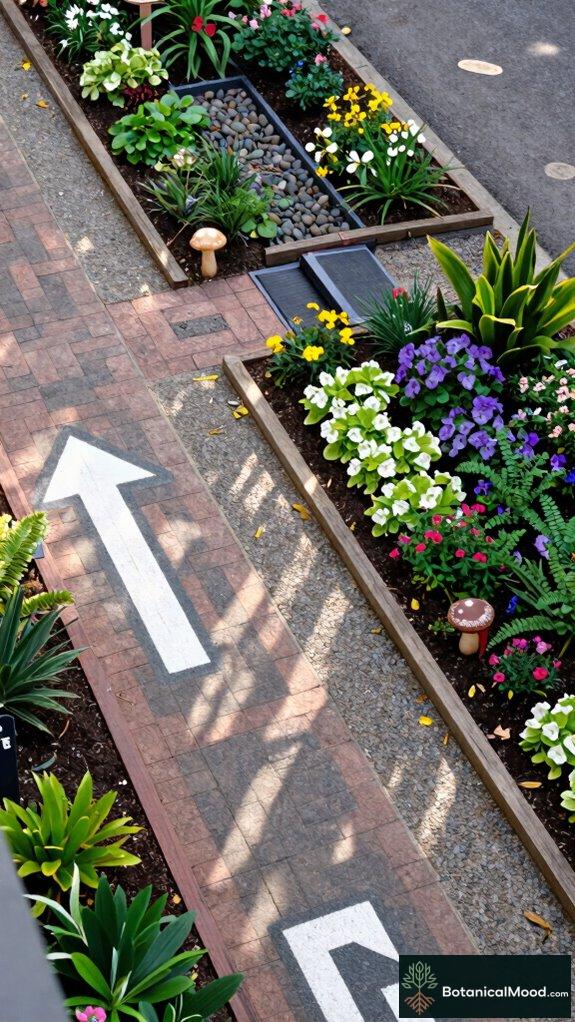
Paths and borders in a dog-friendly beds are best organized as a disciplined sequence of clearly defined travel corridors, low-impact edging, and high-contrast visual cues that guide dogs with confidence while preserving ornamental cohesion.
I speak to you as a fellow gardener, sharing practical dog pathways and visual markers that tolerate daily foot traffic.
Consider brick pavers, river stone, or timber edging (Cornus florida, Camellia sinensis) to delineate routes. In beds, install tactile mushrooms and UV-painted arrows for late afternoon guidance.
Use durable labels from labels from GardenWorks or Gardena, ensuring persistent visibility for paws and noses alike. Additionally, incorporating portable pet steps can provide extra support for senior dogs navigating your garden spaces safely.
Dog-Safe Plant and Material Choices
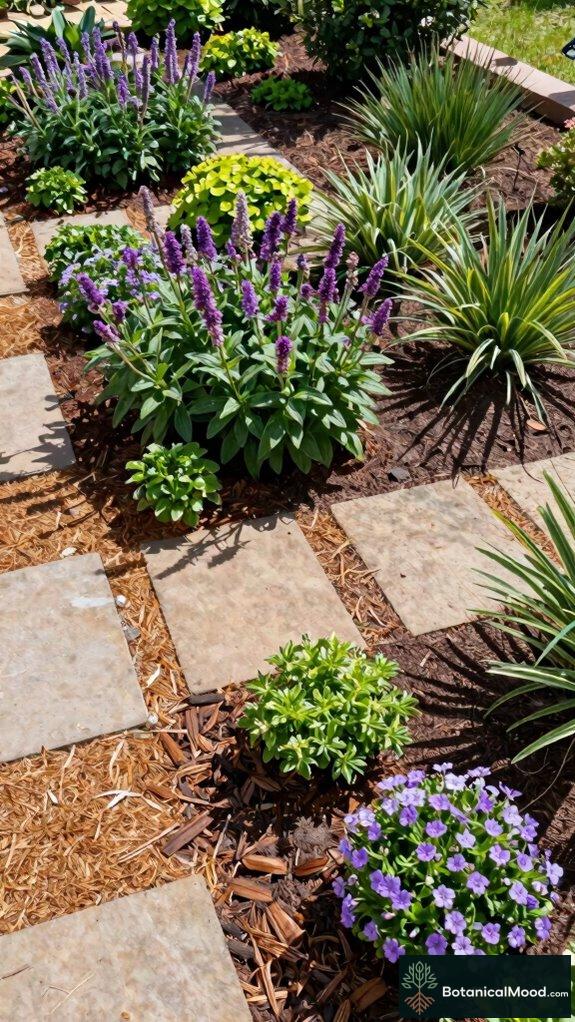
Choosing dog-safe plant and material choices means prioritizing species and substrates that deter chewing, resist digging, and tolerate routine pet traffic without losing form or color.
I guide you toward canine friendly perennials and durable groundcovers that meet these criteria, like Agastache (AGASTACHE) and Nepeta (NEPETA), while avoiding aggressive nibble temptations.
For mulching, I favor safe mulch alternatives such as shredded hardwood or coconut coir over cocoa mulch, protecting paws and noses.
I describe sunlit borders with Liriope muscaria and Festuca glauca, paired with wheel-friendly paths by flagstone and bark chips, ensuring navigable, serene, resilient spaces. Additionally, selecting native plants that are known to be safe for pets can enhance the overall safety of your backyard environment.
Maintenance Routines for Long-Lasting Deterrents
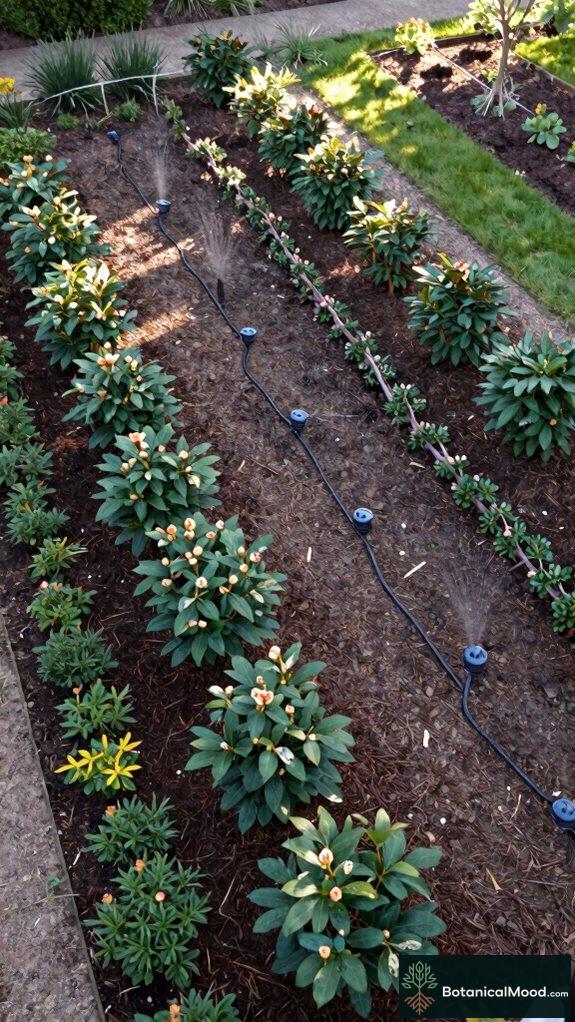
Maintaining long-lasting deterrents requires a disciplined routine that preserves potency while minimizing environmental impact.
So I schedule regular inspection and upkeep that align with seasonal shifts and plant growth patterns. I share notes on flower preservation, checking persistence and residue, while calibrating repellents to avoid phytotoxicity around Camellia (Camellia sinensis) and Rosa spp.
I monitor water balance, ensuring consistent moisture without soggy beds, using drip irrigation and mulch to sustain soil structure.
I record product brands like Dr. Earth and Espoma, and reference field data from Purdue Extension experts, horticulturists, and experienced garden designers. Additionally, integrating thorny plants like barberry and holly can create a natural barrier that deters intruders while enhancing the garden’s aesthetics.
Troubleshooting: Common Issues and Quick Fixes
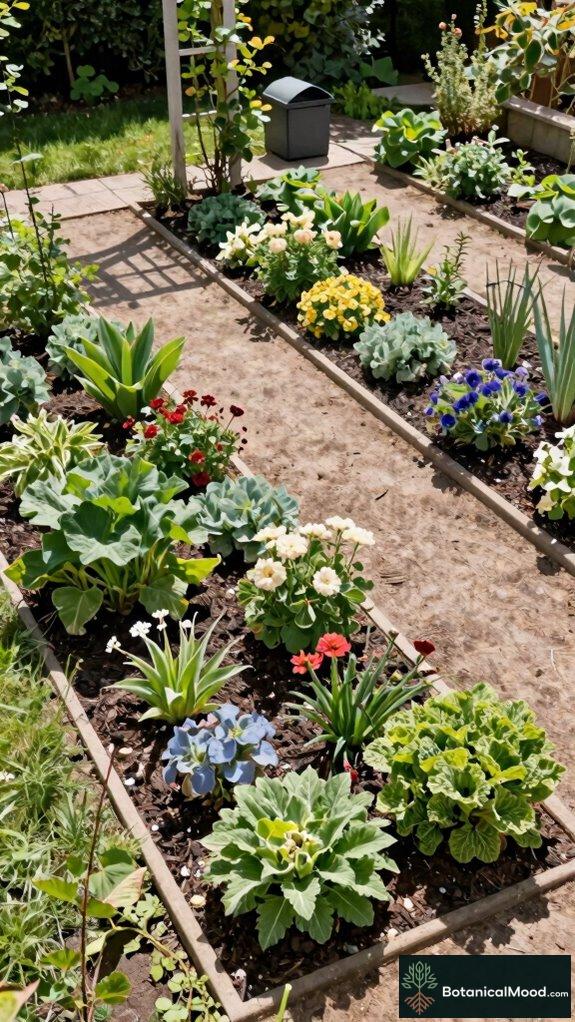
Common issues in flower care often stem from inconsistent moisture, sun exposure, and nutrient balance.
So I start by diagnosing symptoms such as yellowing foliage, edge burn on petals, or stunted development, then trace them to root zone conditions, timed irrigation, or soil fertility.
I guide you through adjusting watering intervals, mulching with pet friendly mulch to stabilize moisture, and selecting resilient flower selection hybrids like Rosa × rugosa or Lilium (l.) candidum for better vigor. Edible flowers can also provide a burst of color while being safe for your pets to explore in the garden.
When issues persist, test soil pH, amend with organic compost, and re-evaluate sun exposure, drainage, and container size for healthier blooms.
Strategic Plant Borders Reduce Dog Intrusion
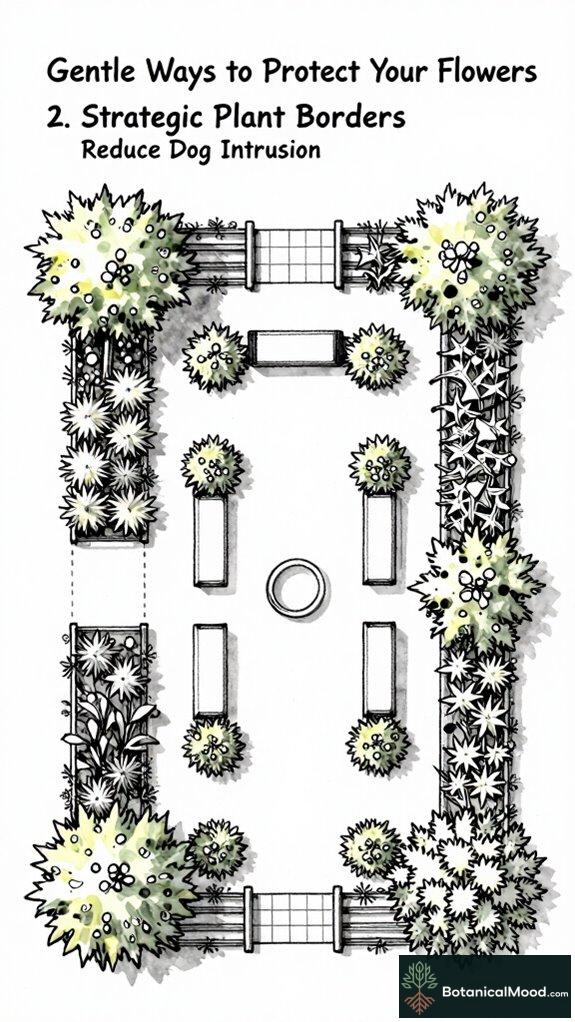
Strategic border design transforms a garden into a living deterrent, pairing form with function to guide canine movement while preserving aesthetic coherence. I craft low profiles with short fences and borders, creating a clear boundary that dogs read instinctively. Boundary awareness Uniform fence materials reinforce recognition, while raised beds and two-to-three-foot empty borders disrupt patrol routes, reducing intrusion. Dense plantings of hardy shrubs and perennials shield vulnerable taxa, with circular or semi-circular metal supports signaling off-limits zones. Charming dog-friendly willow fencing offers both visual appeal and practicality, enhancing the overall garden design. Fence materials, barrier design, combined with dog-safe choices like Astilbe (Astilbe spp.) and Echinacea, yield resilient, tranquil surroundings.
FAQ
What Scents Deter Dogs Without Harming Plants?
Alluding to Orpheus guiding with scent, I’d say my scent profiles rely on natural repellents that deter dogs without harming plants; I trust citrus peels, vinegar, and rosemary oil as gentle, effective options.
Which Soils Best Deter Digging in Flower Beds?
I’ve found that certain soils deter digging best: mulched beds with deeper mulch layers, and soils at slightly acidic to neutral pH, keep roots content and dogs curious but elsewhere. mulch types and soil pH matter, I promise.
How to Manage Weather Effects on Deterrent Effectiveness?
Weather conditions change deterrent effectiveness, but I adjust daily: I rotate deterrent materials, reapply after rain, and shield beds during heat waves; I listen to forecasts and tune materials to keep blooms secure and confident.
Are There Safe, Temporary Deterrents for Puppies?
Puppy distractions pause puppy investigations; I reassure you with safe, simple, temporary deterrents. I’ll share container solutions that work, I speak softly, and I suggest subtle, solid strategies you can trust, today.
How to Measure Success of Digging Zones Over Time?
I measure digging zones by digging patterns and observing success indicators: fewer disturbances, quicker restoration, and steady plant growth. I track footprints, root recovery, and bloom quality, updating weekly to guarantee ongoing harmony and intimate, lasting garden protection.
References
- https://www.mayesh.com/blog/how-humidity-impacts-flowers-a-practical-guide-for-florists
- https://mitchamflorist.co.uk/blog/unearth-3-easy-strategies-to-protect-the-elegance-of-your-flowers/
- https://www.1800flowers.com/articles/flower-facts/how-to-preserve-your-flowers
- https://elifesciences.org/articles/81449
- https://pmc.ncbi.nlm.nih.gov/articles/PMC5333139/
- https://flowersstanmore.co.uk/blog/3-foolproof-methods-to-keep-your-flowers-lush-and-lovely/
- https://onlinelibrary.wiley.com/doi/full/10.1111/ele.13576
- https://www.environment.fhwa.dot.gov/env_topics/ecosystems/Pollinators_Roadsides/BMPs_pollinators_landscapes_hi-rez.pdf
- https://digitalcommons.usu.edu/cgi/viewcontent.cgi?article=1715&context=wdmconference
- https://extension.psu.edu/petscaping-creating-a-pet-friendly-garden/