Ever thought a hedges could be the bodyguard for your furry friend?
I’ve turned my backyard into a canine‑friendly fortress, and it’s a wild ride.
I planted Emerald Green Arborvitae (Thuja occidentalis ‘Emerald Green’) as the evergreen spine—always on point, never wilted.
Camellia and Osmanthus fill the mid‑canopy with perfume that even the neighbor’s cat envies.
Pyracantha’s thorns act like a prickly security guard, keeping nosy critters at bay.
Spacing? 12–18 inches apart, then I watch the growth sprint from year 1 to 3.
Prune after bloom, mulch with pet‑safe bark, and—voilà—layers of bite‑proof screens.
Surprises? My dog started digging for “extra snacks” in the denser patches, proving I need to tweak density.
Do you ever wonder if a hedge can out‑smart a mischievous pup? I do, and I’m still learning the art of balance.
—
H2: Designing a Pet‑Safe Garden Oasis with Layered Hedges
When I revamped my garden last summer, I mixed functional design with a dash of drama. I paired the evergreen Arborvitae with a low‑lying lavender border—its scent deters pests and soothes my nerves. A winding stone path leads to a shaded nook where my dog naps under a canopy of Osmanthus, its blossoms releasing a subtle, calming aroma. I added a small water feature, because every garden needs a splash of personality, and the gentle sound masks the occasional bark. The result? A harmonious space where texture, color, and scent play together, proving that a well‑planned garden can be both beautiful and pet‑proof.
Quick Takeaways
- Recommend dense, pet-safe species like Emerald Green Arborvitae, Boxwood, Osmanthus, Camellia, and Pyracantha for secure, layered hedges.
- Space plants 12–18 inches apart to promote quick crown fusion and thick, escape-proof growth.
- Use summer pruning of side shoots and late-winter thinning to maximize density and containment.
- Reinforce with mulch, early staking, and optional chickwire to boost hedge vigor and security.
- Monitor for signs of escape—soil movement, bark rubbing, and scent markers—and adjust density and fencing as needed.
Core Criteria for a Dog-Proof Hedge
A dog-proof hedge hinges on a triad of dense structure, durable materials, and vigilant spacing that prevents escapes while remaining safe for canine companions. I’m talking about core criteria that shape hedge aesthetics and influence pet behavior, from species choice (Osmanthus, Camellia, Arborvitae) to practical mechanics. The goal is layered density, thorny or tight-foliage interlocks, and reliable anchoring, with spacing close enough (12-18 inches) for rapid canopy cohesion. Materials must endure sun, wind, and wear; avoid toxic taxa for pets. Garden fence panels designed for deterring dogs can complement natural hedge barriers for enhanced security. Monitor growth, prune for lateral branching, and guarantee established access control, using brands like Monrovia as reference points.
Dense Hedge Options for Perimeter Security (Dog-Friendly Species)
Dense hedge options for perimeter security prioritize species that fuse rapid canopy closure with thorny or tight foliage, creating a near-impenetrable barrier without compromising pet safety.
I speak to you as a fellow gardener, sharing dog friendly varieties that maximize hedge density and safety. Os tmanthus and Pyracantha (Yukon Belle®) present dense growth, while Camellia cultivars contribute evergreen walls; barberry adds thorny accents for reinforcement.
I consider hedge density, spacing, and compatible companions like Emerald Green Arborvitae (Thuja occidentalis) for screening. Boxwood shrubs offer exceptional versatility for creating secure borders while providing dappled shade without toxicity concerns for canine companions. Together we design resilient, pet-safe borders that mature gracefully, reducing escape risk and elevating outdoor appeal.
How Close to Plant for a Truly Dog-Tight Hedge (Spacing & Establishment)
Spacing for a truly dog-tight hedge starts at the ground and proceeds upward with disciplined patience: plant seedlings or transplants (12–18 inches apart) so their crowns fuse quickly. Then monitor growth through the first two to three growing seasons, pruning side shoots in summer to encourage dense lateral branching. I emphasize ideal spacing to maximize canopy continuity, aligning spacing with species-specific growth rates (Camellia, Osmanthus, Pyracantha) and establishing an establishment timeline of 2–3 years before full animal-tight performance is reached. Early staking, mulching, and weed control support vigor, while chickwire reinforcement accelerates uniform wooding and resilience. If your pet enclosure includes climbing areas, ensure any nearby plants are safe for cats to prevent accidental ingestion of toxic foliage.
Seasonal Pruning for a Stronger Barrier
Seasonal pruning refines a hedge’s barrier by shaping growth at predictable intervals, coordinating with each species’ intrinsic rhythm to enhance density and animal containment. I speak to you softly, guiding pruning techniques that balance vigor and form, promoting seasonal benefits like denser crossings and tighter junctions while maintaining plant health. Based on species, I favor strategic cuts after flowering or dormancy, thinning crowded shoots, and reinforcing vertical structure for dogs’ paths. Well-maintained hedges provide decorative fencing alternatives that blend security with aesthetic appeal for dog-friendly garden spaces. Visual guide below illustrates timing, targets, and tools for Camellia, Osmanthus, and Pyracantha, with notes on tool cleanliness and wound sealing.
| Timing | Targets |
|---|---|
| Post-bloom / late winter | Basal shoots, interior clearance |
| Summer | Thinning, lateral reinforcement |
Layering Hedges: Thorny Mixes Plus Dog-Friendly Backups
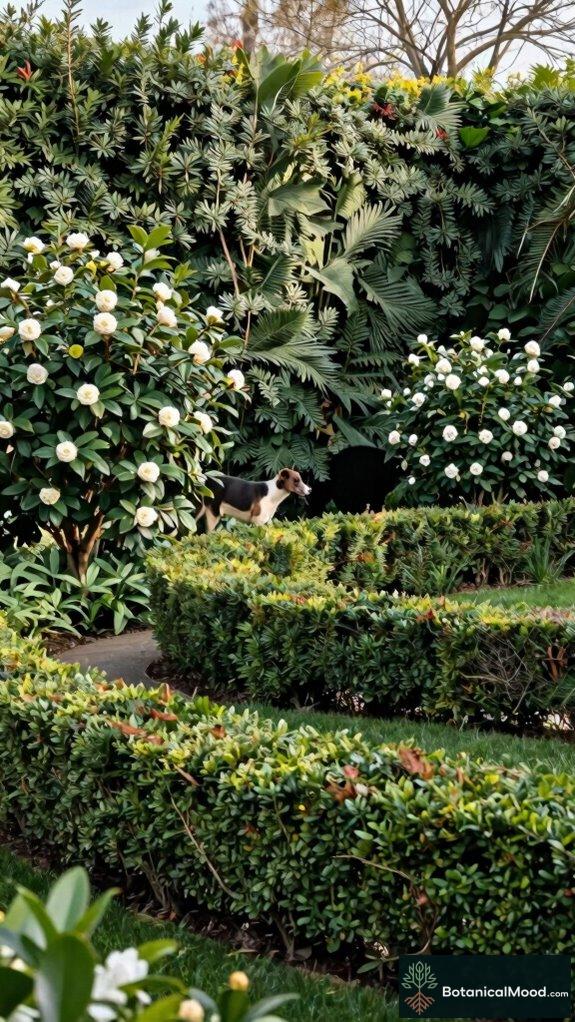
Layering hedges becomes a strategic craft when thorny mixes provide security while dog-friendly backups preserve usability and biodiversity in the environment.
I guide you through layered screens where Prunus spinosa (Sloe) thorns mingle with Osage-orange (Maclura pomifera) and Camellia spp., building depth, texture, and deterrence.
Layering hedges relies on staggered heights: 6–8 ft backbone, 4–6 ft mid layer, and 2–3 ft groundcover, with thorny backups like Pyracantha coccinea and Berberis spp. for perimeter reinforcement.
Pair with dog-safe companions such as Osmanthus fragrans and Camellia japonica to sustain bloom, scent, and creature comfort. Positioning these layered barriers strategically—similar to how wall mounted bird feeders create vertical space away from ground predators—keeps cats at distance while maintaining an accessible garden environment for your pets.
Supplemental Safeguards: Integrating Wire and Fences With Hedges
Integrating wire and fencing with hedges creates a layered security system that respects both form and function, so I start by surveying the hedge’s growth habits and the boundary’s geometry to determine where a discreet mesh or rigid barrier will reinforce the canopy without eroding the hedge’s density.
| Element | Purpose | Effect |
|---|---|---|
| wire reinforcement | creates taut support | prevents sag and escape routes |
| fence integration | aligns with hedge line | preserves aesthetics |
| plant compatibility | avoids shade conflict | maintains vigor |
| irrigation overlap | sustains moisture | reduces stress |
wire reinforcement, fence integration, hedge cohesion.
Dog-Friendly Hedge Species Spotlight (Monrovia Examples)
Monrovia’s dog-friendly hedge offerings showcase a curated lineup where dense foliage, dependable vigor, and manageable mature sizes contribute to practical, aesthetically pleasing boundaries for pet-focused gardens.
I guide you through resilient selections: Camellia benefits, Osmanthus characteristics, Shrub Rose care, Fringe Flower growth, Arborvitae features, Cypress uses, Pyracantha attributes, all rooted in Monrovia stock (Camellia, Osmanthus, Loropetalum, Thuja).
These choices provide year-round structure, soft winter interest, and blocking density; barriers blend with lawn and path edges.
I emphasize disease resistance, zone specifics, and compatible pruning windows, ensuring tranquil boundaries that welcome family activity while preserving privacy, color, and canine safety.
Year-by-Year Maintenance Plan (Years 1–3) to Secure the Boundary
To establish a robust, animal-safe boundary within three years, I’ll guide you through a precise, year-by-year plan that emphasizes dense, dog-friendly hedges, strategic pruning, and reinforced containment. For optimal results, consider integrating poultry fencing rolls designed for secure garden boundaries to complement your hedge structure. I narrate with intimate detail about hedge growth, spacing, and pruning cycles, citing Camellia, Osmanthus, and Arborvitae (Thuja occidentalis) as anchors, and noting hedge growth rates, irrigation rhythms, and soil amendments. Expect soil testing, compost top-dressing, and mulch layers to sustain vigor. Pruning focuses on lateral branching, reinforcing containment with buried mesh, and predictable clip schedules. Document results, observe scent of Laurus nobilis microclimates, and adjust maintenance frequency to preserve density while dogs explore safely.
| Year 1 | Year 2 |
|---|---|
| Year 3 | Maintenance frequency: quarterly checks |
Troubleshooting Escapes: Signs Dogs Test the Hedge and Fixes
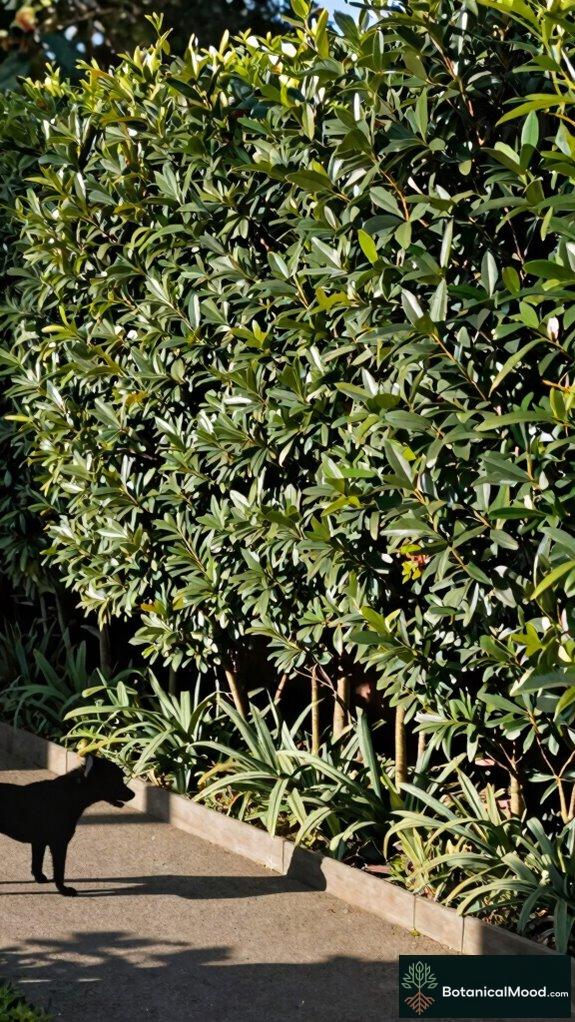
Escapes begin as subtle testings: a determined dog years toward the hedge, pressing for a foothold where the dense foliage should hold, and you’ll notice bark rubs, bent shoots, or a telltale groove at the base where the soil has softened from repeated contact.
I observe behavioral triggers, such as tail wag bursts, paw scraping, and scent markers near perimeter nodes, signaling breach risk along escape routes.
Tightening density with Osmanthus (Osmanthus × fortunei), Camellia, and thorny mixes, plus reinforced bottom fencing, reduces risk.
Monitor shifting soil, prune lateral growth, and adjust mesh for persistent challengers. Selecting the right pruning shears ensures clean cuts that promote dense hedge growth and maintain the structural integrity needed to withstand repeated canine pressure.
Dense Hedge Width Planning
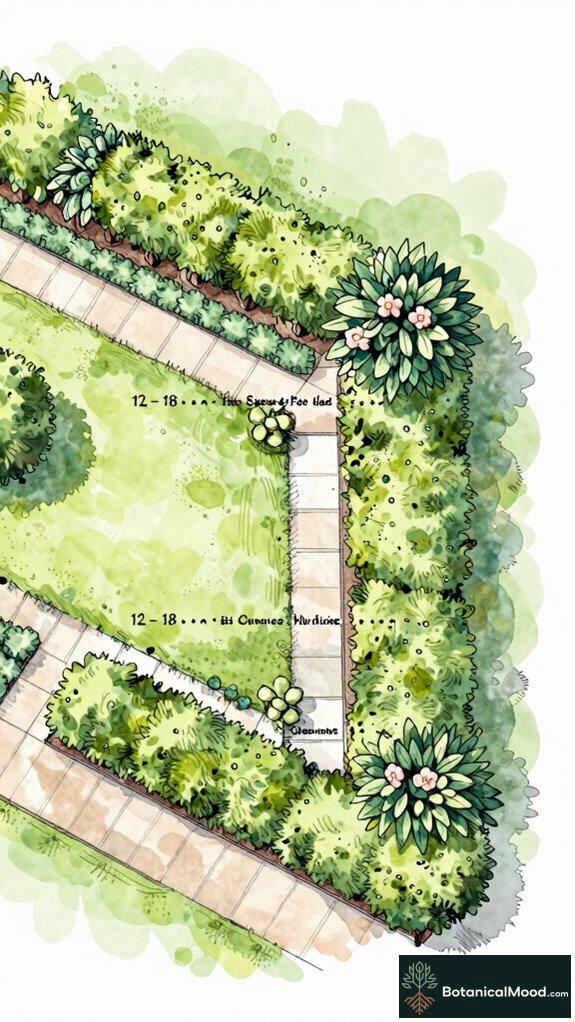
I design dense hedges with precise spacing to optimize barrier density while preserving plant health and air circulation. For seedlings and transplants, I space 12-18 inches on center to encourage rapid lateral growth and seamless canopy formation, selecting combinations such as Camellia × japonica and Osmanthus × fortunei to weave a continuous wall.
Dense Hedge Width Planning informs hedge maintenance and planting techniques, guiding pruning cycles, spacing decisions, and species pairing for year-round density.
I document metrics: growth rate, canopy width, leaf texture, and pest pressure, aligning with Monrovia cultivars, Camellia, Osmanthus, and Pyracantha benchmarks for durable, dog-friendly borders.
Pet-Safe Mulch Options
Pet-safe mulches provide a critical balance between weed suppression, moisture retention, and kid- and canine-friendly safety, especially when paired with dense hedges like Camellia (Camellia japonica) and Osmanthus (Osmanthus fortunei) to create a cohesive, low-toxicity barrier system.
I share practical choices that align with thoughtful design, prioritizing pesticide-free, organic options, and durable textures. Pet safe mulch avoids cocoa, dyed chips, and split logs, favoring shredded hardwood, pine fines, and straw blends.
Organic options like cocoa-free bark mulch, coconut coir, and leaf mold enrich soil while discouraging gnawing curiosity. I emphasize layering, drainage, and seasonal replenishment for lasting garden serenity.
FAQ
How Long to Establish a Truly Dog-Tight Hedge Start-To-Finish?
It takes about 2–3 years to become truly dog-tight. I stay patient, prune regularly, and mix dense hedge varieties with thorny elements; maintenance tips include consistent spacing and monitoring. Stay committed; your hedge will reward you with security.
Which Thorny Mixes Deter Dogs Without Harming Them?
I’d say thorny mixes deter dogs if chosen thoughtfully, prioritizing dog safety, hedge maintenance, and elegant garden design; I personally blend barberry and prickly pyracantha with careful spacing, mindful pruning, and humane barriers to protect curious pups.
What Minimum Planting Density Ensures Immediate Barrier Integrity?
Dense hedges can block exits in 2–3 years if planted every 12–18 inches. I’m telling you this: for immediate barrier integrity, choose hedge varieties with rapid preliminary growth, and follow planting tips diligently.
Can Hedges Alone Fully Contain Dogs or Require Secondary Fencing?
Yes, hedges alone can’t fully contain all dog breeds; I’d combine hedge height with secondary fencing for most breeds, because some dogs test boundaries. I’ll tailor height and barriers to your specific dog breeds and yard.
What Mulch Is Safest Near Dog-Friendly Hedges Year-Round?
Honestly, the safest pick is organic mulch, because it’s organic mulch benefits—yet I know you’ll wonder if it’s too tempting. I’d say choose bark or cedar, lightly layered, year-round, and monitor for chew bites.
References
- https://www.monrovia.com/be-inspired/create-a-dog-friendly-backyard-landscape.html
- https://www.houzz.com/discussions/2227628/is-there-any-living-hedge-that-a-dog-cannot-get-through
- https://www.youtube.com/watch?v=XFnh6MboWgM
- https://myfarmlife.com/2012/bull-strong-hog-tight/
- https://www.youtube.com/watch?v=k-AzGWpDYDE