Lavender hack for pet owners: I swear my dog’s calm is a myth—until the diffuser runs.
I pulse a low‑intensity diffuser 20‑30 min, 3‑6 ft from the bed.
I dab diluted Lavandula angustifolia on inner ears with a sterile swab—never eyes.
I swap washable, certified liners every 3‑4 days for fresh scent.
I lock indoor plants in sealed trays, because chewing is a pet’s favorite sport.
I confine fragrance to predictable paths; canine sensitivity is wildly variable.
I’m still learning, and honestly, it’s a messy, rewarding experiment.
Garden Design Tips: Pet‑Safe Lavender Oasis
I turned a backyard corner into a lavender sanctuary, using low‑growth varieties, raised beds, and pet‑proof edging. The scent lingered, and my cat finally stopped knocking over pots.
Quick Takeaways
- Use dog-safe, pure Lavandula angustifolia lavender oil only with careful dilution and intact skin—avoid eyes, nose, and broken areas.
- Apply diluted lavender to low-friction spots (e.g., inner pinnas) using a sterile swab, then monitor for redness or head shaking.
- Diffuse lavender briefly, 20–30 minutes, with the diffuser 3–6 feet from bedding; pause and repeat only if the dog seems calm.
- Add lavender scent to bedding with washable, pet-safe materials, using removable covers changed every 3–4 days.
- Keep lavender plants and oil access controlled: elevate planters, use guards, prevent soil chewing, and watch for allergy symptoms.
Is Lavender Oil Safe for Anxious Dogs?
How safe is lavender oil for an anxious dog, especially when you’re considering a topical application?
When I advise readers, I emphasize controlled lavender dosage and skin integrity first. I never improvise amounts, because canine sensitivity varies by coat, inner pinnas thickness, and prior irritation.
A precise topical regimen can be safer when you dilute appropriately and avoid broken skin, eyes, and mucosa. If you’ve measured 0.18 mL for the inner pinnas of both ears at 8:30, I still recommend monitoring closely for redness, itching, or head shaking.
Lavender’s calming effects come from compounds that, at high exposure, may backfire, so confirm the product’s purity and (Lavandula angustifolia) origin. Dog-friendly gardens should feature only lavender varieties that have been verified as safe for pets before introduction to your landscape.
Lavender Diffuser: Safe Setup and Timing
When you set up a lavender diffuser for a calmer home environment, I want you to treat it like any other dose-controlled plant essential oil application, because air exposure can still irritate sensitive pets if you run it too long or too strong.
I follow lavender dosage guidelines, start with a minimal fill, and choose a ceramic or ultrasonic model placed 3–6 feet from bedding and litter zones.
I diffuse for 20–30 minutes, then pause, repeating only if I observe relaxed breathing and no eye or nose rubbing.
This approach extends lavender scent duration while keeping Ocimum (Lavandula angustifolia) volatiles controlled.
Topical Lavender for Dogs: Dilution Rules
I follow dilution ratios that keep total lavender oil extremely low, then I choose application methods that target low-friction surfaces and avoid mucosa. For example, at 8:30, I diluted 0.18 mL lavender oil into a carrier and applied it to the inner pinnas of both ears, using a sterile cotton swab, then I track for redness, warmth, and shake-lick behavior.
When selecting lavender varieties for your pet’s environment, prioritize dog-friendly lavender plants to ensure safety through exposure to naturally occurring compounds rather than concentrated oils. This approach minimizes the risks associated with topical applications while still allowing your dog to benefit from lavender’s calming properties in a gentler form.
Lavender-Scented Bedding: Pet-Safe Use
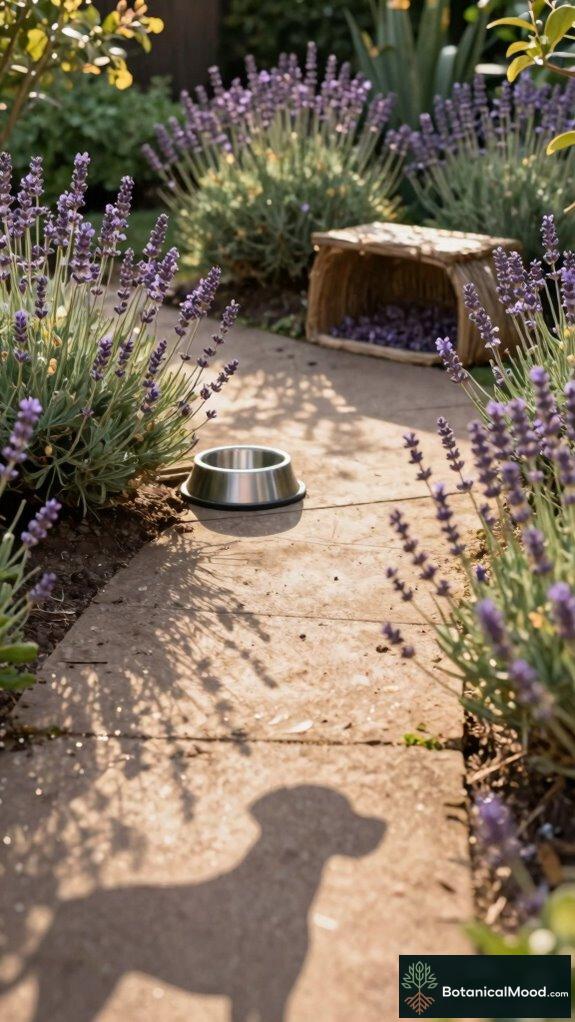
Lavender oil on skin needs tight control, so I carry the same dose-and-contact mindset over to sleep zones, choosing lavender-scented bedding only when I can keep exposure predictable and pet-safe.
Look for certified, fragrance-bottled cottons, wool, or bamboo liners from brands that list ingredients and avoid undisclosed essential blends.
I use removable pillow protectors, then wash on a steady schedule, typically every 3–4 days, because calming scents fade fast yet can linger in fibers.
For airflow, I place bedding near a low-traffic draft, not closed crates, so lavender benefits stay gentle, consistent, and measurable.
Lavender Plants Indoors: Keep Pets Safe
Indoor lavender (Lavandula angustifolia) thrives on bright windowsills, but pet safety starts with how you set up the planters and where you place them, because inquisitive cats and dogs can mouth leaves, stems, and flowers even when the plant looks “ornamental” and tidy. I elevate pots on wall shelves, add clear plant guards, and keep runoff trays sealed to reduce chewing incentives, while recalling indoor plants can still trigger pet allergies in sensitive pets.
| Setup | Why it helps | Watch for |
|---|---|---|
| Shelf height | Limits access | Mouthy behavior |
| Guard ring | Blocks stems | Scratched soil |
| Sealed tray | No drips | Soggy media |
I monitor leaves for wilt, and I avoid any unknown lavender oil exposure.
Related Pet-Friendly Garden Proucts
When you plan a pet-aware garden, the right accessories matter as much as the plant choices, because they control access, contain odors and runoff, and reduce the chances your cat or dog will mouth foliage or tracked soil; that’s why I pair lavender (Lavandula angustifolia) with targeted, pet-friendly garden products like bite-resistant nursery pots, modular plant guards, and soil-safe deterrent mats.
I treat each item as part of a complete “contain-and-protect” system rather than a standalone purchase.
For lavender pest control, I choose perforated, sealed-bottom planters to keep roots tidy, plus removable mesh cages for transplants. During hot weather, cooling mats for pets provide comfortable resting spots near your lavender plantings while keeping your pets safe from heat stress.
If I use lavender essential oils, I only deploy them through scent diffusers labeled pet-safe, never direct sprays.
For persistent odor issues in high-traffic pet areas, garden lime pellets offer an effective solution that complements your lavender plantings by neutralizing ammonia and other odorous compounds without harming your pets.
Lavender Around Pet Paths
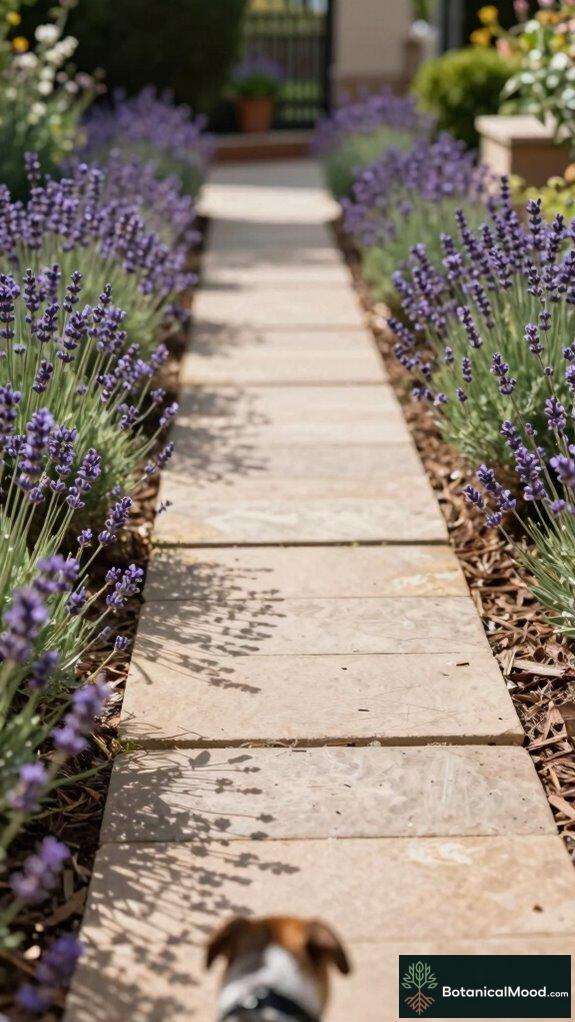
Pet paths benefit from a controlled, aromatic border that looks tidy while discouraging curiosity at the ground level. I build that effect by planting (Lavandula angustifolia) in narrow swales alongside high-traffic walkways.
The low, evergreen mounded habit lets the mulch stay clean, while the silvery foliage and purple wands read as precision backdrop edging. I also stagger plants 18–24 cm apart, so airflow dries leaves after irrigation, reducing fungal pressure.
As you observe, lavender benefits appear as calmer, less investigatory pet reactions, especially when paths channel dogs onto a consistent, scent-guided route near gates and doormats. Creating a calming lavender haven with outdoor incense burners can further enhance your pet’s sense of relaxation along these pathways. Safe aromatic plants like lavender create multi-sensory garden experiences that engage pets while maintaining their wellbeing throughout your landscape design.
FAQ
How Soon Should My Dog Show Improvement After Lavender Topical Use?
You’ll usually see improvement within 24–48 hours after the lavender topical application, but I can’t promise. Like dawn after dark, mild relief comes first; deeper comfort may take several days. Stick to lavender dosage advice, and call your vet.
Can Lavender Oil Be Used on Puppies or Senior Dogs?
Yes, but I treat lavender usage carefully: I follow lavender dosage guidelines and consider puppy safety concerns, since young or senior dogs can be more sensitive. I never apply essential oils near ears without vet guidance; dilute and patch-test first.
What Signs Mean I Should Stop Lavender Use Immediately?
Stop lavender use immediately if your pet shows lavender toxicity symptoms: head shaking, redness/swelling, hives, excessive drooling, vomiting, lethargy, or breathing trouble. For topical application, especially ear drops, rinse promptly and call your vet.
Is Lavender Safe for Dogs With Sensitive Skin or Allergies?
Yes—lavender can be risky for dogs with sensitive skin or allergies; I wouldn’t assume safety. I’d patch-test diluted, stop if irritation happens, and explore lavender alternatives like chamomile or vet-approved soothing sprays for gentler lavender benefits.
Can I Combine Lavender With Other Calming Aids Safely?
Yes, you can combine lavender with other calming aids cautiously; about 70% of animal owners report calmer pets after aromatherapy. I follow lavender dosage guidelines, use one aid at a time, and watch for side effects, guided by calming effects research.
References
- https://pubmed.ncbi.nlm.nih.gov/19496667/
- https://dogbehavior.it/dogbehavior/article/view/185
- https://www.vinevida.com/blogs/our-blog/lavender-essential-oil-for-dogs-what-are-the-benefits
- https://natureslogic.com/blog/is-lavender-safe-for-dogs/
- https://apupabove.com/blogs/all/is-lavender-safe-for-dogs
- https://pmc.ncbi.nlm.nih.gov/articles/PMC10135126/
- https://www.aspca.org/news/essentials-essential-oils-around-pets