My cats think I’m a cat‑toxic‑free greenhouse.
I stick to non‑toxic genera—Echeveria, Haworthia, Sempervivum—while steering clear of Aloe vera, Crassula, Euphorbia, Kalanchoe, Senecio.
I mix pumice‑rich soil, use terracotta pots with screens, keep saucers bone, and give them bright shade to full sun.
I place them on high shelves or hanging planters, use high‑rimmed containers, and watch for drooling or lethargy—because cats are honest critics.
I once caught my tabby sniffing a Sempervivum and then sprinting away, convinced it was a new toy. That tiny drama reminded me how crucial proper placement and non‑toxic choices are.
I’m still tweaking the setup—maybe a bit more grit, maybe a shade cloth—because perfect safety feels like a moving target.
—
Garden Design Tips for Cat‑Friendly Succulent Spaces
I turned my balcony into a cat‑proof succulent garden using raised, slatted shelves and matte‑black terracotta pots. The layout blends modern minimalism with practical safety: pumice‑laden soil, bright indirect light, and a sprinkle of decorative stones. I added a tiny water feature for visual interest, and the cats now lounge nearby, content but not destructive. This design balances aesthetics, pet safety, and low‑maintenance gardening.
Quick Takeaways
- Choose clearly cat-safe succulents like Echeveria, Haworthia, and Sempervivum to reduce poisoning risk.
- Avoid toxic lookalikes such as Aloe, Crassula, Euphorbia, Kalanchoe, and Senecio, and keep suspected latex plants out.
- Use a mineral-forward, fast-draining cactus mix with pumice/coarse grit, plus terracotta pots and empty saucers.
- Place plants on secure high shelves or closed enclosures, and hang trailing sedums away from walkways.
- Monitor for nibbling symptoms (vomiting, drooling, lethargy) and buy from reputable nurseries for correct plant identification.
Cat-Safe Succulents to Choose First
When you’re building a cat-safe succulent collection, start with varieties that stay non-toxic and fit your light and watering habits, because a healthy layout matters as much as plant choice.
I pick (Echeveria) for rosette form and vivid mineral tones, (Haworthia) for zebra-striped geometry in compact planters, and (Sempervivum) for resilient “hens and chicks” groundcover that tolerates seasonal swings. Sempervivum varieties excel as winter-hardy outdoor succulents that maintain their non-toxic properties even through harsh freezing temperatures.
Then I layer in (Graptopetalum) and (Sedum) for textured edges, and I tune placement near windows or ledges.
For Variety highlights, I rotate colors seasonally, and use Propagation tips like Sempervivum offsets for rapid, low-stress expansion.
Using pet-friendly potting mixes designed specifically for succulents ensures your feline companions won’t be exposed to harmful components while maintaining optimal drainage and soil health for your plants.
Avoid Toxic Succulent Varieties for Cats
Even after you pick great cat-safe succulents like (Echeveria), (Haworthia), and (Sempervivum), I still recommend you scan for toxic genera before you buy or pot a single rosette, because many common “easy” plants can cause more than mild mouth irritation if your cat chews them.
In safe gardening, I watch for alarming common symptoms—vomiting, lethargy, incoordination, or drooling—especially from (Aloe vera), (Crassula), (Euphorbia), (Kalanchoe), and (Senecio).
- Read labels, check (Euphorbia) latex risk
- Keep (Agave) and (Sansevieria) out of reach
- Hang potential drool magnets away
- Source from Mountain Crest Gardens or Fantastic Gardens
Light, Soil, and Drainage Setup for Healthy Growth
To help your cat-safe succulents (Echeveria), (Haworthia), and (Sempervivum) stay compact, richly colored, and rot-free, I set up their light exposure, gritty soil, and drainage before I pot a single rosette, because these plants rely on fast water movement and steady “bright but not scalding” conditions.
I place pots in bright shade to full sun, then I engineer soil composition: a mineral-forward mix of pumice, coarse grit, and cactus/succulent blend, finished with a thin top dressing.
For drainage solutions, I use terracotta, add a screen over the hole, and keep saucers empty, so roots never sit in water. I’ve replicated this with Mountain Crest Gardens starters.
Placement Tips to Keep Succulent Leaves Out of Reach
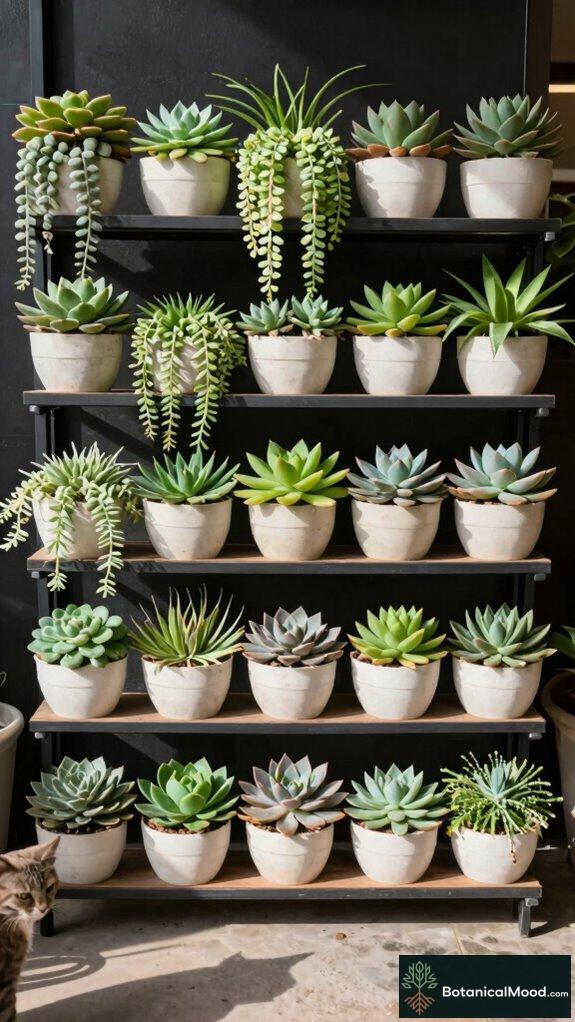
After you pot cat-safe rosettes like (Echeveria), (Haworthia), and (Sempervivum), I treat placement as the first line of defense, because even non-toxic fleshy leaves can still tempt nibbling, and chewing can cause GI upset.
I design smart shelf arrangements and hanging planters, so curious paws can’t reach rims, trailing stems, or offset rosettes. I also rotate containers weekly to spot early paw-marks. Pet-friendly sedum varieties offer additional low-maintenance options that combine visual interest with safety for your feline companions. These winter-resilient succulents thrive outdoors while remaining safe for cats to be around.
- Lift heights above 6 ft and use closed shelves
- Cluster by light needs, not by aesthetics
- Hang (Sedum morganianum) away from walkways
- Seal pot bases with non-slip liners
Where needed, I add netting around supports for clean, repeatable access control.
Related Pet-Friendly Garden Proucts
When I’m building a cat-safe succulent space, I shop with “related products” in mind, because the right potting accessories and placement aids help prevent nibbling and reduce stress on the plants, even when they’re non-toxic varieties like (Echeveria), (Haworthia), (Sempervivum), and (Graptopetalum).
I like pet friendly planters with high rims, wire baskets, or self-watering inserts, paired with gardening tools that make handling precise, like small trowels, long-tip tweezers, and micro-drainage scoops. These hardy succulents thrive in winter conditions while remaining completely safe for your feline companions.
For sources, I check Mountain Crest Gardens and Fantastic Gardens, then calibrate spacing with L-shaped pot stands, using free-shipping thresholds on Mountain Crest Gardens when possible. Choosing the right succulent potting mix ensures proper drainage while keeping your plants and cats healthy.
Raised Beds With Cat-Safe Mulch
Building raised beds for my cat-safe succulent space starts with the mulch layer, because it directly affects moisture retention, weed suppression, and how easily I can keep curious noses from reaching tender foliage; I design mine so the succulents—(Echeveria), (Haworthia), and (Sempervivum)—sit on a fast-draining substrate while the top zone stays tidy, cool, and non-inviting. Just as pet-friendly herbs offer safe sensory enrichment for cats on balconies, choosing the right mulch creates a non-toxic environment where feline curiosity can be indulged without risk.
- Choose cat friendly mulch: pine fines, shredded bark, or cypress alternatives, no rubbery dyes.
- Stack 1–2 inches, leaving a gravel collar at stems for raised bed benefits.
- Keep edges high, so whiskered paws can’t dig into roots.
- Reapply after dry spells, targeting 30–40% less weed germination.
I source mixes from Mountain Crest Gardens, then test drainage using a 1-minute soak.
FAQ
How Can I Tell if a Succulent Is Cat-Safe Before Buying?
I tell you: before buying, I verify cat friendly varieties with a trusted pet-safe list and check plant toxicity details on labels or sites. I avoid “unknown” listings, and I read symptoms charts for common irritants.
What Symptoms Should I Watch for if My Cat Chews Leaves?
If your cat chews leaves, watch for drooling, vomiting, lethargy, loss of coordination, low heart rate, and appetite changes; some cases can look mild at first. If you see these, remove plant, rinse mouth, and call your vet fast.
Can Cat-Safe Succulents Survive Frequent Indoor Temperature Changes?
Yes—many cat-safe succulents tolerate temperature resilience, but sudden swings stress them. I keep them near stable windows, adjust watering during indoor climate changes, and use fast-draining soil. Haworthia and Sempervivum handle it best.
Which Succulents Propagate Fastest and Safest Around Pets?
I’d choose fastest propagators that stay pet-friendly: Sempervivum offsets, Haworthia pups, and Sedum cuttings. These fast growing species spread quickly, while Echeveria and Graptopetalum pups/root easily. Keep them in cat-safe placement, avoiding toxins.
Are Hanging Planters Enough, or Should I Add Barriers?
Hanging planters alone often aren’t enough: many cat tests show nose-and-paw reach is surprising. I’d install hanging planter installation plus simple barriers. I use layered plant placement strategies—higher shelves, clear pet-proof rails.
References
- https://www.gardenia.net/guide/are-succulents-poisonous-to-cats
- https://mountaincrestgardens.com/blog/succulents-for-cats-dogs-safe-or-toxic/
- https://www.youtube.com/watch?v=zO2xpwZYvUk
- https://planetdesert.com/blogs/news/cat-friendly-plants-top-34-easy-to-care-for-nontoxic-varieties
- https://succulentsbox.com/blogs/blog/toxic-and-non-toxic-succulents-for-pets
- https://fantasticgardensofli.com/collections/pet-friendly-plants-succulents
- https://mountaincrestgardens.com/pet-safe-succulents/