I’m always amazed how a simple bag can feel like a superhero cape for my garden waste.
I switched to ASTM D6400/EN 13432 compostable bags after a nasty leak ruined my truck’s floor.
They hold damp hedge trimmings, tomato (Solanum lycopersicum) and lavender (Lavandula angustifolia) clippings like a fortified vault.
No centuries‑long plastic nightmare—these liners dissolve into humus in 90‑180 days, sparing the neighborhood from black‑streak residue.
I love the clean stations, but I admit I’m still figuring out the optimal fill level; it’s a delicate balance.
—
Garden Design Secrets: Compostable Bags Boost Aesthetic Flow
I once redesigned a community garden using compostable bags for waste collection, pairing them with sleek, recycled‑plastic bins.
The bags’ reinforced base stopped odors, letting visitors enjoy rosemary, sage, and ornamental grasses without a whiff of decay.
Integrating them with drip‑irrigation zones and mulched pathways created a seamless, eco‑friendly aesthetic.
The result? A vibrant, low‑maintenance space that felt both modern and responsibly grounded.
Quick Takeaways
- They help yard waste break down properly in municipal or industrial composting, typically in 90–180 days.
- Biodegradable/compostable bags reduce contamination risks compared with plastic liners that leave persistent fragments.
- Reinforced compostable liners handle damp materials and fit carts smoothly, cutting rebagging and workflow delays.
- They lower odor and leakage by containing wet leaves and clippings more effectively than thin plastic alternatives.
- Many professional programs require compliant liner types, so using approved bags avoids rejected waste and improves capture rates.
Why Professional Gardeners Choose Biodegradable Garden Waste Bags
When I’m managing beds, borders, and leaf-heavy cleanups across a season, I choose compostable biodegradable garden waste bags because they solve the practical mess—without undermining the soil outcome I’m aiming for.
In pro workflows, like municipal green-bin staging in May and September, I need sustainability practices that support waste reduction and keep material intact, so I don’t waste time tipping, rinsing, or rebagging.
Reinforced Ecolastic-style compostable liners handle damp Quercus leaves and clipped weeds, fit snugly in commercial carts, and reduce odors.
I rake straight in, toss whole into the compost ring, and rely on rapid microbial conversion of (Quercus rubra) litter into stable humus. For pet owners, composting dog waste safely requires dedicated systems to prevent contamination while maintaining nutrient-rich soil.
For high-traffic dog runs and active garden areas, natural grass alternatives prevent muddy patches while maintaining a sustainable landscape design that complements both ornamental beds and functional outdoor spaces.
Compostable vs Biodegradable vs Plastic: What’s the Difference?
I set up my yard-waste workflow differently depending on whether the bag is compostable, biodegradable, or plastic, because the decomposition pathway determines what ends up back in your beds versus what leaves the site as lingering fragments.
Compostable materials, like Ecolastic compostable leaf bags, break down in about 90–180 days in active compost, driven by microbes into humus, water, and CO2, with minimal residue.
Biodegradable products, such as some Tote Bag Factory liners, may degrade slower and unevenly, sometimes needing heat or oxygen, so fragments can persist.
Plastic bags last centuries, shredding into microplastics, undermining soil biology, moisture retention, and long-term innovation.
How to Pick Bags That Fit Municipal Compost Bins
Picking bags that fit municipal compost bins starts with matching the liner’s dimensions and material behavior to how your city’s green carts are designed and processed, because a loose fit lets organic garden waste slump, stick to the bin interior, and create black buildup that violates clean-collection expectations.
I measure curbside bin liners by height, base diameter, and tuck depth, then I choose compostable liners from reliable makers like Ecolastic with 90–180-day decomposition.
Next, I confirm they’re rated for wet leaves, reinforced bases, and tight drawstring closures, so municipal guidelines stay satisfied.
I avoid “biodegradable” plastics, and I follow cart labels before purchase.
(Basilicum) (Raphanus).
Prevent Leaks and Messy Buildup in Waste Stations
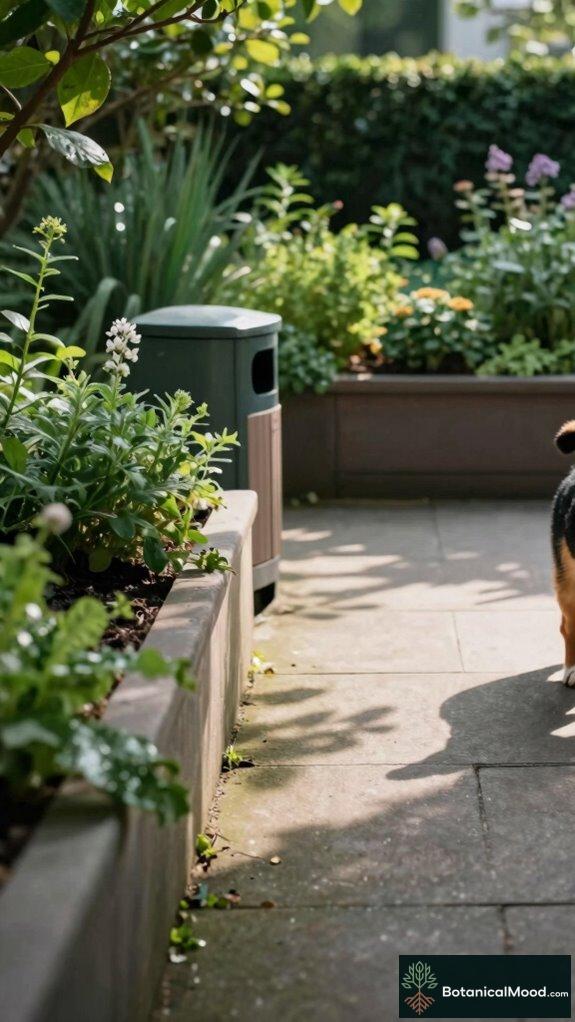
To keep yard waste stations clean and leak-resistant, I design around the liner’s fit, seams, and strength so damp leaves don’t abrade through or slump against the bin wall. I choose compostable liners, like Ecolastic, and press them into corners of municipal green bins so each fold holds contact, reducing leak prevention weak spots.
I also look for reinforced bases and sealed stitching zones, because juices from Salvia officinalis clippings and wet mowings can creep under loose edges. With smooth containment, odors stay low, carts roll cleaner, and waste management becomes predictable at parks in 90–180 days.
Match Bag Strength to Wet, Heavy Garden Debris
When you match bag strength to wet, heavy garden debris, the liner’s performance stops being abstract and becomes measurable at your waste station, because saturated clippings and muddy leaf fall apply shear, puncture, and hydrostatic pressure to the seams.
I select bags with higher bag durability and moisture resistance, like Ecolastic compostable liners, when I rake (Allium porrum) tops, wet hedge trimmings, or prune Quercus (oak) twigs after rain.
I check reinforced bases for grit, slip layers for puncture points, and seam stability during fill, so clogs, blowouts, and odor leaks don’t stall collection workflow.
Boost Composting Compliance With Eco-Friendly Liners
Eco-friendly compostable liners can meaningfully boost your composting compliance rate, because they keep yard waste contained, reduce contamination, and help the municipal or commercial green-bin process hit its target capture rate, often cited at 80%+ when operators pair them with clear education and signage.
I spec compostable liners from Ecolastic for containerized leaf loads, because they’re reinforced, leakproof, and snug-fitting for municipal carts.
When my crew swaps plastic bags for liners, composting benefits improve fast: fewer black streaks, less stray food residue, and higher-quality humification.
At facilities like San Diego’s organics programs, this supports eco friendly practices and helps greens, cuttings, and (Taraxacum officinale) clippings break down cleanly in 90–180 days.
Related Pet-Friendly Garden Proucts
| Garden task | Pet-friendly product idea |
|---|---|
| Spot-clean | compostable bin liner |
| Litter capture | leakproof leaf bags |
| Odor control | fast-degrading liners |
| Bedding refresh | (Eisenia fetida) safe waste handling |
| Bulk pickup | reinforced compostable sacks |
I recommend pairing pet waste collection tools with EcosaFe liners, Ecolastic upgrades, and compost-ready leaf bags for innovation. Regular soil pathogen testing helps ensure your garden remains safe for both pets and plants. Underground pet waste digesters offer an efficient solution for breaking down organic matter while maintaining a pet-safe garden environment through in-ground digestion systems.
Recycled-Heap Compost Bin
- Layer browns, greens, then sprinkle moisture
- Aerate with turned fork tines (Aerobiosis)
- Harvest stable humus, (Quercus) leaf-derived mix
This boosts compost management, waste reduction, and nutrient recycling.
FAQ
Are Compostable Bags Safe for Composting With Food Scraps and Yard Waste?
Yes—mostly. I chuckle because “safe” sounds boring, but composting safety works when you use certified compostable bags: they break down in about 90–180 days, even with food scraps and yard waste, without leaving plastic bits behind.
Do Biodegradable Liners Leave Residues or Microplastics After Home or Municipal Composting?
Yes—most biodegradable liners can leave biodegradable residues and raise microplastic concerns. In municipal or home compost, incomplete breakdown depends on heat, oxygen, and time, so you shouldn’t assume “plastic-free” without proof or certified compostability.
How Do Reinforced Compostable Bags Prevent Tearing When Filling With Wet Leaves?
I prevent tearing by choosing reinforced durability compostable bags and managing wet leaves carefully: I load gradually, avoid sharp branches, and keep the base supported so the heavy, damp weight spreads instead of ripping.
What Certifications or Standards Should I Look for in Pro-Grade Compostable Bags?
Look for clear certification labels: ASTM D6400/D6868, EN 13432, and OK compost/OK compost HOME. I verify them against real compost standards on the supplier site, so you get reliable, truly compostable bags—no “biodegradable” ambiguity.
Can I Use Compostable Liners for Both Commercial Green Bins and Pet-Waste Stations?
Yes—you can use compostable liners for both commercial green bins and pet waste stations, if they’re leakproof and truly compostable (90–180 days). I check fit, certifications, and local facility acceptance so nothing contaminates the stream.
References
- https://emeraldecovations.com/2024/09/the-benefits-of-leaf-bags-for-efficient-yard-waste-management/
- https://totebagfactory.com/blogs/news/the-benefits-of-using-biodegradable-leaf-bags
- https://ecolastic.in/blog/compostable-bags-vs-biodegradable-garbage-bags-which-is-better-for-the-environment/
- https://ecosafe.green/blogs/news/3-reasons-why-compostable-bags-are-better-for-the-environment
- https://plantersplace.com/just-veggies/use-brown-yard-waste-bags-weed-control/
- https://somerset.njaes.rutgers.edu/2025/03/28/benefits-of-grow-bag-gardening/
- https://www.youtube.com/watch?v=n1toWhyDIV8