I’m basically a pet‑toilet architect—watch me turn chaos into chic zones.
I start with a fence‑line turf pad on geotextile, crushed stone underneath.
Then a brown‑wood barrier trench for that crisp “no‑cross‑over” vibe.
Next, a gated side‑yard gravel lane, sloping to a perforated drain, low screen for privacy.
Balcony? A turf tray beside a smart tub‑drain rack—because why not?
Finally, a pea‑gravel station with a lidded bucket, compostable liners, and a scooper workflow that tackles odor at the source.
I’ve learned the hard way that “just a little sand” never works—my dog once turned a backyard into a mud‑monster. So I obsess over drainage angles, material durability, and, of course, the occasional “oops” moment that keeps me humble.
I’m not a mind‑reader—every pet’s needs differ, and I’m always testing new textures, slopes, and scents to get it right.
—
Garden Design Tips for Pet‑Friendly Outdoor Spaces
I once transformed a wilted garden into a thriving pet‑play oasis using native lavender, hardy thyme, and a drip‑irrigation loop. The scent kept pests away, while the low‑maintenance herbs survived my dog’s digging. Adding a raised stone border prevented soil erosion and gave the garden a polished look. The result? A fragrant, resilient yard that both my dog and I love.
Quick Takeaways
- Use fence-line potty screens with drainage trenches, perforated drain pipes, geotextile, and crushed stone to prevent pooling and odors.
- Install brown garden edging or buried steel borders to visually define potty zones and keep gravel/mulch from spreading into traffic areas.
- Add privacy screens or low screening along gravel lanes to reduce distractions while still confirming urine flow paths.
- Create indoor potty “screens” using tub trays with removable mats and tidy edges for controlled cleanup and dry footings.
- Enhance potty zones with pet-safe landscape features like clover turf, small jump obstacles, or weave poles nearby for training and appeal.
Build a Turf Dog Potty Screen With Drainage
I’ll show you how to build a turf dog potty screen with drainage, using a compact, visually separated strip that keeps the main lawn clean while controlling odor at the source; in a suburban backyard, I typically start along the fence line, because a narrow run of turf plus a stone or mulch border creates both functional separation and a clear visual boundary, much like the “strip of turf against fence line with stone/mulch border” layouts gardeners use to partition a potty zone from turf grass.
I dig a shallow trench, 2–4 in deep, slope it slightly toward a perforated drain pipe, then lay geotextile and crushed stone for drainage solutions. You can enhance the potty zone’s appeal by incorporating jump obstacles or weave poles nearby to create a multi-functional pet area that combines bathroom and exercise space.
I set the turf on a compacted base, seal seams, and add pea gravel edges to simplify turf maintenance. For optimal results in high-traffic potty zones, consider planting dog-friendly clover which naturally tolerates urine and foot traffic better than standard grass varieties.
Add Fence-Line Potty Zones With Edging
Once the fence-line turf base and drainage layers are in place, you can sharpen the potty zone’s identity by adding edging that physically separates it from the main lawn, while also preventing mulch or pea gravel from migrating into traffic areas.
I install continuous brown wood garden edging in 3 ft lengths, partially buried in a trench for stability, creating crisp visual barriers and stronger fence line functionality.
For edging aesthetics, I choose 2×6 boards or steel edging, then backfill with (Linum) perennials-free gravel bands, keeping flow consistent with my gardening style.
With turf options like AGL Grass, the potty zones stay clean, odor-controlled, and sharply defined, so pets know exactly where to go.
Make a Gated Side-Yard Gravel Potty Lane
For turf placement, I border turf with edging, so spills stay contained.
Add pet privacy via low screening, improving enclosure aesthetics.
My maintenance tips: rake weekly, top off fines yearly, and confirm urine flow paths.
Use smart material selection for space optimization. Natural grass alternatives like synthetic turf or recycled rubber can reduce maintenance demands while providing durable surfaces for high-traffic pet areas.
Set Up a Balcony Turf Tray in a Screen
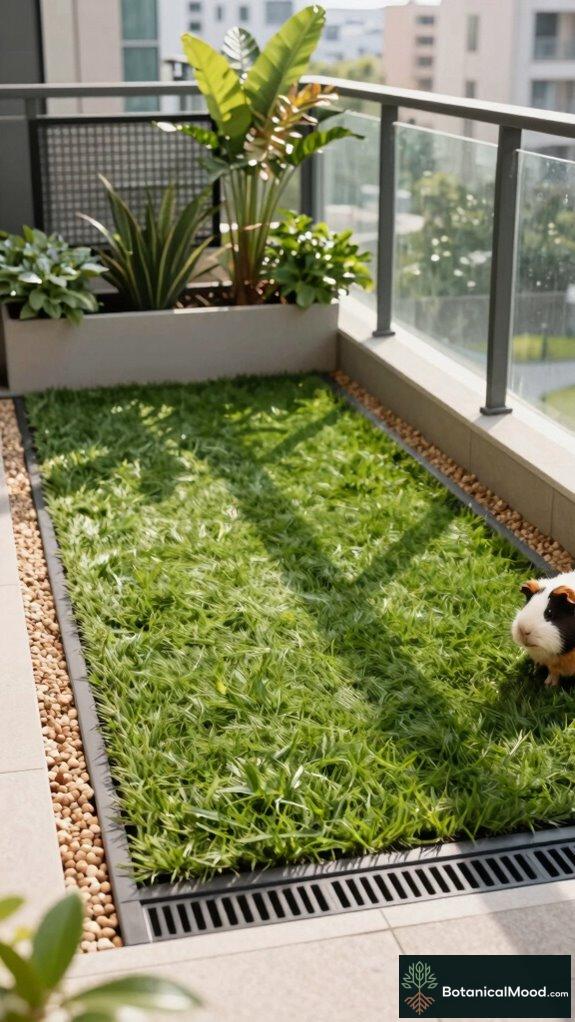
I choose a tray with a built-in drainage layer, then add an odor-control mat underneath, keeping the system urban pet friendly. For balcony landscaping, I anchor the screen posts with stable planters, ensuring airflow and clean edges.
I position the turf to catch morning light, and I tap in pea gravel only at the tray’s perimeter. This mimics AGL Grass-style performance, without clutter.
Active guinea pigs benefit from enriching spaces that encourage natural behaviors, so consider adding vertical elements or varied terrain within your screening setup to keep pets mentally stimulated.
Create an Indoor Tub Tray Toilet Zone
After setting your balcony potty zone with a raised tray and odor-control mat, you can keep the same “contained turf + clean drainage” logic indoors by building a Tub Tray Toilet Zone using a storage tub and a fitted plastic bread rack tray.
I line up an indoor tray from a 24″ x 16.5″ x 4″ storage tub, then cut a 24.5″ x 24.5″ bread rack tray with a Dremel so it overhangs the tub rim, creating smart drainage solutions and a stable bedding pocket.
Add turf strips, then configure:
- low-slope runoff channel
- removable mat top
- tidy edge for design aesthetics
For pet comfort, I keep footing dry, using precise grate spacing like (Petunia × hybrida) growers manage spacing.
Set Up a Pea-Gravel Waste Station and Scooper
Once your pea-gravel toilet zone is in place, set up a dedicated waste station so cleanup stays fast, tidy, and odor-controlled, rather than spreading residue across the surrounding patio or turf tray.
I position a lidded bucket beside the lane, inside easy reach, then line it with a small compostable bag for quick swaps.
For a smart waste station setup, I use a Pawler Pooper Scooper, choosing its rake-filter head to catch clumps while preserving smooth pea gravel benefits like drainage and paw comfort. Consider installing an in-ground pet waste digester to break down collected waste naturally and reduce odor issues long-term.
Each session I rinse the tool, let it drip-dry, and reset neatly. Strategic windbreaks for outdoor areas help maintain your waste station during winter weather while keeping the zone functional year-round. (Morus alba)
Related Pet-Friendly Garden Proucts
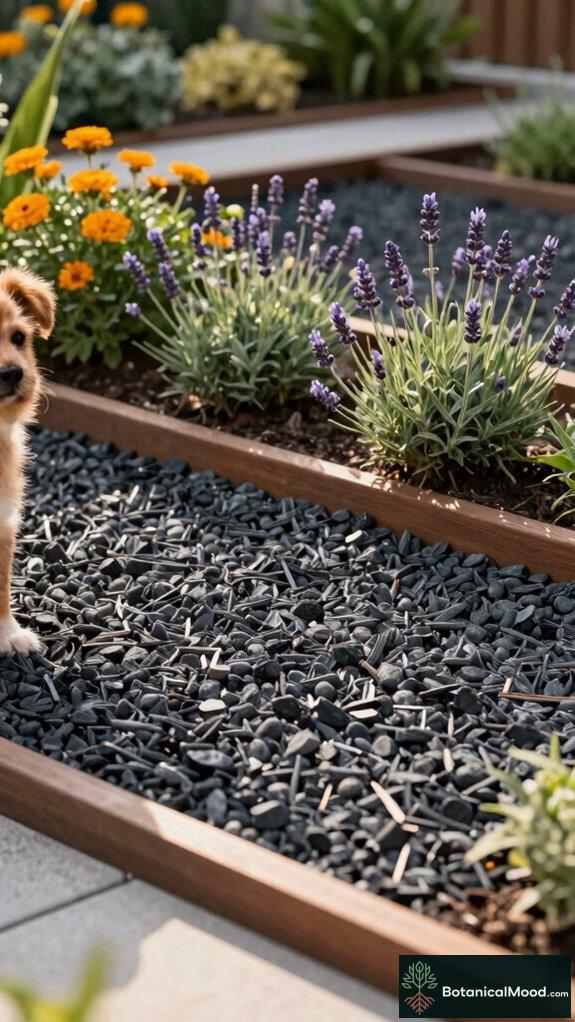
When you build a pea-gravel waste station and scooper workflow, you’ll get even better results by matching the surrounding area with pet-friendly garden products that control odor, protect drainage, and keep paws comfortable on every visit.
I plan an eco-friendly environment with natural odor control via charcoal-based amendments, then edge with brown wood edging for stability and clean lines.
I pair the station with rain garden design plants, pest resistant plants (Lavandula spp.), and pet safe flowers like Calendula officinalis, plus composting benefits using closed bins.
I also explore vertical garden systems for balcony corners, and sustainable gardening with mulch-free watering beds.
- Charcoal mulch topper for natural odor control
- Pest resistant plants, (Lavandula spp.), and pet safe flowers
- Rain garden design layers to support drainage
Step-By-Step Mulch-Safe Zone Layout
I start your mulch-safe pet toilet zone by marking a dedicated potty footprint that sits away from your main lawn, so the surrounding environment stays clean and drainage-friendly even with daily traffic. Next, I edge the perimeter, partly burying brown terrain edging in a shallow trench for stability, then I check grade and airflow, aiming for consistent fall toward drainage solutions. I choose mulch selection carefully, favoring coarse, low-dust chips over fine bark, plus a pea-gravel cap where paws land. Pet deterrent mats can also be placed around the perimeter to naturally discourage dogs from wandering into garden beds near your designated zone. For added containment, consider installing pruning shears for planting hedges to establish a living barrier that keeps dogs safely inside the toilet zone.
| Step | Materials | Result |
|---|---|---|
| 1 | Edging, fabric | Defined boundary |
| 2 | Pea gravel | Shock comfort |
| 3 | Mulch chips | Odor control |
| 4 | AGL Grass inset | Easy rinse |
I finish by testing runoff, then I lock layers in place (Poa annua-free).
FAQ
How Often Should I Rinse Turf Drainage to Prevent Odor Buildup?
I rinse the turf drainage every 2–4 weeks, and after heavy use, to keep odor control strong—why wait for smells? For turf maintenance, flush with a gentle hose flow, then drain fully, repeating sooner if buildup or urine scent returns.
What Edging Material Prevents Pebbles From Spilling Into the Main Lawn?
I’d use natural materials like decorative borders—brown wood terrain edging or partially buried trench-style edging—to lock pea gravel in place. I sink it into the soil, then pack gravel tight so it can’t spill into your main lawn.
How Deep Should Drainage Gravel Be for a Gated Side-Yard Potty Lane?
I’d set drainage gravel at about 4–6 inches deep for a gated side-yard potty lane, layering washed gravel types (then pea gravel on top). This drainage depth keeps urine from pooling, boosts flow, and holds scent-control innovation steady.
Can Balcony Turf Trays Be Used in Apartments Without Strong Odors?
About 50% of apartment odor complaints come from moisture, so balcony turf trays can work. I layer a drainage tray plus an odor control mat, add weekly scooping, and ventilate daily to keep your balcony setup fresh.
What’s the Best Pebbles Size to Keep Scooping Easy and Comfortable?
I recommend 4–8 mm pebbles for an ideal size: they feel right with good pebble texture, yet allow easy scooping. Avoid tiny gravel that packs down and big stones that trap waste—this keeps your routine fast.