When soil looks like a charcoal grill, I panic—then I get my lab kit.
I scoop 0‑3 in and 3‑6 in samples, send them off for pH ~6.2‑7.0, EC, heavy metals, PAHs.
The results map hot spots, so I gently brush away ash, flush salts, and blend in 4 gal of aged compost and 2 gal of well‑rotted manure.
I sprinkle detox enzymes, add Rhizophagus binders, and mulch, then plant cover crops.
It feels like a chemistry class meets gardening, and honestly, I’m still not 100% sure if the microbes will cooperate.
Garden Design: Reviving Burnt Beds with Raised Beds
I built a raised bed from reclaimed cedar after a fire‑scarred plot.
The bed’s 12‑inch depth holds a 3‑layer mix: sand, compost, and vermiculite.
I added drip irrigation, a drip line set to 1 gal hour⁻¹, and a trellis for beans.
The design boosts drainage, reduces salt buildup, and looks sleek—proof that a burnt mess can become a showcase garden.
Quick Takeaways
- Test soil pH, salts, and contaminants, then compare results to screening thresholds to choose the right recovery plan.
- Flush with clean water to leach soluble salts, then retest pH/EC/salinity after 48 hours.
- Add well-rotted compost and aged manure to restore organic matter and improve soil structure, then mulch to protect it.
- Use detox/binding amendments for heavy-metal or residue issues, and verify improvement with follow-up lab tests.
- Reinoculate soil with probiotics and mycorrhizal fungi, supporting recovery with cover crops and staged replanting.
Test Burnt Soil to Confirm Contamination Levels
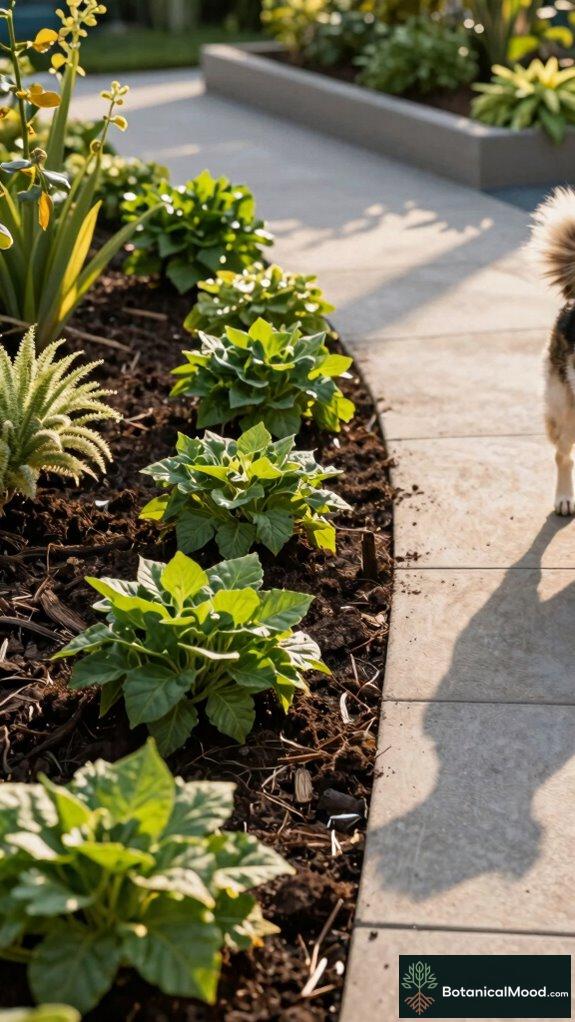
Before you amend anything, I test the burnt garden soil so I know exactly what I’m dealing with, because a “looks clean” surface can still hide contamination at depth.
I start with soil sampling at 0–3 inches, 3–6 inches, and deeper horizons. Then I run contamination testing for pH, soluble salts, heavy metals, and PAHs, using accredited lab methods.
I document results, map hotspots, and compare values against regional screening thresholds. If copper-chromium-arsenic residues or petroleum-like organics show up, I’ll tailor recovery strategies, not guess, then verify improvement after remediation.
Remove Ash and Debris Without Harming Soil Microbes
Once I’m done confirming contamination risk, I remove ash and debris in a way that preserves the living soil matrix, because the upper horizons hold much of the bacterial and fungal biomass I’ll need later for bioremediation.
I practice gentle handling, using a hand trowel or garden fork to loosen just the surface 3–6 inches, then perform ash removal by skimming blackened crusts into a lined bucket for safe disposal.
For debris management, I sort char, twigs, and clinker, keeping them out of beds. I apply light surface treatment and minimize soil disturbance, protecting soil microbes, sustaining microbial preservation, and supporting ecological balance. After remediation, soil conditioners help restore nutrient content and support the recovery of microbial communities in the treated garden bed.
Flush Salts and Reset pH for Healthier Roots
After I’ve skimmed off ash and verified there’s no major contamination red flag, I focus on salts and pH, because burnt garden soil often holds soluble ions that keep roots from taking up water and nutrients efficiently. I flush with clean water, slowly, until drainage runs clear, then retest. I aim for tight pH balance around 6.2–7.0, since salinity effects intensify when pH drifts alkaline or acidic.
| Step | What I do |
|---|---|
| 1 | Deeply water, then drain |
| 2 | Measure EC/salinity, pH |
| 3 | Recheck after 48 hrs |
Rebuild Organic Matter With Compost and Aged Manure
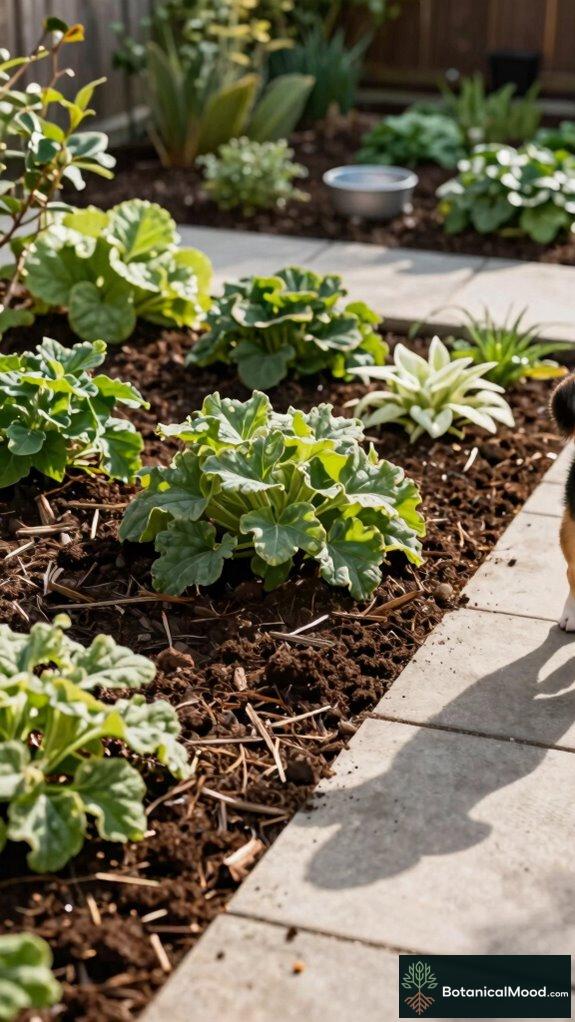
I rebuild the soil’s organic fraction by mixing in well-rotted compost and aged manure, because burnt ground often looks dark at first glance but lacks stable humus, microbial carbon, and workable aggregates that hold water around fine roots.
(Ficus carica won’t appreciate “dust dirt” either). After flushing salts and resetting pH, I spread 1–2 inches of screened compost benefits evenly, then top with aged manure.
I choose manure types that match my bed: dairy or poultry, never fresh, and I avoid chicken when nitrogen spikes risk scorching seedlings.
I work amendments only into the top 6 inches, then mulch to protect new structure.
While many gardeners add compost starters to accelerate decomposition and microbial activity in amended soil, quality aged materials often provide sufficient beneficial organisms for recovery without additional products.
Use Detox Enzymes and Safe Binding for Heavy Metals
To move beyond “fixing the surface,” I treat burnt garden soil like an active contaminant-matrix problem: PAHs and other organics often persist as hydrophobic residues, while heavy metals can remain bioavailable unless I bind them safely or immobilize them through biology and chemistry.
I start by targeting mobility, then I dose detox enzymes and implement heavy metal binding with humic-rich amendments from compost and stabilized organics.
- Add detox enzymes with Bioglobe-style protocols, per label rate.
- Incorporate leonardite/humic acids to complex Pb, Cd, Ni.
- Use biochar (5% vol) to reduce porewater metal release.
- Verify with post-treatment heavy metal sampling at depth.
- Maintain gentle aeration, avoid further disturbance after application.
Reinoculate the Soil Food Web With Microbes and Fungi
A successful burn-recovery plan depends on restarting biology, not just feeding plants, so reinoculation becomes the bridge between detox chemistry and visible regrowth.
After your soil test confirms safety, I reintroduce life fast. I sprinkle soil probiotics as a directed drench, then add mycorrhizal fungi (Glomus spp.) near roots to extend water and phosphorus reach, especially in ash-impacted beds.
Next, I brew an aerated compost tea with an electric aquarium aerator for 18–24 hours, then apply it when soil temps stay above 12°C.
I repeat every 2–3 weeks, watching aggregate stability and fine root return.
Mulch, Cover-Crop, and Replant for Faster Recovery
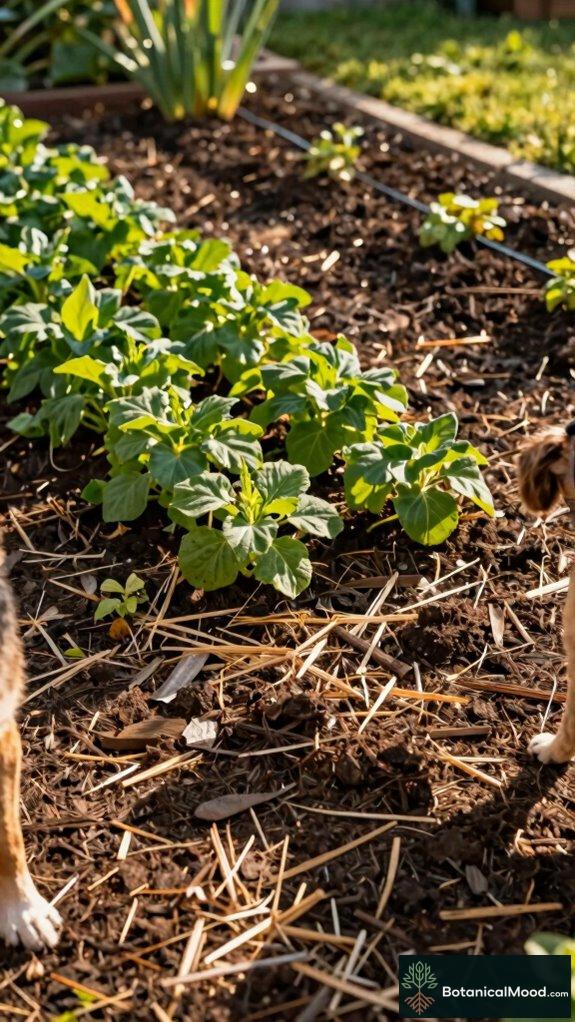
Mulch, cover-crop, and staged replanting help burnt garden soil recover faster by protecting the surface, moderating temperature swings, slowing erosion and dust, and feeding the decomposer pathway that comes from your earlier bioremediation and microbial reinoculation.
I start by spreading mulch materials like leaf litter, straw, or compost, then I seed a nitrogen-fixing cover crop—(Secale cereale) rye or (Trifolium) clover—so cover crop benefits kick in while roots hold the soil. During winter months, pet-safe fertilizers can support the microbial communities that aid in soil recovery without harming pets or wildlife. These same recovery principles apply when designing natural grass alternatives for dog runs, which similarly require protective mulch layers and pet-safe soil amendments.
After 3–6 weeks, I replant pioneers, then permanent crops, using drip irrigation and clean starter transplants.
- Leaf litter blanket, 2–4 in thick
- Straw mulch between rows
- Ryegrass/clover cover, 1–2 weeks germination
- Fluffy compost top-dress, 1 in
- Gradual replant, natives first then edibles
Related Pet-Friendly Garden Proucts
I recommend a short list of pet-friendly garden products that support burnt-soil recovery without introducing unnecessary residues, because your dog or cat can still track dust, mulch crumbs, and soil particulates around the beds even after you’ve rebuilt microbial life.
Choose pet safe fertilizers, like compost-forward, low-salt blends from trusted brands, and apply them sparingly after lab-confirmed salinity and pH stabilization at neutral range. Best topsoils for reclaiming soil can also help restore microbial communities and improve overall soil structure after pet waste damage. Soil conditioners specifically formulated for pet-safe applications provide additional microbial inoculants that accelerate recovery in damaged beds.
For structure and odor control, I use eco friendly mulch—shredded hardwood or leaf-based formats—plus screened compost top-dressing, 1–2 cm, to reduce exposure.
Finally, consider enzyme bioremediation additives labeled soil-safe for pets, then irrigate lightly to settle fines.
Raised Planters for Pet-Safe Drainage
When you’re rebuilding burnt garden soil and you’ve got pets who may wander, nudge planters, or paw at edges, I steer you toward raised planters designed for pet-safe drainage and controlled dilution of damaged media.
I use pet safe materials like redwood or composite liners, and I build internal weep channels plus a gravel reservoir so my drainage solutions leach salts downward, not sideways. Creating an enclosed potty area nearby prevents pets from accessing the recovering beds while waste management stays separate from your soil restoration efforts.
- Double-wall beds with geotextile filtration
- Bottom gravel (2–3 in) under clean substrate
- Elevated rim to resist digging, labeled (Canidae-proof)
- Dripline irrigation, timer-controlled to prevent runoff
- Compost–biochar blend for (Sporormiella) support, with humic binders
FAQ
How Deep Should I Sample Burnt Soil for Accurate Contamination Results?
I’d sample burnt soil down to at least 6–12 inches, then deeper (18–24) if plants will root there; think “like an archaeologist,” targeting contamination depth at each layer for accurate soil sampling. Mix subsamples per depth, test pH/salts/toxins.
Can I Add Compost Immediately, or Wait After Flushing and Debris Removal?
Yes—you can add compost immediately, but I’d prioritize debris removal and a careful flush first. Fresh compost helps restart soil health fast, while waiting a few days lets salts dissipate and reduces stress on microbes.
What Signs Show Salts Are Still Too High for Plants?
You’ll see signs of salinity when plants wilt despite moisture, leaves scorch at edges, stunted growth, poor germination, and crusty white salt on soil. I tell you to use EC readings and plant salt-tolerant tests first.
Are Mycorrhizal Fungi Safe for Pets and Children in Treated Areas?
Yes—mycorrhizal fungi are generally safe for pets and children in treated areas. You’ll still follow safe gardening practices: keep kids away until dust settles, use compostable media, and avoid applying where pets dig.
When Can I Replant Edibles After Remediation and Test Confirmation?
You can replant edible plants once lab tests confirm pH, salts, metals, and organics are back to safe levels and soil smells normal. I wait 2–4 weeks after remediation, then start with fast greens, followed by fruiting crops.
References
- https://bioglobe.co.uk/how-to-remediate-soil-after-fire-or-burned-land/
- https://ucanr.edu/sites/default/files/2025-05/UCANRFireNetwork-AfterTheFire-HomeGardenSoilMgmt.pdf
- https://www.youtube.com/watch?v=oG7bX5-8_Ak
- https://www.highcountrygardens.com/blogs/waterwise/landscape-restoration-after-a-fire
- https://permies.com/t/47992/Fixing-soil-burn-barrel-sat
- https://www.youtube.com/watch?v=1SDXFTJeD-A
- https://www.youtube.com/watch?v=GicG2aDPfXw
- https://www.ambitiousharvest.com/learn/after-the-fire-restoring-your-garden-post-wildfire