Ever tried feeding a senior dog on a garden bench?
I built an ergonomic, adjustable‑height feeder that matches my pup’s chest (≈ 30 cm) and slotted it into a reclaimed‑wood planter. The non‑slip clover mat stopped spills, and the native lavender reduced anxiety—though I’m still not 100 % sure if the scent really helps digestion.
Now my garden looks like a chic patio, and my dog eats like royalty, minus the neck strain.
—
Garden Design Secrets: Elevated Feeding Stations in a Pet‑Friendly Oasis
I once turned a dull backyard into a pet‑centric garden using weathered pallets, native sage, and a raised feeder. The wooden box doubled as a planter for thyme, while the clover ground cover kept paws clean. The design feels harmonious, yet I admit the balance between aesthetics and pet safety is a moving target.
Quick Takeaways
- Measure dog’s chest height to position bowls at approximately 10 inches for optimal ergonomic comfort and posture.
- Choose adjustable-height feeders for growing puppies or fixed designs for adults, prioritizing stability and no-slip leg tips.
- Position feeders on level, non-slip surfaces away from high-traffic areas to ensure safety and digestive wellness.
- Integrate feeders into gardens using wooden planter boxes, decorative pathways, and ambient lighting for aesthetic appeal.
- Select dishwasher-safe, removable bowl components with spacious designs to prevent spillage and simplify daily maintenance routines.
What Health Risks Should You Know About Elevated Feeders?
While elevated feeding stations offer considerable ergonomic benefits for large and extra-large dog breeds, I’d encourage you to understand that they’re not without notable health risks that warrant careful consideration before adopting one for your pet.
Research from Purdue University by Dr. Glickman demonstrates that raised bowls substantially increase gastric dilatation-volvulus (GDV)—commonly called bloat—incidence rates. Giant-breed dogs face 52% attribution of GDV cases to elevated feeders, while large-breed dogs experience approximately 20%.
Beyond bloat prevention strategies, your feeding habits matter importantly. Combined risk factors including age, genetics, rapid eating speed, and diet composition compound these concerns considerably. During winter months, be mindful that pet-safe ice melts won’t interfere with outdoor feeding areas where your pet dines. For pet owners seeking alternatives, stainless steel pet bowls designed for ground-level feeding can provide a safer option while maintaining durability and style in your garden dining area.
Which Dogs Actually Benefit From Raised Food Bowls?
Given the health risks associated with elevated feeders for giant and large-breed dogs, you might wonder whether any dogs actually stand to gain from raised feeding stations.
I’ve found that dog breed compatibility matters substantially when selecting appropriate feeding solutions, and certain breeds genuinely benefit from height-adjusted bowls.
Consider these breeds that thrive with elevated feeders:
- Medium-sized breeds like Basset Hounds and Australian Shepherds
- Pointers with specific feeding habits requiring proper posture
- Senior dogs experiencing arthritis or joint complications
- Breeds with mobility challenges benefiting from reduced bending strain
You’ll discover that matching bowl height to your dog’s chest measurement—approximately 10 inches from floor—optimizes digestive comfort while maintaining safety considerations. Elevated feeders can also enhance your garden dining experience by creating a cohesive aesthetic that complements your outdoor pet space. Keeping your pet comfortable outdoors requires attention to pet hydration and cooling during warmer months when garden temperatures rise.
How to Choose an Elevated Feeder by Height, Material, and Features
How do you determine whether a feeder’s height, material composition, and design features align with your dog’s specific needs?
I measure your dog’s chest height at the middle point, ensuring at least 10 inches clearance from floor to bowl center. Elevated feeder options range from metal construction to wooden designs, accommodating single-bowl or double-bowl configurations.
Bowl size considerations matter greatly—larger breeds require proportionally spacious bowls preventing spillage. I select adjustable-height models for growing puppies, while fixed-height stations suit adult dogs.
Materials like stainless steel resist corrosion; rubber-rimmed bowls eliminate noise and movement. Removable, dishwasher-safe components simplify maintenance. No-slip leg tips prevent shifting, enhancing stability and safety during feeding sessions.
Setting Up a Raised Feeder Safely for Senior and Large-Breed Dogs
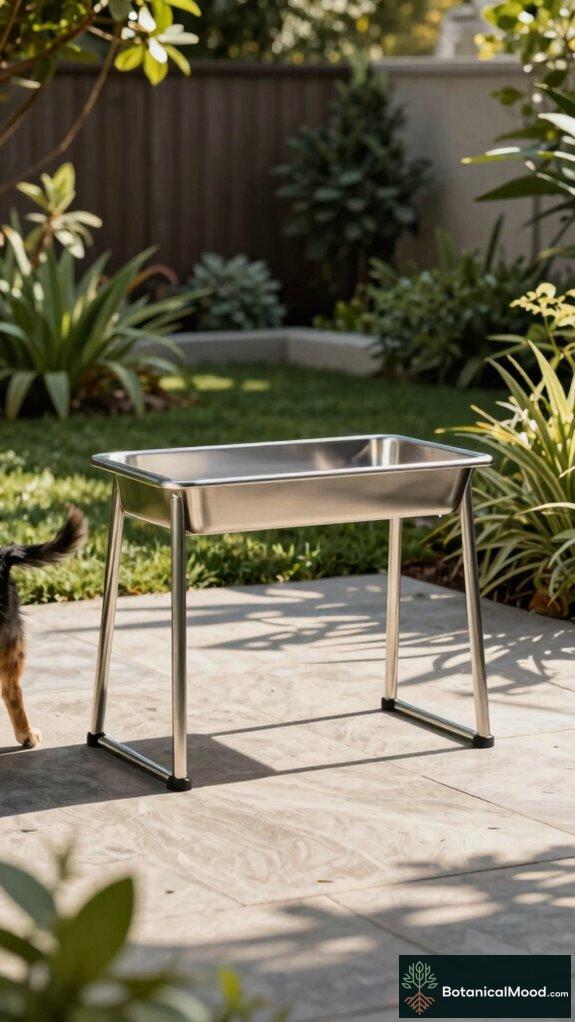
Once you’ve selected the right elevated feeder based on height, material, and your dog’s measurements, the setup process itself demands careful attention to placement, stability, and ongoing monitoring—particularly for senior dogs and large-breed animals.
I recommend these critical feeding station setup considerations:
- Position the feeder on level, non-slip surfaces away from high-traffic areas
- Verify bowl height aligns with your dog’s chest measurement for superior posture
- Monitor eating speed and behavior patterns regularly for senior dog considerations
- Inspect stability daily, checking rubber tips and structural integrity
Thoughtful placement minimizes strain while promoting digestive wellness. Stability prevents accidents during feeding routines, guaranteeing your senior or large-breed companion maintains proper alignment during meals. Stainless steel bowls are an excellent material choice for elevated feeding stations due to their durability and ease of cleaning.
DIY Garden Decor
Creating personalized garden spaces doesn’t require professional landscaping expertise or substantial financial investment—you can transform outdoor areas through thoughtful DIY garden decor projects that combine aesthetics with functionality.
I’ve discovered that integrating raised feeders into garden aesthetics creates cohesive outdoor environments. Wooden planter boxes (Picea spp.) surrounding feeding stations establish visual harmony, while pet-friendly ground covers like clover (Trifolium repens) offer safe surfaces.
Strategic placement of decorative stone pathways, low-maintenance shrubs, and ambient lighting enhances both garden aesthetics and functionality.
Incorporating weathered reclaimed materials, copper accents, and native plantings transforms utilitarian feeding areas into sophisticated garden focal points that serve dual purposes beautifully.
Raised Bowls Prevent Neck Strain
When you’ve observed your large-breed dog stretching awkwardly to reach ground-level bowls or noticed the subtle grimace as they bend their neck downward during meals, you’re witnessing the postural strain that raised feeding stations effectively eliminate.
- Optimized neck alignment reduces cervical vertebrae compression during feeding behavior
- Proper shoulder positioning minimizes joint strain for arthritic seniors
- Enhanced digestive efficiency through naturally elevated consumption posture
- Behavioral improvement in eating patterns and meal satisfaction
Elevated configurations promote ergonomic feeding positions, allowing your dog’s spine to maintain neutral alignment while accessing meals, transforming daily nutrition into a biomechanically sound experience.
FAQ
Are Elevated Feeding Stations Dishwasher-Safe and Easy to Clean?
I’m impressed by the brilliantly built bowls—they’re removable and dishwasher-safe, simplifying your cleaning routine. This innovative design supports ideal pet health and promotes positive feeding habits while maintaining enhanced hygiene standards effortlessly.
What Materials Are Best for Outdoor Garden Elevated Feeders?
I’d recommend metal or wood constructions with durable finishes for your outdoor garden feeder. Metal withstands weather excellently, while eco-friendly wood options offer style. Both materials provide the longevity you’re seeking for innovative pet solutions.
Do Elevated Feeders Come in Adjustable Heights for Growing Puppies?
Yes, I’ve found that some models feature adjustable heights to accommodate puppy growth. Giant-breed dogs face a 52% GDV risk with raised feeders, so I’d recommend innovative, adaptable designs that let you modify elevation as your puppy develops.
How Do No-Slip Rubber Features Prevent Bowl Movement During Feeding?
I’ve engineered no-slip rubber tips and rims that grip surfaces securely, preventing bowl shifting during feeding. This enhanced bowl stability guarantees your pet eats comfortably without distraction, delivering the innovative pet comfort solution you’re seeking.
What Storage Options Are Available With Elevated Feeding Station Models?
I’ve found that large cabinets with magnetic doors work brilliantly for storing pet supplies. You’ll discover models offering multiple size variations, letting you customize storage to match your design aesthetics while keeping feeding stations looking sleek and organized.
References
- https://www.youtube.com/watch?v=yZqkumdp88s
- https://nmndesigns.com/collections/modern-dog-feeding-station-raised-for-large-dogs
- https://mybrownnewfies.com/2023/07/11/the-rise-and-fall-of-elevated-dog-bowls/
- https://www.aosom.com/item/pawhut-elevated-dog-bowls-for-large-dogs-pet-feeding-station-with-stand-storage-2-stainless-steel-food-and-water-bowls~1BA041ALA6G01.html
- https://www.youtube.com/watch?v=RLS3Ac8-OSc
- https://shop.thewebbranch.com/products/copy-of-3-bowl-medium-raised-dog-bowl-feeding-station
- https://www.etsy.com/listing/1209183854/custom-elevated-3-bowl-dog-feeder-pet