I swear my old bulldog thinks garden lights are a rave.
I’m lighting paths at 1000 lux, 2700 K, with 250 lux melanopic glow—because senior pets need contrast, not a foggy mystery.
Terracotta pots clash with cool gray walls; light edging beats dark mulch.
Motion‑activated spotlights, solar stakes, reflective paint keep them strutting confidently, not wobbling.
I’m not a lighting guru, but I’ve seen the shadows swallow a tail‑wagging confidence, so I tweak the glare and hope for the best.
—
High‑Contrast Garden Design for Senior Pets
I once turned a dim backyard into a senior‑pet sanctuary using 2700 K LEDs, 1000 lux on the walk, and warm terracotta against slate.
The result? A confident, wagging tail and a garden that finally respects aging eyes.
Quick Takeaways
- Senior pets need minimum 250 lux melanopic equivalent lighting to support aging eyes and circadian rhythms effectively.
- Use contrasting materials like warm terracotta against cool gray to distinguish walking surfaces and prevent navigation hazards.
- Install motion-activated spotlights along pathways for energy-efficient, responsive illumination that enhances senior pet safety and confidence.
- Position light fixtures strategically with diffusing covers to reduce glare and prevent harsh shadows that impair visibility.
- Apply reflective paint and light-colored edging against dark mulch to establish clear boundary definitions for safe exploration.
Why Your Senior Pet Garden Needs High Contrast Lighting
How much can aging vision truly compromise your senior pet’s safety and comfort in the garden space you’ve carefully designed for them?
I’ve discovered that diminished retinal light reception, combined with reduced contrast sensitivity, creates genuine hazards. Your senior pet navigates pathways where shadows blur boundaries, where stepping stones vanish into mulch, where water features become invisible threats.
High contrast lighting—strategically positioning illumination to distinguish walking surfaces, plant beds, and water elements—transforms garden sensory engagement. Motion activated spotlights provide responsive illumination that guides your pet’s movement through the garden while conserving energy. Solar powered garden lights offer a sustainable solution that maintains consistent illumination throughout evening hours without increasing energy consumption. This approach isn’t merely aesthetic; it’s foundational for senior pet safety.
Adequate illumination compensates for age-related vision changes, preventing costly accidents while enabling your aging companion to explore confidently.
Design High Contrast Pathways for Pet Areas
Now that you’ve grasped why high contrast lighting protects your senior pet’s mobility and confidence, you’ll want to implement this principle directly into your pathway design.
I recommend selecting pathway materials with inherent color separation—pavers in warm terracotta adjacent to cool gray stone create natural visual distinction without additional lighting equipment. Well-designed dog paths should follow natural movement patterns through your garden to encourage safe navigation.
Strategic placement of light-colored edging against dark mulch or groundcover (Ajuga reptans) establishes clear boundaries your pets navigate intuitively.
Consider permeable paving systems offering textural contrast alongside chromatic variation, enhancing both safety and accessibility while maintaining drainage for senior pet comfort and movement confidence. Combining these pathways with natural fence deterrents prevents senior pets from wandering into restricted garden areas while maintaining their independence and safety.
How Bright Is Bright Enough for Aging Eyes and Pets?
Determining adequate illumination for your senior pet’s garden requires understanding how aging eyes—both human and animal—process light differently than younger counterparts.
I’ve found that you’ll need minimum 250 lux melanopic equivalent for circadian rhythm support, though 1000 lux delivers ideal visual clarity for seniors traversing pathways safely.
Color temperature matters greatly; warmer 2700K lighting reduces glare while supporting nocturnal pet visibility.
Strategic light placement along walkways and around planting beds (Ilex verticillata, Taxus baccata) prevents tripping hazards. The best solar path lights available today offer reliable illumination that adapts to your garden’s specific layout and lighting needs.
Solar path lights provide an energy-efficient solution for illuminating pet garden areas throughout the night without requiring electrical installation.
I recommend combining overhead illumination with ground-level accent lighting, creating layered brightness that accommodates both aging vision and pet navigation without overwhelming sensory systems.
Avoiding Glare and Shadows
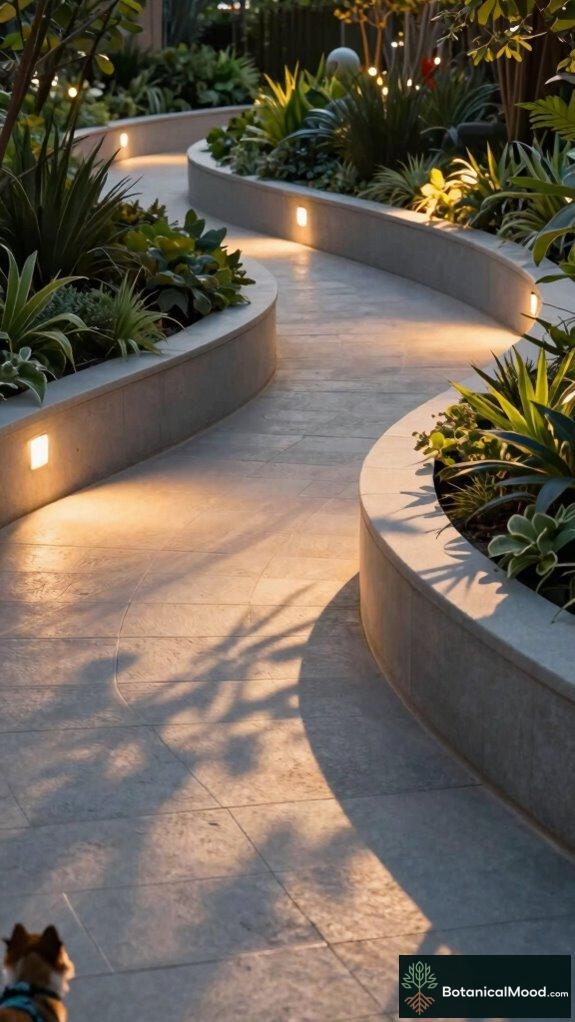
While bright illumination supports senior vision and pet navigation, uncontrolled light creates harsh glare and deep shadows that actually impair visibility and increase fall risk.
I’ve found that strategic glare reduction techniques transform garden usability markedly. Positioning fixtures away from direct sightlines eliminates glare reflections off hardscaping surfaces, while diffusing covers soften harsh beams.
Shadow management requires layered lighting approaches—combining ambient overhead illumination with targeted path lighting that prevents dark zones where pets or seniors might stumble.
Matte finishes on surfaces and directional uplighting create balanced, even illumination throughout planting beds and walkways.
DIY Garden Decor
Creating functional lighting décor from readily available materials allows you to enhance visibility and safety while honoring your budget and aesthetic preferences.
I’ve discovered budget-friendly enhancements that transform senior pet gardens into navigable spaces:
- Solar stake lights positioned along pathways illuminate walking routes for both owners and pets.
- Reflective paint applied to garden borders creates contrast against darker plantings.
- Mason jar lanterns filled with LED strips offer customizable brightness.
- Painted rock markers define planting beds while catching ambient light.
These unique garden decor solutions combine practicality with visual interest, establishing high-contrast zones that reduce fall risk, enhance nighttime visibility, and create welcoming outdoor environments where seniors and their companions enjoy safe, independent movement throughout cultivated spaces. For rabbits and other garden companions, edible wood chew toys provide enrichment while supporting dental health during outdoor exploration. Consider incorporating edible flower seed kits to provide safe grazing options for your pets while adding nutritional variety to their outdoor experience.
Creating Safe Walkways Strategically
Safe walkways function as the structural foundation of accessible senior pet gardens, requiring deliberate planning that accounts for both human mobility needs and companion animal movement patterns.
I’ve discovered that contrasting pathway textures—combining smooth permeable pavers with tactile edging—significantly enhance navigation safety. Selecting lighting materials like solar bollards with high lux output creates definition between walkway boundaries and planted areas. Maintaining clean garden spaces through outdoor fly traps prevents pest accumulation that can create additional safety hazards around pathways.
You’ll want textured surfaces (not slippery) paired with strategic illumination positioned at ankle height, eliminating shadows that confuse depth perception. This layered approach—merging innovative lighting materials with varied pathway textures—transforms garden circulation into an intuitive, secure experience supporting both seniors’ mobility and pets’ natural movement patterns.
Low voltage path lights minimize electrical hazards while providing adequate illumination for safe evening navigation without disrupting nocturnal wildlife activity in your garden space.
FAQ
What Lighting Fixtures Work Best With Pet-Safe Materials in Garden Environments?
I’d recommend solar fixtures and LED options for pet gardens—they’re non-toxic, durable, and energy-efficient. These innovations eliminate heat hazards while delivering bright illumination that won’t harm curious pets exploring your space.
How Do I Maintain High Contrast Lighting Systems Throughout Seasonal Weather Changes?
I’ll maintain your high contrast lighting through seasonal adjustments by selecting weather-resistant fixtures with IP65+ ratings and performing quarterly checks. You’ll need durable LED systems that withstand temperature fluctuations, ensuring consistent visibility for senior pet garden navigation year-round.
Can High Contrast Lighting Help Senior Pets Navigate Gardens More Safely?
Haven’t you noticed how aging eyes struggle with depth perception? I’ve found that high-contrast lighting markedly enhances senior pet mobility by creating distinct visual cues that guide safer navigation through garden pathways and obstacles.
What Are the Cost Differences Between Various High Contrast Garden Lighting Options?
I can’t provide specific cost comparisons because current data on high contrast garden lighting prices isn’t available. You’ll find solar options, LED advantages, and installation costs vary greatly by fixture type and vendor—requiring direct quotes for accurate pricing.
How Frequently Should Garden Lighting Be Adjusted for Aging Vision Changes?
I’d recommend seasonal lighting adjustments paired with annual vision assessments, as vision deterioration progresses individually. You’ll want quarterly lighting reviews to optimize contrast and illumination levels matching your aging eyes’ changing needs.
References
- https://pmc.ncbi.nlm.nih.gov/articles/PMC7768397/
- https://americanretirementhomes.org/the-hidden-impact-of-lighting-and-environment-on-senior-well-being/
- https://www.pioneernetwork.org/wp-content/uploads/2016/10/Lighting-A-Partner-in-Quality-Care-Environments-Symposium-Paper-3.pdf
- https://discoverycommons.com/senior-living-blog/how-poor-quality-lighting-affects-seniors-overall-health/
- https://pmc.ncbi.nlm.nih.gov/articles/PMC12987635/
- https://files.cie.co.at/x051_2025/P1166_ID332JenniferVeitch_OA_with_cover.pdf
- http://shimberg.ufl.edu/publications/Lighting.Effects.on.Older.Adults.Visual.and.Nonvisual.Performance.A.Systematic.Review.pdf