My dog once looked at me like I’d betrayed him when dripped on mid-squat. Never again. Now? 1000 gauge polythene roof. UPF50+ shade. 8° slope so water actually leaves. PVC curtains stop wind without the dungeon vibe. Ball bungees. Monotex splash guards. Linear paver drains for the muddy paw parade. Dry dog. Happy human.
Rainy Day Dog Kennel Design Ideas
I learned drainage the hard way after my “temporary” pallet shelter became a swamp. Now I swear by compacted-aggregate edge channels and integrated French drains. Position enclosures near established trees for natural rain buffers, but mind root systems. Permeable pavers beat concrete every time. Consider surrounding ground cover like Irish moss or creeping thyme instead of bare mud. My current setup includes a 4-inch gravel apron topped with rubber mats; clean paws, zero guilt. Raised beds with cedar mulch complete the dry-zone ecosystem. The garden stays intact. The dog stays dignified. I stay sane.
Quick Takeaways
- Use UV-resistant, rip-proof waterproof roof covers (e.g., UV-stable polythene or PVC tarpaulins) to block rain, wind, and sun.
- Add clear PVC side curtains as removable wind-driven rain barriers while preserving visibility and airflow.
- Create roof drainage with an ~8° slope and minimal folds to prevent standing water and muddy paw zones.
- Improve comfort with UPF 50+ shade coverings and tension-secured installation using eyelets, cable ties, or ball bungees.
- Anchor covers using reinforced tie-downs and add linear paver drains with a slight fall for dry, safe ground.
Choose a Waterproof Roof Cover for Pet Runs
A waterproof roof cover is the most effective way to keep your pet run dry during rainy spells, and I start by selecting the material based on how much rain, wind, and sun exposure it will face.
I compare material options like 1000 gauge polythene, glass clear PVC tarpaulin, and lightweight heavy-duty polyester, prioritizing cover durability through UV-resistant, rip-proof, and tear-tolerant construction.
For agile installation, I fit Omlet outdoor chicken run covers or an EXPAWLOR dog play pen cover, then pull tension evenly so runoff channels cleanly.
I also avoid greenhouse buildup by removing in strong sun.
Think (Morus alba) climate logic, but for pets.
Add UPF UV Shade for Hot Weather Comfort
I look for true UPF benefits, ideally fabric rated UPF 50+, like Hale Pet Doors coverings, and I mount it with eyelets plus cable ties or ball bungees to keep tension stable in wind.
For Shade alternatives, I compare Alion Home sails, plus Omlet run covers, aiming for airflow.
This creates a bright, breathable microclimate—perfect for (Canis lupus familiaris).
Natural shade solutions like trees and vegetation provide additional cooling benefits beyond fabric coverings by offering organic protection from direct sunlight.
Install Clear PVC Side Curtains for Wind and Rain
To keep a bright, breathable outdoor microclimate for (Canis lupus familiaris) without soaking the bedding whenever the wind-driven rain arrives, I install clear PVC side curtains along the kennel or run perimeter, using AKON Curtains-style panels for full visibility and fast weather response.
In my pvc curtain installation, I hang each panel on a taut line, then secure the hems with cable ties through eyelets, or ball bungees for quick swaps.
These weather protective barriers act like transparent windbreaks, shedding gusts while letting light and airflow pass, so kennel occupants stay calmer and drier.
I align seams to eliminate drafts, and I keep panels removable for seasonal cleaning.
Set the Roof Slope for Runoff to Prevent Pooling
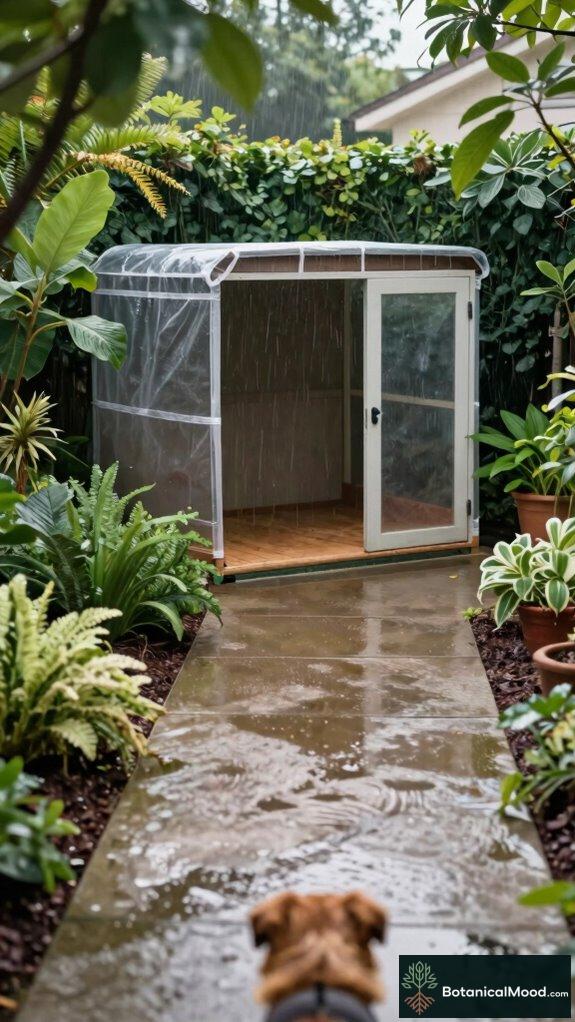
Once you’ve got wind-driven rain handled with clear PVC side curtains, I focus on the roof geometry so water never lingers. I start by setting a proper slope on the kennel or dog run cover made from 1000 gauge polythene or a glass clear PVC tarpaulin.
An 8° angle on the roof surface drives runoff toward a gutter line, then into my planned drainage solutions, so puddles and grime can’t form. I choose UV-resistant, rip-proof roof materials, keep folds minimal, and attach the cover under light tension for stiffness. Using digital temperature controllers helps maintain comfort levels inside the shelter while preventing moisture-related temperature fluctuations.
For senior dogs with mobility challenges, proper drainage is essential to prevent standing water that could create slipping hazards or accessible garden surfaces that remain safe year-round. Done right, heavy duty polyester and monotex panels shed water fast.
Secure Covers With Tie-Downs That Prevent Sagging
5 well-placed tie-downs keep a rainy-day pet run cover from sagging, and the difference shows up immediately once wind starts lifting edges and pooling water turns the fabric heavy. I secure my tarp materials with ball bungees through reinforced eyelets, so installation methods stay fast, clean, and repeatable across seasons.
After tightening the cover to an even, tensioned surface, I knot elastic cords at corner grommets, then add two midspan straps to eliminate drape.
For added stiffness, I sometimes choose heavy-duty polyester or 1000 gauge polythene, tuned like (Cucumis sativus) trellising lines, but without restriction.
Block Side Spray With Monotex Panels and Binding Bands
When rainy wind drives across a pet run, it doesn’t only soak the roof edge, it pushes side spray straight into the enclosure. So I add Monotex clear panels as cut-to-size monotone barrier wings and secure them with binding bands tied directly to the pen frame, usually at the corner posts and along the mid-rail to keep the panels taut and glare-light.
Monotex benefits show up immediately. The clear sheet diffuses impact raindrops, while binding band usage prevents fluttering gaps that splash paws and bedding, even during gusty March showers. These panels also help protect your nearby garden by creating a defined boundary that encourages dogs to stay contained within the pet run area.
I trim edges cleanly, then tighten bands in sequence for even tension.
Rainproof Rooftop Paw Paths
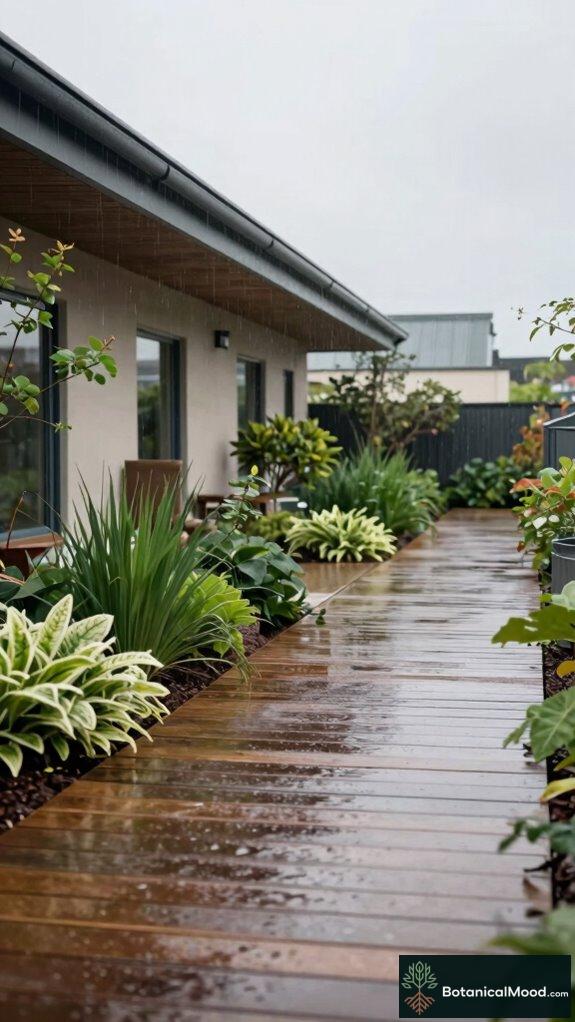
To keep wet paws from tracking mud across the run, I build rainproof rooftop paw paths that sit under the main cover line, then route runoff so it doesn’t drip onto the animal’s usual walking lane.
I choose elevated pathways with a slight 8° pitch, so water sheets toward a gutter, not into corner plant pots or bedding zones.
For decking, I use weather resistant materials like glass clear PVC tarpaulin or waterproof, UV-resistant rip-proof tarp membranes, fastened with ball bungees and cable ties through eyelets.
Around the edges, I bridge joints with elastic cords, giving stable footing even on rainy mornings. These covered pathways work alongside dog-centric landscape design principles that prioritize both pet comfort and garden functionality during wet weather.
Paver Drains for Muddy Paws
A well-designed paver drain cuts down mud tracking at the source, by giving muddy paw zones a place to discharge water rather than letting it pool and soak into bedding or soil.
I install a linear drain set into a compatible paver design, then edge it with tight joints and a compacted aggregate base, so runoff reaches gravel and a downpipe instead of the kennel path.
Choose drainage solutions with a slight fall—about 1–2%—and a cleanout grate sized for (Canis lupus familiaris) traffic.
In wet weeks, I’ve seen cleaner changes from turf to pavers, with fewer muddy streaks on nearby covers.
FAQ
Can I Reuse a Polythene Cover Safely After Winters and Heavy Storms?
Yes, you can usually reuse a polythene cover after winters and heavy storms, if cover maintenance passes. I inspect for tears, brittleness, UV cracking, and loose ties, then clean and patch, using polythene recycling only if it fails.
Which Tarp Material Best Prevents Mildew Buildup in Humid Climates?
In humid air, I choose a UV-resistant, rip-proof tarp fabric with strong tarp durability and mildew resistance—like waterproof polyester with UPF 50+. It lets moisture shed, resists fading, and keeps your pet enclosure from turning into a damp greenhouse.
How Do I Keep Side Curtains Secure During Strong Gusts and Storms?
I keep side curtains secure in gusts by using side curtain fasteners—ball bungees and cable ties through eyelets—plus storm resistant designs like binding bands and snug elastic cords. I tighten, anchor to sturdy posts, and check after each storm.
Will UPF Shade Reduce Airflow Enough to Overheat My Pet?
Yes—UPF shade can reduce airflow, but you can prevent pet overheating by choosing UPF 50+ fabric that still lets breezes through, keeping airflow gaps, and placing shade where wind naturally flows for effective cooling.
What’s the Correct Slope Angle to Prevent Pooling on Angled Roofs?
Right away, I’d aim for about an 8° slope for roof drainage; it consistently sheds water without pooling. Use slope measurements from the highest edge down, then test runoff and adjust slightly.
References
- https://keepingitcovered.wordpress.com/2013/12/09/protect-your-pet-how-to-cover-outdoor-cages-coops-and-runs/
- https://www.youtube.com/watch?v=BiLOHZt7D2A
- https://www.omlet.us/shop/chicken_keeping/outdoor_run_weather_protection/
- https://www.cleanrun.com/category/dog_agility_trial_and_travel_supplies/shade_cloth_tarps_and_hardware_for_dog_trials/index.cfm
- https://www.curtain-and-divider.com/product/outdoor-dog-kennel-covers-side-panels/
- https://alionhome.com/collections/pet-kennel-shade-cover
- https://smallpethomes.com/collections/weather-covers-shade
- https://halepetdoorsofaz.com/pet-runs/