My dog once shredded a “dog-proof” liner in three hours flat. Never again.
Now I roll with 30 mil Premium Grade RPE from Everything-Ponds. Hardy stuff. Pair it with geotextile underlayment, overlapping seams by six inches, bonding them tight with approved tape and primer. Top with gravel cushioning. Peace of mind restored.
Best Pond Liner Installation for Dog-Friendly Backyard Landscaping
Last summer, I mapped my entire garden layout around that pond. Native water irises. A flagstone border. Mapped sun patterns like my life depended on it. The liner choice dictated every decision: depth for root zones, edging materials, even which ornamental grasses could handle occasional splashing. Landscape architecture binds itself to practical constraints. My hydrangeas thrived. The dog? Never punctured it once. Small victories.
Quick Takeaways
- Choose a 30 mil Premium Grade RPE reinforced polyethylene liner with geotextile underlayment for maximum claw puncture resistance.
- Use thicker EPDM (about 45 mil) for better long-term pliability, helping it stay flexible over bends and channels.
- Avoid exposed HDPE, LDPE, and PVC because UV brittleness reduces claw resistance and increases patching over time.
- Add geotextile cushioning and 2–6 inches of gravel coverage to distribute pressure and protect against abrasion from digging.
- Install seams with compatible primer and manufacturer-approved seam tape, then inspect seams under oblique light after curing.
Choose RPE Pond Liners for Maximum Dog Claw Puncture Resistance
If you build a dog swimming pond, I recommend choosing an RPE reinforced polyethylene liner when your top priority is maximum claw puncture resistance.
RPE stands out as the strongest option against dog claw punctures while still staying lightweight and easy to contour around pond basins and shelf features. I like using 30 mil Premium Grade RPE with a geotextile underlayment, then covering it with 6-inch gravel for extra abrasion control, which boosts RPE advantages.
For innovation-minded builds, I specify UV-resistant reinforced polyethylene rated from -58°F to 175°F, supporting dog safety in everyday play. I source from Everything-Ponds or Farm Plastic Supply.
Pick EPDM Pond Liner Thickness That Stays Flexible
When you choose EPDM, I focus on thickness because it directly affects how well the liner stays pliable over time while it wraps shelf edges, undercuts, and waterfall channels without bridging.
For most constructed koi ponds and streams, a 45 mil EPDM sheet (like Pondgard, DuraLiner, or Stratton) gives the flexibility I want while still delivering long service life.
I compare thickness by how the membrane conforms after crevice burn-in, then recovers at bends, and resists permanent set, which is essential for EPDM benefits.
If you go thinner, you’ll notice less “give” during installation and seam finishing. Like microchip pet flaps, quality pond liners provide an extra layer of protection that justifies the investment in durability.
Avoid HDPE, LDPE, and PVC in Exposed Pond Areas
HDPE, LDPE, and PVC liners work well under cover, yet I avoid them in exposed pond areas because UV radiation and day-to-day flexing make them degrade faster than EPDM or RPE.
If your garden dog patrols the edge, I prioritize claw resistance at the first puncture. With HDPE/LDPE brittleness, flexibility benefits vanish, and liner lifespan drops, forcing sharper maintenance considerations and more frequent patchwork.
I also weigh environmental impact, since shortening service life increases replacements, transport, and waste.
For a cost comparison, cheaper sheet prices rarely win against EPDM Pondgard or RPE solutions, especially with smart installation techniques and tight seam sealing.
Use Geotextile Underlayment and Gravel Cover to Block Claws
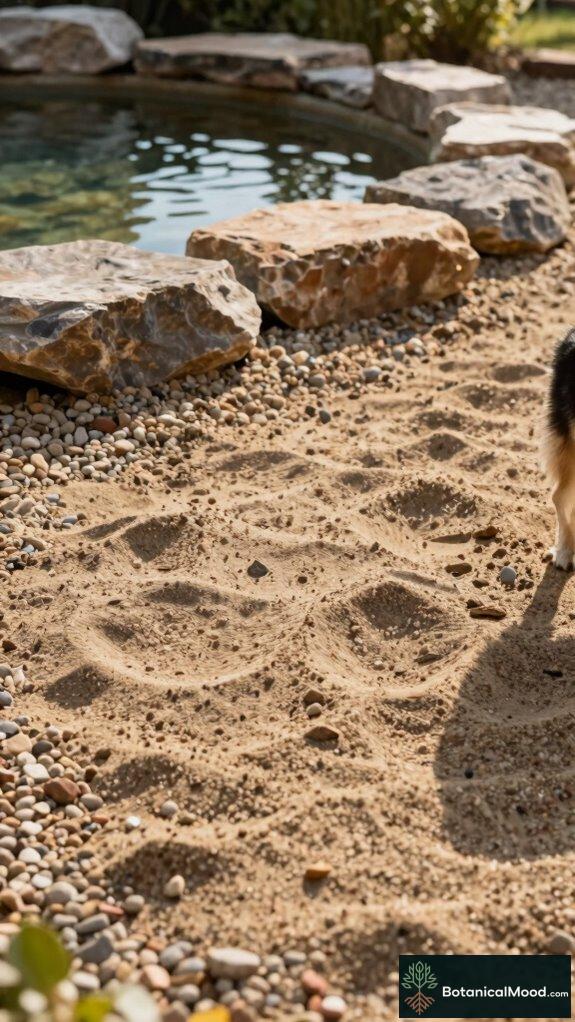
Geotextile underlayment plus a protective gravel or sand cover forms a hard barrier that blocks dog claws before they ever reach your pond liner, and I treat that layering like a structural system rather than a decorative add-on.
This approach delivers clear geotextile benefits: it cushions point loads, spreads stress, and reduces abrasion where claws would otherwise find weak spots in RPE or EPDM.
- Install geotextile underlayment with seams overlapped 6 in
- Build 2–6 in gravel layers, angular for stability
- Use compacted sand beneath for finer adjustment
- Place larger stones away from high-dig zones
- Inspect edge alterations near (Lythrum) and (Typha)
EPDM pond liners offer superior puncture resistance compared to lower-grade materials, making them an excellent foundation choice when combined with proper underlayment protection.
Match Liner Thickness and Protection to Your Pond Design Goals
Now that you’ve blocked claw access with a real barrier system, you can tune liner thickness and overall protection to the way your pond actually performs, from dog swimming layouts to koi holding basins and waterfall headworks along gravel paths.
I match liner customization to my pond design goals: for RPE, I choose 30 mil Premium Grade with geotextile underlayment plus a 6-inch gravel layer, and I upgrade to classic 40 mil when puncture risk is extreme, using products from Everything-Ponds or Agtec.
For koi, I favor 45 mil EPDM like Pondgard or DuraLiner, keeping it covered, flexible, and abrasion-ready. Combining a quality pond pressure filter with durable liner selection ensures your filtration system maintains water clarity while protecting against damage from pet activity.
(Laminaria digitata).
Seamed EPDM Liner Edges
How you finish the seams on an EPDM liner often determines whether your pond stays tight under foot traffic, waterfall vibration, and seasonal soil movement, so I pay special attention to seamed EPDM liner edges before I ever backfill.
I want seam durability plus reliable edge sealing, especially where a dog might patrol the rim, and where hydraulic pressure flexes the rubber. Safe EPDM pond liners are specifically engineered to withstand dog claw punctures and abrasion during active pet use.
- Trim overlap to a clean, even profile, no wrinkles (Flexibility preserves stress relief)
- Use manufacturer-approved seam tape and primer for compatibility
- Clamp evenly, hold cure time, then inspect under oblique light
- Seal penetrations at folds, corners, and notch points
- Cover seams with geotextile and a buffered gravel berm to reduce abrasion
Tiled Pond Liner Seams
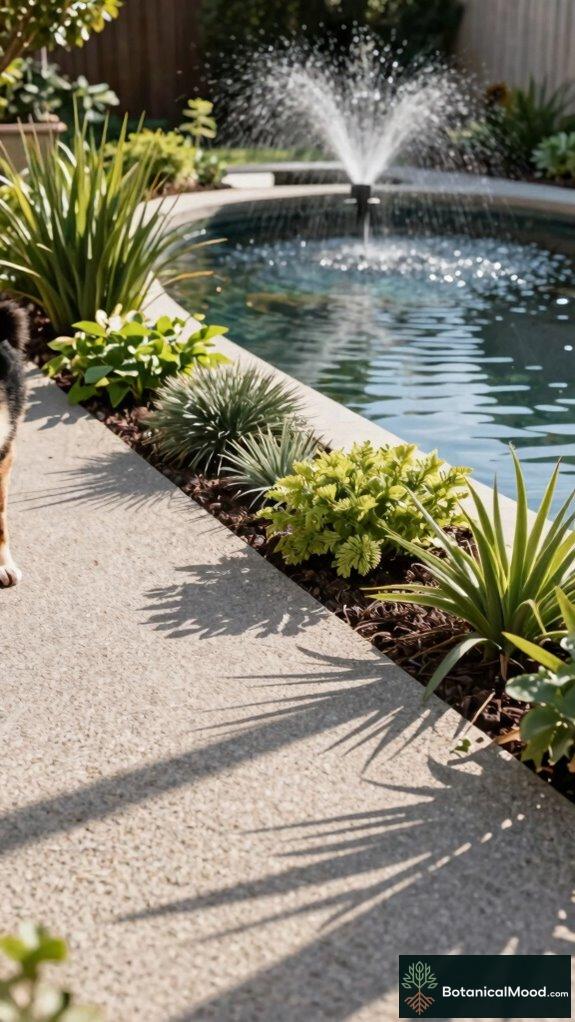
I treat each seam like a high-load joint, because tiled edges concentrate shear at grout junctions and dog claws exploit any weak overlap.
I prefer RPE, like 40 mil Everything-Ponds RPE with geotextile underlayment and 6-inch gravel, since its puncture resistance holds up when claws (Canis familiaris) test the boundary.
For EPDM, I use 45 mil Firestone-grade, then I elevate seam maintenance with clean edge trimming, contact-cured overlap, and protective under-tile flashing.
When installing pond liners around garden features like a misting arch, proper seam treatment becomes even more critical due to increased foot traffic and splash zones.
FAQ
How Deep Should Gravel and Underlayment Be Under RPE for Dogs?
For dogs, I recommend a 6-inch gravel layer over solid underlayment under RPE. Use underlayment thickness around 1/4 inch to protect claws and punctures, then finish with smooth, well-compacted gravel.
Is 30 Mil RPE Enough, or Do I Need 40 Mil for Claws?
Like a fortress, 30 mil RPE often works if you add geotextile and a 6-inch gravel layer; it delivers strong claw resistance. For maximum durability comparison, I’d choose 40 mil, especially for rough, frequent clawing.
Does EPDM Need Geotextile Underlayment, Even if It’s Flexible?
Yes, I still recommend geotextile underlayment under EPDM, even though it’s flexible. Geotextile benefits reduce punctures from roots and grit, while flexible material drawbacks include hiding abrasive debris that eventually wears edges and seams.
Which Is Safer for Outdoor Exposure: EPDM or Reinforced Polyethylene?
EPDM wins for outdoor safety: it stays UV-tough, flexible, and fish-safe, delivering strong synthetic durability. Reinforced polyethylene can puncture well, but EPDM’s pliability and coatings better resist weather aging for long runs.
Can Dogs Damage Seams, and How Do I Reinforce Seam Areas?
Yes, dogs can damage seams from dog claw impact if edges lift. I reinforce seam areas by heat-welding or double-stitched seam tapes, then fully covering with geotextile underlayment and smoothing gravel so no stress points remain.
References
- https://www.everything-ponds.com/rugged-liner.html
- https://farmplasticsupply.com/Construction-Materials/Water-Liner
- https://universalpondsupply.com/Category/rubber-pond-liners
- https://www.garvee.com/collections/pond-liner
- https://shop.naturalwaterscapes.com/pond-construction-supplies/pond-liner/
- https://www.agtec.com/waterproof-pond-and-containment-liners
- https://justpondliners.com