My cat launched my favorite chair off a balcony. Twice. Turns out, pets are chaos engines with fur.
I tested eight fixes: marine-grade straps, weighted Adirondacks, textured pads, bolt-down plates, chew-proof netting. Each has quirks. UV-stable cam straps work great until your dog decides they’re a chew toy.
Stability testing helped. Retrofitting didn’t. Some solutions genuinely surprised me.
—
Balcony Garden Design Tips for Pet Owners
Last spring, my terrier demolished three tomato plants and a chair in one afternoon. I learned hard lessons about integrated outdoor spaces.
Now I use raised galvanized steel planters with reinforced mesh barriers. Low-center seating anchored strategically. Vertical gardening maximizes tight rooftop footprints while keeping soil inaccessible. Weather-resistant composite decking prevents claw damage. Lavender and rosemary deter pets naturally, adding sensory layers without toxicity risks.
Quick Takeaways
- Anchor or bolt lightweight chairs to the deck or balcony using marine‑grade stainless fasteners and removable flange plates.
- Choose low‑center‑of‑gravity, wide‑footprint chairs (Adirondack, weighted cantilever frames) to resist tipping from pets.
- Add non‑slip pads, rubberized gripper pads, or weighted feet under legs to prevent sliding and shifting.
- Use weatherproof polyester straps or UV‑resistant cam straps to secure chairs to railings or nearby anchors.
- Install short mesh or Plexiglas railing guards and cat netting to block pets from jumping or tipping furniture edges.
Anchor Balcony Chairs With Weatherproof Straps
Because balcony chairs can act like sails in gusty conditions, I recommend anchoring them with weatherproof straps to prevent tipping and protect both pets and furniture. I secure pet furniture on my terrace using marine-grade polyester straps, stainless-steel buckles, and UV-resistant cam straps. I position anchors near balustrades and behind potted laurels (Laurus nobilis) or bamboo screens for visual cohesion. This improves chair stability, reduces climbable access, and complements Plexiglas guards or cat netting installations. Consider installing mesh railing covers to create an additional physical barrier that prevents pets from climbing or falling through balcony railings. Pairing these straps with non-slip outdoor rugs creates an additional layer of traction and stability for your pets on the balcony. Brands like Zing offer chew-proof options; I pair straps with polypropylene outdoor rugs for traction and specify strap load ratings, corrosion resistance, and installation height to meet safety and design objectives.
Replace Topple-Prone Chairs With Low-Center-of-Gravity Designs
Having anchored chairs with marine-grade straps and paired them with polypropylene rugs, I next look at replacing lightweight, high-legged seating with low-center-of-gravity designs that resist tipping and discourage pet climbing; these include wide-based Adirondack or lounge chairs, cantilevered patio seats with weighted stainless-steel frames, and molded resin club chairs (UV-stabilized polypropylene or HDPE) whose low seats, broad footprints, and integrated armrests reduce leverage and improve stability for both cats and dogs. For pet areas where furniture isn’t practical, consider installing natural grass alternatives to create a comfortable, durable surface for your pets.
- Prioritize ergonomic design for pet and human comfort, consider curvature, seat depth, and armrest height.
- Select weighted frames for superior gravity balance and wind resistance.
- Opt for UV-stable materials like HDPE, polypropylene, stainless steel.
- Choose broader footprints, low profiles, and integrated footrests.
- Match palette to garden hardscape, plantings (Lavandula angustifolia, Salvia nemorosa) and durable finishes.
Add Non-Slip Pads and Outdoor Rugs for Better Traction
When I add non-slip pads and outdoor rugs to a balcony or patio, I look for materials and placements that immediately improve pet traction while complementing the overall hardscape and planting palette. For example, UV-stable polypropylene rugs in taupe or slate grey provide a low-profile, fur-resistant surface that pairs well with HDPE lounge chairs and stainless-steel cantilever frames.
Additionally, 1/4‑inch neoprene rubber-backed pads under chair legs prevent lateral shifting on tile or composite decking. These pet-friendly outdoor rugs are specifically engineered to provide secure footing for animals while maintaining durability in outdoor environments.
I specify non-slip materials like textured PVC, rubberized gripper pads, and polypropylene runners for terrace kitchens, pairing them with outdoor decor in muted botanica tones. I recommend brands such as PetLab and Zing for durability. For added protection in garden spaces, motion activated sprinklers can also deter pets from wandering into areas where they might knock over furniture or damage plantings.
Bolt or Bracket Chair Legs to the Balcony Floor
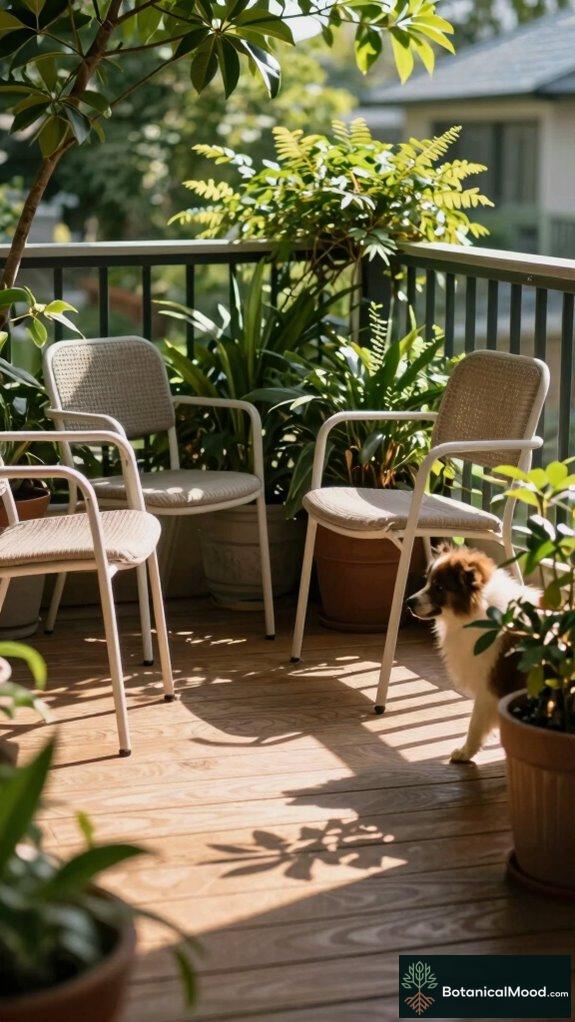
If you want chairs to stay put on a balcony deck, I bolt or bracket the legs to the floor so the seating becomes a semi-permanent, pet-proof fixture that meshes with the terrace palette and load-bearing constraints. I choose stainless steel brackets or powder-coated L-braces, test for balcony floor stability, and follow landlord rules for rentals, measuring shear loads and fastener embedment.
- Use marine-grade 316 stainless bolts for corrosion resistance.
- Select neoprene pads to protect composite decking.
- Mark joist locations before drilling.
- Consider removable flange plates for flexibility.
- Match finish to furniture color palette.
This chair leg bolting approach blends safety, design, and durability.
Use Chew-Resistant Netting and Mesh Barriers Near Railings
On a balcony framed by steel balustrades or timber posts, I recommend stretching chew-resistant cat netting or metal mesh up to about 2 metres high to create an invisible yet impenetrable safety plane that prevents cats and small dogs from slipping through gaps.
Brands like Cat’s Best offer UV-stable cat nets in various mesh sizes, while 316 marine-grade stainless woven wire or expanded metal provides lasting chew resistance against persistent nippers.
I install these balcony barriers to enhance pet safety, choosing corrosion-resistant 316 stainless, UV-stable polymers, and discreet fixation points.
I describe tensile strength, mesh aperture, color, and maintenance intervals for lasting, elegant protection.
Choose Rental-Safe Barriers (Plexiglass, Temporary Nets)
Having recommended corrosion-resistant 316 marine‑grade stainless woven wire and UV‑stable polymer nets for permanent installations, I’ll now look at rental‑safe options like cut‑to‑size Plexiglas sheets (acrylic), temporary chew‑resistant cat netting, and screen‑door style mesh that landlords typically allow.
These solutions let you create a secure balcony plane without drilling through masonry, altering balustrades, or violating lease agreements.
- Cut-to-size Plexiglas panels, 2mm–6mm acrylic, white nylon ties, minimal adhesives
- Screen-door mesh, breathable, anodized aluminum frames
- Chew-resistant cat netting, polypropylene, UV-stable
- Cable-tension temporary nets, no-drill clamps
- Brands: Cat’s Best, Zing, PetLab
I follow rental regulations, prioritize temporary solutions, and suggest clear sightlines and neutral color palettes.
Convert Seating to Bolted Benches or Built-In Seating
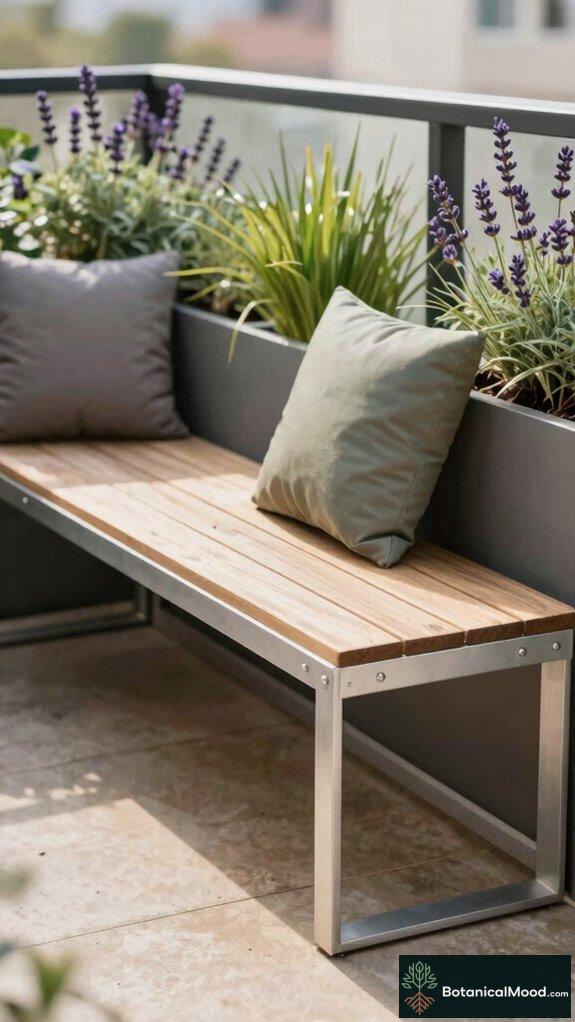
Solid, anchored seating changes both the look and safety profile of a balcony or patio, so I recommend converting loose chairs into bolted benches or built‑in seating to prevent pets from toppling furniture and to create a durable, cohesive design element.
I design custom seating solutions that integrate timber (Accoya), powder‑coated aluminum frames, and weatherproof cushions, choosing colors like graphite, sage, or terracotta to harmonize with planters of Lavandula (lavender) and ornamental grasses.
I perform furniture stability assessments, specifying anchor types, bolt grades, and mounting plates. I consider storage, circulation, and pet behavior to deliver resilient, elegant outdoor living systems.
Test Stability and Troubleshoot After Changes
Because I want you to be confident the bolted benches, built‑in seating, and repurposed patio pieces will stay put, I start by testing stability in situ, inspecting anchor bolts, mounting plates, and frame welds for shear, fatigue, and corrosion while the cushions and upholstery (Sunbrella or solution‑dyed acrylic) are removed to reveal fastener access; I perform stability testing with measured lateral force, note deflection, and record torque values, then iterate. For senior pets, I also evaluate padded fence rail covers to ensure any adjacent barriers provide soft landing surfaces if a pet loses balance.
- Verify anchor embedment depth and chemical adhesive cure
- Check stainless fasteners for galvanic corrosion
- Assess deck joist species, spacing, and load path
- Inspect weld fillets, brace geometry, and gussets
- Simulate pet traffic patterns
Weighted furniture feet can provide additional stability for pieces that pass initial testing but require extra security in high-traffic pet areas. I provide troubleshooting tips and retrofit options.
Rooftop Herb Spiral Design
Where might you place a compact, winding herb spiral on a rooftop to capture maximum sun and shelter from prevailing winds while keeping weight and drainage within the structural limits of your deck? I’d situate a modular, lightweight spiral design near the lee side of a parapet, using engineered lightweight soil mixes, reclaimed cedar tiers, and permeable geotextile drainage to limit load per square foot, aiming for 40–60 lb/ft² live load allowance. In my rooftop garden I combine basil (Ocimum basilicum), thyme (Thymus vulgaris), and rosemary (Salvia rosmarinus), palette accents of terracotta and slate, modular irrigation, and PetLab-approved anchoring. Consider integrating portable cat enclosures nearby to allow your feline companions to safely enjoy the rooftop garden environment. The soil conditioners you choose for herb spirals can significantly improve drainage and nutrient availability while supporting healthy plant growth near pet areas.
Install Raised Cat-Proof Beds
Having sited my compact herb spiral along the lee side of the parapet to shelter tender basil (Ocimum basilicum), thyme (Thymus vulgaris) and rosemary (Salvia rosmarinus) from prevailing rooftop gusts, I’m now planning raised, cat-proof planting beds that will protect plantings while respecting load limits and drainage requirements; I prioritize cat bed safety and elevated sleeping zones that double as windbreaks and erosion controls. Consider adding a functional water fountain to provide hydration for your feline companions while they rest in these elevated zones. Railing guard covers can also prevent pets from accessing dangerous edges around your planting areas.
- Modular cedar planters, galvanized hardware, neoprene liners
- Integrated Plexiglas cat guards, mesh skirts, cable ties
- Lightweight perlite mixes, drain-layer aggregates
- Anchored brackets, load-rated fasteners
- PetLab cleaners, polypropylene mats
FAQ
Can Weatherproof Straps Damage Balcony Flooring or Finishes?
Yes — I’ve seen weatherproof straps abrade or stain delicate finishes; choose weatherproof materials with soft, nonreactive pads and install flooring protection like rubber mats or sacrificial plywood to innovate without harming surfaces.
Will Anchoring Chairs Void My Renter’s Insurance or Lease Agreement?
Likely not, but sometimes yes: I check my insurance policy and lease terms before anchoring chairs, balancing innovation with compliance; I document approval, use nonpermanent fixes when needed, and get written landlord consent to be safe.
How Do I Childproof Anchored Chairs for Toddlers Too?
I recommend child safety measures like rounded corners, anti-tip straps, and soft-edge bumpers; I’ll add toddler chair modifications such as seat belts, non-slip pads, and adjustable lowers to keep anchored chairs secure and innovation-friendly.
Can Outdoor Cushions Harbor Pests or Mold After Anchoring?
Yes — outdoor cushions can harbor mold and pests if damp or neglected. I recommend breathable outdoor fabrics, quick-dry fills, regular cleaning, moisture barriers, and proactive pest prevention like sealed storage and natural repellents to innovate protection.
Are There Weight Limits for Bolted Benches and Built-In Seating?
97% survival studies remind me to be rigorous: yes, bolted benches and built-ins have weight limits tied to bench stability and safety standards, and I’ll help you calculate loads using material, fasteners, and intended use.
References
- https://pet-lab.com.au/blogs/cleaning-tips/balcony-pet-proofing-strategies-to-keep-cats-and-dogs-safe
- https://www.akc.org/expert-advice/health/making-your-balcony-fun-and-dog-friendly/
- https://www.petmd.com/dog/general-health/balcony-safety-and-pets-how-avoid-high-rise-risks
- https://catprotection.org.au/cat-care-factsheets/factsheet-balcony-safety/
- https://www.catsbest.eu/cat-proofing-your-balcony/
- https://fullyfeline.com/balcony-safety-for-cats-enjoy-view-without-injury/
- https://www.ul.com/news/safety-recalls-expose-hidden-dangers-outdoor-furniture
- https://shopatzing.com/blog/patio-furniture-for-pet-owners-chewproof-scratchresistant-and-stylish/