My dog actually melted once. Not literally, but close enough. Now I fight sun with science and spite.
Porcelain slabs that laugh at heat.
Cedar decking, painted white, because I learned the hard way.
Ceramic planters. Stone benches. Thermal mass is my new religion.
Shade cloth. Seventy to ninety percent. Stainless fittings so nothing rusts.
Self-watering pots. Saucers. Lazy genius.
Columnar evergreens. Buxus. Dwarf olive ‘Little Ollie’. Wind breaks. Afternoon shade.
Practical. Low maintenance. Pets survive. I sleep better.
Want install tips? I have scars to share.
Pet-Friendly Balcony Garden Layout Mistakes I Made in July
I once arranged everything for aesthetics.
Vertical garden against the railing. Metal trellis. By noon, that wall radiated like a pizza oven. My corgi refused to walk.
Now I map sun paths first.
Morning light hits east planters. Afternoon shade clusters west. Raised beds with drainage gravel underneath, not directly on concrete that bakes roots.
I spaced evergreens too tightly once. Airflow died. Mildew bloomed. Lesson learned.
Companion planting helped. Thyme between pavers. Releases scent, confuses pests, tolerates foot traffic.
Lighting matters too. Solar path lights, warm white, 2700K. Extends usable hours without heat output.
I still tweak every season. Garden design isn’t finished. It’s negotiated.
Quick Takeaways
- Combine layered shade (awnings, 70–90% UV cloth, slatted screens) with light-colored decking to reduce surface and radiant heat.
- Use porous or light porcelain slabs and ceramic planters to reflect sun and enable evaporative cooling when misted.
- Add thermal-mass seating (stone benches, ceramic pots) and shallow water reservoirs to stabilize temperature swings.
- Prioritize pet-safe, wind-tolerant plants (dwarf olive, boxwood, African violet, spider plant) in deep troughs and varied heights for shade and screening.
- Install passive airflow features—air-gap modular tiles, slatted screens, and solar fans—to improve ventilation without continuous power.
Immediate Fixes: Cool a Hot Balcony for Pets
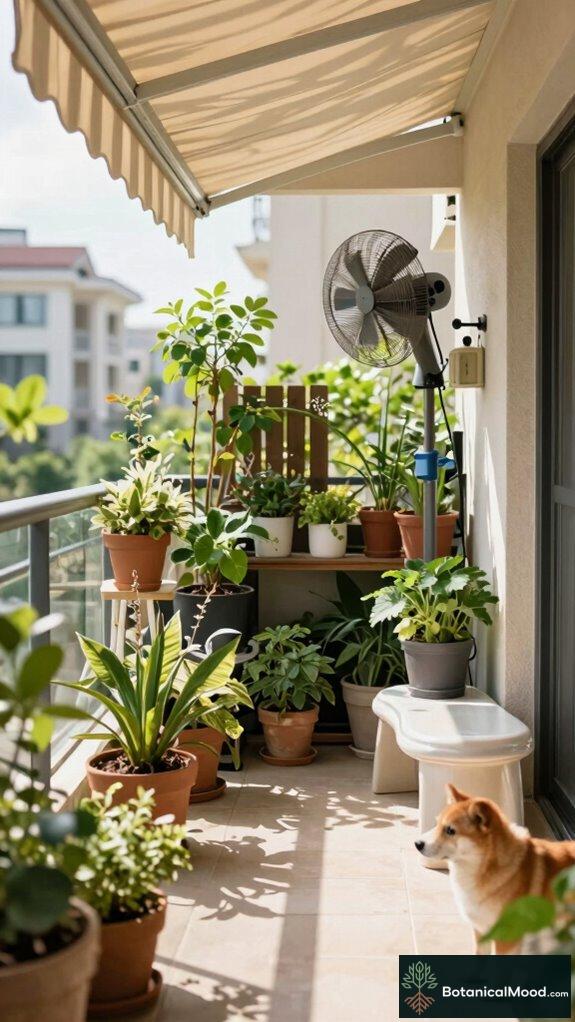
Because pets can’t tell us when a balcony has become a heat trap, I’ll start with immediate, practical fixes you can implement today to cool the space and protect paws and breathing—shade, surface cooling, and water management.
I recommend installing adjustable awnings, reflective sail shades, and heat reflective surfaces like white-coated panels to deflect solar gain, paired with thermal mass techniques—ceramic planters or stone benches that moderate temperature swings. Solar powered fans can provide additional air circulation to enhance cooling efficiency on particularly hot days.
Combine self-watering pots (w/ saucers), light-colored textiles, and temporary misting with porcelain slabs for directed evaporation; choose pet-safe plants (Saintpaulia, Pelargonium) and durable fittings such as Oscillot® for safe, adaptive urban patios. Vertical privacy screens can further enhance shade coverage while maintaining airflow to keep your pet’s outdoor space comfortable.
Cool Patio Slabs and Floors With Passive Materials
When I assess a hot balcony, I start by treating the slabs and flooring as active elements in the microclimate—porcelain tiles, concrete pavers, and painted wood decks each store and radiate heat differently, so selecting passive materials and surface treatments can cut peak temperatures by several degrees and protect pet paws and respiratory comfort. Strategic placement of these cooling surfaces can also naturally deter dogs from less suitable areas of the balcony garden. Integrating living plants around your flooring choices creates stylish landscaping that enhances both cooling and aesthetic appeal.
- Light-colored porcelain slabs (glazed porcelain) for superior heat reflection and easy evaporative cooling.
- Porous concrete pavers with joint sand to limit thermal mass while enhancing drainage.
- Painted cedar decking with reflective, low-VOC coatings for surface temperature control.
- Modular composite tiles (eco-brand composites) with air-gap undersides for convective cooling.
Create a Pet-Safe Shady Zone (Access and Placement)
To create a pet-safe shady zone on a balcony, I position layers of protection—structural shade, soft footing, and plant screening—so animals can access cooler microclimates without risking burns or escape.
I favor slatted privacy screens or a retractable awning over dense fabric canopies, pair those with columnar evergreens (e.g., Buxus sempervirens or dwarf olives, Olea europaea ‘Little Ollie’) for wind buffering and year-round screening, and place light-colored porcelain slabs or artificial turf beneath to keep surface temperatures down while providing a comfortable texture for paws.
I design access ramps and low thresholds, orient shady retreats near walls to reduce reflected heat, ensure secure risers and Oscillot®-style barriers for containment, and select pet friendly design details—non-toxic finishes, shallow saucers for drainage, and modular planters that buffer sun while preserving sightlines and airflow. Sun shade sails offer an additional structural option for creating natural shade solutions that complement permanent installations like awnings and screens.
Strategic placement of solar bat houses nearby can enhance the garden ecosystem while maintaining safe nocturnal lighting that won’t disturb resting pets during cooler evening hours.
Pet-Safe Plants and Placement for Natural Shade
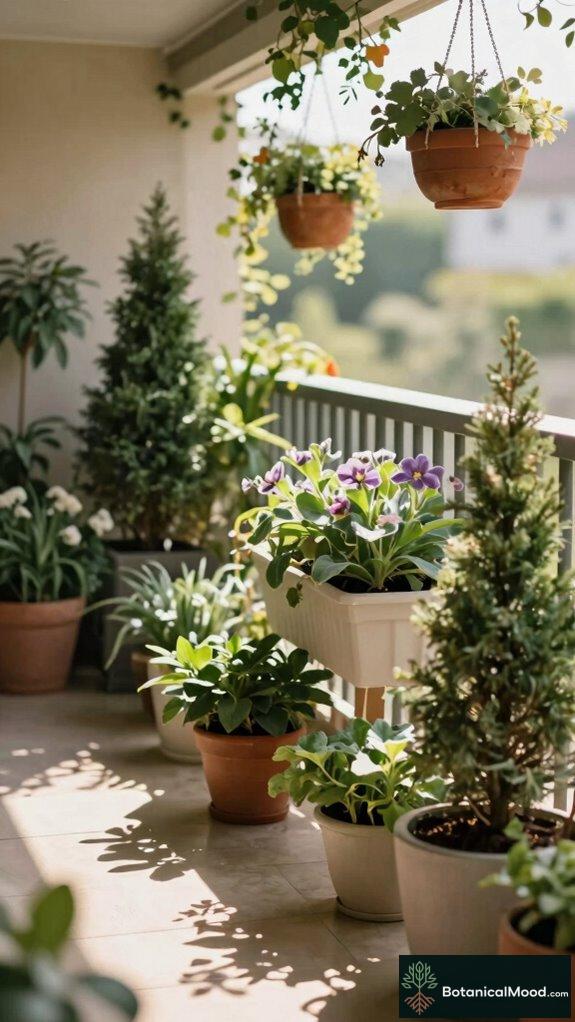
As I plan pet-safe shade using plants, I prioritize species that combine dense canopy, low maintenance, and non-toxicity—selecting compact columnar evergreens like dwarf olive (Olea europaea ‘Little Ollie’) or boxwood (Buxus sempervirens) for year-round screening, broad-leaved perennials such as African violet (Saintpaulia spp.) and spider plant (Chlorophytum comosum) for understory softness, and sun-tolerant, pet-safe shrubs that tolerate wind and reflected heat from glass surfaces.
I place taller, wind-resistant specimens at the perimeter to cast afternoon shade and reduce radiant flooring temperatures. I situate lighter-colored, shallow-rooted containers nearer walking paths to keep root zones cool. Complementing these plantings, AI pet cameras positioned throughout the balcony garden allow you to monitor your pets’ comfort levels and behavior in real time, ensuring they remain safe in shaded areas during peak heat hours.
I use layered containers—hanging baskets, mid-height planters, and raised beds—to create vertical shade gradients while preserving airflow, sightlines, and access for pets. When selecting plants for these varied heights, focus on native plants that are safe to ensure your pets remain protected from toxic species while enjoying the garden environment.
- Dense columnar screening at perimeter for afternoon shade and privacy.
- Mid-level planters (20–40 cm) with non-toxic perennials for filtered shade.
- Hanging baskets to create upper canopy and reduce slab heat gain.
- Light-colored, shallow pots near paths, mulched soil, self-watering trays for root cooling.
Add Screens and Windbreaks to Cut Heat and Glare
Although I usually start design work by mapping sun angles and prevailing winds, I also prioritize adding screens and windbreaks early on because well-placed barriers—slatted timber walls, bamboo reed panels, or commercial privacy screens like those from Home Depot or Gardeco—can cut reflected glare, lower radiant heat on porcelain slabs, and shelter sensitive plants and pets from drying gusts.
I recommend 1.2–1.8 m high screens at the exposed perimeter, spaced or slatted to allow airflow, or evergreen living screens such as dwarf olive (Olea europaea ‘Little Ollie’) and boxwood (Buxus sempervirens) planted in deep 40–60 cm troughs to provide year-round screening. Dog-friendly garden fencing serves the same protective function while adding a defined boundary to your outdoor space.
Climbers like Trachelospermum jasminoides or Parthenocissus inserta trained on trellis reduce midday reflection from glass and create a multilayered shade profile that cools the balcony surface, protects root zones in shallow containers, and maintains sightlines and ventilation for pets.
I select modular screen options, assess windbreak materials for porosity versus solidity, and favor light tones or natural finishes to reduce heat absorption while preserving airflow and pet visibility. Consider including non-toxic plants like valerian in your screening design to provide enrichment opportunities for outdoor cats while maintaining the cooling benefits of your balcony garden.
Water, Drainage, and Low-Mess Setups for Cooling
Building on the screen and windbreak strategy, I now focus on how water, drainage, and low‑mess systems work together to cool porcelain slabs, keep root zones stable, and protect pets from slippery runoff and standing water. Effective setups combine self‑watering containers (wicking beds, reservoir pots like Lechuza or Gro‑dan systems) with saucers and directed drainage.
Lightweight collapsible watering cans for precise application, and outdoor waterproof rugs or trays that channel overflow to balcony drains, are also important. Materials such as impermeable porcelain tiles benefit from periodic misting or poured cooling with minimal soakage because they don’t absorb water.
Concrete surfaces need more deliberate runoff paths to avoid pooling. Plant choices—deep‑rooted troughs for Buxus (Buxus sempervirens), drought‑tolerant dwarf olive (Olea europaea ‘Little Ollie’), and shallow pots for African violet (Saintpaulia ionantha) and Chlorophytum (spider plant)—must pair with mulch layers and saucer capacity (volume matched to pot size, typically 10–20% of container volume) to maintain moisture without creating algae or insect habitats that could bother animals. For pet safety, consider adding pea gravel edging around planter bases to define potty zones and improve drainage while keeping surfaces comfortable for paws. Natural grass alternatives like artificial turf can also be strategically placed in designated pet areas to reduce dust and improve comfort underfoot while maintaining easy cleaning protocols.
- Porcelain slab misting and timed evaporation.
- Reservoir pots with overflow routed to drains.
- Mulched troughs for root stability and insulation.
- Saucer volumes sized to container capacity to limit mess.
Succulent-Filled Microterraces
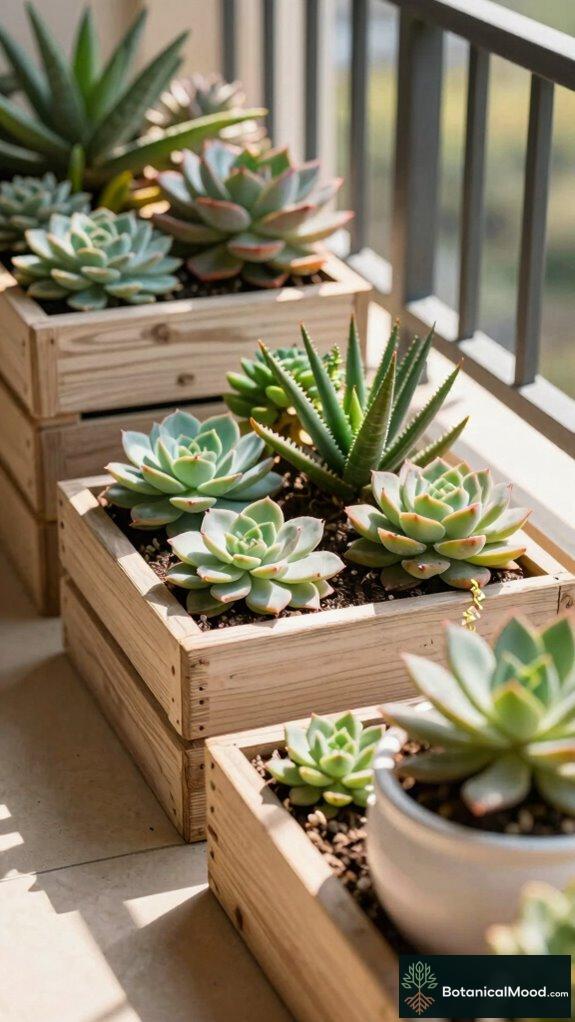
Succulent microterraces fascinate me because they let you layer drought‑tolerant species, textural contrast, and passive cooling into compact balcony designs that are safe for pets. I sketch terrace design tiers using reclaimed cedar, modular plastic planters, and porcelain slabs to reflect heat, arranging rosettes of Echeveria (Echeveria spp.), trailing Sedum (Sedum spp.), and Aloe vera as focal points.
I value microclimate benefits: each level shades the one below, reduces soil temperature by several degrees, and channels breezes. Species like Echeveria and Sedum are among the winter hardy pet-safe succulents that thrive in outdoor garden conditions while posing no toxicity risk to curious pets. When selecting species for cat-accessible gardens, I prioritize non-toxic succulent varieties that won’t cause harm if nibbled or ingested. I specify light‑colored pots, well‑draining gritty mixes, mulch, and low, pet‑safe spacing for airflow and maintenance access.
Shade-Cloth Hammock Nook
I favor a 70–90% UV‑rated shade cloth hung on stainless‑steel hardware, tensioned between load‑rated eye bolts or a freestanding powder‑coated frame, positioned to cast early‑afternoon shade over porcelain or light‑colored composite decking where ceramic slabs (porcelain) can be misted to amplify evaporative cooling. For additional cooling benefits, consider supplementing your shade cloth strategy with fast growing willow trees positioned to provide natural, living shade as they mature. Pet-friendly shade solutions should prioritize breathable material construction to ensure adequate air circulation while protecting animals from harmful UV exposure.
- Powder‑coated frame, stainless fittings, load ratings for safety.
- 70–90% UV‑rated shade materials, breathable woven polyethylene.
- Hammock design sized for pet weight, washable outdoor fabric.
- Integrate climbing Trachelospermum jasminoides, Plectranthus, and potted Olea europaea for structure.
FAQ
Can Balcony Cooling Strategies Void My Building Insurance or Lease Agreement?
Absolutely—I’m not saying it’ll explode, but any modifications can affect insurance implications and lease agreements; I always check policies and landlord consent, document changes, and prefer reversible, low-risk cooling innovations to avoid disputes.
How Do I Prevent Mold From Frequent Slab Misting?
I prevent mold by combining mold prevention with moisture management: I mist sparingly, improve drainage and airflow, use quick-drying porcelain slabs, schedule misting mornings, add breathable trays, and inspect regularly so innovation meets practical, low-maintenance care.
Can Cooling Water Runoff Attract Pests or Mosquitoes?
Yes — I worry cooling runoff can cause pest attraction if water pools; I recommend fast-draining trays, covered collection, slight slope to drains, timed misting, and adding mosquito dunk or biological larvicide to prevent breeding.
Are Scented Plants Safe for Pets With Allergies?
Scented plants can be risky; I caution scented safety and advise allergy considerations: choose low-volatile, pet-safe varieties, monitor reactions, and innovate with unscented fragrant substitutes or air-purifying plants to reduce triggers.
What’s the Best Way to Winterize Pet Cooling Features?
I recommend insulating water trays and shelter floors, removing or storing porous cooling pads, and limiting active heating sources to low-wattage, pet-safe options; I’ll retrofit windbreaks and smart thermostats for efficient, innovative winter protection.
References
- https://www.pavingdirect.com/info/how-to-create-cooling-corner-garden-pets-summer/
- https://oscillotamerica.com/blogs/news/oscillot®-compatible-balcony-ideas-for-pet-safe-apartments-in-the-usa
- https://www.youtube.com/watch?v=amuKdF9vkGM
- https://www.gardendesign.com/small/balcony-garden.html
- https://naturehills.com/blogs/garden-blog/creating-a-lush-balcony-garden-the-apartment-dwellers-guide-to-gardening