Who knew grass could be the main character? I spent years ignoring the “boring” stuff until my nephew spent twenty minutes mesmerized by zebra grass whispering in the wind. Game changed.
Now? I’m obsessed.
My go-tos: Miscanthus for that tall, shivery canopy sound. Karl Foerster for crisp, upright structure. Fountain grass because watching it bounce back after touch never gets old. Blonde Ambition for low, grabby exploration. Molinia when I want neat without trying too hard.
Clump-formers only. Invasives are a hard pass. Windward placement, sandy loam, annual chop. Skip the stabby seed heads around kids.
Sensory Garden Design Mistakes I Learned the Hard Way
I once planted a gorgeous feather reed grass border. Looked magazine-worthy. Then my dog ran through it. Cue awns in paws, emergency vet visit, $340 bill. Trauma all around.
Now I audit every grass for “soft factor.” I map wind patterns with ribbon tests before planting anything. I layer heights deliberately: tall back, mid, low front. Think theater seating, not random chaos.
Texture contrast matters enormously. Pair the silky Pennisetum against stiff Calamagrostis. Add aromatic herbs nearby, maybe lavender or rosemary, for multi-sensory layering. Hardscaping helps too, gravel paths that crunch, wooden benches that warm in sun.
Soil prep is where I got cocky once. Assumed my clay would “figure it out.” Spoiler: it didn’t. Now I amend religiously, drainage first, always.
The best sensory gardens? They reward patience. Mine took three seasons to really sing. Worth every itchy, sweaty, doubt-filled moment.
Quick Takeaways
- Choose clump-forming, non-invasive grasses (Miscanthus, Karl Foerster, fountain grass) for safe, defined edges and clear sightlines.
- Select heights (12–18 in to 5–6 ft) to provide layered tactile reach and varied rustling frequencies.
- Plant windward borders, berms, and path edges where airflow and activity intersect for strongest sound and motion.
- Favor drought-tolerant, fast-draining soils and amend clay with compost; adjust watering during establishment.
- Prioritize soft-bladed varieties, minimal awns, and retained stems for winter interest, pollinator habitat, and child-safe sensory play.
Best Rustling Grasses for Sensory Play (Quick Picks)
Why choose rustling grasses for sensory play?
I recommend interactive rustling specimens like Miscanthus (zebra grass), Calamagrostis x acutiflora (‘Karl Foerster’), and Pennisetum (fountain grass) for immersive sensory exploration, because their seed heads, panicles, and variegated blades create audible white-noise, motion and seasonal color shifts that enhance play spaces.
I specify heights, textures, and hardiness—5–6 ft Miscanthus for drama, 2–3 ft Karl Foerster for structure, 3–4 ft Pennisetum for backlit glow—so designers and educators can select drought-tolerant, low-maintenance plants that deliver tactile feedback, visual contrast, and consistent movement in gardens.
Top Rustling Varieties Kids and Pets Love
Building on the quick picks I recommended—Miscanthus (zebra grass), Calamagrostis x acutiflora ‘Karl Foerster’, and Pennisetum (fountain grass)—I’ll highlight rustling varieties that reliably engage children and household pets through sound, texture, and safe form.
For designers and educators, I point to heights, tactile attributes, and seasonal behavior. For example, the tall, laterally striped Miscanthus sinensis at 5–6 ft creates a dramatic, whispering canopy and persistent seedheads. The clump-forming Calamagrostis ‘Karl Foerster’ at 2–3 ft has upright sandy panicles that stay erect into winter for year-round sensory cues.
Additionally, the soft-plumed Pennisetum alopecuroides at 3–4 ft features rose-purple flower spikes that glow when backlit and provide gentle tickling motion.
Lower-growing, pet-friendly options like Bouteloua gracilis ‘Blonde Ambition’ (12–18 in) have eyelash-like seed heads for close-up exploration. The well-mannered Molinia caerulea ‘Variegata’ offers tidy clumps and soft yellow blades.
These choices provide durable, deer-resistant, drought-tolerant options that tolerate a range of soils and hardiness zones (Zones 4–9), allowing you to match scale, color, and maintenance to play area constraints while minimizing sharp or brittle foliage that could harm small hands or paws.
Where to Plant Rustling Grasses for Best Sound
I usually place rustling ornamental grasses where airflow, sightlines, and human or animal activity intersect, because sound intensity and rhythmic motion depend on exposure, scale, and planting arrangement; for example, a 3–6 ft Miscanthus (Miscanthus sinensis) planted on a windward border or hillcrest will catch prevailing breezes and create long, whispering waves, while lower-growing Bouteloua gracilis ‘Blonde Ambition’ grouped in front of a play lawn or gravel path produces delicate, high-frequency rattles at child and pet height.
I prioritize planting locations for acoustic enhancement: windward berms, path edges, play zones, meadow masses, and courtyard screens, using scale, clumping (Calamagrostis), and vertical contrast (Panicum ‘Northwind’) to tune pitch, volume, and visual rhythm.
Soil, Water, Hardiness & Low‑Maintenance Care
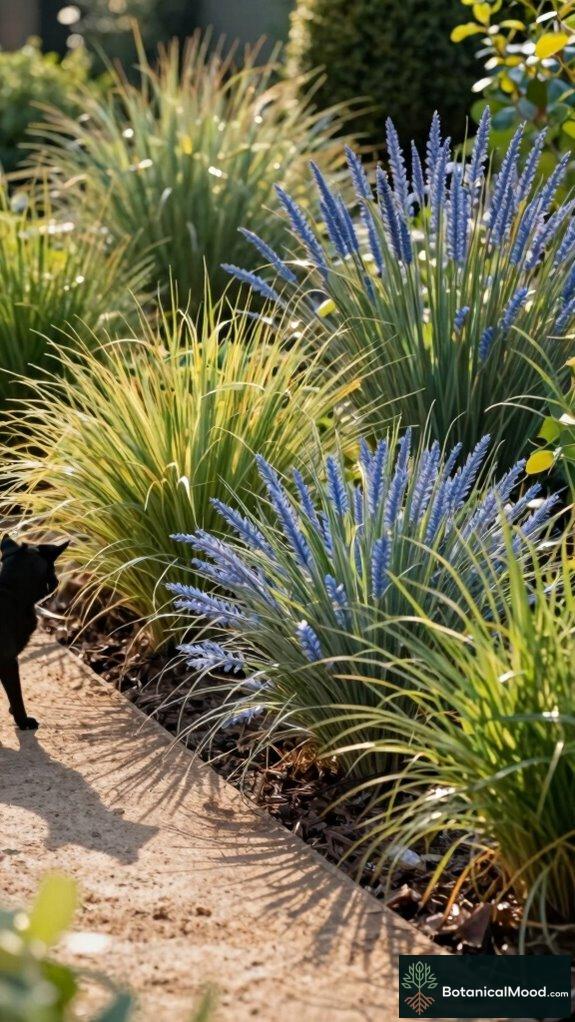
After placing rustling grasses where breeze and sightlines meet, I next consider soil texture, moisture regime, and winter hardiness because those factors determine long‑term performance and maintenance needs for species like Miscanthus (Miscanthus sinensis), Calamagrostis x acutiflora ‘Karl Foerster’, and Bouteloua gracilis ‘Blonde Ambition’.
I assess soil types—sandy, loam, clay—and amend heavy clay with compost for root aeration; for drought‑tolerant natives I prioritize fast‑draining sandy loams. Blue fescue grasses offer exceptional pet-friendly alternatives that thrive in well-drained soils while maintaining their distinctive foliage color and rustling qualities throughout the growing season.
I plan watering frequency based on establishment versus maturity, reducing irrigation for established, xeric cultivars. Hardiness zones guide selection, while annual minimal pruning and dividing keep maintenance low.
Safety, Wildlife, and Winter Interest for Play Areas
When I plan rustling ornamental grasses for play areas, I put safety, wildlife value, and winter interest at the top of the checklist so each planting both delights children and performs reliably through seasons; I prioritize non-invasive clumpers like Calamagrostis (Karl Foerster), Panicum (Northwind), Miscanthus, Stipa gigantea, and Bouteloua for defined edges, clear sightlines, and soft textures that meet safety measures, limiting sharp awns and seed dispersal.
I design layers to create wildlife habitats for pollinators and seed‑eating birds, retain upright stems for snow sculptural interest, and select warm bronze, silver, and straw tones to extend sensory play into winter.
Rainproof Rooftop Sensory Beds
Design a rainproof rooftop sensory bed that performs like a resilient meadow, using layered substrates, efficient drainage, and salt‑tolerant, rustling grasses to create year‑round sound, motion, and tactile interest.
I specify modular green roof trays, a lightweight engineered growing medium with expanded clay and composted pine bark, a tapered drainage mat to protect membrane warranties, integrating rooftop design principles and load calculations for safety. When selecting plants for rooftop environments, natural grass alternatives provide superior durability compared to conventional turf in exposed conditions.
I select Calamagrostis (Feather Reed), Miscanthus, Pennisetum, and Bouteloua for wind‑responsive texture, combine drought‑adapted sedges (Carex) near membranes, and add varied foliage color to heighten sensory elements. For optimal year‑round performance, consider integrating digital temperature controllers to monitor substrate conditions and maintain ideal growing temperatures during seasonal fluctuations.
Non-Toxic Native Planting Guide
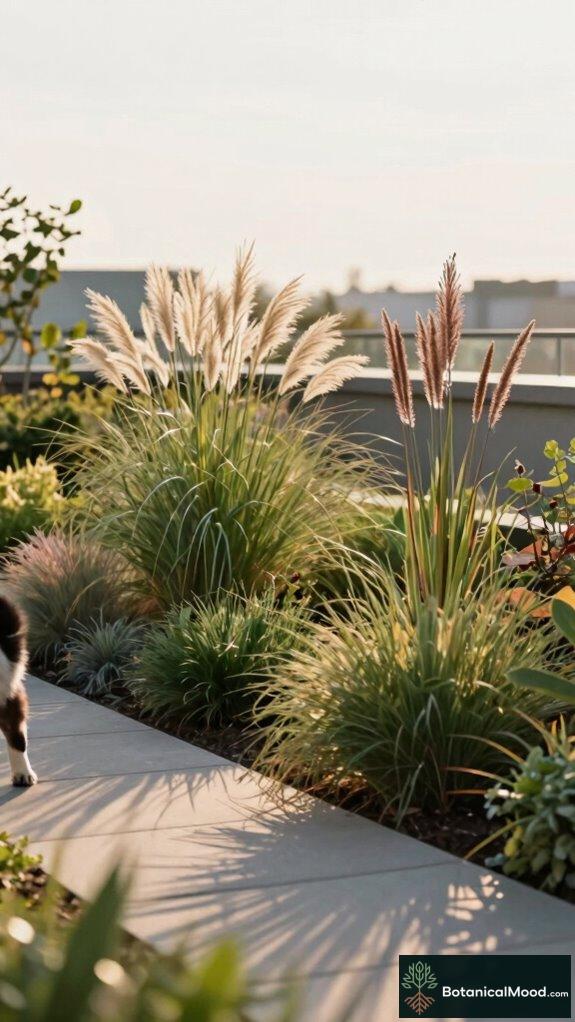
Bringing the rooftop meadow’s wind‑play and salt‑tolerant Calamagrostis and Bouteloua into a native, non‑toxic palette lets me create sensory beds that support local wildlife while keeping people safe.
I begin by selecting regionally appropriate species known for low toxicity and high ecological value.
I choose native grass benefits like structural seed heads, drought tolerance, and nectar resources, combining Bouteloua gracilis and Schizachyrium scoparium (little bluestem) with sedges (Carex spp.) and Juncus for wet pockets.
Applying sensory exploration techniques—textural contrasts, auditory layering, and safe sightlines—I craft resilient, biodiverse, low‑maintenance planting schemes.
FAQ
Can Rustling Grasses Be Used Indoors or in Sunrooms?
Yes — I use rustling grasses in sunrooms and indoor gardening setups to create tactile, auditory sensory experiences; I choose compact, container-friendly varieties, guarantee bright light, good drainage, and occasional pruning for manageable, innovative displays.
How Do I Propagate Grasses From Seed or Divisions?
I propagate grasses by saving seed collection once plumes dry, sowing cold‑stratified seed; and using division techniques in spring or fall—I split clumps, replant sections with roots, watering well to encourage quick establishment.
Do Ornamental Grasses Attract Beneficial Pollinators?
Birds of a feather flock together — I’ll say yes: ornamental grasses bolster pollinator habitats, offering shelter, nectar in flowering panicles, and ornamental grass benefits like structural diversity; I’m excited to innovate garden ecology with them.
Can Rustling Grasses Be Integrated Into Sensory Pathways for Visually Impaired?
Yes — I integrate rustling grasses into sensory pathways for visually impaired people; I design for tactile experience and sensory stimulation, placing varied heights, textures, and sounds to guide movement, encourage exploration, and spark innovative engagement.
What Maintenance Timing Reduces Allergenic Pollen Release?
About 70% of seasonal allergies stem from outdoor pollen; I recommend late-season mowing and cutting before peak bloom—pollen timing strategies and allergen reduction techniques that I use reduce release, innovate maintenance, and curb airborne allergens effectively.
References
- https://naturehills.com/blogs/garden-blog/7-popular-ornamental-grass-types
- https://www.monrovia.com/be-inspired/best-ornamental-grasses.html
- https://dennis7dees.com/ornamental-grasses/
- https://www.youtube.com/watch?v=tfM0bcrgB_A
- https://wholegardensnw.com/these-nine-will-change-your-mind-garden-grasses-for-the-skeptic/
- https://extension.colostate.edu/resource/ornamental-grasses/
- https://www.petittigardencenter.com/quick-guide-to-top-10-ornamental-grasses/
- https://www.missouribotanicalgarden.org/gardens-gardening/your-garden/help-for-the-home-gardener/advice-tips-resources/visual-guides/best-ornamental-grasses