My dog once ate an entire rosemary bush. Respect.
Now I build smarter gardens. Raised cedar beds, dog-safe aromatics (rosemary, mint, lavender, chamomile), gravel paths that survive zoomies. pH 6.0–7.0. Drip lines. Zones for energy levels. Less panic, more sniffing.
Raised Garden Bed Plans That Actually Survive Dog Ownership
My first attempt? Splintered pine and regret.
My terrier, Buster, treated it like a digging buffet. Learned hard: cedar lasts. Modular beds, permeable pavers, proper drainage. Ergonomic height saves my back; 24-inch depth handles herbs plus root competition. Landscape fabric? Skip it. Cardboard base, gravel layer, quality soil mix. Companion planting with marigolds deters pests naturally. Unexpected bonus: the elevated design prevented my neighbor’s enthusiastic retriever from trampling everything during his daily escape routine. Now my rosemary thrives. Buster still judges me, but at least he can’t destroy evidence.
Quick Takeaways
- Create scent zones (calm, investigative, high-energy) with herbs, soft mulch, paths, and durable turf to match dog behaviors.
- Plant non-toxic, aromatic species like rosemary, chamomile, lavender, peppermint, and lemongrass for safe olfactory stimulation.
- Use modular raised beds, permeable pavers, and gravel paths to control access and provide varied textures for sniffing and exploration.
- Maintain well-draining loam, monitor pH (6.0–7.5), use slow-release organic fertilizer, and ensure drought-tolerant selections.
- Train scent games and foraging stations with peppermint, blueberry, and lavender cues to enrich dogs and build olfactory skills.
Quick Scent Garden Setup: Get Started Today
If you’re ready to start today, I’ll walk you through a compact, scent-focused layout that fits a small yard, patio, or shelter run, using plants and materials that dogs find engaging and are known to be safe.
I design modular beds, raised cedar planters, permeable pavers, and gravel pathways to direct scent layering and encourage sensory exploration, integrating rosemary (Salvia rosmarinus), chamomile (Matricaria chamomilla), mint (Mentha spp.), and dog grass for nibbling zones. Before planting, verify that all species are non-toxic to dogs to prevent accidental poisoning. For additional scent variety, consider lemongrass plants, which offer a natural citrus solution that complements your sensory garden while remaining pet-safe.
I specify sun exposure, soil pH, drought tolerance, irrigation micro-drip, color palettes—gold marigold accents, purple salvias—plus durable edging for maintenance and animal safety.
Choose Dog-Safe Aromatic Plants (Peppermint, Rose, Blueberry)
I recommend starting with three signature, dog-friendly aromatic plants—peppermint (Mentha × piperita), rose (Rosa spp.), and blueberry (Vaccinium spp.)—because each brings distinct olfactory profiles, seasonal interest, and environmental roles that together create a layered scent experience for dogs; peppermint delivers a sharp, cooling menthol note and vigorous groundcover habit suited to partly shaded beds with moist, well‑drained loam and pH around 6.0–7.0.
Roses contribute prolonged floral fragrance and vertical structure—choose disease‑resistant cultivars like Rosa ‘Knock Out’ for low maintenance and repeat bloom in full sun on slightly acidic soil—and blueberries add a sweet, fruity aroma. When establishing these plants, applying dog-safe shrub fertilizers during the growing season supports robust growth and enhanced aromatic production.
I select these species to maximize dog friendly scents and aromatic benefits, calibrating planting depth, mulch type, micro‑drip irrigation, and pathway placement so scent hotspots remain accessible yet resilient in shelter or backyard environments. These plants support non-toxic plant selection by eliminating exposure to harmful compounds that could compromise your dog’s health through ingestion or skin contact.
Design Scent Zones by Behavior: Textures & Layout
I’ll start by outlining scent zones as purposeful environments that pair texture, layout, and olfactory intent to match specific dog behaviors—calm, investigative, and high-energy—and I’ll describe how to arrange surfaces, plant masses, and pathways so each zone performs reliably in shelter or backyard settings.
I design a calm zone with chamomile (Matricaria recutita), soft mulch, low grasses, soothing lavender beds, and bench sightlines for handlers, promoting scent exploration and rest. Research demonstrates that lavender’s calming properties can significantly reduce anxiety responses in dogs, making it an essential foundation for therapeutic garden design.
An investigative sector uses gravel paths, raised planters, rosemary (Rosmarinus officinalis), peppermint, and texture diversity with bark, stone, and tactile stepping pads. These varied sensory experiences encourage natural foraging behaviors and mental stimulation that support pet exploration and discovery.
A high-energy loop features wide lanes, durable turf, sunflower accents, and scent stations spaced for active foraging.
Planting, Soil & Safety: Maintenance and Troubleshooting
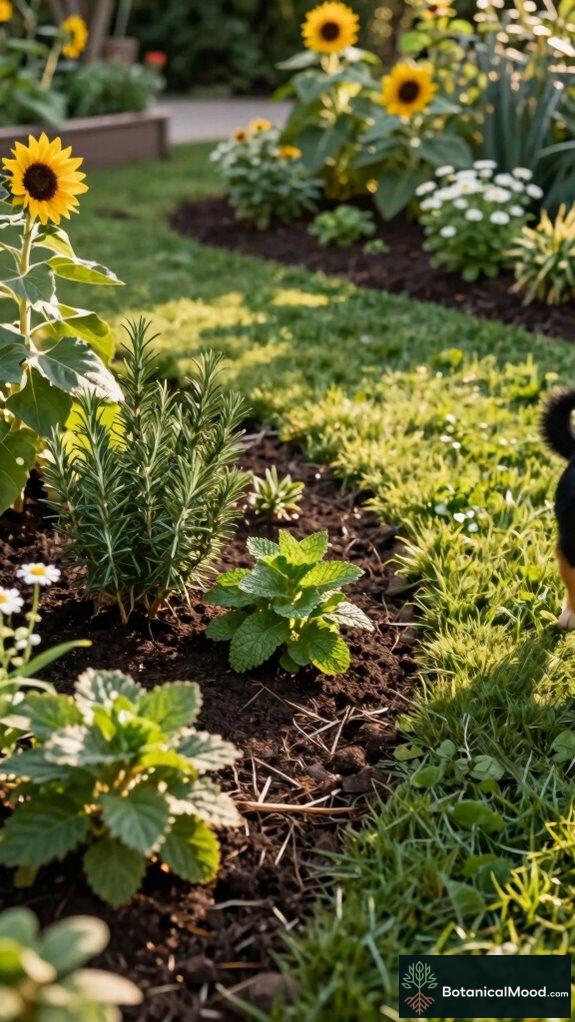
One essential maintenance principle I follow is keeping planting and soil regimes tailored to both plant health and canine safety. Therefore, I select well-draining loam mixes amended with composted bark or aged manure at a 20–30% ratio to support herbs like rosemary (Rosmarinus officinalis), mint (Mentha spp.), and chamomile (Matricaria recutita), while avoiding heavy clays that trap moisture and promote root rot.
I monitor soil pH—aiming for 6.0–7.0 for most aromatic herbs and 6.5–7.5 for sunflowers (Helianthus annuus)—and use slow-release organic fertilizers (for example, a 5-3-3 granular or fish emulsion at label rates) sparingly to prevent overly lush growth that tempts nibbling. I also schedule weekly visual checks for slug activity, fungal lesions, and herbivory, recording irrigation cycles, mulching depths (2–3 cm for bark, 5 cm for mulch in shaded beds), and any pet-related wear patterns. This way, I can rotate plantings, amend compaction with aeration, and replace sensitive species with proven dog-safe alternatives listed by Dogs Trust and RSPCA when necessary.
When pet urine causes localized damage, I apply lawn repair seeds specifically formulated to restore soil fertility and eliminate dead patches before replanting scent-rich species. For digging areas, I incorporate safe potting soils that minimize ingestion risks while providing comfortable substrate for natural canine behavior. I monitor soil preservation metrics, track plant nutrition via leaf tissue tests, adjust microirrigation emitters, and favor native, drought-tolerant cultivars for resilience and scent longevity.
Scent Garden Games & Training for Enrichment
Three structured scent games will get your dog engaged and enhance enrichment while fitting into compact beds, raised planters, or larger sanctuary gardens. I’ll describe hide-and-seek scent trails using peppermint (Mentha × piperita) and blueberry-scented oil, target-station training with lavender (Lavandula angustifolia) and rosemary (Rosmarinus officinalis) markers, and sequential foraging stations that use varied textures—pea gravel, decomposed granite, and soft chamomile (Matricaria recutita) groundcover—to guide nose work, reward pacing, and build confidence.
I design progressive scent detection drills that layer complexity, use scent blanks and control samples, and map routes with painted stepping stones, low hedges, and visual cues to scaffold learning. This approach ensures olfactory enrichment, durable materials, clear rewards, and scalable challenge levels for novel, measurable outcomes.
Shelters & Rehab: Using Scent Gardens for Behavior and Conservation
When I plan a shelter or rehabilitation scent garden, I prioritize durable planting palettes, clear circulation, and measurable behavioral goals so staff and volunteers can use the space consistently for enrichment and conservation work.
I design zones with hardy herbs like rosemary (Rosmarinus officinalis), mint (Mentha spp.), chamomile (Matricaria chamomilla), and lavender (Lavandula angustifolia), paired with durable surfacing, raised beds, and secure fencing; color palettes favor calming blues and purples, contrasting golden marigolds (Tagetes spp.). Scented geraniums provide additional olfactory complexity that enriches the sensory experience for dogs during behavioral sessions.
These choices support behavioral enrichment, aid staff-led scent training, and foster conservation awareness through native-plant plots, interpretation signage, and volunteer-led detection dog programs. Medicinal herb seeds offer additional therapeutic benefits that enhance the healing environment for animals in recovery and rehabilitation settings.
Rooftop Herb Spiral Garden
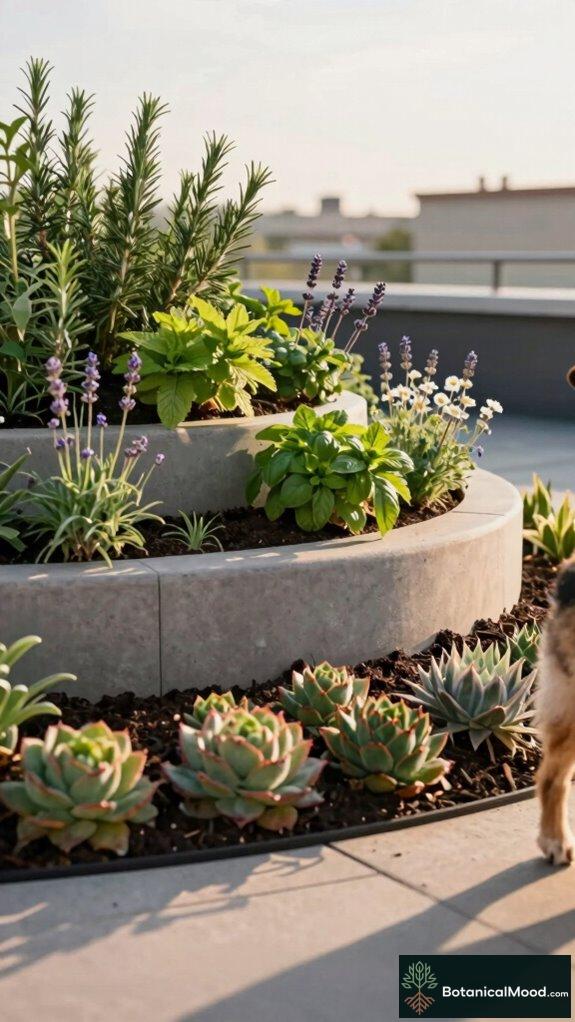
Although rooftop spaces present constraints of wind, load limits, and microclimates, I find a herb spiral is an efficient, sculptural solution that maximizes planting density, creates distinct moisture and sun gradients, and provides layered scent-rich microhabitats for dogs and people alike.
I design a compact herb spiral in rooftop design terms, using lightweight structural aggregates, geotextile liners, and recycled modular blocks; I plant rosemary (Salvia rosmarinus), mint (Mentha spp.), basil (Ocimum basilicum), lavender (Lavandula angustifolia) and chamomile (Chamaemelum nobile) in graduated exposures, orienting south-facing terraces for sun lovers, north-facing crevices for shade, ensuring drainage, wind screens, and easy canine access. These aromatic herbs are edible flowers for pets that dogs can safely graze while enjoying the sensory enrichment of the garden. For added winter resilience and pet safety, I incorporate winter-hardy succulents like sempervivum varieties that tolerate rooftop extremes while remaining non-toxic to curious dogs.
Raised Cedar Planter Steps
I like to start raised cedar planter steps with a clear design intent—creating terraced planting pockets and durable access for dogs and people that combine breathable Western Red Cedar (Thuja plicata) construction, rot-resistant joinery, and lightweight, well-draining growth medium such as a coconut coir–perlite blend at a depth of 20–30 cm for herbs and 35–45 cm for small shrubs.
The stepped profile not only provides graded microhabitats for scent-rich plants like rosemary (Salvia rosmarinus), mint (Mentha spp.), and chamomile (Chamaemelum nobile), but also integrates 2–4 cm rounded edge treads for canine comfort, stainless-steel fixings for longevity, and a south-facing orientation when possible to maximize insolation for Mediterranean species while reserving shaded crevices for moisture-loving ground covers and low-profile tactile plants. Lavender plants for dog-friendly gardens offer additional aromatic benefits while ensuring safety and wellness for canine companions exploring the garden.
I specify dimensions, modular joinery, cedar finish tones, integrated irrigation, and planter drainage details to emphasize raised planter benefits and deliberate plant selection that promotes stress reduction for dogs through scent pathways, texture gradients, and visual layering. Selecting native plants safe for pets ensures that every element of the garden supports both canine wellbeing and landscape longevity without introducing toxic species into areas where dogs frequently explore and forage.
FAQ
Can Scent Gardens Attract Pests Harmful to Dogs?
Yes — I’ve found scent gardens can attract pests harmful to dogs, so I blend scent preferences research with smart pest management, using repellent plants, traps, and habitat design to innovate safer, low-toxin environments for pets.
Can Essential Oils Be Used Safely in the Garden?
Like a sharp brushstroke across a canvas, I say yes—carefully: essential oil safety matters, I dilute heavily, avoid direct plant spraying, keep oils away from dog friendly plants and monitor dogs closely, and I prefer whole-plant scents.
How Do I Prevent Dogs From Eating Toxic Plants?
I prevent dogs from eating toxic plants by using toxic plant identification, fencing off hazards, and offering safe plant alternatives like mint and rosemary; I redesign tempting spots with enrichment, supervision, and bitter deterrents to innovate prevention.
Will Scent Gardens Affect Neighborhood Allergies?
Without a doubt, I’ll say scent gardens can influence neighborhood scent sensitivity and pollen exposure; I’ll design low-allergen plants, time blooms, and communicate with neighbors so we’re all on the same page and innovate responsibly.
Can Indoor Apartments Support a Scent Garden?
Yes — I can create a scent garden in apartments using container gardening and indoor herbs like mint, rosemary, and basil; I’ll design compact, innovative layouts with safe plants, layered scents, and easy care for curious dogs and busy owners.
References
- https://pmc.ncbi.nlm.nih.gov/articles/PMC9219509/
- https://www.vetanswers.com.au/blog/post/sensory-gardens-another-great-pet-environmental-enrichment-idea/1000514/
- https://emmasanimals.co.uk/creating-a-safe-sensory-garden-for-your-dog/
- https://showsightmagazine.com/designing-the-ultimate-sensory-garden-for-dogs-a-guide-to-enhancing-canine-well-being/
- https://laist.com/brief/news/climate-environment/these-conservation-dogs-can-sniff-out-invasive-plants-and-endangered-species-the-size-of-a-nickel
- https://www.aspcapro.org/resource/building-sensory-garden-shelter-dogs-enhancing-well-being-through-stimulating-spaces
- https://www.aspca.org/news/what-sensory-garden-and-how-does-it-help-fearful-dogs
- https://petharmonytraining.com/for-the-benefit-of-mister-pete-creating-a-sensory-garden-in-a-small-backyard/
- https://www.lombardvet.com/services/dogs/blog/how-canine-sensory-garden-can-boost-your-dogs-mind-and-mood