Gravel looks cute until your dog treats it like a giant litter box. Been there.
Crushed limestone? White, alkaline, murder on paws. Pea gravel? Cozy until it rolls into your hostas. River rock? Fancy but useless for drainage. I’ve learned the hard way: angularity matters, base compaction saves your sanity, and yes, you’ll be rinsing urine forever.
The pros are real though. Zero mud. Weeds give up. Colors from warm cream to moody charcoal. My current setup uses 3/8″ angular granite over compacted road base, and honestly? It’s the first yard that hasn’t betrayed me.
Still, I wince watching my greyhound tiptoe across it.
Gravel Garden Design Ideas for Dog Owners
My neighbor judged me hard for “paving” half my backyard. Then her golden retriever destroyed her sod in one rainy spring.
I created zones: crushed limestone paths for drainage, pea gravel lounging areas with buried edging to stop migration, and river rock accents that look intentional. The secret? French drains underneath, landscape fabric only under paths (it suffocates soil elsewhere), and a dedicated rinse station with a hose bib hidden in a faux rock.
She copied me within the year. No apologies given.
Hardscaping, permeable pavers, xeriscaping, and pet-friendly landscaping aren’t trends here. They’re survival tactics. My soil pH is weird now. Worth it.
Quick Takeaways
- Pros: Excellent drainage and low maintenance reduce standing water and routine watering needs.
- Pros: Durable, long-lasting surface ideal for high-traffic and dog potty areas when correctly installed.
- Cons: Can retain urine odors and trap bacteria, requiring frequent rinsing or periodic replacement.
- Cons: Abrasive or angular stones may injure pet paws and damage tender plant stems.
- Neutral: Aesthetic, color, and size choices affect compaction, weed suppression, and compatibility with surrounding plantings.
What Garden Gravel Is and When Homeowners Choose It
When I specify garden gravel for a project, I’m thinking about its material, particle size, color range, and functional role in the setting: garden gravel is loose aggregate—often crushed stone, pea gravel, or crushed limestone—available in grades from fines and screenings up to 3/4-inch or larger, with colors from pale limestone white through buff and tan to charcoal and river-worn browns. Each choice affects drainage, compaction, and visual texture.
I evaluate durability factors like angularity and mineral hardness, pair textures with plant palettes (Lavandula, Salvia), and propose drainage solutions—permeable bases, geotextiles, gradated layers—to optimize performance and aesthetics.
Quick Verdict: Is Gravel Right for a Dog Potty Area?
Choosing garden gravel for a dog potty area follows naturally from thinking about material, particle size, drainage and texture, because the same attributes—pea gravel’s 1/8–3/8-inch rounded stones, crushed stone’s angular 3/8–3/4-inch fragments, and crushed limestone’s pale buff alkalinity—determine how urine and feces drain, how easy the surface is to clean, and how long the surface will last under repeated canine use.
I recommend gravel when drainage, durability and low upkeep matter, but I also weigh odor management and comfort; for innovation-minded owners, consider gravel alternatives like permeable pavers or recycled rubber.
- Drainage performance and maintenance frequency
- Comfort and paw health
- Long-term odor management strategies
7 Advantages of Using Gravel for Yards and Pet Zones
Because I want you to picture the practical trade-offs, I’ll start by saying gravel can be one of the most pragmatic surfacing choices for yards and dedicated pet zones, offering a precise mix of drainage performance, durability, and low ongoing inputs that many homeowners and groundskeeping professionals value.
I recommend pea gravel or crushed stone for engineered drainage, weed suppression, and long lifespan, noting gravel benefits like reduced irrigation needs and easy spot-repair with spare bags, improving maintenance efficiency. Path edging strips help contain decomposed granite and prevent migration into surrounding landscape areas, ensuring your pet trails remain defined and durable over time.
For pet comfort, choose rounded textures, 10–20 mm sizes, neutral colors to echo paving, and combine with edging, permeable base layers, and selective planting (Lavandula, Festuca) for balance. When comparing gravel to natural grass alternatives, gravel requires significantly less water and maintenance while still providing a functional surface for active pets.
7 Drawbacks to Consider for Dog Potty Gravel
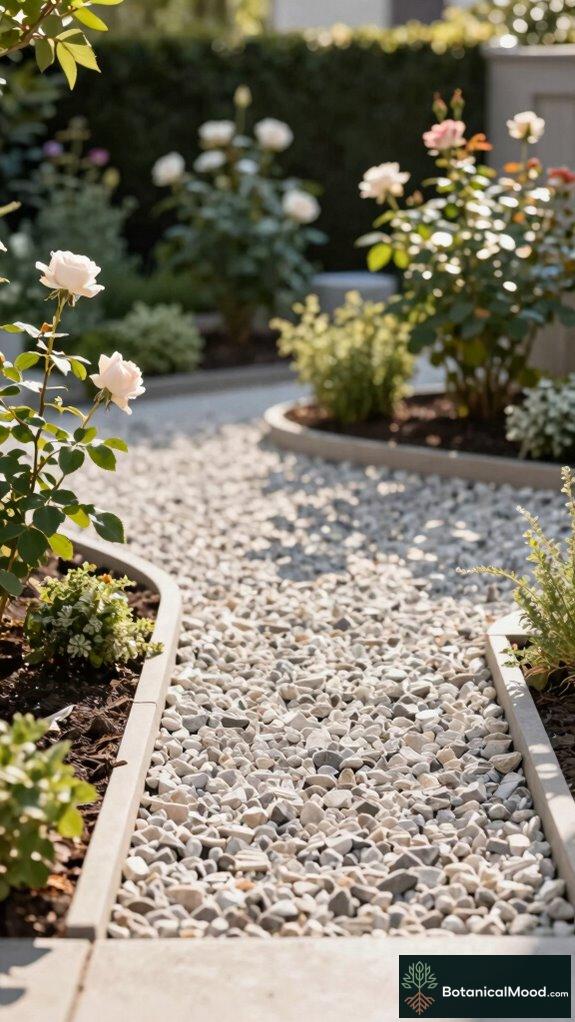
Although gravel can be highly practical for dog potty areas, I’ve found several drawbacks that merit careful consideration before you commit to a full installation, especially if you’re managing mixed-use yards or sensitive plantings.
- Gravel can abrade paws and retain urine odors, impacting dog health, increasing skin irritation risks, and necessitating frequent rinsing or replacement.
- Migration into beds and root zones of ornamentals (Rosa spp., Quercus spp.) alters soil pH and drainage, compromising plant vigor, color palettes, and long‑term substrate ecology.
- Explore gravel alternatives like permeable pavers, engineered turf, or pea‑gravel blends to balance utility, aesthetics, and sanitation.
- Edging kits help contain pea gravel within designated potty areas and prevent migration into surrounding garden beds.
Choosing the Best Gravel Type and Size for Dog Potty Areas
I’ll usually recommend starting with pea gravel or crushed stone in the 3/8–3/4 inch range for dog potty areas, because those sizes balance drainage, comfort, and ease of cleaning better than larger angular rock or fine screenings; pea gravel (rounded, 3/8–1/2 in) provides a forgiving surface for paws and quick percolation, while crushed limestone or decomposed granite (3/8–3/4 in, angular) locks together more firmly for paths and containment, though it can heat and abrade more. Crushed granite gravel is particularly effective for creating durable, long-lasting dog paths that maintain their structure while providing adequate drainage and comfort for your pet.
I favor evaluating gravel texture, drainage properties, particle shape, and color palette to match microclimate, canine comfort, maintenance cadence, and scenery aesthetics. When selecting among top pea gravels, consider how each option performs in your specific climate and how frequently you’ll need to rake and refresh the potty area.
Installation Steps to Limit Heat, Migration, and Odor
Having chosen a gravel size and texture that suits your dog and site—pea gravel or 3/8–3/4 inch crushed stone being common—I now focus on practical installation steps that reduce radiant heat, limit particle migration, and control urine odor.
- Compact a permeable base (crushed rock, 3/4 inch, geotextile beneath) to improve drainage, enable heat mitigation via subsurface thermal mass, and anchor stones for migration prevention.
- Add a charcoal-impregnated layer or biochar-infused sand to adsorb ammonia, lower odor, and moderate surface temperature.
- Edge with steel or plastic ribbed edging, stake firmly, and slope 1–2% for runoff and maintenance.
- Consider pairing your gravel installation with shade sail structures to further reduce surface temperatures and provide relief during peak sun hours.
Simple Maintenance, When to Replenish, and Troubleshooting
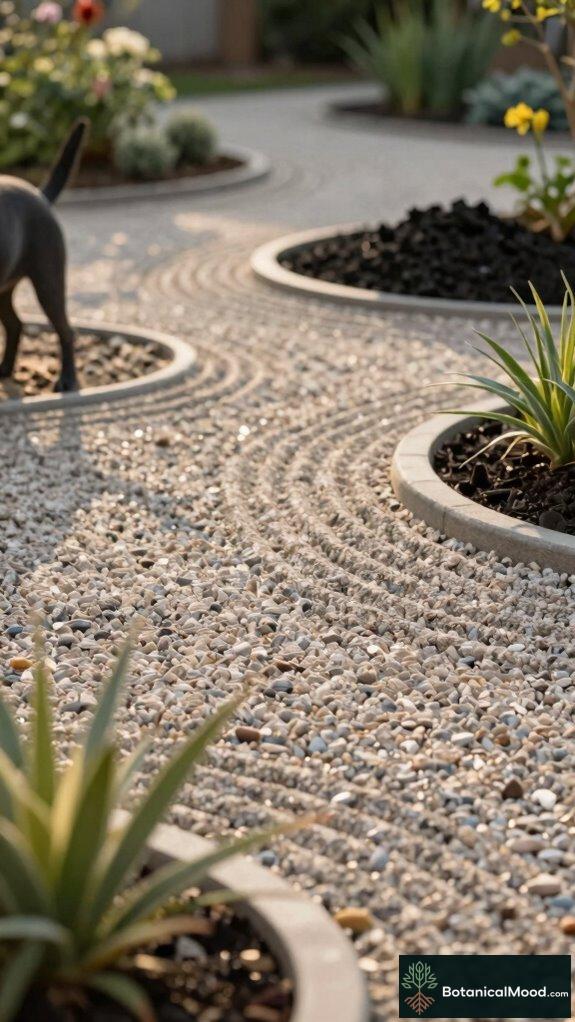
When I maintain a gravel dog potty or planting bed, I focus on three simple routines—routine raking to redistribute stones and expose fresh surfaces, periodic top-dressing to replace lost or dust-filled particles, and targeted flushing or biochar replacement to manage urine salts and odors—because these actions address the primary failure modes of gravel installations: migration, compaction, and chemical build-up.
I monitor gravel maintenance schedules seasonally, inspect edging, and measure depth; replenishment tips include adding 1–2 cm annually for high-traffic zones, using angular crushed stone for stability, and flushing with water or replacing biochar to neutralize salts, preserving drainage and aesthetics.
Rooftop Drought-Tolerant Planters
Shifting from routine gravel care for ground-level beds and dog potty areas, I apply the same maintenance instincts to rooftop drought-tolerant planters, where drainage, media depth, and salt management become even more important because access and weight limits constrain interventions.
I prioritize gravel drainage layers, lightweight engineered substrates, and careful plant selection—succulents like Sedum (Sedum spp.), Mediterranean lavenders (Lavandula spp.), and dwarf ornamental grasses—to reduce irrigation and structural load, while specifying pumice or expanded shale for porosity, considering wind exposure, irrigation zones, and color palettes that complement rooftop materials.
These principles mirror the spatial planning considerations used when designing dog agility obstacles to maximize both functionality and aesthetic appeal in compact outdoor spaces.
- Layering: gravel drainage, filter fabric, lightweight mix.
- Plants: xeric, salt-tolerant, shallow-rooted species.
- Maintenance: modular trays, measured irrigation, seasonal refresh.
Non-Toxic Mulch for Dogs
I’ve learned that choosing non-toxic mulch for dogs means prioritizing safety, durability, and environmental function, so I look for materials that won’t splinter, leach harmful compounds, or attract pests while still providing weed suppression, moisture retention, and an aesthetically pleasing texture and color palette.
I favor natural alternatives like crushed granite, recycled rubber alternatives rated non-toxic, stabilized wood chips from certified hardwoods, and gravel blends that drain well, offering dog friendly options for potty areas; I note particle size, pH, color tones, thermal properties, and longevity, advising placement, edging, and occasional raking for hygiene and plant health.
FAQ
Can Gravel Harm a Dog’s Paws Over Time?
Yes — I worry gravel texture can irritate sensitive pads over time; I recommend evaluating dog sensitivity, considering gravel alternatives, and using paw protection like booties or padded pathways to innovate safer potty areas for your pet.
Will Gravel Retain Urine Odor Long-Term?
Yes — and no: I’ve seen gravel absorb urine but not forever; urine absorption depends on stone type and base, so I’m proactive about odor management with rinsing, enzymes, and periodic gravel replacement to innovate solutions.
Can Gravel Cause Drainage Issues for Neighbors?
Yes — I worry gravel can cause drainage issues for neighbors: permeability concerns and altered runoff effects can redirect water, so I’d propose innovative edging, graded slopes, and permeable base layers to manage flow and protect adjacent properties.
Is Gravel Safe for Composting or Soil Amendment?
Like a sieve of stones, I’d say no — gravel benefits soil structure but isn’t composting; I don’t mix it into composting alternatives. I use gravel for drainage and paths, not as organic amendment in beds.
Can Gravel Attract Pests or Rodents?
Yes — I worry gravel can attract pests: its pest habitats and rodent hiding spots offer shelter, nesting and concealment. I recommend thoughtful design, edging, and frequent inspections to deter burrows, nests, and infestations.
References
- https://www.epicgardening.com/gravel-mulch/
- https://www.livingetc.com/advice/pros-and-cons-of-gravel-patios
- https://www.youtube.com/watch?v=EhYUw3HI8V0
- https://kurtzbroslandscapesupply.com/pros-and-cons-of-gravel-and-limestone-for-yard-projects/
- https://www.wildway.info/p/10-concerns-about-planting-in-gravel
- https://www.gardenista.com/posts/10-things-nobody-tells-gravel-gardens/
- https://www.msisurfaces.com/blogs/post/2025/06/15/pros-and-cons-of-using-garden-rock-in-flower-beds.aspx