My dog finally stopped roasting his paws on concrete, and I finally stopped feeling like a monster.
I build pet paths with decomposed granite: crushed granite fines, 3-4 inches compacted over road base. Aluminum edging keeps it tidy. TerraPave where water gets feisty. It’s permeable, stays cool, doesn’t shred paw pads. Mediterranean plants nearby—lavender, rosemary, sage—because dogs deserve ambience too. So do I, honestly.
Slope matters. Drainage matters. Seasonal topdressing matters. The usual suspects: rutting, erosion, that one spot where your dog spins in circles before peeing. I’ve learned to plan for chaos.
Decomposed Granite Garden Paths: Lessons From My Failed Herb Spiral
Last spring I built this gorgeous spiral herb garden. Flagstone centerpiece. Very Pinterest. My greyhound, Arthur, treated it like a launching pad. Herbs demolished. My pride: shattered.
Switched to DG for the rebuilt path. Flexible. Forgiving. Arthur still launches, but now the surface absorbs his chaos. I integrated thyme between pavers for ground cover, added drainage gravel below, and finally—*finally*—stopped fighting biology.
Sometimes the best design surrenders gracefully to dogs. And hubris. Mostly hubris.
Quick Takeaways
- Excavate 4–6 inches, lay and compact a 3–4 inch road base, then apply 3–4 inches of DG for stable drainage and longevity.
- Use rounded granite with finer fines for pet comfort; reserve loose DG for natural crunch zones.
- Install 1/2-inch aluminum, steel, or recycled plastic edging to contain DG and prevent spreading.
- Stabilize erosion-prone sections with TerraPave/TerraKoat while leaving high-traffic areas uncompacted for grip.
- Maintain seasonally: clean urine spots, topdress annually, and monitor compaction to preserve drainage and comfort.
How Decomposed Granite (DG) Works for Pet Paths
I’ve installed decomposed granite (DG) paths in patios and dog runs across northern California, and I’ve found DG works because its angular, mineral-rich particles compact into a stable, permeable surface that drains well, resists rutting, and stays cooler under paws than concrete.
When laid over a 3–4 inch compacted road-base foundation, or used with a stabilizer such as TerraPave or a spray hardener like TerraKoat, DG achieves a durable, low-maintenance finish that still offers the gentle traction and non-abrasive texture dogs need, while loose, unsolidified DG provides the natural crunch and easier replenishment some clients prefer.
I specify DG for pet comfort, highlighting drainage benefits, low dust options, and color choices from golden to gray that suit Mediterranean plantings like lavender (Lavandula) and rosemary (Salvia rosmarinus).
It’s resilient on slopes, pairs with aluminum edging, and fits urban parks to rural estates.
Pick the Right DG, Edging, and Stabilizer for Pets
Moving from how DG performs in patios and dog runs to the selection stage, I’ll help you choose the right decomposed granite, edging, and stabilizer for pets by matching material properties to site conditions and animal needs.
I recommend rounded granite with finer fines for paw comfort and reduced abrasion. Select TerraPave or TerraKoat for stabilized sections where erosion threatens slopes, and use loose DG for natural crunch zones. Crushed granite gravel provides excellent drainage while maintaining a comfortable surface for your pet’s paws.
Choose edging materials—aluminum, steel, or recycled plastic—1/2-inch profile for containment and clean lines. When selecting plants near pet pathways, prioritize non-toxic plant species to ensure your dog’s safety while enjoying outdoor spaces. Consider color palette, drainage, non‑toxicity, and maintenance cadence; match choices to traffic, climate, and canine behavior for lasting performance.
How to Build a Long‑Lasting DG Path (Step‑by‑Step)
A well-built decomposed granite (DG) path starts with a firm, engineered foundation, and I’ll walk you through the exact materials, dimensions, and techniques I use to get a surface that lasts 7–10 years under normal conditions.
I begin by excavating 4–6 inches, install 3–4 inches compacted road base (crushed rock), set 1/2‑inch aluminum edge, and grade to 1–2% slope for drainage, noting design considerations like pet traffic patterns, shade (Acer rubrum), and color palette. Strategic dog path placement should follow natural pet movement patterns throughout your garden to create a cohesive landscape experience.
I compact road base, lay 3–4 inches DG (stabilized or TerraPave), broom and compact, water cure, and finish with installation techniques: edging, compaction, and perimeter irrigation. Path edging strips designed specifically for decomposed granite provide superior containment and reduce material migration, extending the lifespan of your pet trail.
Maintain Decomposed Granite Paths: Cleaning, Refill, Odor Control
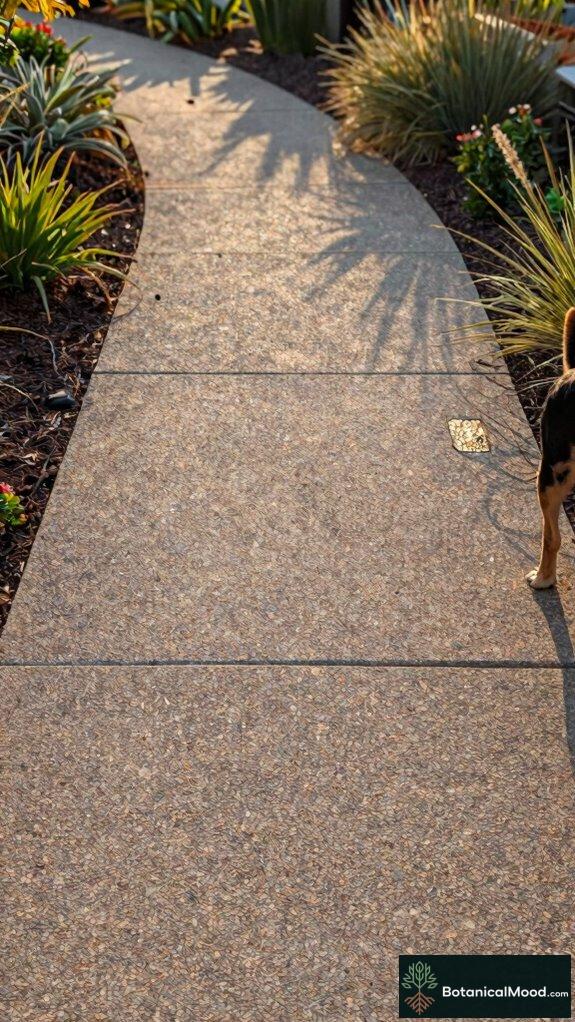
When I maintain a decomposed granite (DG) path—whether it’s a TerraPave‑stabilized dog run, a loose pea‑sized DG WALKWAY in a San Francisco courtyard, or a compacted, non‑stabilized trail—I treat cleaning, refilling, and odor control as a single, seasonal system that preserves drainage, comfort, and longevity; I schedule interventions in spring and fall, monitor compaction, and adapt products like TerraKoat or manual raking for different textures.
I use targeted cleaning techniques—power washing urine spots, enzymatic cleaners for biological waste—and follow a refill schedule of annual to semi‑annual topdressing, balancing particle size, color, and permeability.
Odor management, maintenance tips, and quantified measurements keep paths durable and pet‑safe.
Rooftop Native-Plant Pocketbeds
Rooftop pocketbeds are my compact, modular planting stations—typically 12–24 inches deep, lined with lightweight structural soil or expanded shale mixes, and framed in powder‑coated steel or rot‑resistant cedar—that let me introduce regionally appropriate natives such as California poppy (Eschscholzia californica), California fescue (Festuca californica), and yarrow (Achillea millefolium) on urban roofs without overloading the deck;
I pair modular trays from brands like ZinCo or LiveRoof with low‑profile irrigation, permeable drainage mats, and reflective gravel edging to control microclimates and substrate depth.
I prioritize native plant selection, seasonal color palettes, and pragmatic plant maintenance schedules to optimize stormwater retention, pollinator habitat, and rooftop longevity.
Raised Bed Access Ramps
Because accessibility dictates both form and function, I design raised bed access ramps to bridge the 6–18 inch height difference between pathways and planting edges, using materials and slopes that meet practical needs while preserving aesthetics.
I specify gentle slope accessibility, often 1:12 to 1:8, integrate decomposed granite edges, timber sleepers or corten steel, and consider plant palette contrast—lavender (Lavandula angustifolia), sedum, and Carex—to soften connections, aligning raised bed design with pet paths and ADA-adjacent thinking. When selecting plants for these hedges, choosing dog-friendly shrub fertilizers supports healthy growth while maintaining safety for pets that may access or inhabit the landscape. Decorative fencing elements can be integrated alongside ramps to create charming garden boundaries that define spaces while keeping pets secure and contained.
- slope accessibility: 1:12–1:8 recommendations
- materials: DG, corten, treated timber
- color: warm ochre DG, rusted steel
- drainage: 3–4″ compacted base
- maintenance: annual top-up, raking
FAQ
Can DG Path Landscaping Affect Local Stormwater Runoff Regulations?
Yes — I check regulations first because DG paths influence stormwater management; they can help meet eco friendly landscaping goals via permeability, but I’ll confirm local runoff rules, permits, and required infiltration or pretreatment measures.
Can DG Be Installed Over Radiant-Heated Paving Systems?
A stitch in time saves nine—I can install DG over radiant heating if I respect installation techniques: maintain proper base depth, use permeable bedding, avoid heat-trapping stabilizers, and coordinate layering so thermal transfer and drainage remain effective.
Will DG Attract Insects or Vermin to Pet Areas?
No — I don’t think DG inherently increases insect behavior or vermin attraction; if organic debris, moisture, or food accumulate, pests may appear, so I’ll design drainage, clean regularly, and use deterrents to stay innovative.
Can DG Be Used Around Poultry or Other Small Livestock?
Can DG be used around poultry or small livestock? Yes—I use DG for poultry health and livestock safety, preferring well-compacted, rounded DG with drainage, occasional dust control, and regular cleaning to prevent ingestion, pests, and foot injuries.
Are There Seasonal Freeze-Thaw Concerns for DG in Cold Climates?
Yes — freeze-thaw cycles can affect DG durability, but if I install a proper compacted base, good drainage, and edging or stabilization, I’ll minimize heaving, erosion, and maintenance while keeping an innovative, resilient path.
References
- https://hellogravel.com/decomposed-granite-dog-run-guide-best-base-material-installation-maintenance/
- https://cyclandscaping.com/pros-and-cons-of-decomposed-granite-in-landscaping/
- https://www.angi.com/articles/decomposed-granite-driveway.htm
- https://www.gardenista.com/posts/hardscaping-101-decomposed-granite/
- https://www.wagbar.com/dog-park-surface-materials-comparing-grass-gravel-mulch-and-artificial-turf
- https://thehumanfootprint.wordpress.com/2009/07/10/decomposed-granite-patios/
- https://www.losososcsd.org/files/4d656eb28/Agenda+Item+4A+Attachement+-+Dog+park+surface+comparison+April+2020.pdf
- https://www.mymilestone.com/blog/dog-friendly-landscaping-guide-tips/