8 Clever Plant Screens for Chicken Coops
Ever tried turning a chicken coop into a botanical boutique? I did, and it was a wild ride.
I pair wind‑break natives like Quercus spp. and Salix spp. with modular vertical trellises and drip irrigation. The result? sturdy bulk screens that keep the wind at bay and give the birds a shady retreat.
For a pop of color I slip in Cornus florida variegata, while Clematis and Lonicera climb the sturdy trellises at the run edges—think living fences that double as predator deterrents.
Perimeter plantings? Allium schoenoprasum, Lonicera fragrantissima, and Tagetes erecta wave goodbye to pests, while Vinca minor spreads a low‑key carpet.
Need more shade? I grow Passiflora incarnata, Vitis vinifera, Cucumis sativus, and Phaseolus vulgaris, plus a shade cloth for that “just right” vibe.
It’s not all sunshine—some plants are picky, and the irrigation system can be temperamental. But hey, isn’t that part of the charm?
Curious how it all works? Let’s dive deeper together.
—
Garden Design Secrets: From Chaos to Cohesion
When I first re‑imagined my backyard garden, I faced the same dilemma: balancing aesthetics with function. I started with a raised veggie bed flanked by Lavandula angustifolia for pollinators, then added a rain garden using Acer saccharinum and Echinacea purpurea to manage runoff. The key was layering: tall trees for shade, medium shrubs for structure, and low groundcovers for soil health. I learned that soil pH, sun exposure, and water retention are the unsung heroes of any design. The result? a resilient, low‑maintenance oasis that still feels wild. Want to try it? Grab a shovel, a sense of humor, and let the garden surprise you.
Quick Takeaways
- Use vertical vine screens with trellises and drip irrigation to create shaded, forage-rich walls around the coop.
- Combine native trees (Quercus, Salix) with groundcovers like Vinca minor for dense, low-maintenance shelter.
- Include prickly hedges and layered perimeters (Allium, marigold) to deter pests and protect flock edges.
- Implement trellised crops (watermelon, cucumber, runner beans) to boost shade and accessibility for harvest.
- Choose shade fabrics 30–60% (Coolaroo, GreenShed, SunShade) with fade- and melt-resistant features for longevity.
Coop Landscaping Goals and Planning
Coop landscaping goals hinge on creating a functional, durable, and aesthetically cohesive environment that supports the birds while enhancing the surrounding scenery.
I design with a purposeful sequence: site assessment, microclimate mapping, plant screens, and resilient materials, then refine with seasonal color plans and habitat features.
I prioritize windbreaks, drainage, and predator guards, pairing native (Quercus spp., Salix spp., Cornus florida) and strategic ornamentals (Rudbeckia spp., Astilbe spp.) for year-round structure. Strategic garden fence panels can further reinforce predator protection while defining the coop perimeter.
Boxwood shrubs provide excellent shade coverage while remaining safe for chicken runs and complement the overall landscape design.
Proven brands inform choices—Legrand irrigation valves, Netafim drip lines, Sonoco mulch—while I document soil pH, calcium, and micronutrient levels for precise amendments.
The result blends innovation, practicality, and visual harmony.
Install Vertical Vine Screens for Coop Shade
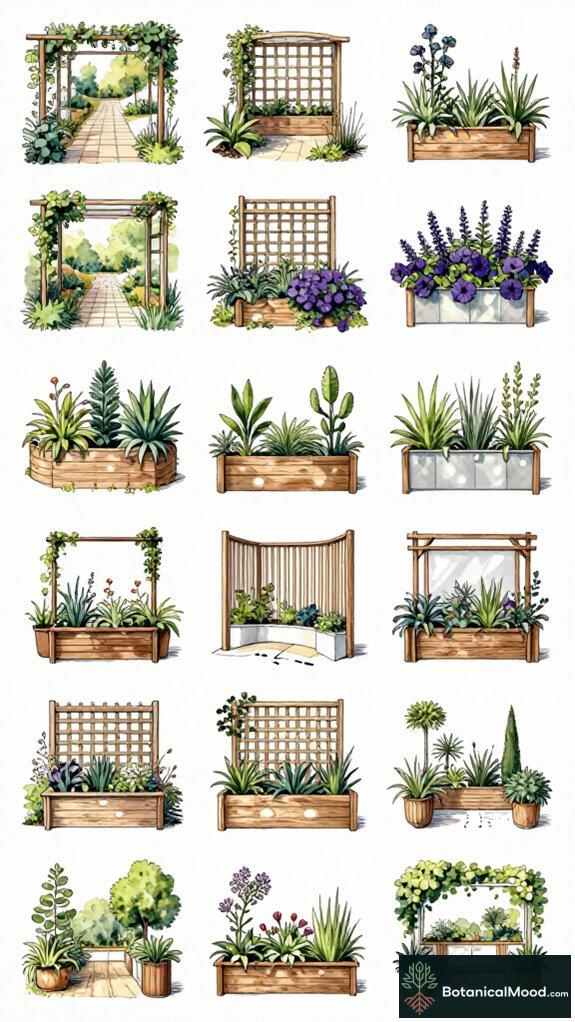
Sprouting up along the coop perimeter, vertical vine screens provide a dual function of shade and forage, integrating trellised selections that maximize sun protection while delivering edible or ornamental payoff.
I guide readers through a modular setup: sturdy trellises, galvanized anchors, and drip irrigation loops, enabling responsive microclimates for layers of vines such as Passiflora incarnata (passionflower), Vitis vinifera (grape), Cucumis sativus (cucumber), and Phaseolus vulgaris (runner bean). Colors pair with foliage: deep emerald leaves, tropical yellow blooms, and purplish grape clusters. When selecting vines, prioritize safe shrubs and plants that won’t toxify your flock or cause digestive upset. Organic mulches beneath vine trellises help regulate soil moisture and temperature while providing additional protection for your chicken run environment.
| Column A | Column B |
|---|---|
| Trellis height: 6–8 ft. | Irrigation per run: 1–2 L/day |
| Species: grape, cucumber | Shade coefficient: 0.55 |
| Materials: powder-coated steel | Maintenance: prune monthly |
| Benefits: forage + shade | Aesthetic payoff: year-round |
Shade Inside the Run: Native Trees and Small Ornamentals
Shade inside the run comes from a curated pairing of native trees (Foranna spp., Quercus spp., and Salix spp. pruned to bushy silhouettes) with small ornamentals that tolerate confinement and frequent pruning.
I advocate deliberate selections like Cornus florida variegata, Symphoricarpos alba, and Asimina triloba understorys, plus compact Salvia and Heuchera cultivars for color continuity during heat.
Planting beds emphasize drip irrigation, mulched arcs, and root barriers; I map seasonal flushes, bloom windows, and pollinator value. Strategic drip irrigation systems maintain consistent moisture levels while minimizing water waste in confined garden spaces.
The approach pairs scholarly provenance with practical pruning regimes, ensuring microclimates stay cooler, moisture-stable, and aesthetically coherent for readers pursuing innovative, resilient run design.
Perimeter Plantings That Deter Pests and Frame the Coop
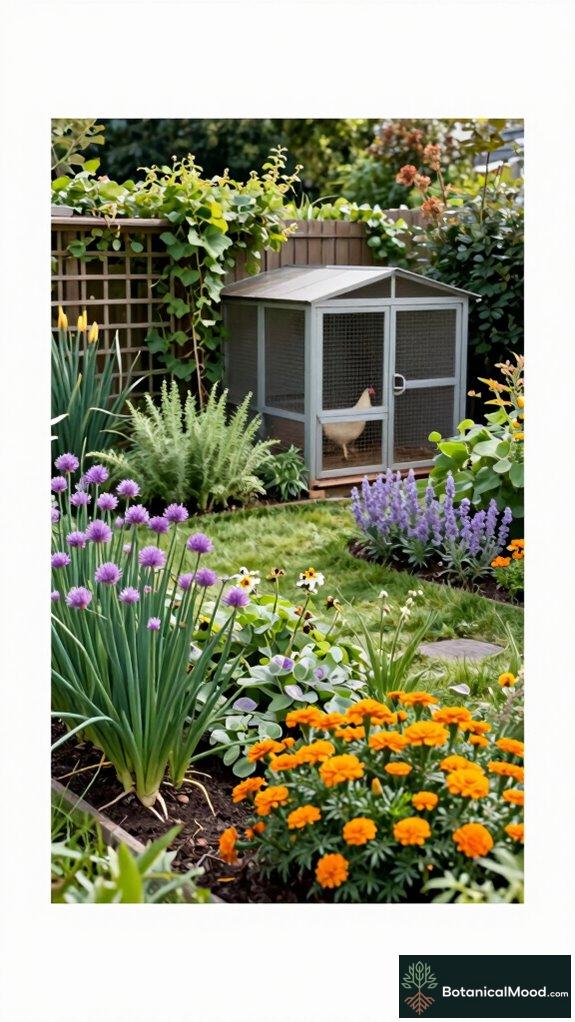
Perimeter plantings form a living buffer that deters pests while framing the coop with purposeful, layered greenery. I guide you through careful choices: sturdy, pest-repellent borders, aromatic margins, and visual screens that reduce glare and predation risk. Trellised vines, fragrant herbs, and native shrubs create microclimates, while chalk-colored stones emphasize structure. Groundcovers suppress weeds; pollinator-friendly blooms attract beneficial insects. Marigolds serve as natural pest defenders, offering reliable protection through their aromatic properties and insecticidal compounds. Just as accessible garden ramps enhance mobility for aging pets, thoughtfully designed plantings around your coop improve both function and safety for your flock. Table below presents a concise matrix of candidates, functions, and placements for quick reference.
| Plant | Function | Placement |
|---|---|---|
| Allium schoenoprasum (chives) | repels moths | outer perimeter |
| Lonicera fragrantissima | hides coop | south-facing border |
| Tagetes erecta (marigold) | pest barrier | front run edge |
Annual Flower Borders for Color and Function
A well-planned border blends color, texture, and utility, so I select a palette that carries through peak summer into early autumn while delivering pest deterrence, pollinator support, and visual framing for the coop.
I favor annual borders with brassicas as backdrops, Salvia guaranitica, and Cosmos bipinnatus (garden elegance) for long season interest, plus Tagetes patula for nematode suppression near soil contact.
Plant in staggered rows: tall showy blooms like Helianthus annuus, mid-height Coreopsis verticillata, and low-ground calibrachoa for spillover color.
Water-efficient mulches, drip irrigation, and predator guards guarantee sustained function and aesthetic cohesion from July to September.
Edible and Pollinator-Friendly Plant Beds
I integrate edible perennials (Allium schoenoprasum, Ocimum basilicum) with nectar-rich annuals (Ruta graveolens, Cosmos bipinnatus) along sun borders, using drip irrigation and layered mulches for soil health.
I route trellises for Vitis vinifera and Cucurbita pepo, inviting pest predators while providing microclimates for Salvia destinata and Asclepias tuberosa.
Pathways favor accessibility, shade pockets host Mentha × piperita, and soil tests guide organic amendments, ensuring resilience, flavor, and pollinator networks. Selecting non-toxic plants ensures that nearby chickens remain safe while foraging in garden spaces shared with edible and ornamental plantings.
Strategic drip irrigation systems deliver water directly to plant roots, minimizing waste while maintaining consistent soil moisture for both edible crops and pollinator-supporting flowers.
Predator Barriers and Plant-Based Boundaries
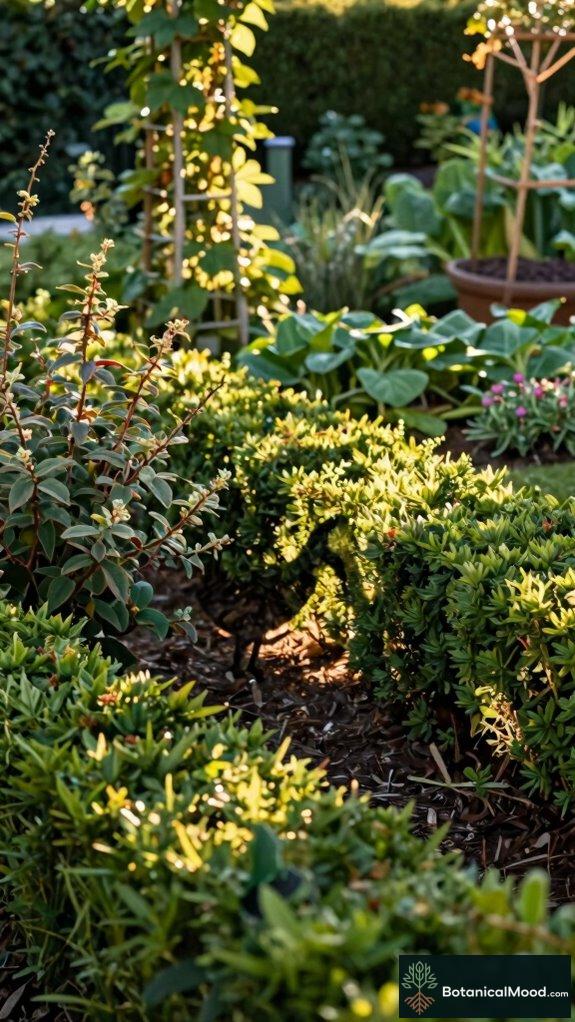
For predator barriers, I design plant-based boundaries that function as both deterrents and visual screens, weaving thick, thorny, or inherently unpalatable textures into the coop’s enclosure while integrating dense ground cover and vertical planting to disrupt predator approaches. These plantings can also provide non-toxic plant selection that ensures safety for your chickens should they nibble on surrounding vegetation. When selecting species, prioritize native plants that are safe for your flock to minimize toxicity risks. Strategic spacing, native species, and seasonal pruning keep protection robust and adaptable.
| Plant Type | Function | Example |
|---|---|---|
| Thorny shrubs (Rosa spp., rubra) | Deterrent barrier | Prickly hedges along perimeter |
| Groundcovers (Vinca minor, Thyme) | Visual camouflage + cover | Dense mat under fencing |
| Vertical climbers (Clematis, Lonicera) | Hiding screens + height | Trellises at run edges |
Seasonal Timelines, Maintenance, and Troubleshooting
Seasonal timelines shape every task in my coop garden, guiding when to plant, prune, and prep for pests, while ensuring the shelter remains productive year-round.
I track frost dates, last spring equinox, and heat peaks, aligning drip irrigation, shade cloth upgrades, and mulch layering with moon phases and regional climate data.
Maintenance includes seasonal pruning of Salix babylonica (willow) and Camellia sinensis, sensor checks on irrigation controllers, and routine predator audits.
Troubleshooting hinges on plant health diagnostics, soil buffering, and netting integrity, with quick replacements from Gardena, Proven Winners, and Burpee.
Decorative plant screens around the perimeter create visual appeal while protecting chickens from external predators and harsh weather elements.
Innovative cadences, documented outcomes, and adaptive design sustain resilience.
Vertical Trellis Camouflage Plan
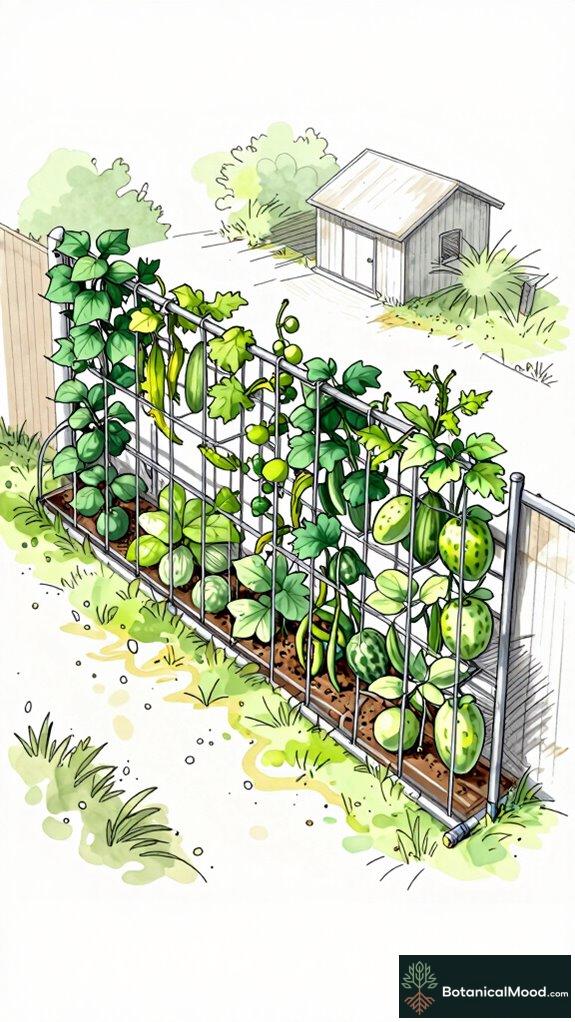
A vertical trellis camouflage plan begins with selecting a sturdy, sun-facing perimeter fence as the backbone. Then, it layers up a living screen that doubles as windbreak and forage source, using a mix of trellised watermelons (Citrullus lanatus), cucumbers (Cucumis sativus), and runner beans (Phaseolus coccineus) trained along galvanized rails and trellis pockets to maximize shade for the coop while maintaining easy access for harvest.
- Optimize microclimate: shade, airflow, and forage balance.
- Schedule staggered pruning to sustain fruiting and privacy.
- Choose disease-resistant cultivars; monitor leaf health and soil moisture.
“Pet-Safe Coop Shade Cloth”
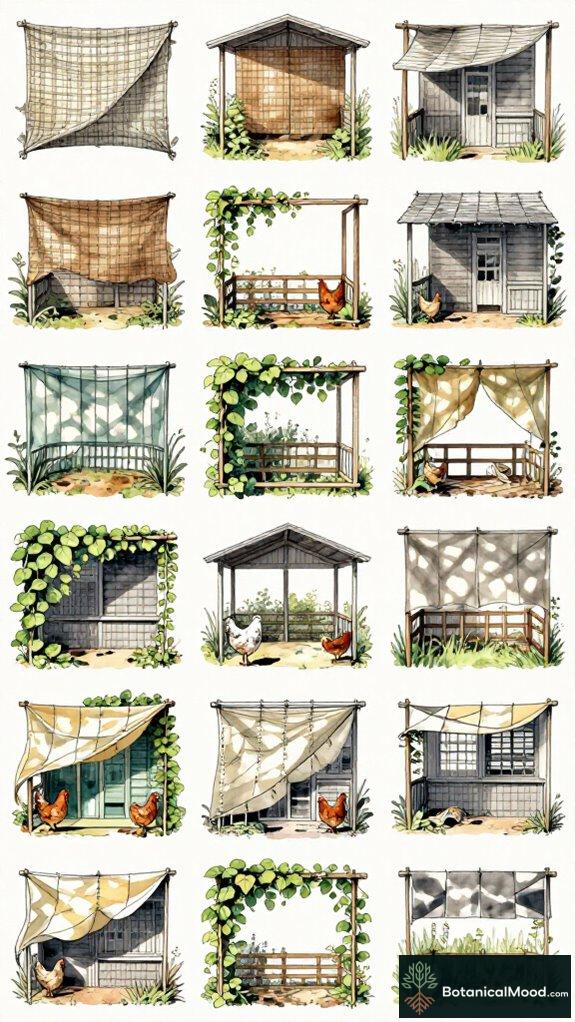
Pet-safe shade cloth choices balance UV protection, airflow, and animal welfare, so I prioritize woven polypropylene or high-density polyethylene fabrics that are labeled Safe-SIP or similar pet-friendly standards, typically offering 30%–60% shade, melt-resistant seams, and fade-resistant colors that don’t leach dyes into forage or dust.
| Attribute | Value |
|---|---|
| Material | Woven PP / HDPE (Safe-SIP) |
| Shade Range | 30%–60% |
| Seams | Melt-resistant |
| Durability | Fade-resistant, UV-stable |
I compare brands such as Coolaroo (HDPE), GreenShed (PP), and SunShade (PP-HDPE blends) for long-term coop aesthetics and airflow.
FAQ
How to Balance Aesthetics With Chicken Safety in Screens?
Screens must blend safety and style, and I’m obsessed with it. I’ll use sturdy, escape-proof mesh, layered plant screens, and constant checks, because beauty plus security means happier hens and a showroom-worthy coop you’ll brag about.
Which Plants Are Most Resilient to Coop Microclimates?
The most resilient plants for coop microclimates are sun-loving annuals and hardy perennials like sunflowers, marigolds, okra, rain trees, and butterfly bushes; they tolerate heat, shade shifts, and poultry traffic while still thriving nearby.
Can Screens Hinder Ventilation or Predator Access?
Screens can hinder ventilation and predator access if not designed properly; I balance airflow with gaps, slats, or vines trained above, and use sturdy, removable panels to adapt as seasons change. Innovation thrives with thoughtful, layered screening.
What Are Cost-Effective Irrigation Methods for Screens?
I’d use drip irrigation with gravity feed or a small solar-powered pump, minimizing water waste. I’d place emitters near roots, avoid wind disruption, and route hoses along trellises; add moisture sensors to optimize every drop.
How to Manage Seasonal Plant Color Without Harming Birds?
I manage seasonal color without harming birds by choosing non-toxic, pollinator-friendly natives and rotating plants weekly; I alert predators with safe deterrents, and I favor bird-safe blooms, avoiding toxic fritillaries, and using mulch shields during peak molt.