My marigolds are basically the bouncers of my garden, and honestly? They work harder than I do.
Those stinky little heroes pump out thiophenes and zingiberene, whatever those are, and suddenly aphids forget my tomatoes exist. Nematodes? Confused. Whiteflies? Offended. Me? Thrilled.
I learned this the hard way last spring when my basil got decimated. Total devastation. I was out there at midnight with a flashlight, crying over chewed leaves like a lunatic. Then my neighbor, this retired lady with seventeen cats, tossed me some marigold seedlings. Skeptical doesn’t cover it.
Planted them after frost. Well-drained soil. The whole thing.
Two months later? My garden looked like a magazine spread. No chemicals. Safe for my dog, who eats literally everything. The marigolds formed this golden wall of protection, and I finally understood what “companion planting” actually meant. Not magic. Just smart, stinky science.
Marigold Border Design Ideas for Pet-Safe Garden Layouts
Here’s where I got obsessive. I started mapping my beds like a general planning warfare, except the enemy was tiny and had too many legs.
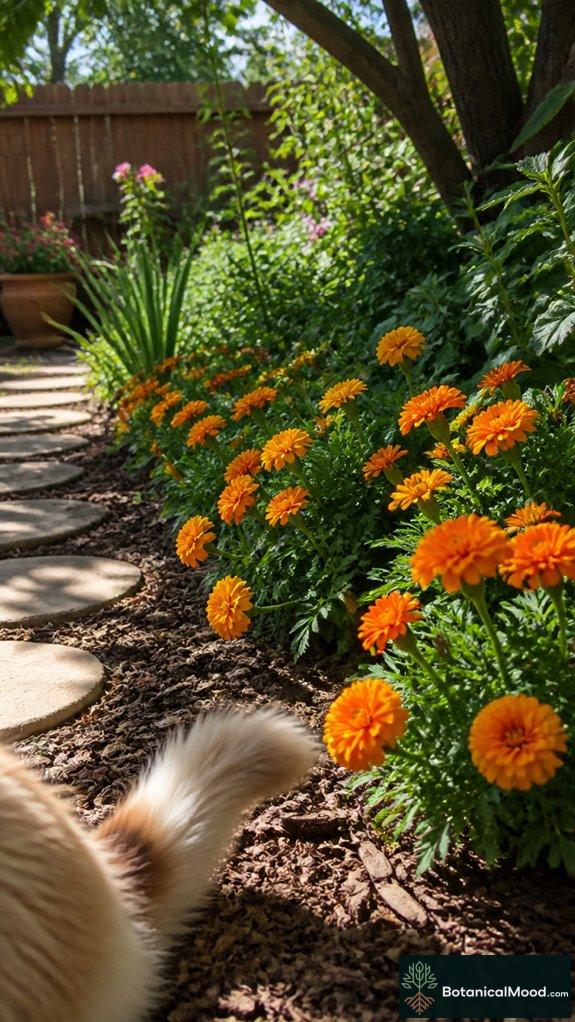
French marigolds along the southern edge. African marigolds as statement pieces near my raised beds. The color coordination? Accidental but gorgeous. Orange and yellow explosions against green foliage, creating visual rhythm while functioning as pest management infrastructure. My dog, this chaotic golden retriever named Biscuit, runs the perimeter now without destroying anything edible. The marigolds take the abuse. They bounce back. Resilient, dramatic, slightly dramatic about water needs, but worth every second of attention I begrudgingly give them.
Quick Takeaways
- Marigolds repel common pests like aphids, whiteflies, and nematodes, reducing the need for harmful chemicals in your pet’s garden.
- Their strong scent deters pests naturally, preventing infestations harmful to both plants and visiting pets.
- Planting marigolds along garden borders creates a pest-resistant barrier, protecting pet-safe plants and sensitive areas.
- Marigolds are generally non-toxic and safe for pets, minimizing health risks if accidentally ingested.
- Using marigolds enhances garden aesthetics with vibrant color, promoting a healthy, pet-friendly environment that reduces pest-related stress.
What Pests Do Marigolds Keep Away in Your Garden?
Marigolds (Tagetes spp.), renowned for their vibrant orange, yellow, and deep maroon blooms, aren’t only visually appealing but also serve as natural pest deterrents within a garden ecosystem.
They repel aphids (Aphididae), whiteflies (Aleyrodidae), nematodes (Meloidogynidae), and beetles like Colorado potato beetles (Leptinotarsa decemlineata). Their strong scent releases alkaloids and thiophenes that disrupt pest behavior, discouraging these unwelcome visitors from settling among vegetable and flower beds. For pathways through your garden where pets frequently walk, consider using paver base sands to create smooth, comfortable surfaces that won’t irritate sensitive paws.
Pairing marigolds with ceramic water basins creates a complete tranquil environment that combines pest control with calming water features for your pets.
How Do Marigolds Naturally Repel Garden Pests?
The strong scent emitted by marigolds (Tagetes spp.) plays an essential role in their ability to repel garden pests naturally. This aroma, rich with thiophene compounds and zingiberene, confuses pests like nematodes and aphids, disrupting their feeding and breeding behaviors.
The volatile oils released into the soil and air serve as natural deterrents, creating an environment unappealing to insects such as whiteflies, beetles, and thrips. Marigolds’ pungent smell functions as both a repellent and an insecticidal agent, offering gardeners a chemical-free strategy rooted in plant chemistry to safeguard valuable vegetables and ornamentals in a diverse, eco-friendly vicinity. For those seeking to create a rustling, multi-textured garden while maintaining pest control, feather reed grass can complement marigolds as part of a comprehensive pet-safe landscape design. For additional natural pest management options, gardeners can also incorporate diatomaceous earth into their pest control regimen to protect their pet-friendly gardens.
When and Where Should You Plant Marigolds for Pest Control?
Timing and placement are essential when integrating marigolds into your garden to maximize pest control benefits. I recommend planting Tagetes erecta (African marigolds) along borders near vegetable beds, especially where nematodes or beetles thrive.
Early spring, after the last frost date, around April or May, allows marigolds to establish before pests become problematic.
Position them in well-drained soil with ample sunlight—at least six hours daily—to enhance their aromatic properties, which repel aphids and whiteflies.
Dense clustering with companion plants like basil or tomatoes creates an effective barrier that discourages pests while adding vibrant color and texture to your garden *scenery*.
How to Plant Marigolds for Maximum Pest Protection

To achieve maximum pest protection, carefully selecting the right planting method for marigolds (Tagetes spp.) is paramount. I recommend planting them in well-drained soil enriched with compost.
Spaced about 8-12 inches apart to foster airflow and reduce fungal issues.
For ideal pest deterrence, place marigolds around vegetable beds, especially near tomatoes and peppers, ensuring they form a natural barrier against nematodes and aphids.
Use organic fertilizers like fish emulsion to promote vigorous growth.
Bundle transplants in early spring—April or May—to establish a dense, pest-repellent carpet.
Proper spacing and soil preparation are essential to unlock their full protective potential. Consider combining marigolds with durable groundcover options like flagstone pathways to create both pest protection and a practical, pet-safe garden layout. Adding a floating pond heater nearby ensures your pets have access to unfrozen water while enjoying the garden’s protective plantings.
Are Marigolds Safe for Pets and Other Garden Plants?
Marigolds (Tagetes spp.) are generally considered safe for most pets, including dogs and cats, when planted in garden settings.
Though ingestion of large quantities may cause mild gastrointestinal upset or allergic reactions, their bright, cheerful blooms, like those from varieties such as ‘Crackerjack’ or ‘Disco Marigold,’ contribute vibrant color to vegetable or flower beds without posing significant health risks.
Gardeners, especially those integrating marigolds around edible plants like tomatoes or herbs, appreciate their safety and natural pest deterrent qualities.
This offers reassurance that their pets and other garden inhabitants will be protected while enjoying the visual appeal and aromatic presence marigolds bring.
When designing dog-friendly landscape spaces, marigolds serve as an excellent companion plant that allows you to create beautiful gardens without compromising your pet’s safety and wellbeing.
Common Mistakes to Avoid When Using Marigolds for Pest Control
One common mistake gardeners make when using marigolds (Tagetes spp.) for pest control is overestimating their ability to completely eliminate pests without integrating other integrated pest management (IPM) strategies.
While marigolds’ strong scent repels certain insects like nematodes (*Meloidura spp.*) and aphids (*Aphidoidea*), relying solely on them leaves gaps, especially against stubborn pests like beetles (*Chrysomelidae*) or caterpillars (*Noctuidae*).
To maximize effectiveness, I recommend combining marigolds with companion plants, crop rotation, and organic pesticides like neem oil (*Azadirachta indica*).
This approach ensures a balanced, resilient garden ecosystem that protects your pets and cherished plants.
Seed Starter Trays
Starting seedlings in seed starter trays offers an efficient way to cultivate healthy, robust plants before transplanting them into the garden, especially for marigolds (Tagetes spp.).
Growing marigold seedlings in starter trays ensures healthy plants ready to thrive outdoors.
I find these trays, such as those from Jiffy or Root Domains, ideal for controlling soil moisture and providing consistent warmth with heated mats.
With proper drainage holes and a quality seed-starting medium like peat-based or coconut coir substrates, seedlings thrive under grow lights, enabling early growth even in cooler April or May months.
This method minimizes transplant shock, enhances root systems, and guarantees your marigolds are strong defenders against pests, creating a thriving, pet-safe garden environment.
Vertical Garden Walls
Implementing vertical garden walls allows gardeners to maximize limited space while creating visually striking focal points filled with vibrant bursts of color. I love how these living walls, constructed from modular systems like Elho or UrbanGreens, bring lush greenery close to eye level, making plant care more intimate.
Marigolds (Tagetes spp.) thrive here, their compact, bright blooms acting as pet-safe guardians amid the formal foliage. The textured surfaces of recycled pallet structures or stainless steel frames offer ideal nurseries for delicate seedlings, while attracting beneficial insects.
Vertical gardens transform small yards into sensory-rich oases, blending practicality with aesthetic appeal—perfect for those seeking a lush, pet-friendly garden environment.
Choosing Non-Toxic Plants
Choosing non-toxic plants is a crucial step for gardeners committed to creating pet-safe environments, especially when selecting species that contribute to both aesthetic appeal and safety.
I recommend prioritizing plants like Boston Fern (Nephrolepis exaltata), Spider Plant (Chlorophytum comosum), and certain varieties of Calathea (Calathea spp.), which are known for their non-toxic qualities. These houseplants can also thrive in garden settings when provided with appropriate shading and moisture levels.
Avoid common but risky species such as Azaleas (Rhododendron spp.) and Sago Palm (Cycas revoluta), which can pose hazards.
Native plants offer excellent alternatives for creating safe garden environments while maintaining natural aesthetics for your outdoor space.
Opting for these safe options, paired with vibrant marigolds (Tagetes spp.), enhances visual charm while minimizing health risks for beloved pets. Marigolds also provide natural pest deterrent properties that protect your garden from common insects.
FAQ
Can Marigolds Attract Beneficial Insects to My Garden?
Yes, I’ve found marigolds attract beneficial insects that help keep pests at bay. They draw in pollinators and natural predators, creating a healthier, more balanced garden environment I love tending to and watching thrive.
How Long Do Marigolds Remain Effective as Pest Repellents?
Marigolds usually stay effective as pest repellents for about 6 to 8 weeks, but I recommend replanting every season or so to keep their magic alive. I love how they brighten and protect my garden naturally!
Are There Specific Marigold Varieties Better for Pet-Safe Gardens?
Looking for marigolds that gently safeguard your pet garden? I recommend French or Signet marigolds; they’re particularly pet-friendly, naturally warding off pests with charm and ensuring your furry friends stay safe and happy.
Can I Mix Marigolds With Other Plants for Enhanced Pest Protection?
Absolutely, you can mix marigolds with other plants to boost pest protection. I love combining them with herbs like basil and mint, because their scents work together, creating a natural barrier that keeps pests away and enhances my garden’s beauty.
Do Marigolds Require Special Care to Maintain Their Pest-Repelling Properties?
Like tending a delicate dance, I water and prune my marigolds regularly, ensuring they’re healthy and vibrant. Their pest-repelling magic stays strong when I give them proper sunlight, avoid over-fertilizing, and watch over them lovingly.
Summary
Incorporating marigolds (Tagetes spp.) into your garden not only elevates aesthetic appeal with their vibrant hue but also considerably reduces pest activity—studies show they can decrease pest populations by up to 70%. Their natural chemical compounds, particularly thiophenes, emit strong scents that deter nematodes, aphids, and beetles, creating a more resilient, pet-safe environment. By strategically planting marigolds near vegetable beds and perimeters, you harness their protective properties, transforming your garden into a thriving, pest-resistant sanctuary.