Learned the hard way. Last summer I inhaled a cloud of DE dust chasing ants. Felt like sandpaper in my lungs for days.
Now I’m that guy in an N95, gloves, goggles – the full hazmat look for garden chores. My neighbors definitely judge me.
The paranoia pays off though. Safer Brand’s fine silica particles are no joke; that <10 micron stuff floats forever. I target shaded, hidden spots where pets and kids never roam. Reapply weekly during bug season. Airtight storage keeps it potent. Worth the hassle? Absolutely.
Garden Design with Integrated Pest Prevention
My rock garden disaster taught me everything. I once packed river rocks tight against the house for that Pinterest aesthetic. Looked stunning. Created perfect spider mite condos.
Now I design breathing room into every bed. Raised cedar borders with copper mesh barriers. Strategic lavender and rosemary placement – companion planting that actually works. Permeable gravel paths instead of suffocating landscape fabric. DE becomes my last resort, not my only tool.
Quick Takeaways
- Always wear a proper N95 mask, gloves, and eye protection when applying DE to prevent inhalation or skin irritation.
- Store DE in airtight, moisture-proof containers away from children and pets to maintain safety and effectiveness.
- Apply DE in dry, shaded areas using gentle methods to minimize dust dispersion and reduce inhalation risks.
- Reapply in controlled, targeted areas every 7-14 days, and avoid overuse to prevent environmental contamination.
- Keep pets and children away from treated zones until dust has settled or been worked into the environment.
What Is Diatomaceous Earth and How Does It Work?
Diatomaceous earth (DE) is a naturally occurring, siliceous sediment composed mainly of fossilized remains of diatoms, which are microscopic algae with complex silica cell walls (Diatomaceae family). I find its fine, powdery texture fascinating—composed of tiny skeletons that form abrasive, porous particles.
DE works primarily through mechanical action; it dehydrates pests like aphids (Aphidoidea), ants (Formicidae), and beetles (Coleoptera) by damaging their exoskeletons. When pests crawl over DE, the sharp silica particles latch onto their bodies, causing dehydration and death.
This natural insecticidal property makes DE a versatile, eco-friendly component in organic gardening and integrated pest management systems.
How to Choose the Safe and Effective DE Powder for Your Garden
Choosing the right DE powder for your garden involves careful consideration of its purity, particle size, and intended use, as these factors directly influence both effectiveness and safety.
Select high-quality, food-grade DE with fine particles for safe and effective pest control in your garden.
I recommend selecting food-grade DE, such as brands like Safer Brand or Bonide, which guarantee minimal crystalline silica content, reducing health risks for humans, pets, and beneficial insects.
Fine, uniformly textured particles (less than 10 microns) adhere better and provide maximized pest control, especially against crawling insects like ants (Formicidae) and beetles (Coleoptera).
Always verify the source, opt for unaged, natural deposits, and store in a dry, sealed container to retain best efficacy over time.
DE powder works particularly well when used in dog runs and garden areas where pets frequent, as it provides non-toxic pest control while maintaining a safe environment for your animals.
For additional garden protection, consider complementing DE powder with thorny plant barriers that provide natural, non-toxic defense against pests and unwanted entry.
Review Local Regulations Before Using DE
Before applying diatomaceous earth (DE) powder in your garden, it’s essential to review local regulations and stakeholder guidelines to guarantee compliance with environmental and public health standards. Different municipalities, such as Los Angeles County or the State of California, may restrict certain brands like Mount Sicily or Mother Earth, especially in organic certification zones.
Regulatory agencies, including the EPA and local environmental boards, often stipulate permissible application methods and quantities. This is to avoid contamination of water sources or harm to non-target species. Consider supplementing winter pest management with alternative wildlife-friendly approaches, such as installing bird seed wreaths to support beneficial species while reducing pest populations naturally. For winter applications, ensure your DE powder remains dry and effective, similar to how microfiber towels maintain their functionality in cold weather conditions.
Familiarizing yourself with these rules ensures responsible use, avoids fines, and protects your garden’s ecosystem while effectively managing pests.
Applying DE Safely Without Harm to Pets and Wildlife
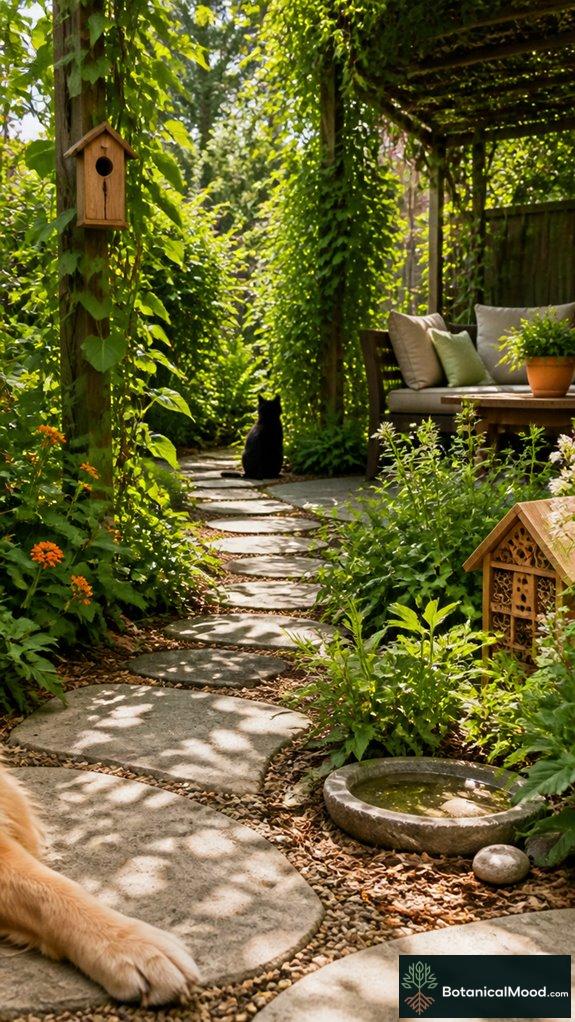
To make certain that applying diatomaceous earth (DE) powder doesn’t pose a threat to pets and wildlife, it’s essential to understand the potential risks associated with improper application.
This is especially important in environments frequented by domestic animals such as dogs (Canis lupus familiaris) and cats (Felis catus), as well as local fauna including beneficial insects and ground-dwelling birds like thrushes (Turdus spp).
I recommend applying DE only in targeted areas, avoiding windy days to prevent drift, and keeping pets indoors during application.
Avoid applying near water sources, as runoff can affect aquatic life. Using waterproof fabric sprays can help protect outdoor pet run areas from moisture while maintaining the integrity of DE applications.
For outdoor spaces, consider incorporating vertical climbing structures to provide cats with elevated areas away from ground-level DE applications.
These precautions help safeguard the delicate balance of garden ecosystems and guarantee safe pest control.
What Protective Equipment Should You Wear When Handling DE?
Handling diatomaceous earth (DE) powder requires deliberate safety precautions to prevent respiratory irritation and skin exposure, especially given its finely milled, abrasive silica composition. When working with DE, I recommend wearing a properly fitted N95 respirator mask to filter airborne particles effectively, coupled with long-sleeved shirts, gloves like nitrile or latex to protect skin, and goggles to shield eyes from dust. Brands like 3M provide reliable respirators, while durable work gloves ensure safety during handling. These measures are essential for anyone working with food-grade or technical DE, such as perlite or silica-based products, in garden settings or pest control applications. When designing your garden layout, consider creating dog paths throughout the space to keep your pets safe from treated areas. If you’re applying DE in areas where pets frequent, consult non-toxic plant selection guides to ensure your garden remains safe for your dog.
Proper Techniques for Applying DE Effectively
Applying diatomaceous earth (DE) effectively requires a careful and deliberate technique to guarantee maximum coverage while minimizing dust dispersal in the environment.
Applying diatomaceous earth carefully ensures thorough coverage and minimizes dust in your environment.
- I recommend using a bell-shaped duster or a fine sieve to sprinkle DE gently along baseboards, cracks, and crevices where pests hide.
- Always work in quiet, dry conditions to prevent disturbed dust from becoming airborne.
- Focus on areas with high pest activity, like under vegetable beds (Solanum lycopersicum) or nestled in mulch layers, ensuring thorough, even distribution.
- After application, gently sweep or tamp to embed DE into soil or organic matter, avoiding excessive disturbance.
- DE powder works particularly well in cold frame greenhouses where winter gardening conditions create concentrated pest habitats.
- This approach is especially useful for protecting outdoor pet food from contamination by common garden pests.
This method enhances efficacy and minimizes environmental dust spread.
How Often Should You Reapply DE for Best Results?
Frequency of reapplication for diatomaceous earth (DE) depends heavily on environmental conditions, pest pressure, and the specific indoor or outdoor setting.
In a garden setting, particularly when targeting pests like garden ants (Lasius spp.) or fleas (Ctenocephalides felis), reapplication might be necessary every 7 to 14 days during peak activity seasons, especially if rainfall or watering disperses the powder. When choosing a location for DE application near outdoor spaces, consider planting shade shrubs to protect treated areas from excessive moisture.
For indoor use targeting bed bugs (Cimex lectularius) or pantry pests, reapply every few days until infestation diminishes. Monitoring pest activity closely helps prevent overapplication and guarantees DE remains effective.
Adjust frequency based on pest resurgence or environmental factors for best results. Similar to preparing pea gravel for dog potty areas, proper maintenance and regular monitoring ensure optimal performance of your pest control approach.
Store DE Properly to Maintain Its Effectiveness and Safety
Proper storage of diatomaceous earth (DE) is essential to preserve its physical structure, purity, and effectiveness as a pest control agent. To do so, I recommend:
- Keep DE in an airtight, moisture-proof container, like a sealed plastic or metal bin, to prevent clumping caused by humidity.
- Store it in a cool, dry place, away from direct sunlight or heat sources, which can weaken the silica’s abrasive qualities.
- Label containers clearly, especially when handling different brands like *Safer* or *Bonide*, to avoid accidental misuse.
- Avoid exposure to air for extended periods, as moisture diminishes DE’s efficacy in controlling pests and insects.
- Just as pet safe paint protects animals in your coop environment, ensure DE is stored securely away from children and pets to prevent accidental ingestion or inhalation.
- Store DE away from areas where you maintain dog-friendly garden spaces, as accidental contamination could harm pets that frequent those landscapes.
Keep Kids and Pets Safe During and After Applying DE
When using diatomaceous earth (DE) for pest control around homes or gardens, it’s essential to evaluate the safety of children and pets during and after application. I recommend applying food-grade DE (such as Pyrium or Harris Farms) in shaded, inaccessible areas, away from curious pets and playful children.
Once applied, keep kids and animals from disturbing the powder until it has settled and been worked into the soil or cracks. Afterward, gently vacuum or sweep the area to remove excess DE. Consider using wand toys and interactive enrichment to keep pets mentally stimulated and less likely to investigate treated areas.
Always supervise pets, especially during outdoor activities, to prevent ingestion or inhalation of airborne particles, prioritizing their health and safety. Guinea pigs and other small animals should have access to climbing structures within enclosed garden zones to keep them away from treated areas.
Birdbath Scatter for Pest Control
Using a birdbath as a strategic scatter point for pest control offers an innovative approach that leverages natural behaviors of birds, like the house sparrow (Passer domesticus), to reduce pest populations effectively.
Placing DE powder (diatomaceous earth, food grade) subtly around the birdbath discourages insects without harming beneficial birds. Beneficial nematodes provide an additional complementary approach to pest management that works alongside physical barriers like DE powder for comprehensive lawn protection. For persistent glare issues in outdoor areas, consider installing outdoor sun curtains to create shaded zones where you can safely apply pest control measures.
- Use a fine sieve to dust the edges lightly, ensuring safety.
- Keep the birdbath filled with clean water, welcoming birds and encouraging pest-eating visits.
- Schedule application during early mornings or late evenings when insect activity peaks.
- Avoid direct spraying into water to maintain bird safety.
Choosing Vertical Planting Methods
Vertical planting methods offer an innovative approach to maximizing garden space, especially in environments where horizontal growth is limited or impractical. I recommend considering structures like wall-mounted planters, modular towers, or hanging garden systems crafted from durable materials such as cedar or galvanized steel. These materials are suitable for vegetables (Solanum lycopersicum), herbs (Ocimum basilicum), and leafy greens (Lactuca sativa).
These methods provide efficient use of vertical real estate, promote better airflow, and can incorporate vintage trellises or modern hydroponic setups for enhanced productivity. By selecting appropriate containers and positioning them according to sun exposure and plant needs, you create a visually appealing and functional garden environment aligned with safety protocols. Consider adding light reflecting garden features like gazing balls to your vertical garden setup to enhance aesthetic appeal while creating visual interest for outdoor spaces. For garden ponds located near vertical planting systems, pond pressure filters help maintain water quality for pet drinking and plant irrigation purposes.
Select Non-Toxic Plants
Choosing non-toxic plants for your garden is an essential step to guarantee safety, especially if children, pets, or foraging wildlife have access to the space.
Selecting non-toxic plants ensures a safe, welcoming garden for children, pets, and wildlife.
- Opt for native species like *Echinacea purpurea* or *Asarum canadense*, which are generally safe and well-adapted.
- Avoid commonly used but toxic plants like *Oleander* (Nerium oleander) or *Foxglove* (Digitalis purpurea).
- Look for varieties labeled as non-toxic by reputable sources like the ASPCA.
- Consider plants like *Partridge Pea* (Chamaecrista fasciculata) that provide beauty and safety, ensuring your garden remains welcoming and secure.
- For vertical garden designs, incorporate climbing plants that are safe for cats and other pets to prevent accidental ingestion of harmful foliage.
- Installing garden ramps throughout your outdoor space allows senior pets and mobility-limited visitors to safely navigate planted areas while enjoying the landscape.
FAQ
Can DE Powder Cause Allergies or Respiratory Issues in Humans?
Yes, DE powder can cause allergies or respiratory issues if inhaled too much. I always wear a mask and work in well-ventilated areas to protect myself, and I recommend you do the same for your safety.
Are There Specific Storage Conditions to Prevent DE Contamination?
Think of storage as your DE powder’s peaceful sanctuary. Keep it in a dry, airtight container, away from moisture and children—like a secret treasure chest—to prevent contamination and preserve its effectiveness for all your needs.
What Are the Long-Term Environmental Impacts of Using DE?
I believe using diatomaceous earth long-term can impact soil health and beneficial insects if over-applied. I recommend monitoring its use carefully, as excessive amounts might disrupt ecosystems I care about and want to preserve.
How Do I Dispose of Leftover or Expired DE Properly?
When I dispose of leftover DE, I pour it into a sealable bag, gently squeeze out air, and toss it in the trash. I envision it quietly settling, safe from wind or water, protecting my loved ones and environment.
Is DE Safe to Use Indoors on Household Pests?
Yes, I find DE safe indoors for household pests when applied carefully. I make sure to keep it away from kids and pets, and I apply it in targeted areas for effective pest control without risking anyone’s safety.
Summary
Often, the journey of integrating DE powder into your garden reveals a surprising harmony—nature’s resilience aligning with thoughtful safety measures. As you navigate local regulations, use protective gear, and select suitable plants, you foster a sustainable balance that benefits both environment and ecosystem. In this interconnected dance of pest control and conservation, a small change, like the careful application of DE, embodies a broader commitment to nurturing life—where precaution and possibility coexist, quietly guiding your garden’s ongoing harmony.